Members
01/Overview
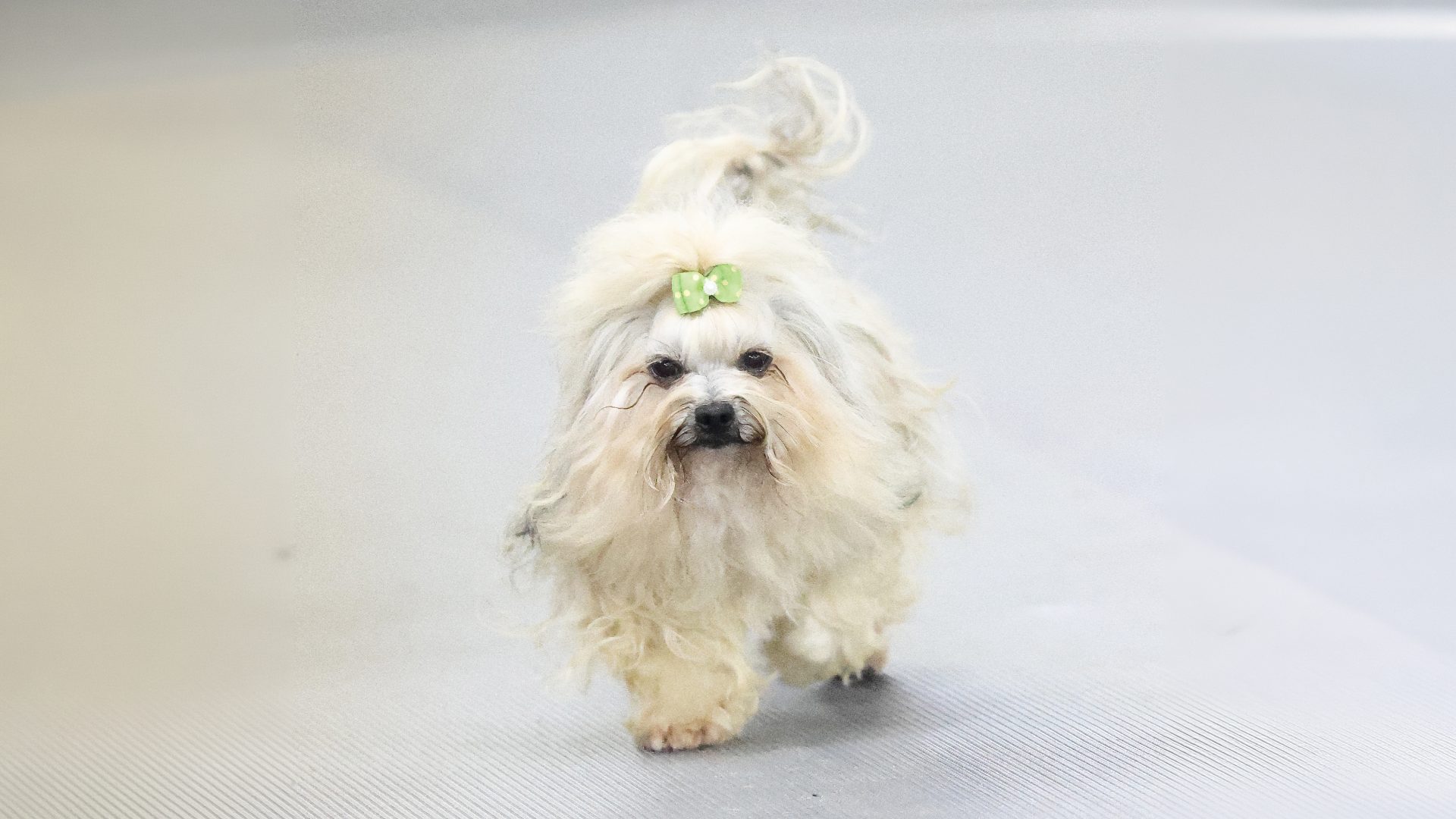
The Russian Tsvetnaya Bolonka is a small companion breed known for its soft, wavy or curly coat, compact build, expressive face, and affectionate personality. The breed is intelligent, playful, adaptable, and typically forms close bonds with its family.
Developed primarily as a companion dog, the Bolonka is well suited to indoor living and tends to enjoy staying close to people. Its small size, moderate exercise needs, and social nature have helped make it a popular companion among enthusiasts of rare toy breeds.
Highlights
02/History
The Russian Tsvetnaya Bolonka originated in Russia and was developed primarily as a small companion dog. The breed’s name translates roughly to “Russian Colored Lapdog,” reflecting both its country of origin and its characteristic colored coat.
Its development began during the twentieth century, when small companion dogs were relatively uncommon in the Soviet Union. Import restrictions and limited access to established European Toy breeds encouraged Russian breeders to develop a domestic lapdog using the dogs that were available.
Several small companion breeds are believed to have contributed to the Bolonka’s development, including dogs related to the Bichon family, Shih Tzu, Lhasa Apso, and other small long-coated breeds. Breeders selected for compact size, a friendly temperament, and a soft coat in colors other than solid white.
By the middle of the twentieth century, breeders in cities such as Leningrad worked to establish a more consistent type. The goal was to create a distinctly Russian companion dog with a sturdy small frame, attractive coat, and adaptable temperament.
The breed became known as the Tsvetnaya Bolonka to distinguish it from white Bolonka-type dogs. “Tsvetnaya” refers to color, and colored coats became one of the breed’s defining characteristics.
Interest in the Russian Tsvetnaya Bolonka gradually spread outside Russia after the end of the Soviet era. Dogs were exported to Europe and North America, where small breeding populations were established.
The American Kennel Club officially recognized the Russian Tsvetnaya Bolonka as a fully recognized breed on January 1, 2026.
03/Appearance
An adult Russian Tsvetnaya Bolonka stands at 10.25 inches tall at the withers and typically weighs between 7 and 9 pounds. Height over 11 inches is a disqualification in the show ring.
Skull: The Russian Tsvetnaya Bolonka has a moderately broad, slightly rounded skull that is proportionate to the body. The head should appear balanced and refined without looking coarse.
Expression: The expression is bright, friendly, and attentive, reflecting the breed’s affectionate and lively nature.
Eyes: The eyes are medium in size, rounded, and set well apart. They should be dark and expressive, contributing to the Bolonka’s soft and engaging appearance.
Ears: The ears are medium in size, set high, and carried close to the sides of the head. They are covered with long hair that blends naturally into the surrounding coat.
Muzzle: The muzzle is relatively short, broad at the base, and tapers slightly toward the nose. It should remain well balanced with the skull.
Nose: The nose is well developed, with pigmentation that harmonizes with the coat color.
Bite: The Russian Tsvetnaya Bolonka has a scissors bite, with the teeth meeting evenly and the jaws well developed for the breed’s size.
The Russian Tsvetnaya Bolonka is a small, compact, well-balanced companion dog with a slightly rectangular outline. The body is somewhat longer than tall, with enough substance to appear sturdy without looking heavy or coarse.
The chest is well developed, the back is level, and the loin is short and strong. Bone is moderate for the breed’s size, supporting an agile and active dog while preserving the refined appearance expected of a companionable Toy breed.
Texture: The Russian Tsvetnaya Bolonka has a long, dense, soft coat that may be wavy or curly. The coat should have enough body and texture to create the breed’s characteristic full, tousled appearance.
Standard Colors
04/Consider
The Russian Tsvetnaya Bolonka is affectionate, intelligent, playful, and usually closely attached to its family. Anyone considering the breed should be prepared for regular coat care, early socialization, consistent training, dental care, and moderate daily exercise.
Interaction With Family
The level of affection a breed typically shows towards family members and familiar individuals.
Good With Other Dogs
The innate friendliness of a dog towards other dogs can depend on its breed.
Good With Young Children
The degree to which a breed will typically be patient with young children.
Amount Of Shedding
How much hair a breed typically leaves behind on clothes, furniture and floors.
Frequency Of Grooming
How often a breed needs brushing, bathing or a professional trim to stay in condition.
Amount Of Drooling
How prone a breed is to drool, worth knowing before you keep a towel by the door.
Openness To Strangers
How openly a breed tends to greet new people, visitors and strangers.
Protective Nature
How likely a breed is to alert you to anything unfamiliar, and stand between you and it.
Playfulness Level
How enthusiastic a breed stays about games and play well past puppyhood.
Trainability Level
How readily a breed takes direction and works with you rather than around you.
Barking Level
How much a breed uses its voice, and how readily.
Energy Level
How much get-up-and-go a breed brings to an average day.
Health
The Russian Tsvetnaya Bolonka is generally a healthy and long-lived breed with a typical lifespan of 14 to 20 years. Preventive veterinary care, balanced nutrition, regular exercise, dental care, and maintenance of a healthy weight can help support long-term health.
The Russian Tsvetnaya Bolonka is affectionate, playful, intelligent, and typically very people-oriented. The breed often forms close bonds with its family and usually enjoys being included in everyday activities.
Bolonkas are generally friendly and adaptable, although some may be cautious around unfamiliar people at first. Early socialization helps them become comfortable with different people, dogs, sounds, and environments.
The breed is sensitive and usually responds best to calm, consistent handling. Positive interaction and clear household routines can help the Bolonka develop into a confident and well-mannered companion.
Exercise Expectations
A healthy adult generally benefits from about 30 to 45 minutes of activity each day, divided into manageable sessions. Trick training, scent games, and interactive play can provide additional mental stimulation. The breed’s small size makes indoor activity useful, but regular outdoor walks and opportunities to explore are still important for physical fitness and enrichment.
Grooming Expectations
The Russian Tsvetnaya Bolonka can adapt very well to apartment or house living because of its small size and moderate exercise needs. The breed generally prefers living indoors and staying close to its family.
Bolonkas often enjoy companionship and may not do well when left alone for long periods. Their small size makes them easy to accommodate, but they still benefit from regular walks, training, and mental stimulation.
The breed usually does best with people who appreciate an affectionate, playful, and adaptable companion. Consistent routines, regular interaction, and proper coat care help the Russian Tsvetnaya Bolonka thrive.
05/Puppies
Russian Tsvetnaya Bolonka puppies are affectionate, playful, curious, and usually quick to form close bonds with their families. They benefit from early socialization, consistent routines, positive training, and regular gentle handling from an early age.
A Russian Tsvetnaya Bolonka puppy should have a predictable daily schedule that includes regular meals, potty breaks, naps, play, training, and quiet time. A crate or secure puppy area can provide a safe place to rest and can also support housetraining.
Early socialization should introduce the puppy to different people, well-mannered dogs, household sounds, surfaces, vehicles, and unfamiliar environments. These experiences should remain positive and appropriate for the puppy’s age.
Training can begin as soon as the puppy arrives home. Short sessions can focus on name response, recall, leash walking, housetraining, basic manners, and calm behavior around visitors. Because Bolonkas are intelligent and sensitive, patient and reward-based methods are generally the most effective.
A puppy should receive a complete and balanced diet formulated for growth. Young puppies generally do best with several small meals throughout the day before gradually transitioning to an adult feeding schedule.
Exercise should include supervised play, short walks, and gentle exploration rather than repetitive or high-impact activity. Regular mental stimulation through simple games and training can also help keep a Bolonka puppy engaged.
Regular veterinary visits are important during the first year. Grooming routines such as brushing, combing, nail trimming, ear checks, and tooth brushing should also begin early so that the puppy becomes comfortable with regular care.
06/Activities
Russian Tsvetnaya Bolonkas are intelligent, playful, and responsive dogs that often enjoy activities involving movement, problem-solving, and close cooperation with a handler. Here are some of the dog sports and activities in which Russian Tsvetnaya Bolonkas may participate:
Obedience: Russian Tsvetnaya Bolonkas can demonstrate focus, responsiveness, and reliable performance with a handler.
Rally: Rally Obedience combines obedience exercises with movement through a designated course and can provide both mental and physical stimulation.
Agility: Bolonkas can use their balance, coordination, and quick reactions while navigating appropriately sized obstacle courses.
Scent Work: The breed can use its sense of smell to locate specific odors hidden in containers, indoor spaces, outdoor areas, or vehicles.
Fast CAT: This timed 100-yard dash gives the Russian Tsvetnaya Bolonka an opportunity to use its speed and enthusiasm for running.
Conformation Shows: Russian Tsvetnaya Bolonkas compete in Conformation Shows, where judges evaluate each dog according to the Breed Standard, including structure, movement, coat, expression, temperament, and overall type.
Trick Dog: Trick training provides mental stimulation and gives the Bolonka an enjoyable way to use its intelligence and eagerness to learn.
Therapy Work: A calm, friendly, and well-socialized Russian Tsvetnaya Bolonka may participate in therapy visits to hospitals, schools, assisted living facilities, and other settings.
Canine Good Citizen: Russian Tsvetnaya Bolonkas may participate in programs that evaluate everyday manners, social behavior, and reliability around people and other dogs.
Gallery
07/Standards
The Russian Tsvetnaya Bolonka is recognized by the world’s leading registries and kennel organizations, which categorize the breed into a specific Group based on its unique characteristics. This breed is recognized worldwide under the following Group designations:
The ideal Russian Tsvetnaya Bolonka is described by a Breed Standard that is approved by each of the world’s leading registries and kennel organizations. The Standards for this breed may be found in the following links:
08/Clubs
A club for the Russian Tsvetnaya Bolonka supports breed education, responsible breeding, health initiatives, Conformation shows, Performance events, and adherence to the Breed Standard.
Russian Tsvetnaya Bolonka Club of America: Formed in the early 2000s, this is the national breed club for the Russian Tsvetnaya Bolonka in the United States and the breed’s AKC parent club.
09/Rescue
Breed-specific rescue resources help Russian Tsvetnaya Bolonkas that have been surrendered, abandoned, or need rehoming. Because the breed remains relatively uncommon, dedicated rescue organizations may be limited.
Russian Tsvetnaya Bolonka Club of America Rescue Resources: The breed’s AKC parent club can provide rescue contacts, referrals, or guidance for Bolonkas needing placement in the United States.
Russian Tsvetnaya Bolonkas may also be found through local shelters, Toy breed rescue organizations, and national adoption databases. These resources can provide additional options for people interested in adopting a Bolonka or Bolonka mix.
10/Facts
The Name Refers to a Colored Lapdog
Tsvetnaya Bolonka” roughly translates to “colored lapdog,” reflecting the breed’s Russian origin and its variety of accepted coat colors.
Created Without Relying on Imported Toy Breeds
Limited access to foreign companion breeds during the Soviet era encouraged Russian breeders to develop a distinct domestic lapdog.
A True Companion Breed
Unlike many small breeds with hunting or vermin-control backgrounds, the Bolonka was developed primarily for companionship.
Fully Recognized by the AKC in 2026
The American Kennel Club officially recognized the Russian Tsvetnaya Bolonka as a fully recognized breed on January 1, 2026.
11/FAQ
Russian Tsvetnaya Bolonkas can make excellent pets for people who want an affectionate, playful, and adaptable companion. They usually do best with regular interaction, gentle handling, and consistent routines.

Written by
Dan Sayers is the Executive Editor of SHOWSIGHT. He is a member of the World Dog Press Association and the Dog Writers Association of America, which recognized his illustrations in the award-winning Encyclopedia of K-9 Terminology. Dan is a longtime supporter of the sport of dogs and an advocate for the conservation of recognized breeds in all their forms and functions. He is a member of the Morris and Essex Kennel Club, and for 45 years, the Irish Water Spaniel Club of America where he serves as AKC Delegate, Archivist, and approved Breed Mentor. Dan breeds under the Quiet Storm prefix and has judged the IWSCA National Specialty Sweepstakes twice.
Official Standard of the Russian Tsvetnaya Bolonka
General Appearance - Developed to be the ultimate house pet and companion, the Russian Tsvetnaya Bolonka is a small, sturdy, balanced dog, slightly longer than tall. The breed appears disheveled due to the wavy or curly coat. He moves gracefully with the tail carried over the back. He is friendly to all and shows no sign of aggression. He is sweet, loving, intelligent and willing to please. Size, Proportion, Substance - The body is slightly (not more than 15 percent) longer than the height at the withers, just off-square, measured from the point of shoulder to the ischium. The height is up to 10¼ inches. Height at withers over 11 inches is a disqualification. He is moderately boned. The ideal weight for males and females is 7 to 9 pounds. Head - The expression is sweet, alert, and intelligent. Eyes are dark brown. Lighter brown color is allowed in brown, fawn and cream dogs. Blue or partially blue eye(s) are a disqualification. The eyes are of medium size, rounded, and set on the frontal plane. Eyelids are tight. Eye rims are black or match the coat color. Cheeks are slightly rounded. Ears are moderate size, V shaped with slightly rounded tips, set moderately high, lay close to the skull and carried dropped. When alert, the ears lift at the base. The head is in proportion to the body. The skull is slightly prominent and slightly rounded, with a well defined stop. The muzzle is short, slightly more than one third of the length of the head, slightly tapered to the nose. The nasal bridge is straight and wide at the base. Lower jaw is moderately wide. The nose is small, vertical in profile, with nostrils that are well opened. The nose is solid black or matches the coat color. All shades of solid brown pigmentation are allowed in brown dogs. A spotted or flesh-colored nose is a disqualification. The lips are tight, with edges that are black or similar to the coat color. A scissors bite is preferred; a level bite or a slightly undershot bite is tolerated. A complete set of incisors and canines is desired. An overshot bite or wry mouth is a disqualification. Neck, Topline, Body - The neck is average length, sloping, dry, and well-muscled. The topline is level with a strong, broad, well-muscled back. The body is compact with a deep chest that is moderately broad and oval shaped with the brisket extending to the elbow. Ribs are well sprung. The underline is moderately tucked up. The loin is short and slightly arched. The croup is rounded, medium length, rather broad, slightly sloping, and muscular. The tail is medium length, set at moderate height, and curls over the back so the tip is close to the back. The tail is completely covered by coat. The tail may not be docked. A missing or docked tail is a disqualification. Forequarters - Legs are straight, parallel, and moderately wide when viewed from the front. The shoulder blades are well muscled, and their angulation with the shoulders is 100 to 110 degrees. The forelegs are straight and parallel, with elbows tight to the body. The length from the withers to the elbows is equal to the length from the elbows to the ground. Pasterns are strong and nearly upright. Dew claws may be removed. The feet are small and round with arched, tight toes. Pads and nails are dark. Hindquarters - The hind legs are straight and parallel. The hocks are strong, and moderately angulated, medium in length. They are set moderately wide when viewed from the rear. The rear pasterns are medium length and upright. Dew claws may be removed. The feet are a little smaller than the forefeet, oval shaped, with arched, tight toes. Pads and nails are dark. Coat - The coat is long, dense, thick, soft, and supple, with a well-developed undercoat. The coat forms large curls (preferred) or may be very wavy. The head has a well-developed beard and moustache. Complete lack of a beard and moustache is a disqualification. The coat is never deliberately parted. Hair on top of the head may fall naturally or be held up with a small bow on the top of the head. Feet may be neatened. No other trimming of the coat is allowed. Color - All colors are permitted except solid white, spotted, parti-color or merle. Small white markings on the toes and forechest are permitted. A solid white, spotted, parti-color or merle coat color is a disqualification. Gait - The movement is smooth and flowing with good reach in front and strong rear drive. Temperament - The Russian Tsvetnaya Bolonka is even-tempered, intelligent, friendly to all, and should never be shy or show aggression of any kind.
Disqualifications Height at withers over 11 inches. Blue or partially blue eye(s). A spotted or flesh colored nose. An overshot bite or wry mouth. A missing or docked tail. Complete lack of beard and moustache. Any spots, markings (except where mentioned), solid white, parti-color or merle coat color.
Approved June 17, 2021
Effective January 1, 2023

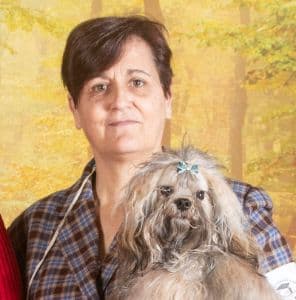
Dog Shows
Discover the Russian Tsvetnaya Bolonka, a charming, sturdy, and energetic lap dog perfect for any adventure or cozy companion.
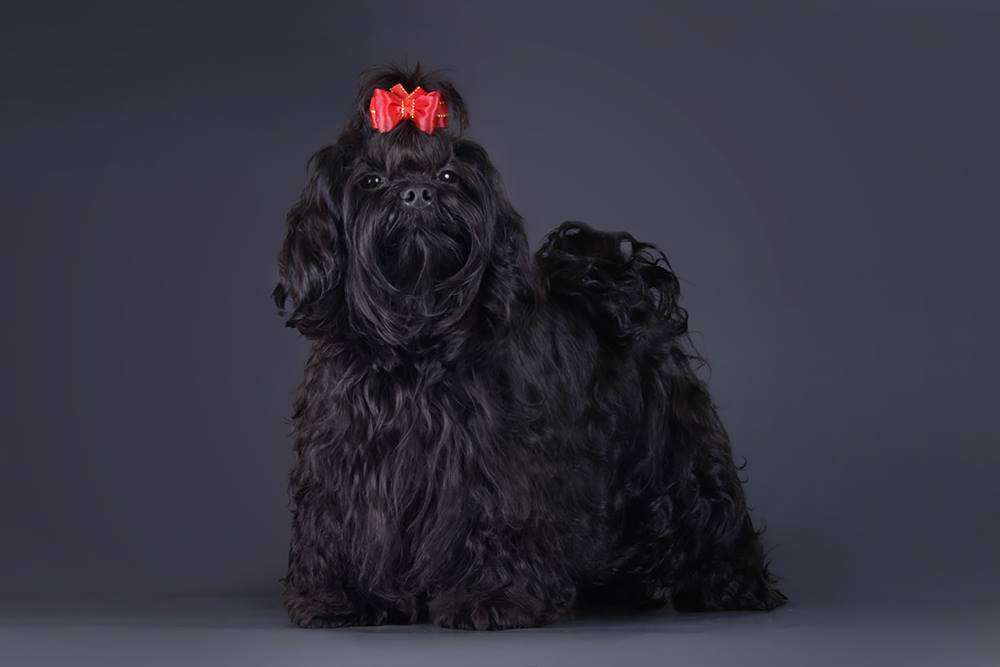
The coat of the Russian Tsvetnaya Bolonka has a natural curl, and the head has a beard and moustache which create a charming appearance.
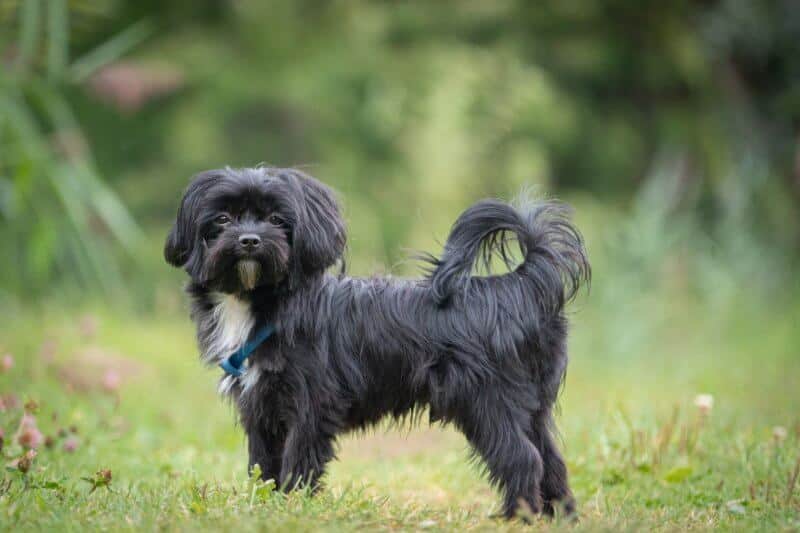

Russian Tsvetnaya Bolonka was crreated by a group of enthusiasts to make a small apartment-friendly companion dog.
The tail is set high and carried over the back or curved toward one side. It is covered with long, abundant hair and contributes to the Bolonka’s compact, balanced, and decorative outline.
Standard Markings
A Note About Color: All colors are permitted except solid white, spotted, parti-color, or merle. Small white markings on the toes and forechest are permitted. A solid white, spotted, parti-color, or merle coat color is a disqualification in the show ring.
Coat Type
Wavy
The structure of the coat this breed carries.
Coat Length
Medium
How long the breed's coat grows when kept in condition.
Adaptability Level
How easily a breed copes with changes in home, routine, noise and weather.
Mental Stimulation Needs
How much a breed needs a job, a puzzle or training to stay content.
A Russian Tsvetnaya Bolonka should receive a complete and balanced diet appropriate for the dog’s age, activity level, and body condition. Because the breed is small, portions should be measured carefully to avoid unnecessary weight gain.
Most adults do well with two measured meals per day, while puppies may need three or four smaller meals as they grow. Treats can be useful during training but should remain a modest part of the dog’s total daily calorie intake.
Maintaining a lean body condition can help support joint health, mobility, and overall fitness, and fresh water should always be available.
The Russian Tsvetnaya Bolonka is intelligent and usually eager to learn, making the breed well suited to positive, reward-based training. Short and varied sessions with food, praise, toys, or play often work best.
Early training should include recall, leash manners, housetraining, basic cues, impulse control, and calm behavior around visitors and other dogs. Socialization should also introduce the dog to a variety of people, surfaces, sounds, and environments.
Because Bolonkas can be sensitive, harsh corrections are generally counterproductive. Patient and consistent training helps build confidence and encourages reliable behavior.
Particular attention should be given to areas behind the ears, under the legs, around the feet, and beneath the collar or harness. Bathing can be done as needed, followed by thorough drying and careful brushing. Nails should be trimmed regularly, ears should be checked for debris or irritation, and teeth should be brushed routinely. Regular dental care is especially important in a small companion breed.