Members
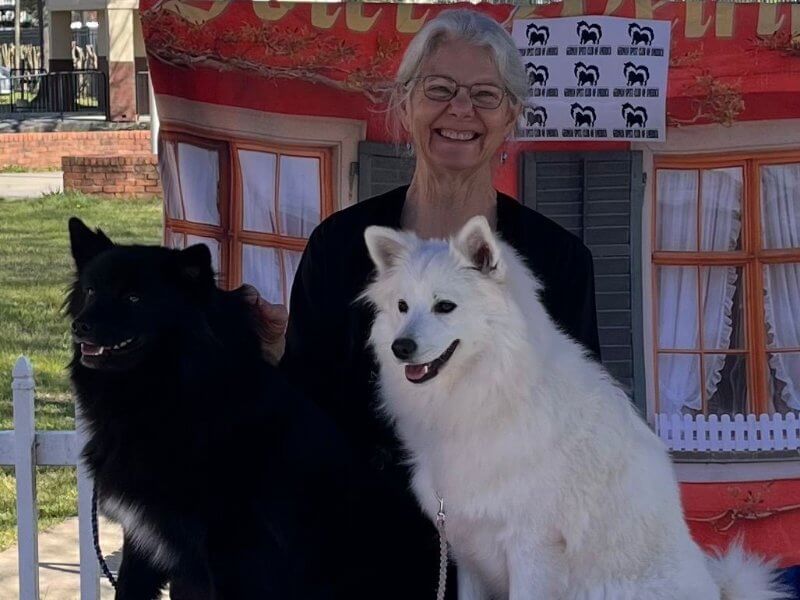
Patrea Pabst is the breeder of Thunderpas German Spitz and American Eskimo. Read about the kennel’s beginnings, the puppies, and more!
The Weekly Brief
The best of SHOWSIGHT editorials, weekly wins, and breeder commentary — delivered to your inbox every Sunday morning.
Patrea Pabst: I live in Dewy Rose, Georgia. I have been breeding and showing dogs since 1976.
Patrea Pabst: My kennel name is Thunderpas German Spitz and American Eskimos. I have four German Grosspitz, one American Eskimo Dog, and two Anatolian Shepherd Dogs. I also co-own other German Spitz.
Patrea Pabst: It’s hard to say. I started with my American Eskimos in 1976 with UKC, showed SKC, and then showed AKC in 1994 when American Eskimos were recognized.
I have had five Register of Merit dams, including: UKC GR CH U-CDX SKC CH SKC CD Thunderpas Artic Mist AKC CDX TT; her daughter AKC CH UKC GR CH U-CD SKC CH AKC CH Thunderpas Astraea; AKC CH UKC GR CH World & Puerto Rican CH AKC CH Jaybar’s Meeko; AKC/UKC CH Thunderpas Isis; and her daughter AKC UKC CH Thunderpas Galadrial. I have had two grand champion Anatolian Shepherds, but their primary role has been as livestock guardians. My boys have been my heart dogs, but it has always been my girls who built my reputation. I have produced more than 45 AKC champion and titled American Eskimos.
I was very proud to have owned and shown both Best of Breed and Best of Opposite Sex at our first German Spitz National show.
Patrea Pabst: I have a farm with a big farm house and dog room, but my dogs sleep with me and are very much pets first. They are born into my hands and are held and loved every day. All show in Conformation and train in a variety of Performance events. All are spoiled and love people and dog events, and going to the office.
Patrea Pabst: Yes. Realizing that we no longer had any genetic diversity in the Standard American Eskimo, and with the resulting rise in autoimmune disease, I went back to the “source”—the German Spitz. I imported my first German Grosspitz (large spitz) in 2019 from the Netherlands. She is my son’s dog. I have imported four more that live with me, and multiple others that live with others. We founded the German Spitz Club of America, Inc. in the fall of 2020. The GSCA is incorporated as a non-profit corporation, has an EID, bank account, and federal non-profit status.
The AKC recognized the club as the parent club in August 2022. We have over forty members, many active in Conformation and Performance events. We collaborate with the European German Spitz breeders and they have been an invaluable resource. In April 2023, we held our first National Specialty and AKC Judges’ Ed, and have participated in multiple Meet the Breeds. We have a group working on putting on an Agility Trial. We have an incredible newsletter editor and both public and private Facebook pages, and we have a website.
Patrea Pabst: When you import a new breed, you have to rely on the breeders to select the dogs. I bred the first German Grosspitz litter registered by AKC in January 2022, from my son’s dog and imported semen from the most-winning German Grosspitz in Europe.
I was extremely proud when the puppy I kept completed her Certificate of Merit (the FSS championship) at age nine months from the Bred-By Exhibitor class, becoming the first German Grosspitz with a CM. We have a black litter coming next fall from the first black Grosspitz with an AKC CM (who was also BOB at our first specialty, and earned her CGC and TKN the same weekend). The sire is a black German champion Grosspitz that I brought semen back from on a recent trip to Germany. We have another black Grosspitz litter and a white Kleinspitz litter planned with my co-owner for this summer.
Patrea Pabst: I compete in many things including Obedience, Rally, Trick Dog, Farm Dog, Barn Hunt, and Fast CAT, and I train in Agility and “Ninja” dog. The GS is an extraordinary performance dog.
Patrea Pabst: My dogs run and play in a yard and through the house, and they are very muscled.
Patrea Pabst: The GSCA requires all members to abide by the same Code of Ethics as the German Spitz Association in Germany. This means health testing and outcrossing. So far, no problems have been observed.
Patrea Pabst: We have shown incredible growth in the US over the last three years. Imports from Europe, UK, and Australia (the latter two for klein and mittel only) have greatly contributed to this.
Patrea Pabst: They are fabulous family dogs, but are very active, smart, vocal… and they dig and climb and destroy toys. They are not to be ignored!
Patrea Pabst: The coat is actually very low maintenance. The best-kept secret is that they love to curl up in bed and do nothing as long as you are there.
Patrea Pabst: We are SO proud of the many beginners and young people showing these dogs. Most have no idea how to show, so please encourage—they are our future.
Patrea Pabst: Be careful not to let the puppy millers get ahold of the breed. Ask for help in selling puppies, use a contract, and require references.
Patrea Pabst: That is hard. They are always making me laugh, even when they are being bad. Perhaps the most amusing thing is when trying to teach them to climb a stepladder, they just keep jumping straight up to the top—or when unlatching their own and their friends’ crates… they are very proud of themselves!
We are SO proud of the many beginners and young people showing these dogs. Most have no idea how to show, so please encourage—they are our future.

Meet the Breeders