Members
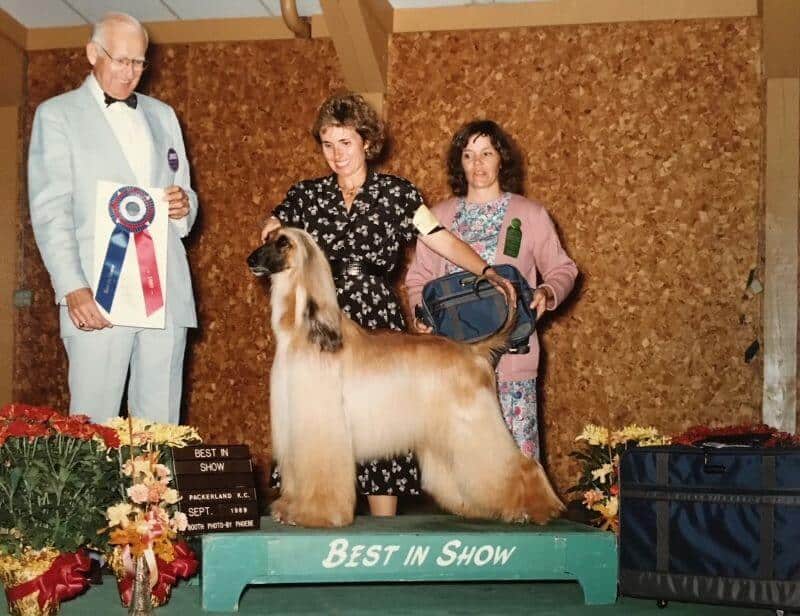
Sandra Frei is the breeder behind Stormhill Afghans. Read about the kennel’s beginnings, dogs, puppies, photos and more!
The Weekly Brief
The best of SHOWSIGHT editorials, weekly wins, and breeder commentary — delivered to your inbox every Sunday morning.
Interview with a purebred Afghan Hound breeder Sandra Frei of Stormhill Afghans, by Allan Reznik.
Sandra Frei: I am originally from Southern California. I grew up in la Canada-Flintridge.
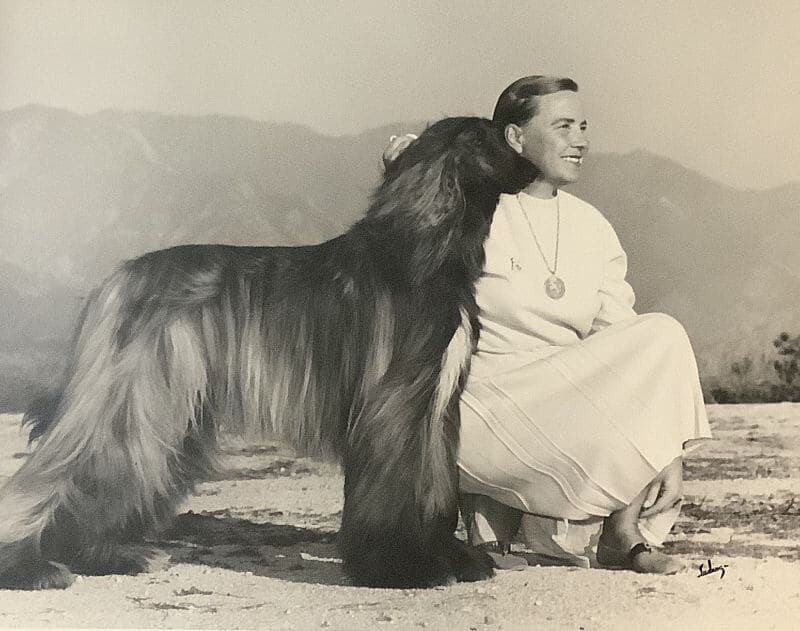
Sandra Frei: Yes, my mother (Virginia R. Withington) got her first Afghan Hound when I was around four years old. His name was Koh-I-Baba UD. He didn’t turn out to be a show dog, so she decided to turn to training him in Obedience. He became the first Afghan in the history of the breed to earn a Utility degree (UD), which at that time was the highest degree you could achieve in Obedience. Her first Conformation dog, and the dog she began her Stormhill breeding program with, was Ch. Stormhill Silver Dream, a son of Ch. Taejon of Crown Crest. “Taejon” was a very influential stud dog in his time, and was bred and owned by Kay Finch of Crown Crest Kennels.
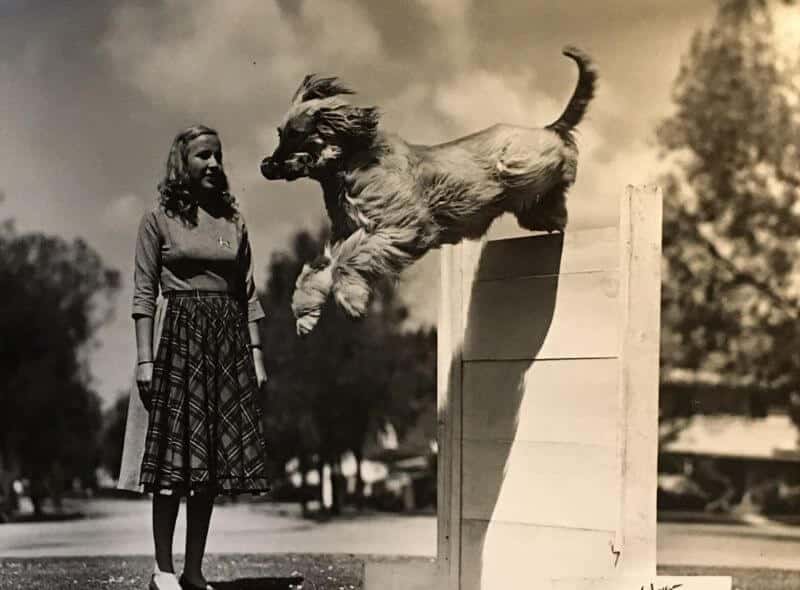
Sandra Frei: My mother was my primary and most important mentor. She was friends with all the great breeders of the past who helped shape the breed into what it is today. These important breeders included Kay Finch of Crown Crest Afghans, Sunny Shay of Grandeur, Bob and Babbie Tongren of ben ghaZi, Reigh and Dewey Abram of Dureigh, Lois Boardman of Akaba, Ned and Sue Kauffman of Holly Hill, Pat Stephenson of Tajmir, Jim and Mary Nesbitt of Mecca, and Wally Pede of Scheherezade.
Of course, over the years I learned a lot by training the dogs and going to handling classes, observing other great handlers in our breed as well as professional handlers, talking to people I knew in the breed, going to club meetings and seminars, etc. Back when I first started showing, which was in the early 1970s, Afghans were at the height of their popularity. There were a number of successful breeders competing at that time. Entries at specialties, all-breed shows, and even matches were huge. We learned a lot from each other. Back then, there was more discussion about dogs and pedigrees. Also back then, there was a lot more socializing among exhibitors, both at the shows and afterwards, than there is now.
I participated in Junior Handling when I was a kid. Back then it was usually judged by a professional handler and held over the lunch hour. It only cost a dollar to enter and you could show any dog that you chose or your parents chose for you on the day. It was lots of fun. There was no pressure on the kids to win, so it was quite relaxed compared to today.
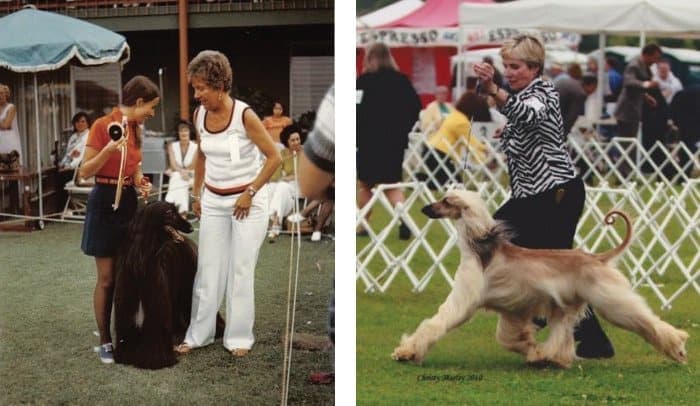
Sandra Frei: Like my mother, I have always adhered to trying to breed to the standard. I have carried this philosophy over to my judging. Temperament is of utmost importance to me. We work hard on socializing our puppies from a young age. We put them on a very fine martingale leash at eight weeks of age and teach them how to walk on a leash by following their mother on a short walk. It takes around two to three days to leash-train them using this method.
Sandra Frei: Currently, we have five Afghan Hounds, ranging in age from one year to nine years. We have “SJ” and his sister, “Milky Way,” who just turned a year; “Zolton,” who is five; and “Cooper” and his sister “Rylie” who are nine. At night, they sleep in the kennel, but in the morning they come in the house to chew on their bones. We try to take several of them on walks in the morning when the weather is nice.
The main house has a detached garage with an apartment that Dave and I turned into a kennel when we first moved from California to Woodinville, Washington. There are six 15-foot indoor runs. Each dog has its own raised bed. Each run goes out into a 20-foot covered, outdoor run, and each outdoor run has a gate that opens up for them to run over a grassy, fenced half-acre. There is also a fenced-in sports court off the kennel for them to run in.
The garage has a built-in, raised tub for bathing. There is a raised grooming table along with several standing dog dryers. I have two large, stainless steel veterinary cages that my mom had that we use for storage and cage-drying. There is a sink for washing dog bowls, and a washer and dryer in the kennel area as well.
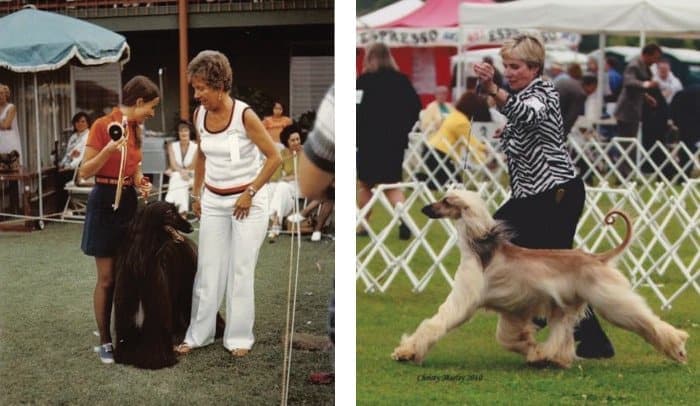
For me/us: the dogs that we have carried on with are all an extension of my mother’s breeding. I attribute the success that Stormhill has had over all these years to the development of a strong bitch line that started with Ch. Stormhill San Dahl, a daughter of Ch. Stormhill Silver Dream. “Dahl” was bred to Ch. Shirkhan of Grandeur, which produced the famous Multi BIS & SBIS Am./Mex. Ch. Pandora of Stormhill. All of our pedigrees go back to her. Currently, the stud dog that has had the biggest influence on the dogs we have carried on with is Ch. Pahlavi Puttin’ on the Ritz, “Taco,” who was bred and owned by Karen Wagner.
A dog I bred and co-owned, Ch. Stormhill’s Red Zinger, is the top Agility Afghan in history. “Zinger” was owned by Robin Kletke, Robin Cohen, and myself. Zinger was trained by and earned all his MACHs and PACHs with Robin Kletke. He retired with 12 MACHs and four PACHs which, I believe, is a record that will never be broken.
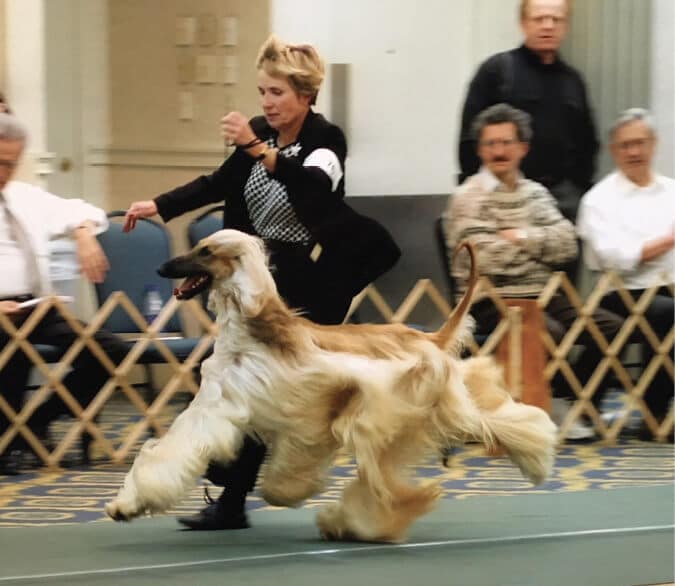
Sandra Frei: I’m really a strong believer in participating in both Conformation and Performance events. It’s good for their minds. Aside from Conformation, we have participated in Agility, Obedience, Rally, Lure Coursing, FastCAT, and Therapy Dog. To me, the hardest Performance event has been Agility. They can be perfect in class. Then you take them to a trial and sometimes they do great, but then other times, they trot around like they’re in the show ring, maybe even taking an obstacle or two. As frustrating as it is, we enjoy the people we have met through our involvement in Agility, and the fact that the dogs are judged on their ability.
I’m really a strong believer in participating in both Conformation and Performance events. It’s good for their minds. Aside from Conformation, we have participated in Agility, Obedience, Rally, Lure Coursing, FastCAT, and Therapy Dog. To me, the hardest Performance event has been Agility.
Sandra Frei: I would say temperaments are much improved. I think there are some nice dogs out there; however, more attention needs to be focused on structure. Afghans are supposed to be square, which means they should appear balanced when standing and moving. Also, there needs to be more attention paid to soundness.
Sandra Frei: This is a hard question. I think the pandemic, and now inflation and the price of gas, have definitely caused people to rethink their priorities about their involvement in the sport, and which shows or events they choose to attend. We are definitely seeing a decline in the number of litters produced and the number of dogs being shown, particularly in the West.
Today, most of the Afghan litters being bred are on the East Coast. Thus, their entries are larger at most shows and they are able to finish their dogs more easily than we can here. Many of the shows we attend have, maybe, one to six Afghans entered at any given show, if that. It’s nearly impossible to finish a dog locally on a timely basis because of our low entries and lack of majors. At our most recent Evergreen Afghan Hound Club Specialty, we saw our first major in two years, and it was only in dogs. Sadly, the numbers in our breed are dwindling nationwide because breeders have either stopped breeding due to their age or a change in living conditions, or have switched to another breed, usually one that requires less maintenance.
To tell you the truth, I am not sure how we bring newcomers into our breed. However, in the past couple of years here locally, we have had several newcomers to the breed who are showing their dogs in Conformation. All three have joined our local specialty club. Along with myself and other members of our club, we have made a point of introducing ourselves and answering any questions they may have.
Sandra Frei: I fall into that category of aging breeders. Not sure where I’ll be. When I think about breeding, I do the math. How old will I be when they reach 12 to 15 years of age?
Sandra Frei: I am retired. Truthfully, my hobbies now pretty much center around the dogs. I feel blessed to have met so many wonderful people through my involvement in the sport. Judging our breed has taken me to many corners of the world and allowed me to meet many talented breeders from other countries, as well as judge their beautiful dogs.
In closing, I would especially like to thank Terri Vanderzee and her mother, Mary Offerman, for all their help, support, and guidance, which has contributed to Stormhill’s continued success.
The best way to ensure a long and happy relationship with a purebred dog is to purchase one from a responsible breeder. Not sure where to begin finding a breeder? Contact the National Parent Club’s Breeder Referral person, which you can find on the AKC Breeder Referral Contacts page.
Did you know nearly every recognized AKC purebred has a dedicated rescue group? Find your new best friend on the AKC Rescue Network Listing.
Showsight Magazine is the only publication to offer dedicated Digital Breed Magazines for ALL recognized AKC Breeds.
Read and learn more about the independent Afghan Hound dog breed with articles and information in our Afghan Hound Dog Breed Magazine.

Meet the Breeders