Members
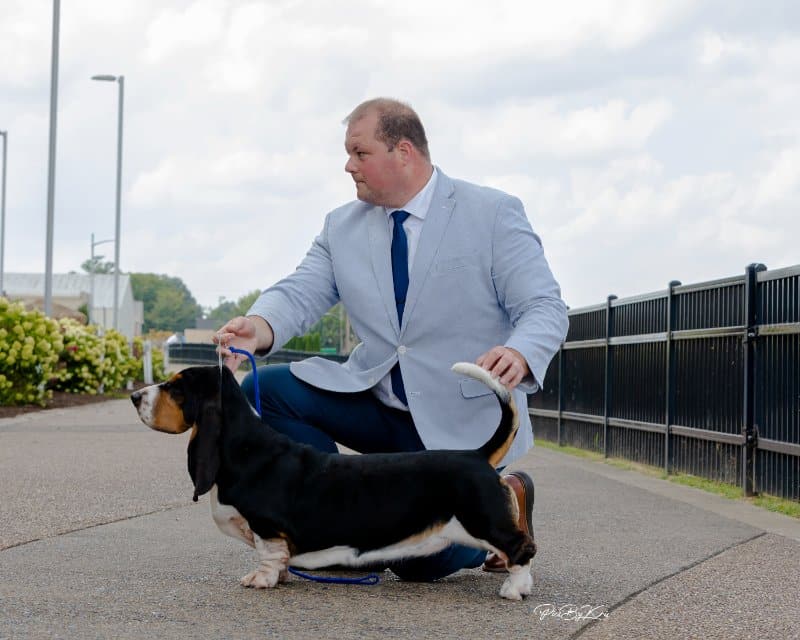
Matt Hess is the breeder behind the Bedrock Bassets. Read about the kennel’s beginnings, the champions, the puppies, and more!
The Weekly Brief
The best of SHOWSIGHT editorials, weekly wins, and breeder commentary — delivered to your inbox every Sunday morning.
Matt Hess: I live in Versailles, Indiana. I have been in dogs for 30 years, 25 years as a breeder.
Matt Hess: My kennel name is Bedrock Bassets. I currently keep four dogs.
Matt Hess: GCH Clanwillows Centenary Pride (Eddie) and Lussy Grand Grades (Gradey) have been my noteworthy winners. Both were handled by me, but bred by two different breeders.
Matt Hess: My most influential dam has been Bedrocks Yaba Daba Doo. She was the foundation of my Basset Hounds and has since produced a couple champions in the show ring, and her offspring are now producing champions.
Matt Hess: I have a 12-kennel run that is heated and cooled. The runs are 8 ft. wide by 30 ft. long. I hire someone to whelp my puppies because I am on the road showing almost every weekend. They raise the puppies indoors in their whelping room.
Matt Hess: I wait until puppies are 6 weeks of age. I begin to look for personalities at this age. I then begin to look at overall conformation at 8 weeks of age. By 12 weeks of age, I can determine which ones will have the personalities along with the conformation for the ring. I look for solid toplines, good tail sets, nice wrap-arounds in the front along with solid fronts, nice sternum, angulation, and length of ear along with ear set. Heads have parallel plains and the muzzle is in proportion as well. Shoulders are also important, so I make sure that they have the correct shoulder set.
Matt Hess: I compete in Conformation only.
Matt Hess: Only the Breed Standard is in mind when breeding; the Standard for the conformation ring. I always keep in mind: “Can the dog do what it is bred to do?”
Matt Hess: This is important when showing a dog in Conformation. You want to make sure that your dog is looking its best when it is performing in the ring. The physical look and emotional performance mean a lot. You want a dog that has a nice coat and is groomed properly. You want the dog to be toned, with well-developed muscling, not flabby or with excess skin. The dog can make it around the ring while proudly presenting itself with the head held high. Food plays a big role in conditioning as well. You want to make sure that they are getting the proper nutrition and that the food is providing enough vitamins to keep the coat healthy and vibrant.
Matt Hess: The biggest health concern in Basset Hounds would be their eyes and the Lafora testing. They can develop cataracts and they can also carry a gene called Lafora. This is basically epilepsy. There are no special nutritional needs necessarily.
Matt Hess: I feel the breed doesn’t have enough preservation breeders. We have a few larger kennels in the breed that have produced nice quality dogs in the past but haven’t produced as much recently, though they do continue to produce top dogs. I feel we need more options in the gene pool to continue the quality of the Basset.
Matt Hess: Yes, the Basset Hound is a loving and loyal hound. They do very well in a family setting with children. They are loyal and loving companions. Older couples do well with the breed as well because the breed is smaller in stature and is easier to maneuver versus a larger breed.
Matt Hess: The biggest misconception is that Bassets are barkers. This actually isn’t always true. The most they bark is when someone pulls up to the kennel or when they are alerted by a strange animal in their area. Most people think they smell, but the best-kept secret is that it is possible to keep the yeast out of the wrinkles if properly cared for.
Matt Hess: Please keep in mind that these are dogs that are supposed to have sternum and they have a height standard. The Basset is supposed to be a hunter and is low to the ground. They have to be able to break through the brush to get to the rabbit. They need sternum to help break through the rubbish and they need the correct length of ear to help gather the scent.
Matt Hess: Align yourself with someone who has been in the breed for many years and who has produced top-quality dogs. They will help you go further with your breeding program and help you succeed.
Matt Hess: When one of the Bassets bays, they all bay together. You then have an orchestra—ha ha!
The best way to ensure a long and happy relationship with a purebred dog is to purchase one from a responsible breeder. Not sure where to begin finding a breeder?
Contact the National Parent Club’s Breeder Referral person, which you can find on the AKC Breeder Referral Contacts page.
Did you know nearly every recognized AKC purebred has a dedicated rescue group? Find your new best friend on the AKC Rescue Network Listing.
Showsight Magazine is the only publication to offer dedicated Digital Breed Magazines for ALL recognized AKC Breeds.
Read and learn more about the Basset Hound dog breed with articles and information in our Basset Hound Breed Magazine.
If you enjoy the Basset Hound Breed Magazine, help us educate the community by sharing it.

Meet the Breeders