


The AKC (American Kennel Club) recognizes just over 200 breeds as of mid-2025, with the Danish-Swedish Farmdog joining the ranks this year as breed number 202. The process of breed recognition in the US—under the AKC banner—is a journey that does more than just rubber-stamp a breed’s legitimacy. The steps for full recognition are mandated on the basis that any new or emerging breed in the United States must balance a sustainable population of quality dogs alongside the commitment to growing a breed’s community of fanciers who, together, may work toward proactively stewarding the breed’s future.

In many ways, the AKC holds the keys to the castle: fully recognized breeds under the AKC are given the privilege of parity between the other major kennel clubs—FCI (Fédération Cynologique Internationale), The Kennel Club (UK), and Canadian Kennel Club—and the process for full recognition is unique as the provisional status grants individual dogs only an AKC Recording of a dog, with only minimal guarantee that the dog’s pedigree will benefit from the reciprocity between the other organizations. The vast size of the US makes establishing a sustainable population for a rare breed uniquely challenging, and there is a responsibility to ensure that a breed’s population is sustainable before a breed and its community can move forward. In this, the AKC’s role isn’t about gatekeeping; it’s about establishing a framework where breeds—and their people—may succeed long term.

The process to attain “Full Recognition,” defined here as a breed that has joined one of the seven AKC Groups and is no longer participating in AKC’s Foundation Stock Service (FSS) or Miscellaneous Class (MISC), is a framework that helps rare breeds move from obscurity toward stability, supporting health, community, and long-term viability. Sure, the process catches criticism: some say it’s too bureaucratic, others say it isn’t thorough enough. But in reality, these requirements are guardrails and they exist to make sure the breeds we love are set up to thrive, not just today but for generations to come. Our dogs are not experimental projects or fads; these are established breeds with real history and legacy, and they deserve that acknowledgment within the AKC.

The breeds in AKC’s Foundation Stock Service and the Miscellaneous Class share space in AKC Open Shows, but that’s often where the similarities end. Wildly diverse in phenotype, purpose, and history, these breeds are headed for different destination Groups once fully recognized. There’s no magic formula that separates a breed in FSS from one already fully recognized. Often, the only difference is timing. Some breeds caught on early in the US, carried over with immigrant communities in the 18th and 19th centuries. Those populations grew before the devastation of the World Wars, which permanently impacted the populations of many breeds overseas. The breeds in FSS and MISC today are often ones that struggled in their country of origin, either because their original purpose faded in modern times or because they never fully recovered post-WWI and WWII. Countless breeds—the Drentsche Patrijshond (FSS), the Bracco Italiano (Sporting), Norwegian Lundehund (Non-Sporting)—are among those whose fanciers have been tasked with rebuilding their populations and sharing their breed’s story with the wider world.

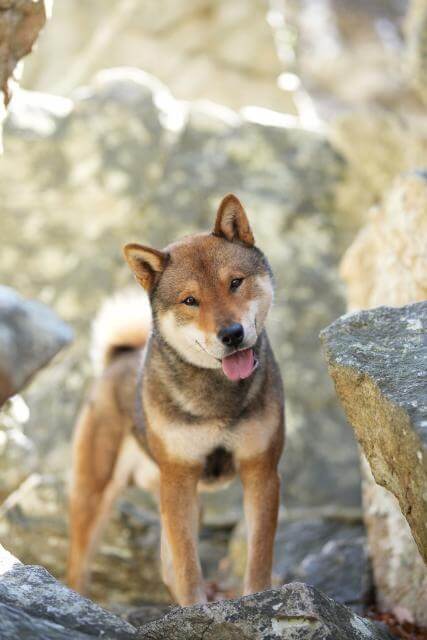
Other breeds are landraces or plainly non-Western breeds—dogs best understood through the lens of their homeland’s culture, function, and history rather than a European-style registry system. Preserving these populations, even here in North America, is an act of love and respect from their fanciers. These are dogs shaped by geography, climate, and the needs of the communities they’ve lived alongside for generations: bred with intentionality, often according to deeply held cultural values about temperament, utility, and soundness. What’s “new” isn’t the dog itself, nor the existence of selection criteria or kennel traditions, but simply their arrival into the Eurocentric concept of a dog show: rings, ribbons, and written Breed Standards designed to codify type visually. Think of breeds like the Azawakh (Hound), the Thai Bangkaew (FSS), the Korean Jindo (FSS), or the Shikoku Ken (FSS). These are living pieces of cultural heritage—dogs whose histories are measured in centuries, not registries.

Other breeds in FSS are quite modern; my own breed, the Eurasier (FSS), is one of them. The first Eurasier litter was whelped in 1960; at the time, the breed was a deliberate cross between the Wolfspitz (Keeshond) and the Chow Chow. By 1973, the Samoyed had been introduced to the gene pool and the breed was accepted by the FCI. The Kromfohrländer (FSS) is another example, as is the Japanese Terrier (FSS). Both breeds found their footing in the aftermath of World War II. The Kromi traces back to a single dog, Peter: originally an American troop mascot in Germany who caught the eye of dedicated fanciers and became the foundation of the breed. The Japanese Terrier’s history begins earlier, with smooth-coated terriers brought from the Netherlands and crossed with endemic Japanese dogs. It rose in popularity between the 17th and early 19th centuries, then nearly vanished in the years that followed. That rise and fall tells us something about Japan, about Europe, and about the long shadows that war can cast over even the smallest things.

These breeds may be modern in some respects, but they carry the same weight as older ones: a sense of being shaped by people, place, and time. Their stories remind us that dogs don’t just survive alongside humans; they reflect our values, our changes, our resilience. Breeds like these began with mixed ancestry, but they became something more through purpose, record-keeping, and a commitment to integrity and care. That’s what makes them breeds, not just random-bred dogs.
Admittance into the Foundation Stock Service (and this does stand in contrast to the popular understanding) can be secured with an application form and a dream. The FSS was designed to give emerging breeds a structure in which to grow. There’s no requirement that a national club exist yet, and no demand that the population be thriving. There is, however, an expectation that the breed itself be legitimate. Breeds already recognized by the FCI often have an easier path, since their legitimacy has been evaluated through an international process that the AKC respects. In those cases, the AKC reciprocates by offering entry into FSS: a provisional space where pedigrees can begin to be recorded and a community can take root.

For breeds founded in the United States, the expectations are stricter. If a breed intends to pursue FCI parity down the line, the AKC is its only real path. As such, the AKC requires that breeds endemic to the United States have at least 40 years of history and three generations bred without outcrossing to their breed’s foundation stock. These breeds must also choose names that do not conflict with any existing AKC breed and must gain approval from the national parent clubs of any breeds from which they descend. That process is careful by design: the goal is to ensure that emerging breeds have a stable foundation and a clear identity before they begin their journey within the AKC.

The AKC FSS is, in and of itself, a tremendous opportunity for breeds and communities that want to align with a national kennel club. Dogs recorded in FSS are eligible to compete in a wide range of AKC Companion Events—everything from CGC (Canine Good Citizen) and Fit Dog to Agility, Rally, and Barn Hunt. Unlike the Canine Partners program, which is designed for mixed breeds and requires dogs to be spayed or neutered, FSS allows intact dogs to participate. That distinction matters. It gives fanciers a way to preserve lines while still enjoying the sport—and it gives the public a chance to meet and fall in love with breeds they may never have encountered before.
In recent years, the opportunities for FSS dogs have continued to grow. As of 2025, breeds in the Herding Group became eligible to earn prefix titles in herding-specific events, including Herding Championships. Per the November 2024 AKC Gazette, FSS breeds are now eligible to earn prefix titles in certain Performance events—provided they meet the eligibility criteria for that sport. Not every breed will be eligible in every venue; those requirements still apply, fully recognized or not. But for many rare breeds, especially those with active sport communities, this expansion provides meaningful ways to showcase their dogs while remaining intact. It’s an ideal middle ground for some: recognition through sport and visibility, even if full recognition isn’t the immediate goal. After all, just being able to compete, participate, and represent your breed publicly is a powerful act of preservation on its own.

The trick is, of course, in the community. A breed can remain in FSS indefinitely, and the AKC won’t force a timeline. But that doesn’t mean clubs should stay passive. Once a breed begins to take root in the US, the next step should be forming a parent club. That club will eventually act as the breed’s voice, responsible for maintaining the Standard, promoting breed health, and guiding ethical breeding practices. It also matters for a practical reason: the AKC will only designate one parent club per breed. If multiple groups are vying for that role, the AKC won’t step in to choose; they wait until the breed community can unify. That means early cooperation is essential. Internal conflict and infighting can stymie progress and damage credibility. Developing core values, ethics, and a shared vision for the breed is one of the most important steps any emerging breed can take.
Every breed’s culture is different; some are tight-knit, others are scattered across coasts and continents. But even with those differences, the most successful communities are the ones that know how to collaborate and acknowledge that a single breeder cannot carry a breed forward alone. It takes coordination, shared responsibility, and a commitment to stewardship that puts the breed first.
Some steps in the recognition process are straightforward paperwork: well-organized, thoughtfully composed, and mostly administrative—but still paperwork. A five-year plan for the organization, judges’ education, and the Breed Standard are all required, but there are other mandatory requirements for full recognition that require measurable proof that a breed has the momentum and manpower for a sustainable future. The FSS/MISC breed parent club must have a minimum of 100 (household) memberships, breeders must produce 20 recorded litters within a five-year period prior to full recognition, and, of course, 10 Certificates of Merit (CM).

The goals of a sustainable population, a sustainable interest in the breed, and a club with the foresight to plan for the future are the three pillars that all breeds should aspire to uphold.
For a breed to be considered for full recognition, there must be a minimum of 10 Certificates of Merit (CM) titles earned by dogs owned by members of the AKC Parent Club. A CM is a suffix title that is earned when dogs are awarded 15 points when exhibited in Conformation. Dogs within the FSS and MISC may earn those points in the Beginner Puppy ring at the Breed or Group level, as well as at AKC Open Shows. Breeds in the Miscellaneous Class may also compete in AKC all-breed shows in the Miscellaneous Class ring. The title does not require any majors, and puppies may begin earning points toward their CM as young as four months old. As of April 2025, the AKC has clarified that CM levels (such as CM2, CM3, etc.) earned by parent club members will count toward the minimum requirement. However, in practice, building a sustainable community of dogs and exhibitors—not just relying on a small number of high-achieving individuals—is still vital. The opportunity to put dogs in front of more judges and exhibitors by traveling to all-breed shows to participate in the Miscellaneous Class is helpful during this phase, but only when the other requirements have been met: if you are struggling to find competition to finish off those 10 Certificates of Merit, depending upon your breed and the regions you are competing in, a longer stay in Foundation Stock Service is not without its own merits.
As of mid-2025, there are only 16 breeds in the Miscellaneous Class, compared to 75 in the Foundation Stock Service, and that disparity has relevance when planning for a breed’s advancement. When you enter an Open Show while your breed is in FSS, your chances of earning points are often better—simply because there are more breeds, and more dogs, entered in that group. The entries may be singular dogs of their breed, but they add up! That’s basic math: the more dogs you defeat, the more points you earn. Once your breed enters the Miscellaneous Class, the group gets smaller. Your only competition are the other Miscellaneous breeds, and if you’re the only one entered, there’s no one to beat and no points to earn. Ideally, a Miscellaneous Class breed will have multiple entries in their breed, for stiffer competition at the Best of Breed level.
At Open Shows, the Best in Open Show winner is chosen from the Group One winners of both FSS and MISC. That means a strong entry in FSS, where the Groups are deeper, can give you a better chance at racking up points. Once you move into Miscellaneous, that advantage often disappears. It’s not that the MISC breeds are stronger or weaker—it’s that there are fewer breeds, which means fewer opportunities to earn the wins needed for recognition. This isn’t an argument for staying in FSS forever, but it is a reason to think tactically. The move to Miscellaneous should happen when your breed has the numbers, consistency, and support needed to hold its own in a smaller, more competitive Group. Progress is good. Strategic progress is better.
To deviate back to a prior point: Certificates of Merit that are earned on dogs that do not belong to members of the AKC parent club do not count toward full recognition. A breeder who is “outside” the club, regardless of the achievements with their dog, are not taken into account when considering a breed for full recognition with the AKC. It is vital that a rare breed pursuing full recognition finds a common ground and a shared code of ethics among themselves; losing key breeders and exhibitors because they are not members of the parent club does not benefit the breed in the short or long term. Their efforts are their own, but the club, as the representative and steward of the breed, will not benefit from those efforts without maintaining a collective of members.
Full recognition is the final step in the process, but is also, in so many ways, merely the next step in a life-long commitment to your breed. When the parent club requests full recognition, the club membership must exceed 100 households, with a minimum of 300 dogs recorded with the AKC. During their time in the Miscellaneous Class, they must have hosted AKC Open Shows, which supports other emerging breeds in the process, conducted judges’ education seminars, and provided the materials necessary for judges’ education. The club is required to submit an AKC Health Statement and, as mentioned, the breed must have produced a minimum of 20 litters in the prior five years as well as have a five-year plan for the future. The Miscellaneous Class is a victory lap as full recognition approaches, emphasizing that the breed is here and has a vibrant community and history, and it is a time meant to attract other enthusiasts within the fancy alongside educating spectators and judges alike. The first year of full recognition is one where these newly recognized breeds are granted the opportunity to step into the limelight and earn their first AKC Conformation Championships. They may hold National Breed Specialties and are able to enjoy the spotlight.

Full recognition comes with the responsibility to maintain the integrity of your rare breed; no breed is magically popular nor prolific at the time of recognition, but maintaining interest in the breed, having the manpower to deal with an influx of interest, is always a concern, as is preventing unethical breeders from getting a foothold in the breed. This is a universal good: in much the same way that each breed is held to their Standard based on their merits as an individual, the presence and preservation of one breed does not inhibit the futurity of another. The breeders and exhibitors of the AKC FSS/MISC community all feel they’re in this “club” for the long haul, so by networking with other people in other rare breeds you are afforded the opportunity to learn a lot very quickly about sustainable population management, how other breed communities are growing interest in their breeds, and how they are promoting the history and purpose for which their dogs were bred.
The most important takeaway is that the AKC FSS/MISC community is a great way to enter the world of purebred dogs, but it is just that: a community. Progress made by individuals who are not members of their respective parent clubs, however worthy their accomplishments or their dogs, are not aiding in the process toward full recognition, as the AKC only considers the number of households (members) in the parent club and the Certificates of Merit earned. While the number of dogs and the number of litters play an important role, these will come with time in a robust community; failing to be a part of the community is not an asset on the way to recognition, much in the way that fully recognized breeds that do not work cohesively will struggle to maintain their populations.
The process of breed recognition is rigorous and depends heavily on community building, both within the breed and across the broader dog fancy. Breeds thrive when experienced exhibitors take an interest in them. Many dogs in FSS and MISC are first- or second-generation—often imports from their country of origin—and are typically owner-handled by breeder-exhibitors. Since AKC Open Shows prohibit professional handlers from exhibiting dogs they don’t own, these rings are often full of novices who are balancing the responsibilities of their breed with learning a sport that can be intimidating to newcomers.
Fortunately, Open Show culture tends to be welcoming, supportive, and enthusiastic. Many all-breed clubs and show chairs are committed to offering space at their clusters for these events, ensuring that even the greenest handlers feel encouraged. There’s a great deal to be learned ringside, as exhibitors share what they’re doing as breeders and club members to promote their breeds. Despite competing in the same Group, these dogs couldn’t be more different—there’s nothing like seeing a Russian Tsvetnaya Bolonka and a Pyrenean Mastiff side by side in the ring. It’s a privilege to watch these rare breeds move forward together.
It’s easy to think that breed recognition is a concern only for the fanciers directly involved in those emerging breeds, but in reality, the process of recognition (and the healthy growth of rare breed communities) benefits the entire purebred dog world. Every single one of our breeds, whether widely beloved or scarcely known, relies on the same foundation: dedicated fanciers, sustainable populations, ethical breeding, and robust clubs that can steward the future.
Bringing new breeds into the AKC isn’t just about honoring history; it’s about ensuring the future of the sport itself. New breeds mean new exhibitors, new club members, new volunteers, and new mentors. They bring fresh energy into the fancy, fill stewarding roles, and inspire the next generation of dog people, whether they’re Juniors, pet owners turned exhibitors, or seasoned handlers looking for their next adventure.
So why should established breeders and fanciers care about the process of AKC recognition for new breeds? For the same reasons we all care about preserving purebred dogs in the first place.
We all share challenges beyond whether a breed can earn an AKC Championship. Our commitments to breed education, responsible pet care, ethical breeding, health testing, opposing harmful legislation, and preserving our dogs must extend beyond Group boundaries and breed names.
The more robust and diverse our community is, the stronger we all are.