Members
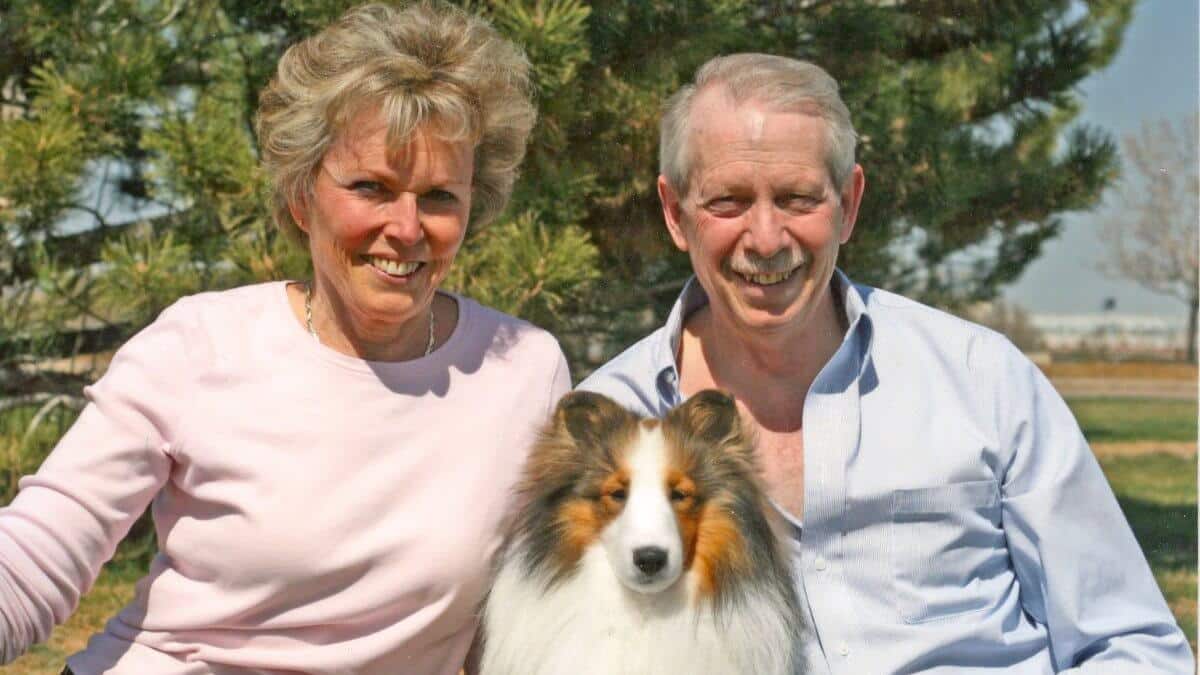
2025 AKC Herding Group Honorees Sylvia and David Calderwood of Kensil Shetland Sheepdogs discuss preservation breeding and more.
The Weekly Brief
The best of SHOWSIGHT editorials, weekly wins, and breeder commentary — delivered to your inbox every Sunday morning.
Sylvia Calderwood: I originally went into Shetland Sheepdogs because they were so sweet and gentle with children. I got my first Sheltie when my three little girls were under the age of six. I got interested in Obedience training and my Shelties were very biddable. From performance, I graduated into Conformation, and once I was hooked I started a breeding program. What sustained my interest? Sweet, biddable, smart, gentle… all boxes were ticked.
David Calderwood: Early on in my Professional Handling career, I’d met a Sheltie breeder who became my mentor in the breed! She had two bitches she was training for Obedience, and while training one bitch, the other bitch watched. When it came time for the second bitch to be trained, she already knew the fundamentals of basic Obedience! When I started to show her Shelties, I found them so easy to train that I now consider competing in Obedience with a Sheltie to be almost like cheating because they’re so easy to train! Since then I’ve learned that ease of training a Sheltie is not only because of the breed’s high intelligence but also because of their willingness to please! I’ve known other breeds that were highly intelligent, but they didn’t have that
willingness to please!
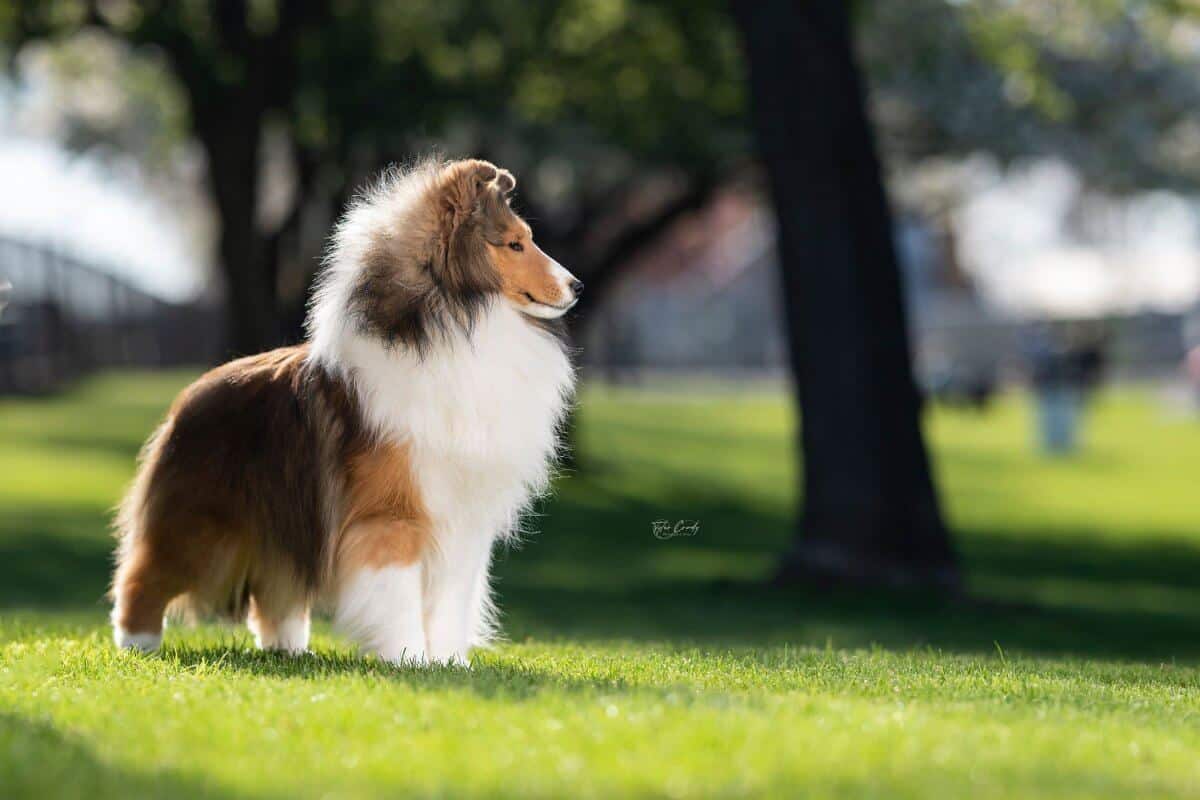
Sylvia Calderwood: I determine what it is that needs correction or improvement in the dogs I’m working with, then I find a male whose puppies are strong in that area. Size is the first criteria in a breed with size DQs. If the pup is in size for its age, has a good bite, testicles if male, and a strong personality, they are contenders. Then, as they grow, if no major faults appear, they stay within the size range for their age, and their temperament stays strong, I can usually show them by nine months of age.
David Calderwood: We’ve had a line of Shelties that were prepotent for excellent movement but were lacking in a detail we needed! We would go to our National every year knowing where our Shelties needed improvement and, while there, we would watch all the classes, including the Puppy classes, and look for the Shelties that had what we were lacking! Then we would look at the pedigrees of those dogs, and if we found one sire consistently producing that attribute we’d breed every bitch in our kennel to him! We’d keep the puppies that combined the movement we already had with the attribute we needed!
Sylvia Calderwood: I don’t lease bitches to others. If that bitch should be bred, she’ll be bred at home. When I rehome the girls at about 6 or 7 years, they are spayed. I do make my male’s semen available for quality bitches, owned by people who are students of the breed.
David Calderwood: We’ve always made our dogs available for stud service by artificial insemination. However, we’re clutchy with our bitches! As a Professional Handler, I was taught the most important thing was the mental and physical health of the dogs and I’m very partial to bitches! Because of that, I feel a great responsibility for their well-being and safety. Even when placing a bitch after her breeding career is over, we’re exceedingly particular about her possible new home, even though we feel they deserve a retirement home and a couch to sleep on!
4 The Breed Standard is the preservation breeder’s most essential tool. How would you summarize the importance of breeding to the Standard and presenting the breed in the ring accordingly?
Sylvia Calderwood: The Shetland Sheepdog Breed Standard has a DQ for size. This impedes, but also protects, the breed. Many of our best-quality pups are lost to being over and under size. The breed doesn’t breed true, and if it were not for the DQ it wouldn’t take long to see a huge deviation in size. Even though the Sheltie Standard is very well written, there’s still room for interpretation. You’ll see one group saying they should have strong head detail, and another group will place more emphasis on body structure and movement.
David Calderwood: When I began to judge, I studied the Breed Standard like never before and wanted to judge the whole dog, not just structure or just type but the whole package! Our Standard isn’t as wordy on head detail as the Collie Standard, but the Sheltie Standard describes the same essential head detail in fewer words as the Collie Standard (with some essential differences) and our Standard also describes structure in great detail. The AKC stresses understanding each Standard by understanding each paragraph, then each sentence in that paragraph, then each word in each sentence! Since one word can change the meaning of a sentence, it’s important to understand a Standard in that way. In other words, it’s important to understand the “detail” of every Standard, and the people who do will have a far greater understanding of each breed!
As far as presenting a breed according to the Breed Standard, not everyone has the God-given ability to present a dog according to its Standard because that takes artistic talent in a coated breed as well as being able to get into the dog’s head! I learned a very long time ago that I was far better at presenting some breeds than other breeds, and I was fortunate that I was good at presenting the breed I loved the most!
Sylvia Calderwood: When I tell people that I used to be a Professional Handler, like they see on the dog shows on television, they understand right away. I think televised dog events are the best use of our advertising resources.
David Calderwood: I totally agree with Sylvia on this question that televised dog events are highly important to promoting purebred dogs! However, since retiring from Professional Handling, I got involved with the battle of opposing the animal rights agenda on a local, state, and national level through the National Animal Interest Alliance (NAIA). I’ve attended a number of legislative seminars and gotten to know local and state legislators on a personal level. I’ve also gotten to know a number of animal rights extremists on a personal level as well as their thought process! This has led me to believe that if we don’t go on the offensive by exposing the agenda of the various animal rights groups, we’ll eventually lose the war!

Agility