Members
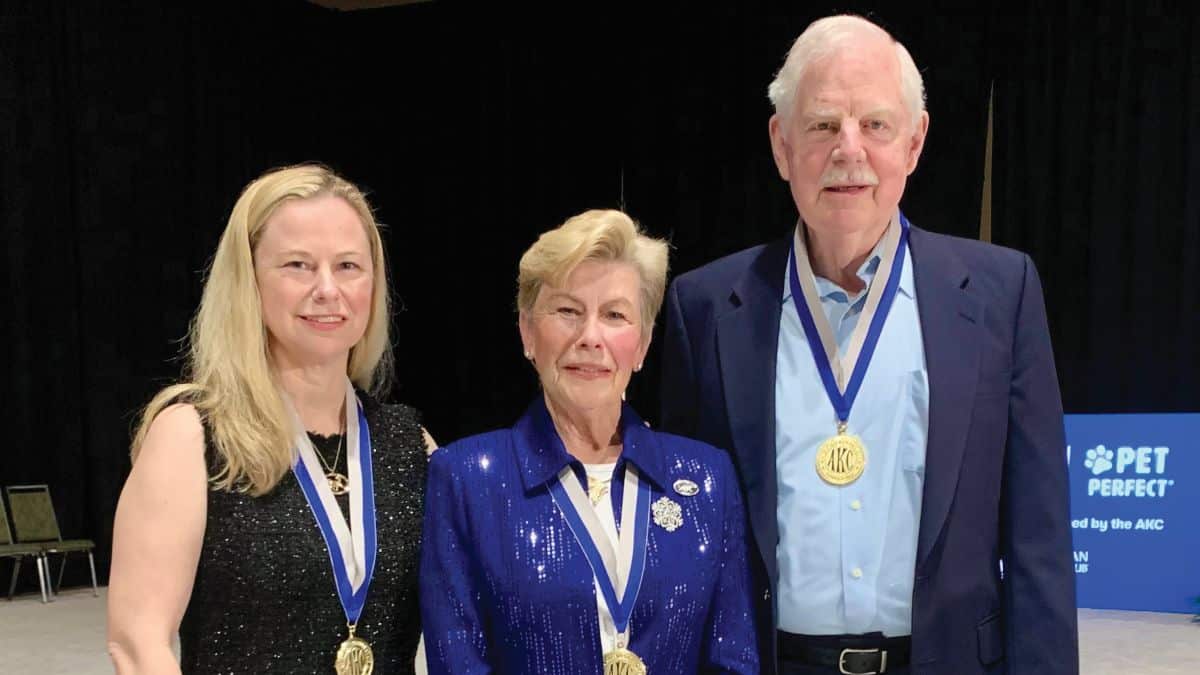
2025 AKC Working Group Honorees Wendy, Randy, and Jennifer Corr of Onak Kennel discuss preservation breeding and the Alaskan Malamute.
The Weekly Brief
The best of SHOWSIGHT editorials, weekly wins, and breeder commentary — delivered to your inbox every Sunday morning.
Wendy Corr: Picture this: a high school summer, the hum of a busy veterinary hospital, and a larger-than-life Alaskan Malamute who—despite needing surgery—radiated pure charisma. That one dog flipped a switch in me. Suddenly, I was chasing down every scrap of Malamute info I could find, connecting with breeders, and before I knew it, I was in Cle Elum, Washington, learning to mush with a team of these powerhouse dogs. My first sled race? Let’s just say I crossed the finish line—face down, knees bruised, but grinning ear to ear. The kennel’s Christmas card even featured me horizontal between the runners! Then a few years later, Randy, my husband, got a Malamute from his brother and that started his path toward meeting me. His brother also purchased a puppy from Tongass’s first litter, leading to our connection and marriage.
Why do I keep coming back? Malamutes are loyal, clever, and just unpredictable enough to keep life interesting. They’re partners, not followers—sometimes they’ll surprise you with their own solutions when the trail gets tough. Every day with a Malamute is a new adventure, and I wouldn’t trade it for anything.
Jennifer Corr: The Alaskan Malamute’s personality, intelligence, and independent nature are what have kept me engaged with the breed for decades. They are dogs that keep you on your toes—never predictable, never dull. Living with them or showing them means that each day can present a new challenge or adventure, and that complexity is part of what makes the breed so compelling.
Wendy Corr: Breeding is a wild blend of science and gut instinct. You can pore over pedigrees and health records, but sometimes you just know when a match is right. Here’s my checklist:
I want dogs that turn heads in the show ring and melt hearts in the community. They need to handle distractions, play nice, and be true ambassadors for the breed.
Jennifer Corr: Selecting a sire and dam is an art that requires careful evaluation of numerous factors. Pedigree plays an important role, as it allows me to identify tendencies within certain lines and anticipate potential strengths and weaknesses. Looking back several generations helps inform decisions, but pedigree alone is never enough.
Each dog must be evaluated as an individual—its structure, temperament, movement, and overall balance—and matched in a way that allows their strengths to complement one another. Health testing and historical health trends within related dogs are also critical considerations. Even when a pairing looks ideal on paper, the dogs themselves may not ultimately complement one another in practice. I tend to favor linebreeding for consistency, while recognizing the value of occasional outcrosses, even though those may produce less predictable results.
When choosing dogs to show, I focus on whether the dog is a quality representation of the breed and worthy of pursuing a championship. For a special, I strongly believe that a Malamute must be capable of performing the work it was bred to do. Key attributes—efficient, powerful movement; correct feet; proper coat; and functional structure—are non-negotiable. The dogs we present to the fancy should clearly demonstrate what the breed is meant to be.
Wendy Corr: Teamwork is everything! But let’s be real—clear communication is the secret sauce. I always recommend written agreements that spell out who’s responsible for what, from vet bills to puppy care. When everyone knows their role, the dogs win.
Jennifer Corr: As the world of breeding continues to grow smaller, collaboration within the fancy has become increasingly important. Successful partnerships require trust, honest communication, and candid discussions about potential breeding matches. Things do not always go as planned, and when they don’t, open dialogue and good intentions are essential.
We need to be willing to have more transparent conversations about the strengths and weaknesses of various lines and to work together—through the use of outside stud dogs and leasing bitches—when it serves the best interests of the breed. Of course, if someone has proven to be unreliable or dishonest, it is natural to choose not to work with them. Ultimately, progress depends on effort and integrity from all parties involved.
Wendy Corr: The Breed Standard is our North Star. It’s what keeps the Malamute true to its roots. As breeders, we strive to produce dogs that embody this blueprint; as judges, it’s about celebrating those who best represent the Standard. That’s how we honor the breed’s legacy and ensure its future.
Jennifer Corr: The Breed Standard exists to guide those who are preserving the breed and to help keep breeders grounded when evaluating their own stock. We have all seen dogs win in the ring that we know are not correct—dogs with exaggerated features that may appeal to less breed-specific judges. However, it is our responsibility as breeders to show dogs that truly meet the Standard, not simply those that win.
Breeders must hold the line and take pride in presenting dogs that represent the breed correctly. The goal should always be to educate and inspire by example, showing others what a proper Malamute should look like—not just what can be campaigned successfully.
Wendy Corr: Let’s bust a myth! Mixed breeds aren’t automatically healthier. Purposeful breeding means you know your dog’s ancestry, health clearances, and temperament. That’s peace of mind you just can’t get with a mystery mix. Without that background, it’s tough to build a strong bond—and that’s when dogs end up back in shelters.
Breeders aren’t just selling puppies; we’re mentors, guides, and cheerleaders for new owners. With the right support and training, every dog can be a superstar in their family.
Here’s my rallying cry: Don’t breed just for profit—breed for purpose! Education is the game-changer. Before bringing home a dog, people need to understand the lifelong commitment involved. Dogs aren’t impulse buys; they’re family. Training, care, and love are non-negotiable.
Let’s spread the word: Responsible ownership means making thoughtful choices, not leaving shelters to pick up the pieces. When we educate the public, we protect both our breeds and the
dogs themselves.
Jennifer Corr: As a fancy, we can be closed off and unintentionally unwelcoming to newcomers. Each of us shares responsibility for changing that. Taking the time to speak with puppy people, include newcomers in conversations, and help them understand how enjoyable participation can be makes a difference.
Most of us are not professionals, and when we attend shows, we are often using vacation time and emotional energy. Still, the lack of mentorship has contributed to declining participation over the decades. Newcomers are unlikely to stay if they feel uncomfortable, excluded, or perpetually unsuccessful.
We should encourage puppy buyers to attend local club events and experience a fun day out with their dogs while connecting with others who share their interests. It is also important to be less judgmental of those who enter the dog world through All-American dogs or doodles—these may be their gateway into dog sports. By approaching conversations with curiosity rather than criticism, we open the door to broader participation. Some may continue in their chosen sport with mixed-breed dogs; others may eventually gravitate toward a breed that captures their interest.
None of this is possible if we remain exclusionary. We can—and must—do better by setting aside judgment, fostering inclusion, and engaging in open, welcoming conversations that invite others into the world of dogs.

Agility