

Photos provided by author.
Welcome to the wonderful world of our AKC Herding Breeds. I say this after 50-plus years of owning, breeding, training, judging, and passionately loving these wonderful canines!
Let us start with the assumption that herding dogs were bred to move livestock from place to place. Livestock include ducks, geese, sheep, swine, goats, cows/cattle, and reindeer. Living, breathing creatures that want to graze, forage, or flee from predators, the stock will generally move away from a predator (yes, that means “dog”) when it gets too close. Try to picture all livestock as having a safe bubble zone. As long as the herding dog stays beyond the bubble, grazing continues in contentment and quiet. Also, let’s assume that livestock do not necessarily wish to move where the farmer, rancher, or herdsman wants. Hmmm, think about going to market…
We humans found a way to harness the ability of certain dogs to intentionally move or hold livestock (likely inherited from wolf ancestors and other large canids that hunted in packs). Herdsmen who teach their dogs about a dozen commands have a dog worth its weight in gold!
So, what are the basic essentials for a successful herding dog? They include:
When herding dogs were originally being trained, the ones that could do a day’s work were kept… survival of the fittest, and smartest, and the most responsive! Think about that as you evaluate our AKC Herding Breeds.
Kindly also remember that dogs that work livestock must be tough—mentally and physically. Livestock can wreak havoc on a dog that is not smart, sturdy, and fast. Not ALL herding work is the same, and the qualities needed to tend sheep in a pasture without fences are different from what is needed to move large herds by road, or bring geese or ducks to market.
There is no Herding Breed Standard that WANTS thin, flat, splayed feet, structural weaknesses, or unsound gait. Every single Herding breed wants balanced angulation. Every single AKC Standard asks for a scissors bite, with many permitting a level or even bite. Thirteen of the 33 Herding Breeds carry a height disqualification with upper and/or lower limits. For the many breeds described as square vs. a rectangle, those are actual geometric events, based on the work they were bred to perform.
Finally, a common theme among the Herding Group is aloofness or wariness with strangers. Do not take this as unsocialized, fearful, nervous, timid, aggressive, or shy. Expect that as you are sizing up your herding dog, he is sizing you up as well. Approach from the front where the dog can see you. Speak to the handler of the dog. Treat the dog respectfully. Do not expect to be every herding dog’s “new best friend.” Once you begin examining a herding dog, finish it gently and quickly without making a career of it. With the breeds clearly described as suspicious, do the bite exam last, permitting the handler to show the bite.
NOW… let’s talk about the various breeds.
The Australian Shepherd, or “Aussie,” is truly an American breed as it was developed in the American West by Basque herdsmen who migrated from Australia, working massive numbers of sheep imported in the late 1800s. These herdsmen brought their dogs with them and crossed them with generic American sheepdogs. The Australian Shepherd of today was thus created.
The Standard calls for a dog of animation and agility, solid and muscular but not cloddy. Dogs are 20-23 inches tall. Bitches are 18-21 inches. With a silhouette slightly longer than tall, they possess a double, weather-resistant outer coat, medium in length, straight to wavy. Acceptable colors are blue merle, black, red, and red merle, all with/without white markings and/or tan points. These ground-covering, agile dogs converge as speed increases. These are smart, quick learners. While the breed was first admitted to the AKC Herding Group in 1993, the Australian Shepherd Club of America has been registering Australian Shepherds since 1957. AKC 2025 registrations made them the second-most popular Herding Breed.
The Miniature American Shepherd (MAS) was likewise developed in the US from Australian Shepherd stock! History tells us that in 1962, a small female Australian Shepherd puppy was purchased at a rodeo in Torrance, California. When mature, this Aussie was under the standard female height. She was bred to a small Aussie male, and like their shorter parents, the offspring measured a max of 13 inches tall. Today’s MAS is still small (Dogs 14-18 inches; Bitches 13-17 inches). AKC recognized the breed in 2015. This breed has exceptional agility and smooth, balanced movement. MAS share the same general color palette as the Australian Shepherd.
You gotta admire the Australian Cattle Dog (ACD)! This breed is absolutely the toughest herding dog I know. The Standard says it best: “The dog’s prime function, and one in which he has no peer, is the control and movement of cattle in both wide open and confined areas.” This is a powerful, compact, workmanlike dog with well-balanced angulation and broad hindquarters. A strong head with a broad skull, muscular cheeks, and parallel planes with a slight but definite stop, and small prick ears, set well apart, are characteristic. And yes, these dogs can have a warning or suspicious glint in their eye when approached by a stranger. Strong, round bone and well-sprung ribs make a sturdy herder. Moderately-sized ACDs come in two colors: Blue (blue, blue-mottled, or blue speckled with/without other markings) and Red speckle. A free and tireless but not extreme gait caps off this hard worker.
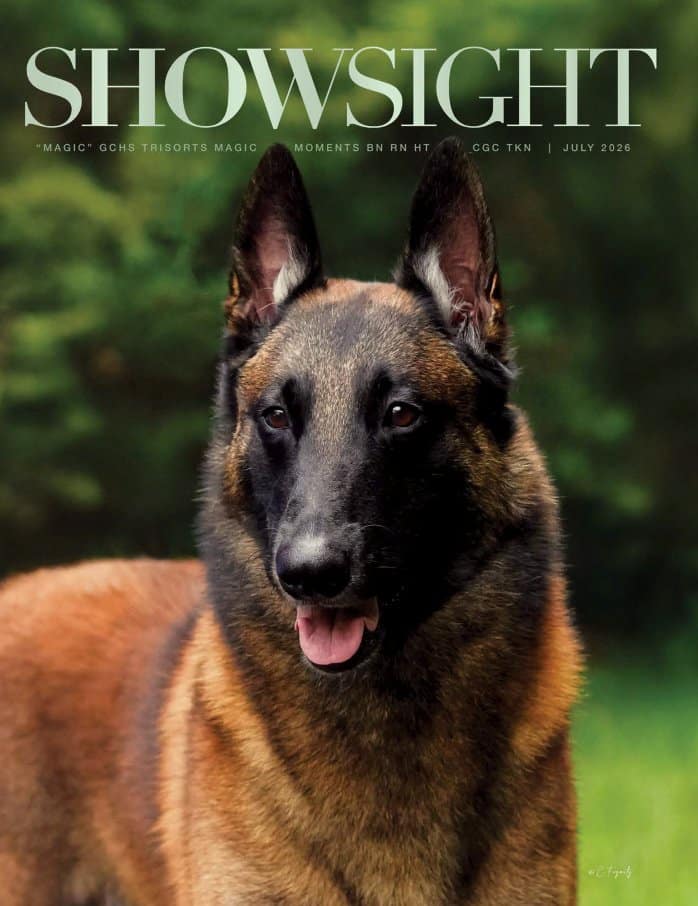
The Belgian breeds (Laekenois, Malinois, Sheepdog, and Tervuren) were developed in the late 1800s in towns encircling Brussels. They are all square herding/farm dogs with varying coat colors, masking, and coat qualities (long-haired, short-haired, or rough-coated varieties), and very alert, with prick ears, clean heads, and dark eyes. Originally registered by the AKC as Belgian Sheepdogs (including the Malinois and Tervuren varieties), the Belgian family tree was splintered into three parts in 1959 when the AKC designated ONLY the long-haired black dogs as Belgian Sheepdogs, renaming the Tervuren variety (long-haired fawn with black masking and coat tipping) as Belgian Tervuren (and adding them to the Working Group). Belgian Malinois (short-coated fawn and black masked/tipped) were relegated to the Miscellaneous Class. Belgian Laekenois (rough-coated red, fawn to grayish color with blackening) were not even noted in the mix. Their AKC Standard went into effect in 2011 in the Miscellaneous Class, and finally received approval to join the Herding Group in 2020. Everywhere in the world, except the United States, these four Belgian breeds are considered as one breed, with varieties often interbred.
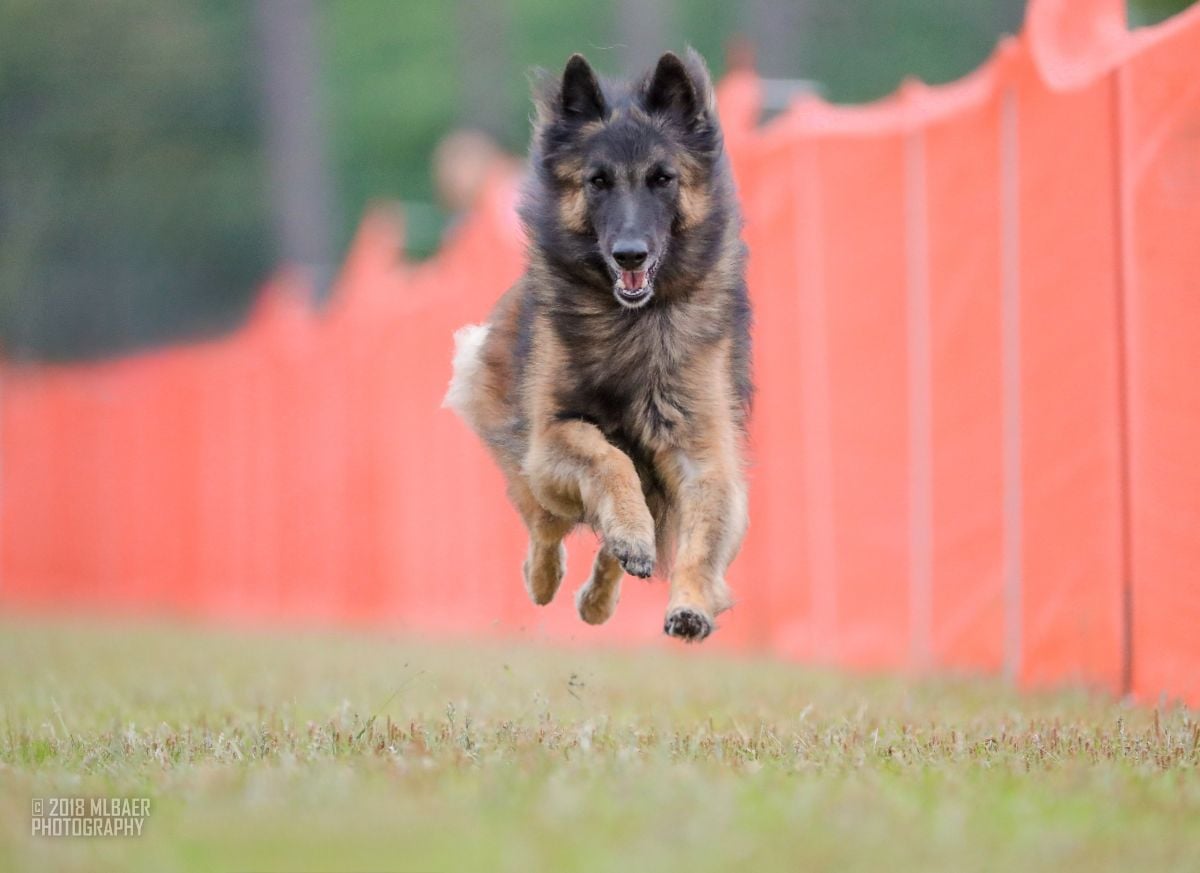
Belgians were originally used to herd on small, unfenced farms in Belgium. The Belgians provided a “living fence.” Sheep were brought to graze in a small field while the dog was used to keep the stock in a designated area, safely and calmly grazing. This is the basis of AKC’s “C Course” Herding competitions. With the advent of modern fencing, and the World Wars, the Belgian breeds were deployed as military and police dogs.
Each of the Belgian breeds has an individual AKC Breed Standard with slightly different DQs in height, bite, and color/markings. Read the individual Standards carefully as the differences are important, reflecting the stewardship of the AKC parent clubs over the course of 67 years since the split. Just as an aside, all four of these breeds have a smile (submissive style grin) accompanied by soft eyes and flattened ears that every Belgian owner recognizes. It is not a sneer, nor is it a threat.
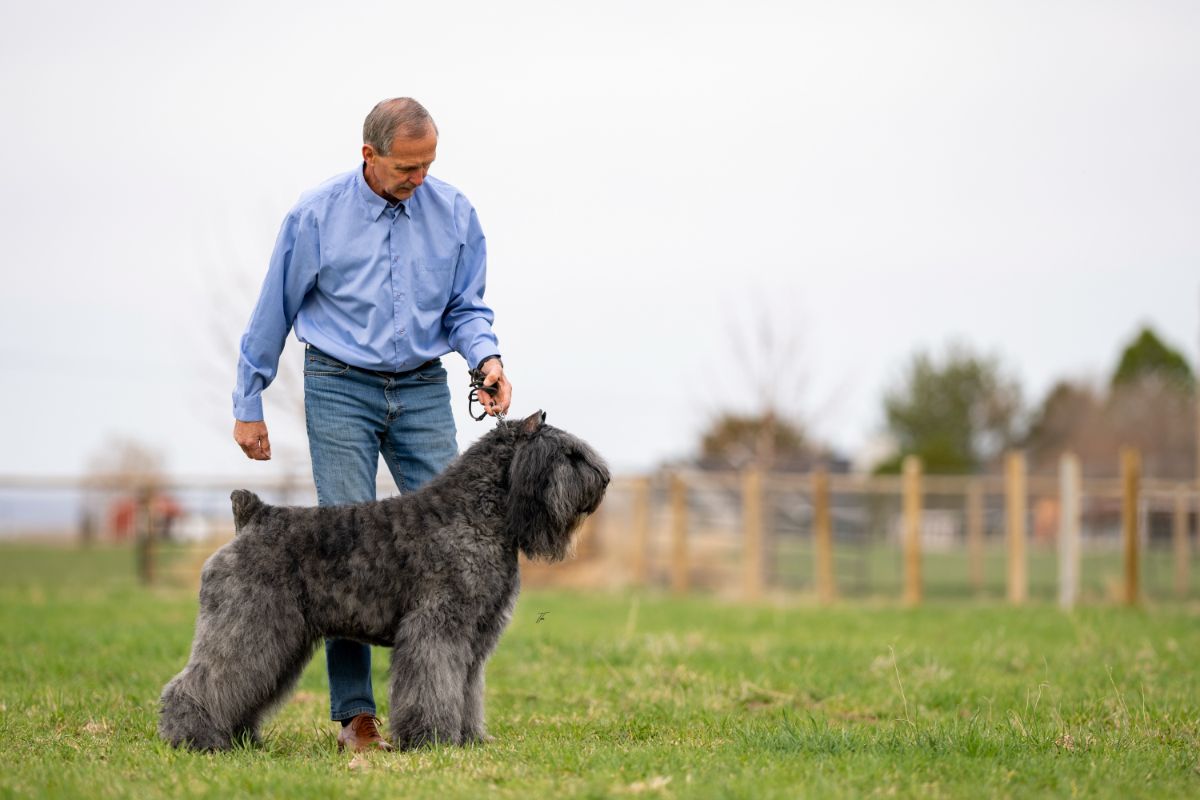
The name Bouvier des Flandres literally means “Cowherd from Flanders.” This is the breed you want standing between you and a gnarly 1100-pound steer. Bouviers are a square, “powerfully built, compact, short-coupled, rough-coated dog of notably rugged appearance.” They have a tousled double coat “capable of withstanding the hardest work in the most inclement weather.” The outer hairs are rough and harsh, and the undercoat is fine, soft, and dense. Color is fawn to black, passing through salt and pepper, gray, and brindle. The gait is powerful, free, bold, and balanced, and they hold a firm topline as they move. When bored, many Bouviers will grind their teeth. This is not poor temperament. In fact, over the years I have found Bouviers to have rather stoic natures and very forgiving characters. However, should a Bouv accidentally “hip” you, hold onto your balance as they are strong (concrete block strong)!
The Beauceron is a sturdy wash-n-wear dog, completely French in origin and hardy enough to move 200-300 head of sheep traveling up to 50 miles daily… guarding them at night. The Beauceron needed solid structure and unwavering endurance. If the dog could not do the job, he/she was not kept nor bred. Intelligent and faithful to master, reserved with strangers but never timid.
Medium in proportion, slightly longer than tall, and colored either Black and Tan or Harlequin (Black and Tan base color with a pattern of blue-gray patches evenly distributed). The coat is 1.25 to 1.5 inches long, coarse, dense, and lying close to the body with short, smooth hair on the head and lower legs. The head is long and well chiseled, measuring about 40 percent of the height at the withers. The tail is long and slightly J-shaped. This is a powerful (not heavy or cloddy) dog. Double dew claws MUST be present on both hind legs.
The Briard is an ancient French sheepdog with roots tracing back to the 8th century. These dogs were bred to be a “living fence,” keeping sheep out of crops yet safe from predators. Briards are extremely intelligent, with devotion to their master/home. I absolutely love the AKC Standard’s description of their gait as “quicksilver,” able to turn abruptly, yet giving the impression that the dog “glides without feet ever touching the ground.” The Briard is never cobby, but rather the body is equal to, or slightly longer than, the height. As in many Herding Breeds, the bitches may be a little longer. The tail of the Briard is a “J-shaped” crook, often referred to as a “crochet,” shaped similar to the needles used in crochet work.
The Briard’s head is long (40 percent of the height), giving the appearance of two rectangles (skull and muzzle), with natural OR cropped high-set ears. The Briard’s outer coat is coarse, hard, and dry, falling naturally in long, slightly wavy locks. Colors are black, various shades of gray, and various shades of tawny. Like the Beauceron, Briards must have two dewclaws on each rear leg. Interestingly, Briards and Beauceron likely shared the same ancestors, but were split into separate breeds in the 1890s when the first Breed Standards were written.
The Berger Picard is an ancient, rustic, working shepherd’s dog, originally developed in northern France. The breed is medium-sized, sturdily built but never bulky, slightly longer than tall, with erect ears and a shaggy rough coat of moderate length and a J-shaped tail (another French herding breed with that J-shaped crook!). Movement in this breed is “fluid and effortless” ground-covering—truly functional in a working shepherd’s dog. Like so many of the dogs of Europe, the breed suffered near extinction during the World Wars. Fast forward to 2005 when the breed gained fame as the star of the movie Because of Winn-Dixie. Everyone wanted one of those charismatic dogs! However, the Picard remains one of AKC’s “low entry breeds.” Picards are confident and even-tempered, but they may be aloof with strangers, never nervous or timid. I personally find them to be quite a charming breed. They never fail to make me smile.
The Pyrenean Shepherd is among the smaller of the AKC Herding Breeds. Originating in the Pyrenean Mountains of France/Spain, they were ardent little herders. The herdsmen of the Pyrenees typically relied on the Great Pyrenees breed to guard the flocks from predators, while the Pyrenean Shepherds were used to move large populations of sheep to summer pastures in the mountains and down to the valleys for winter.
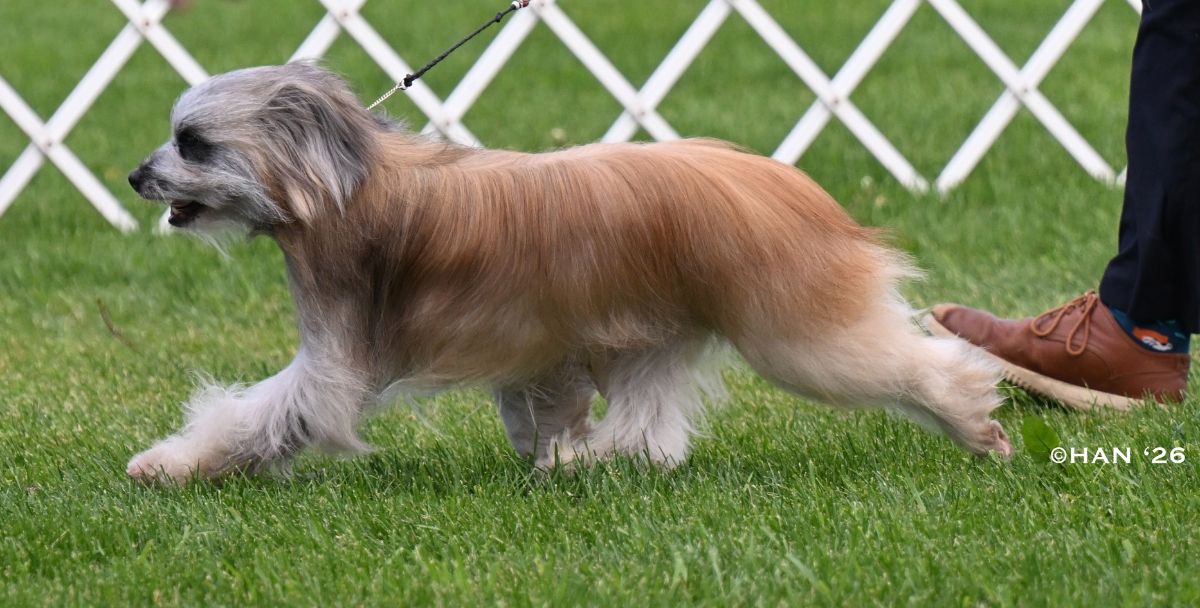
Two varieties of Pyr Sheps (Rough-faced and Smooth-faced) can be born in the same litters. This Standard MUST be studied with great care, as the size, proportions, and DQs vary significantly between the varieties. The Standard description of a gait that “shaves the earth” is poetic. These are lively, rustic, athletic dogs with light bone; lean with “just enough flesh to cover the bones.” Judging this breed, you may see them leap onto the judge’s table from a complete stand. Watch them excel in the Agility ring and you will understand more about their speed and athleticism. This is a breed that adores its own people, but is clearly described in the Standard as “naturally distrustful of strangers.”
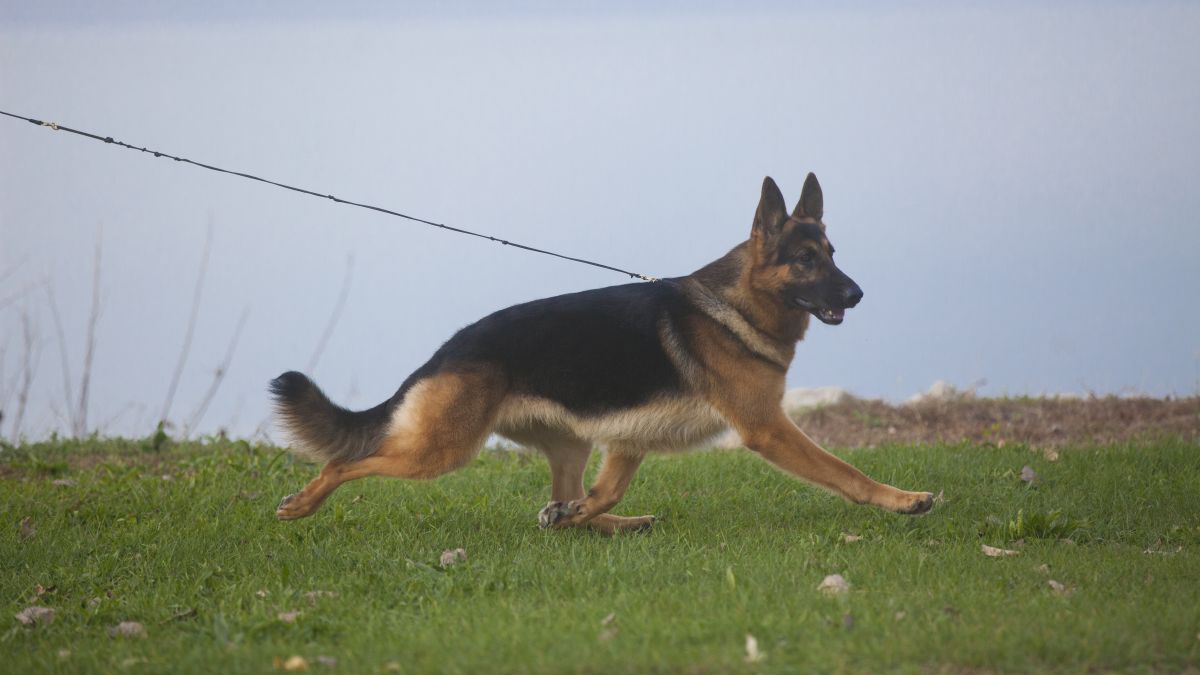
Everyone reading this knows what a German Shepherd Dog (GSD) is. In 2025, GSDs ranked fourth overall in AKC registrations—the top Herding Breed registered. Hollywood legends like Rin Tin Tin and Strongheart actually have stars on Hollywood’s Walk of Fame, and both dogs helped to popularize the breed here in the 1920s. GSDs have excelled as Seeing Eye dogs, Military and Police canines, and beloved family pets for years. They should be brave protectors of hearth and home, with “an incorruptible character.”
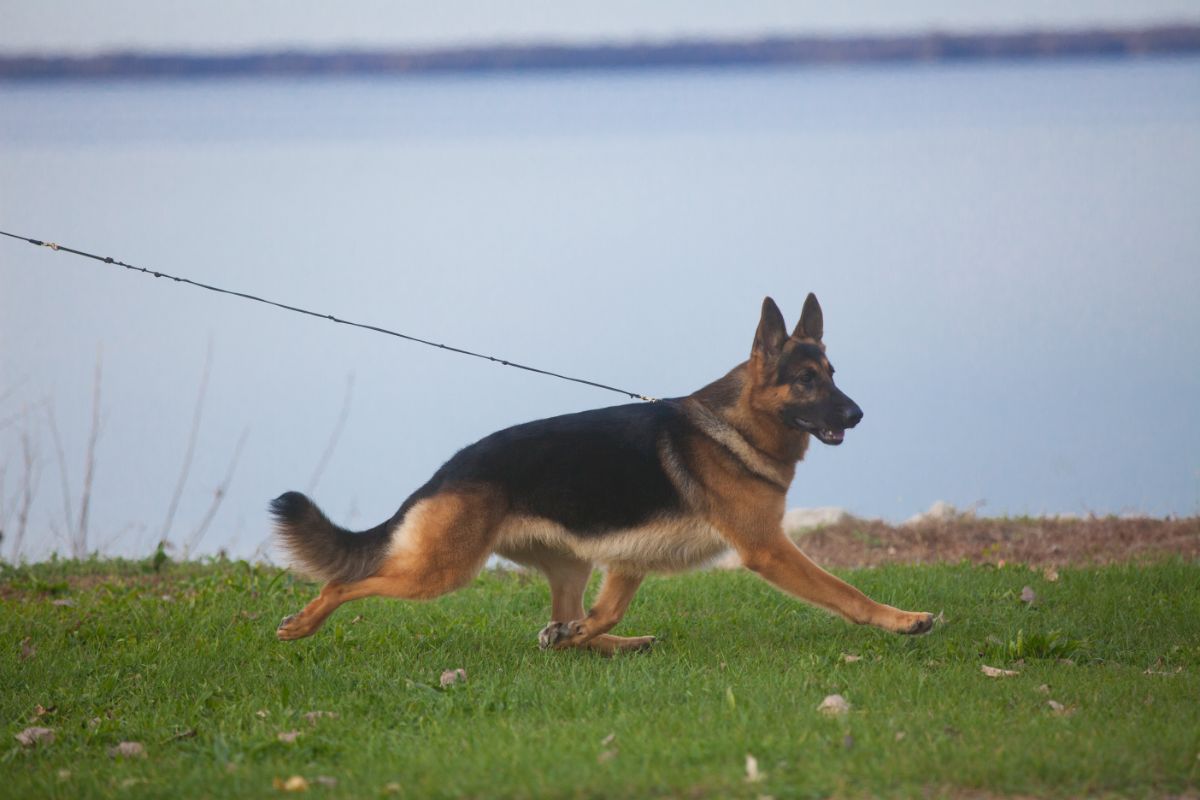
I urge you to reread the GSD Standard. Take particular note of the sections on Temperament and Gait. Truly review the Gait section, which paints the picture of an outstanding, well-engineered trotting dog. Words like “ground covering,” “elastic,” and “outreaching” are expected. But this Standard goes on to deliver an analysis of how good muscular development and ligamentation contribute to movement, as well as exactly how the various parts of the hindquarters create forward thrust. It discusses how forward motion is transmitted from the rear quarters to the front, and exactly what that front must be able to do to create powerful, effortless, harmonious gait. The details matter. This dog works all day long, whether herding, guarding, patrolling, or minding the children. Strong mind and body are musts.
The Bearded Collie, or “Beardie,” is another truly ancient breed. Shaggy-coated dogs with hairy faces inhabited and worked the sheep of Scotland for centuries, likely the ancestors of today’s modern Beardie. Beardies are hardy, agile workers, self-confident and seldom quarrelsome with people or other dogs. It is meant to be a natural breed, double-coated where the outer coat is flat and shaggy, and never excessively long or silky. Beardies should never be sculpted, and while the coat tends to fall naturally to either side down the dog’s back, it should never be artificially parted.
Beardies are long and lean with a length-to-height proportion of 5 to 4. The head is proportional in size to the body, having a flat, broad skull, moderate stop, and equal lengths of backskull/muzzle. The eyes are large and very expressive. As a judge, when you talk to a Beardie, you run the risk of “wearing” that dog. They are exceedingly sweet and friendly. The “Beardie Bounce” is a real event. One second the dog is correctly daisy-cutting effortlessly across your ring, and the next he has leapt exuberantly into the air. Joy unconfined!
Literally, the Border Collie is the premier sheep-herding breed across the world. We’ve all seen the videos of a Border Collie disappearing over a hill in Scotland, gathering an enormous herd of sheep and fetching them back… “The stock is then controlled with an intense gaze known as ‘eye,’ coupled with a stalking style of movement.” This is an amazing athlete. Balance, gracefulness, power, and agility are critical characteristics. Border Collies are sound. As specified in the Standard: “Overall balance between height, length, weight and bone is crucial and is more important than any absolute measurement.”
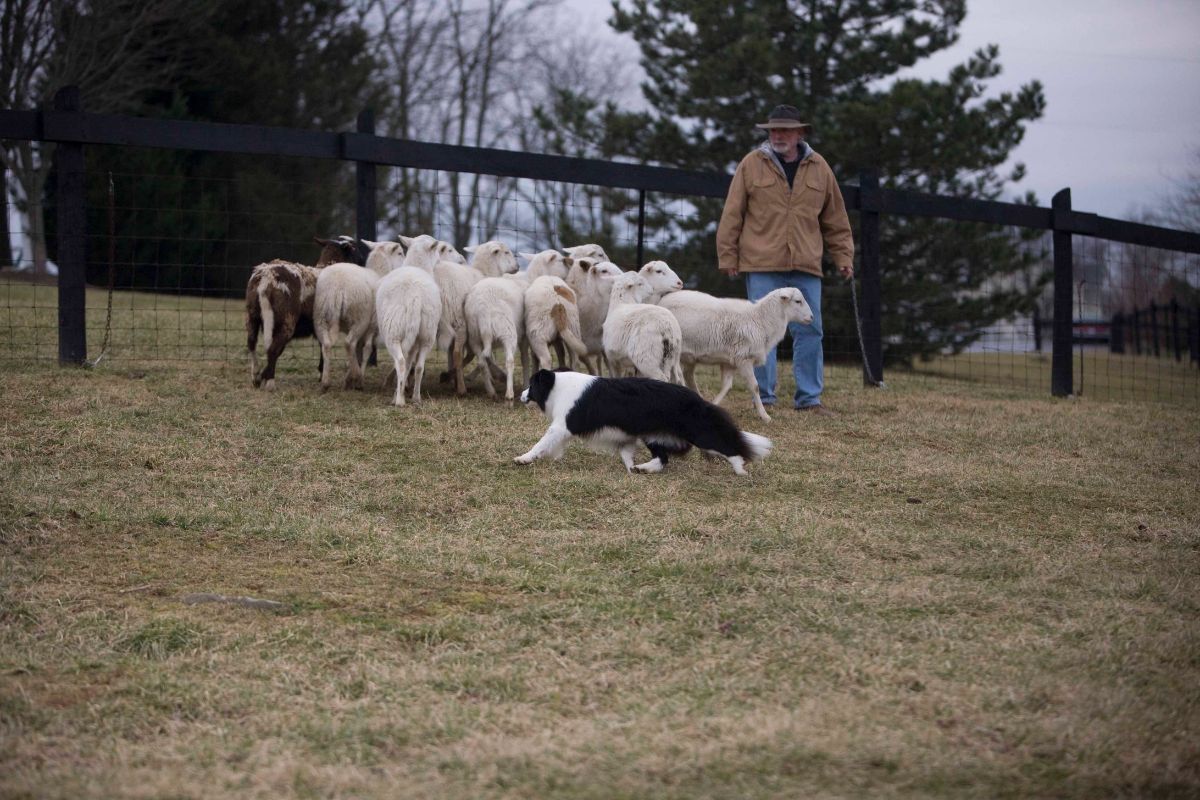
Border Collies should be moved on a loose lead with moderate speed, feet kept close to the ground, and “never raced around the ring with the head held high.” Efficient, unexaggerated movement is the ticket! These dogs are way smart (probably doing higher math problems in their head) and have immense drive. When you look in a Border Collie’s eyes you want to see a dog looking back at you, wondering what’s next. They can be reserved with strangers, but should always stand their ground. When judging Border Collies, I ask myself, “Does this dog have the soundness and agility to work all day?”
Many of us grew up watching Lassie rescue “Timmy in the well,” and read the adventures of Lad: A Dog by Albert Payson Terhune. The Collie (Rough and Smooth), though originating in Great Britain, are lovingly acclaimed as American icons. And yes, just like Rin Tin Tin, Lassie also has a “star” on the Hollywood Walk of Fame!
When it comes to judging Collies, I admit it… I am rather “old school.” From my first (and second and third) Collie National seminar, and from every mentor thereafter, I was told repeatedly, “The Collie is a HEAD BREED!” It was explained further that this was a combination of correct head proportions and correct expression. So, I simply embraced this fact. That is not to say that good structure, legs, and feet are unimportant. Of course they are important; the dog has work to do. In the final analysis, the dog with the more correct head, and a beautiful Collie expression, is the better Collie. Then, one must factor in structure and movement. And make no mistake, the Rough and Smooth varieties differ only in coat.
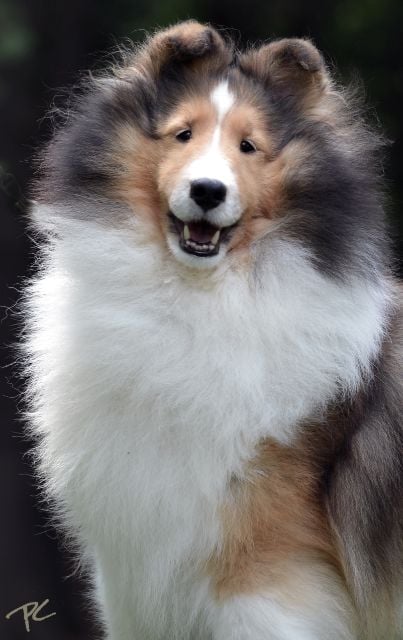
Although there is certainly a resemblance between the Shetland Sheepdog and the Collie, “Shelties” are not miniature Collies. They are hardy, small, rough-coated herding dogs developed in the Shetland Islands from early Scottish Border Collies (progenitors of the Rough Collie as well) mixed with local small, longhaired dogs.
Shelties are 13-16 inches in height, with a moderately long body (angulation of the front and rear assemblies occupy much of that length) but a comparatively short back. The head is a long, blunt, tapered wedge with a sweet, intelligent expression. Flat skull, flat cheeks, well-rounded muzzle, and equal skull-to-muzzle length with parallel planes are characteristic. The “eyes are medium size with dark almond-shaped rims, set somewhat obliquely in the skull.” The ears are “placed high and carried ¾ erect with tips breaking forward.” They are truly beautiful little dogs with a gait that is effortless, single-tracking, low to the ground, and forward-reaching with drive from the rear to match. Double coats (harsh, resilient outer coat) protect them from unpredictable weather.
The Lancashire Heeler is our newest AKC Herding Breed, achieving admission to the Herding Group on January 1, 2024. This is an energetic, intelligent dog with a friendly nature. Sturdily built and small-sized (12 inches for males and 10 inches for bitches), with a short, weather-resistant coat of black and tan or liver and tan, the breed’s history dates back to the 17th century. Possibly developed from Corgis and Manchester Terriers, Lancashire Heelers were used as cattle drovers and ratters, and, of course, beloved family pets. Small, powerful, sturdily built, alert, and an energetic worker, the Lancashire Heeler works cattle but has terrier instincts when rabbiting and ratting. These dogs have a unique characteristic called the Heeler Smile; Heelers have been known to draw back their lips, emulating a human smile.
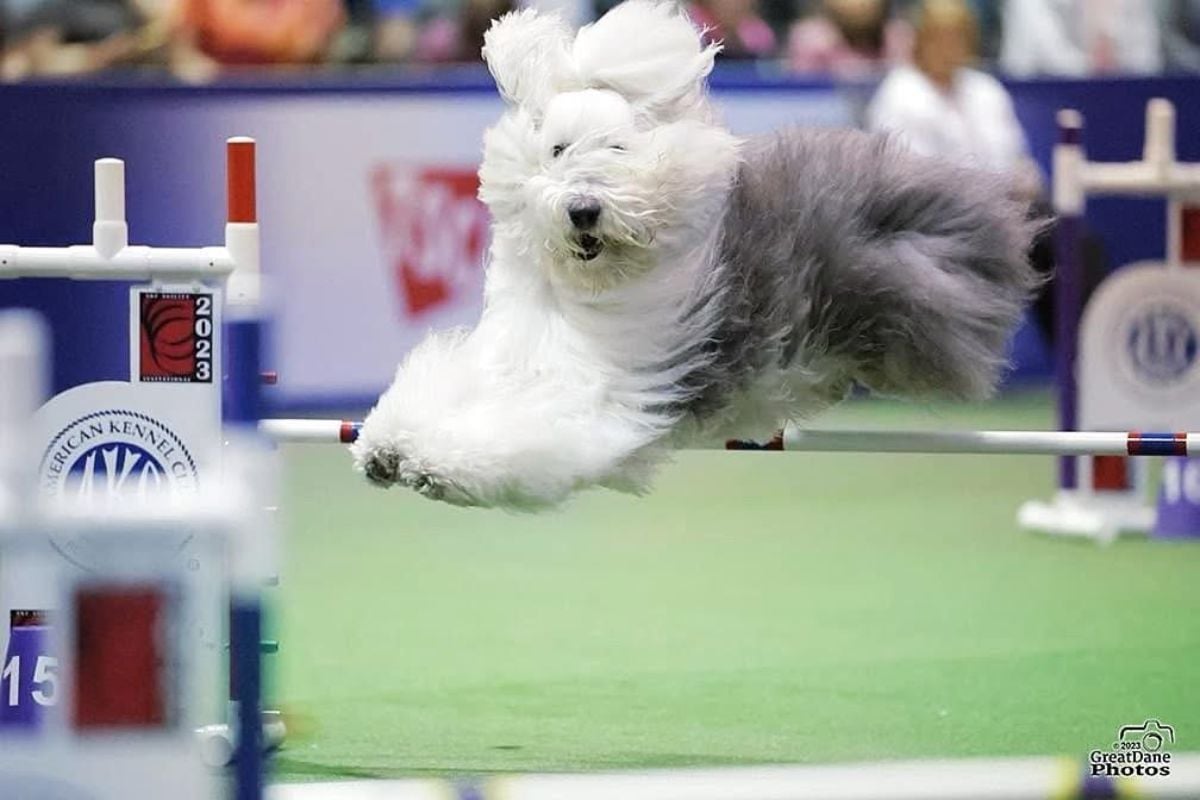
History tells us that the Old English Sheepdog (OES) was used as a drover’s dog, moving sheep or cattle to market in the early 19th century in the Southwest of England. These drover’s dogs were exempt from taxes, and their tails were reportedly docked as evidence of their working status. The name “Bobtail” stuck. OES are known for their profuse double coat (gray, blue, grizzle, or blue merle, with/without white markings) with a good, hard texture that is shaggy and free from curl. They have a practically square outline, a squarely formed skull and muzzle, a unique topline where the dog stands lower at the withers than at the loin, and round, muscular hindquarters. Their gait is distinctive and powerful. The square silhouette should be evident on the move. In the show ring, you will see handlers begin moving their dogs at a walk, moving to an amble, and finally, into a trot. OES have an even disposition “with no sign of aggression, shyness or nervousness.”
Personally, there is no bad judging day that starts with the Pembroke Welsh Corgi. Pembrokes are joyful, happy (10-12 inches tall) dogs. Bred as all-around farm dogs in Wales, they are classified as “heelers,” controlling cattle by using bark, body pressure, plus targeted nips. This is a low-set, active, sturdily built breed with both substance and stamina—neither coarse nor racy.
The distance from the withers to the base of the tail is approximately 40 percent greater than the distance from the withers to the ground. “Pems” have a unique front assembly with the forearms curved to fit a slightly egg-shaped rib cage. Their pasterns and feet point straight forward. A Pem’s head is foxy with a moderate stop and very slight rounding to the cheek, with oval, medium-sized eyes and erect, medium-sized ears that taper to a rounded point. The tail is docked. Gait is very important, particularly as viewed from the side. A dog with a smooth and free gait is ideal.
Pembrokes carry a medium length, short, thick, weather-resistant undercoat with a coarser, longer outer coat. There are serious penalties for incorrect coats that are wiry, marcelled, or overly short, smooth, and thin. Fluffy coats with extreme length and feathering on the ears is a very serious fault, as are some color combinations.
As the Westminster announcer always introduces the Cardigan Welsh Corgi: “This is the Corgi with the tail!” Believed to have been in existence in Wales for over 3,000 years, the Cardigan typically was a herder/drover, moving cattle from Welsh farms to English markets. They are tough little heelers, quick and low enough to avoid the kick from a cow! Besides moving cattle, they were faithful family guardians and helped to rid the home
of vermin!
Measuring 10.5 to 12.5 inches at the withers, their proportion is 1.8 (body) to 1.0 (height at the withers). Balance is more important than any absolute size. Fronts are a hallmark of the breed. Characteristically, the forelegs wrap around the moderately broad chest with a prominent breastbone and deep brisket, and the front feet turn out slightly from the center (no more than 30 degrees). The bone is heavy, but never so overdone as to impair agility. The tail is set and carried fairly low, streaming parallel to the ground when running. Trotting, the action is free, smooth, and effortless. The Standard says, “This is a herding dog which must have the agility, freedom of movement, and endurance to do the work for which he was developed.”
Cardigan ears are larger, more prominent in relation to the size of the dog compared to Pem’s ears. The Standard says of the ears: “Slightly rounded at the tip, and of good strong leather. Moderately wide at the base, carried erect and sloping slightly forward when alert.” Small or pointed ears are serious faults, and a drop ear is a DQ!
The Mudi is an all-purpose Hungarian farm dog and is relatively rare worldwide. Medium-sized, the breed was developed in the 19th century by crossing two other Hungarian breeds (Pumi and Puli) with German spitz breeds. The parent club states: “There are few things a Mudi can’t or won’t do!” Used primarily as cattle and sheep herders, individuals have also excelled as Search and Rescue dogs. The breed was welcomed into the AKC Herding Group on December 29, 2021.
Physically, this is a slightly longer than tall dog with a depth of body that is slightly less than the length of leg. The coat is unique. These dogs have smooth, short, straight hairs on the face and front of the legs, with all other parts of the body covered in a coat that is “very wavy to slightly curly, dense and about 1-3 inches long.” The head is wedge-shaped, with high-set, triangular prick ears, and the whiskers must be left intact. All tail lengths are acceptable. Their movement is tireless and agile, and their angulation is moderate in balance front to rear. This breed is “sensibly suspicious,” making them excellent watch dogs. The plural of Mudi is Mudik… not Mudis!
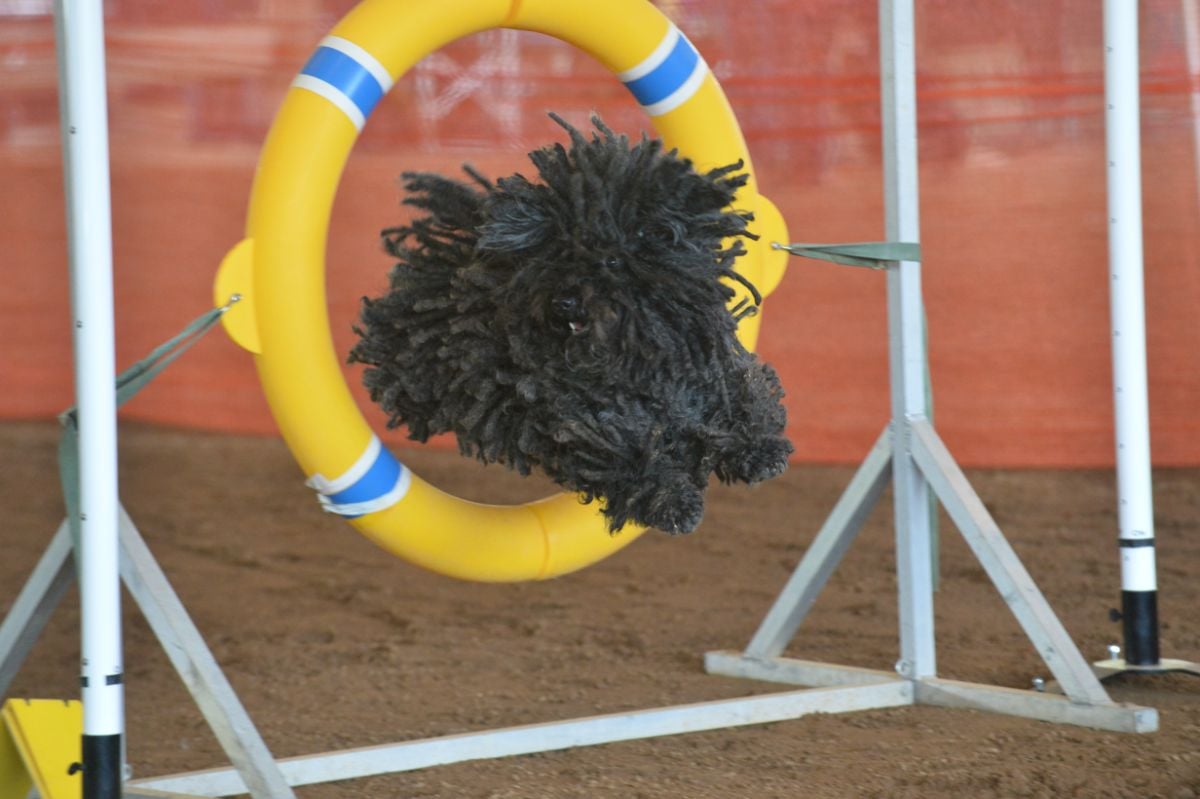
The Puli is an ancient breed. Pulik (the plural of Puli) were prized by nomadic herdsmen of the vast, unforgiving Hungarian plain in the 9th century. Sheared (like the sheep) in springtime, the coats grew all summer long and were ready to protect the dogs from a life in the elements come winter. They were often paired with a Komondor that defended against large predators. Pulik were expert drovers and herders of large flocks of sheep, versatile farm dogs that also herded the cattle and protected the property. They were foundation stock for both the Pumi and the Mudi.
A medium-sized herding dog, square and medium-boned, the Puli has a lively, agile gait, ranging from a collected trot with shorter (never mincing) steps to a full trot with smooth, ground-covering movement. This distinctive movement is essential to the Puli’s herding style. And yes, this IS a corded breed… or NOT, as the breed may be shown corded or brushed, but they must have a proper double coat with correct texture. Judges must find the dog underneath those cords. Kindly forgive the adolescent with cords that are forming, but which presently resembles a clumpy mat.
So, to remind you again, yes, the plural of Pumi is Pumik! The parent club tells us the Pumi was developed around 300 years ago from crosses between ancestral Puli and French and German herding dogs. What resulted from several centuries of careful selection by shepherds is today’s Pumi.
Characterized by a “square outline; curly coat, circular tail and long head with semi-erect ears,” the Pumi is an excellent herder with efficient gait, moderate reach and drive, and the ability to turn on a dime! The coat is never corded, and grooming that obscures the natural curls of the coat is forbidden. This is a truly charming breed with a whimsical expression. It is also a most serious herding dog that learns quickly and can work close to the sheep. In today’s AKC competition, we see many fabulous Pumi Agility competitors.
The Bergamasco Sheepdog is a rustic Alpine stock dog, bred and built to herd and guard in rough terrain. The breed’s Standard is specific about proportions (5-6 percent longer than tall), angulation, and coat (undercoat for protection from the elements, and “goat hair” and woolly hair which weave together to form “flocks”). One must truly get underneath those flocks to find the dog below. Their shoulder and pelvic angles are steeper than most of the rest of the herding dogs reviewed here, but it results in a “free, low-reaching, extended elastic trot, with both front/rear feet remaining close to the ground. Having no need for speed, their gait is a steady slow trot that can be maintained for long periods without tiring.” I love this quote from the Bergamasco Sheepdog Standard: “Just because the eyes are not seen does not mean they are not watching.”
Looking at the intricacy of the Polish name (Polski Owczarek Nizinny), you can see why the Polish Lowland Sheepdog has been shortened to PON. This is another very ancient breed, descended from ancestors of the modern-day Puli bred to Hun herding dogs in the 16th century. PONs are “medium sized, compact, muscular with a long thick double-coat and hanging hair that covers the eyes.” They have a shaggy natural appearance, a docked or natural bobbed tail, and a height-to-length ratio of 9:10. Profuse forehead hair makes their head look bigger than it actually is. PONs typically have a well-defined forechest, level topline, and well-muscled loin. Their angulation balances front to rear, with forequarters described as well laid back. Gait is balanced, efficient, and effortless. All colors are permitted. PONs are stable dogs but somewhat aloof and suspicious of strangers.
Now we come to the Herding Breeds which are NOT classified in FCI terminology as Pastoral Dogs (Group 1) but rather as members of other FCI Groups.
(FCI classifies the Canaan Dog in Group 5: Spitz and Primitive Types; Section 6: Primitive Type.)
The Canaan Dog has such an interesting, ancient history. The Canaan Dog Club of America explains that the breed was developed from redomesticated pariah dog stock captured in Palestine. Their ancestors were the dogs first used for guarding and tending cattle and sheep by the ancient Israelites. This is the National Dog of Israel. During World War II, over 400 Canaan Dogs were trained for the Middle East Forces as land mine detectors, proving superior to the mechanical detectors. The first four imports into the US came to America in 1965.
The Canaan Dog is square and medium-sized, without extremes, showing a clear, sharp outline. The Standard calls for a “marked distinction between sexes.” Moving with athletic agility and grace, their trot is quick, brisk, and ground-covering. A wedge-shaped head with low-set, erect ears, a bushy tail that curls over the back when excited, and a straight, harsh, flat-lying double coat complete the silhouette. In general, the breed is reserved/aloof with strangers, alert, and vigilant.
(Four breeds are classified in FCI Group 5: Spitz and Primitive Types; Section3: Nordic Watchdogs and Herders.)
Finally, we get to the reindeer herders! The Finnish Lapphund Standard says these dogs “combine the look of the northern type dog with the temperament of the herding dog.” Their Finnish home range is north of the Arctic Circle, so the breed is strongly built, with thick coats in a plethora of colors. Undercoat is important for obvious reasons. Medium-sized with bodies just slightly longer than tall (11:10) they have a spitz-type head with erect or semi-erect (tipped) ears. Lapphund tails are set on rather high, carried over the back or side when moving, but may drop when the dog is at rest. One survival feature of this breed is that their “feet are well arched, oval rather than round, with toes slightly spread to act as snowshoes.”
“Lappie” characters are quite lovely. The Standard explains their herding style with reindeer as a basic need to both control AND get away from the reindeer which could easily trample them. The breed has developed a “startle” reflex, which is coupled with basic agility and alertness to keep them safe! These are active, “noisy” reindeer herders!
The Icelandic Sheepdog is another Nordic spitz breed, slightly under medium size. They have erect ears and a curled tail. Rectangular bodies have two possible coats: long and short; both are thick and extremely weather resistant. No coat or whisker trimming is allowed, and dewclaws matter… a LOT! As my first mentor said, “The more dewclaws, the better!” Dewclaws are required on both front and rear legs, and may be double on the front and should be double on each rear leg. There is, however, no DQ. Their colors are many—the only fault being a solid black or brown mantle or saddle on fawn or red dogs (hound marking).
This agile herding dog is expected to cover ground effortlessly. They bark (a LOT) when they are herding or driving sheep. And they often bark in the show ring, never viciously or aggressively, but simply from pure joy! They are cheerful, friendly, lively, and confident!
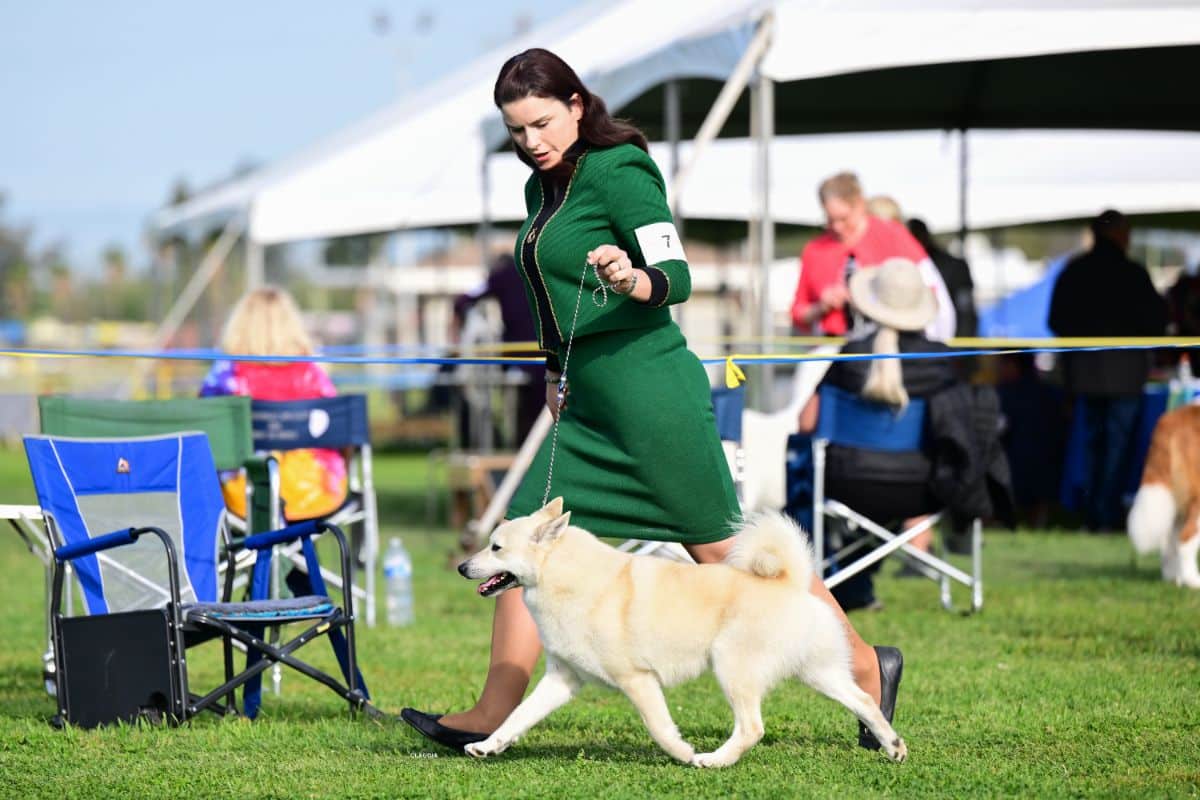
The parent club explains that the Norwegian Buhund “is derived from the Norwegian word ‘bu’ which means farm, homestead or mountain hut, where the shepherd lived in the summer.” Buhund temperament is very self-confident, alert, and lively. These dogs are quite outgoing and affectionate with people. This spitz-type herding dog has a square build, a tightly curled tail carried over the back, a wedge-shaped head with prick ears, and oval eyes as dark as possible with black rims. Their coat is of medium length, with a harsh outer coat lying relatively flat, protecting the soft undercoat and keeping it dry. Two colors are acceptable: Wheaten and Black. Movement (with moderate, balanced angulation) is an important quality in the breed. “The action is free and effortless. The topline remains level while moving. Sound movement is essential for working ability.” Interestingly, they may have optional dewclaws on rear legs (single or double if present) but the Standard is silent about dewclaws on the front legs.
The Swedish Vallhund is a very old spitz-type breed used for farm dog chores and herding cattle. This is a small, proportional (ratio of height to length is 2:3), sturdy dog with a double, hard, close-fitting sable coat and harness markings on the body, a wedge-shaped head, and medium-sized prick ears. These dogs can have a natural tail (long, stub, or bob) or a docked tail. Balance, temperament, and movement are critical features in this breed. They are charming, friendly dogs. In the general dog world, I would rank them as the extrovert Wal-Mart greeters! It is hard not to smile at their antics… each claims it is the very best one in your ring!
(FCI classifies the Spanish Water Dog in Group 8: Retrievers/Flushing Dogs/Water Dogs; Section 3: Water Dogs.)
The Spanish Water Dog is another Herding Group member described as rustic—this one from the Iberian Peninsula. The breed was used by Spanish herdsmen, hunters, and fishermen—truly an all-purpose dog. The breed hallmark is a distinctive, single, curly coat. These dogs are always shown naturally with no aesthetic grooming. Coat length is 1-6 inches (to demonstrate the quality of the curl or cord) and the breed clip is a utilitarian kennel clip, one length over the entire dog. This is a sturdy, athletic dog of medium size, slightly longer than tall (9:8 ratio), and with moderate bone. The head is in balance with the body, and the planes of the skull and muzzle are parallel, with the stop being apparent but not abrupt. Ears are set above eye level, and are dropped and triangular with slightly rounded tips. The body is strong, and all tails are acceptable.
(FCI classifies the Entlebucher Mountain Dog in Group 2: Pinscher and Schnauzer – Molossoid and Swiss Mountain and Cattledogs; Section 3: Swiss Mountain and Cattledogs.)
The Entlebucher Mountain Dog is nicknamed “The Laughing Dog of the Swiss Alps” (der Lachen Hunden) due to the breed’s cheerful nature with their family and for their expressive faces. This is the smallest of the four tri-colored Swiss Sennenhund breeds. “Entles” were used by Swiss farmers to move cows across pastures in the Alps, as well as herding horses and pigs! They are quite rugged, determined cattle drovers, and their movement must be ground-covering, free, and fluid.
Standing 16.5-20.5 inches tall (smallest female to tallest male), this is a longer cast (length in the rib cage, not the loin) dog. The length-to-height ratio is 8:10. Tails are natural or bobbed, and set on as a continuation of a gently sloping croup. Typically, Entles have short, shiny, hard black coats (they MUST have an undercoat) with symmetrical markings of pure white (blaze, muzzle, chest, and feet) and rich fawn to mahogany markings on eyebrows and between their black and white markings. The Standard describes a delightfully lively, active, cheerful dog which can be reserved with strangers.
Thank you to the AKC Herding Breed parent clubs, the AKC website on Herding Breeds, and all my patient mentors for sharing information on the breeds so freely. Also thanks to each of the breeders, owners, and photographers who responded so graciously with beautiful photos of their wonderful Herding dogs to illustrate this article! Look at the titles on both ends of so many of the pictured dogs’ names and recognize the incredible versatility of our Herding Breeds!