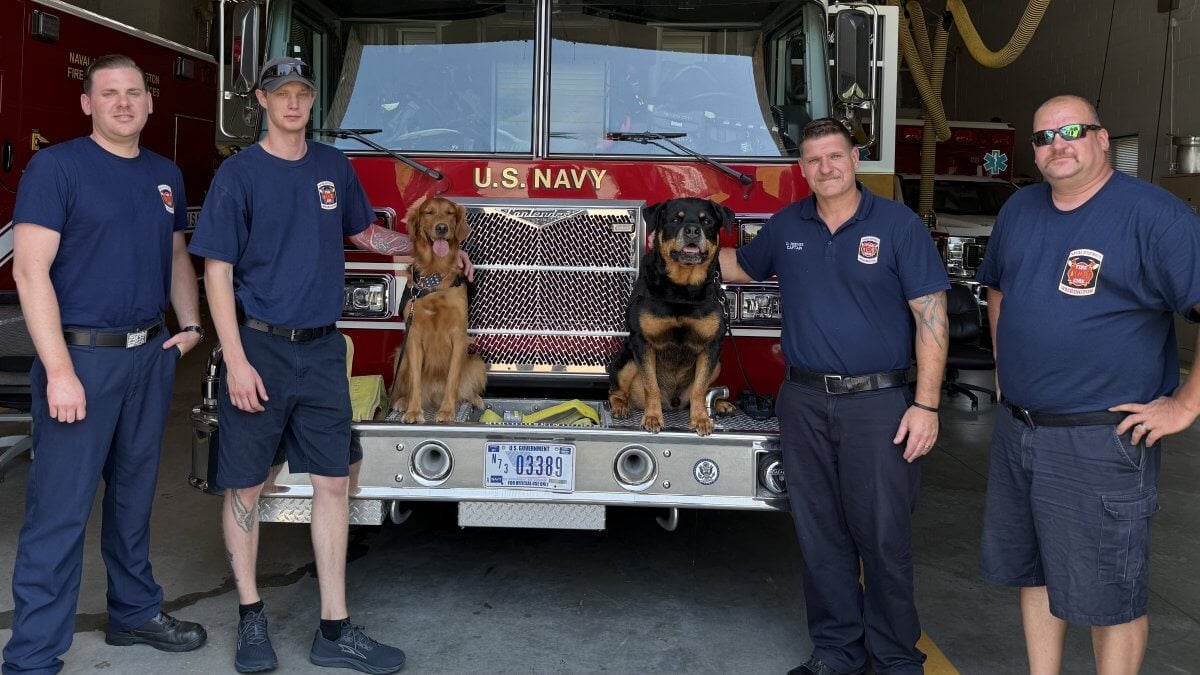
AKC Humane Fund ACE Award – Crisis Response Canines: Andrea Hering, President/CEO
1. The goal of Crisis Response Canines is to establish a nationwide network of canine crisis response teams. How did this New Jersey-based organization get its start?
Andrea Hering: Crisis Response Canines (CRC) began in New Jersey with a clear mission: to build a professional, trauma-informed network of trained canine-handler teams that can support communities when the unthinkable happens. From the beginning, CRC wasn’t designed as a casual comfort program—it was built around structure, standards, and readiness, so teams could respond safely and effectively in emotionally intense environments.
As communities and agencies saw the impact of these teams—especially in the immediate aftermath of crisis—requests grew. CRC expanded its training pathways, clarified team roles, and developed deployment protocols so that teams could serve both locally and nationally, while keeping safety, ethics, and canine welfare at the center of the work.
2. Do handlers need specific certification to become part of a CRC team?
Andrea Hering: Yes. CRC handlers go through a rigorous process to ensure they are prepared for high-stakes settings and for supporting people in acute distress. Handlers complete screening requirements, background checks, confidentiality expectations, and training that reflects the reality of crisis work—where calm presence, professionalism, and boundaries matter as much as compassion.
In addition, teams must meet recognized certification standards and complete ongoing education. CRC emphasizes that canine crisis response is not “just visiting with a dog”—it’s structured support delivered by trained teams who understand how to operate responsibly around grief, shock, trauma reactions, and coordinated response partners.
3. How are dogs selected for this demanding and emotionally charged work?
Andrea Hering: CRC is very intentional about which dogs are suited for crisis response. The work demands dogs who are not only friendly, but emotionally steady, adaptable, and comfortable with unpredictability—crowds, noise, strong emotions, and unfamiliar spaces.
Dogs are assessed for temperament, stress tolerance, sociability, and how they recover from stimulation. Just as importantly, CRC prioritizes the dog’s well-being. Handlers are trained to recognize stress signals and to protect their partner by stepping away when needed. CRC’s selection and training process is built to ensure the work is ethical, safe, and sustainable—for the people receiving support and for the dogs doing the work.
4. Are there specific breeds that are better suited for this work, or does potential depend on the individual dog?
Andrea Hering: CRC focuses far more on the individual dog than the breed. While certain breeds are commonly seen in therapy and support roles, CRC’s approach is that the “right dog” is the one with the right temperament: calm, people-oriented, resilient, and comfortable in emotionally intense environments.
That means mixed breeds and less typical breeds can absolutely succeed—if the dog demonstrates the steady, confident disposition crisis response requires.
5. Is there a story you can share that demonstrates a successful outcome thanks to the efforts of a CRC team?
Andrea Hering: One story that stays with our teams involved a school community after a devastating bus accident. Several students and a teacher died, and the surviving children returned to school carrying enormous grief and fear. In the days that followed, one moment became especially difficult: re-entering the classroom of the teacher who had died.
The children simply couldn’t do it. Even with support from staff, counselors, and caring adults, the classroom doorway felt like an emotional wall. It wasn’t defiance—it was grief, trauma,
and overwhelm.
A CRC team arrived with Rusty, one of our steady, gentle crisis response canines. Instead of trying to “talk the kids into it,” the team took a trauma-informed approach: slow, supportive, and child-led. Rusty sat calmly with the children, offering quiet companionship—soft eyes, relaxed posture, a calm presence that didn’t demand anything from them.
When the time felt right, the children were invited to help Rusty with a simple job: hold his leash and walk with him.
One by one, the children took turns. With Rusty leading at a calm pace, they moved down the hallway together. Their attention wasn’t locked on the loss or the doorway—it was on Rusty and the small, manageable task in front of them. Step by step, they crossed the threshold into the classroom—something they hadn’t been able to do since the accident.
And once inside, the team gave them another gentle assignment: give Rusty a tour of the room.
At first, it was quiet. Then the children began to point out desks, shelves, and artwork. They showed him where they kept their books, where reading time happened, where their teacher used to sit. They spoke to Rusty as if he were a trusted friend—explaining the classroom, sharing details, offering small memories without being pressured to “process” anything out loud.
As they talked, their voices grew steadier. Their bodies relaxed. The classroom began to shift from a place frozen in tragedy back into a place that could hold both grief and safety.
That’s what CRC teams do at their best: we don’t force healing. We create a calm, supportive bridge back to functioning—one quiet step at a time, with a dog whose steady presence helps people feel safe enough to move forward.