Members
Maple the English Springer Spaniel earns the AKC Humane Fund ACE Award for Search & Rescue Human Detection with handler Sue Stejskal.
The Weekly Brief
The best of SHOWSIGHT editorials, weekly wins, and breeder commentary — delivered to your inbox every Sunday morning.
Sue Stejskal: Before I got Maple, my then current partner was a chocolate Lab, K9 Buzz. He was my second human remains detection (HRD) canine and we had a very active career, occasionally encountering some very emotionally difficult cases. At one point, I realized that after K9 Buzz finished his career, I needed a break but still wanted to handle a detection dog. Enter K9 Maple! I got her as a 10-week-old puppy from Springville Springers in Ontario Canada—from a long line of top hunting and detection dogs. The decision to train her as a Cimex Detection Canine (bed bug detection dog) was made way before she joined me. Typical of the Springers from the top field kennel in Canada, she excelled at her job. Her primary responsibilities were searching small rural libraries and some select BNBs.
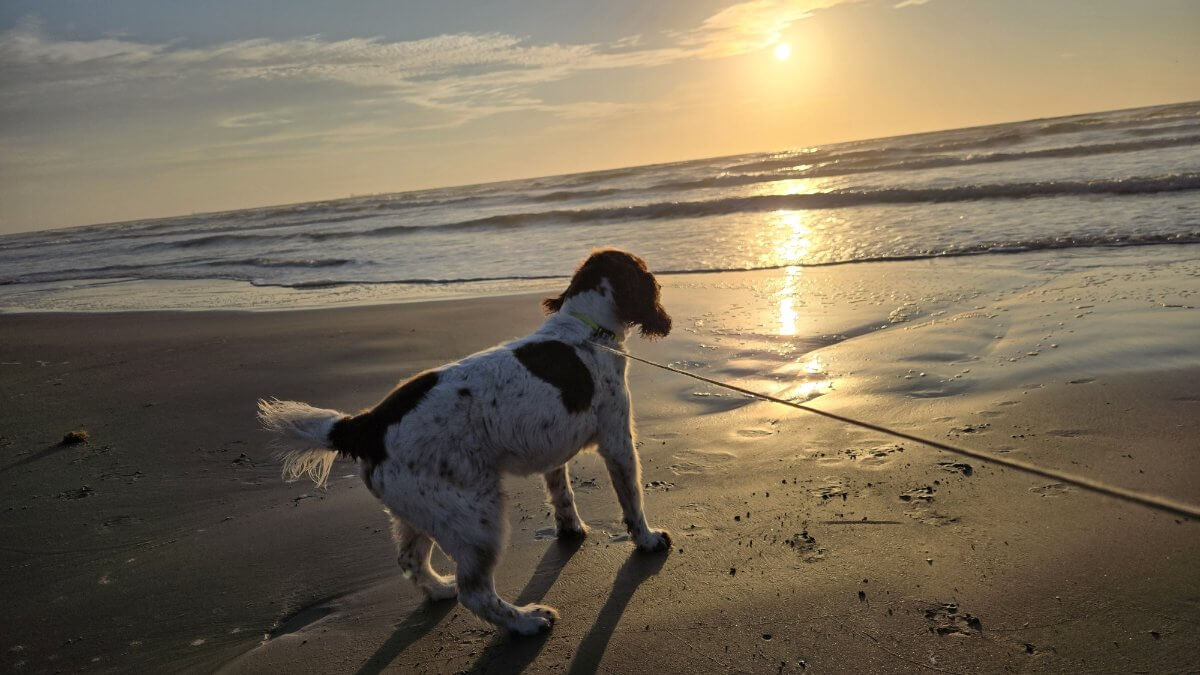
Then COVID hit. There was no place to work, and more importantly, no place to train. With a very driven and highly energetic dog, the recent death of K9 Buzz, and a need, I decided to career-change Maple to locate human remains (land and water).
Just as an aside, Maple is Springville Maple Rush CGC TKN RN RI PSDD.
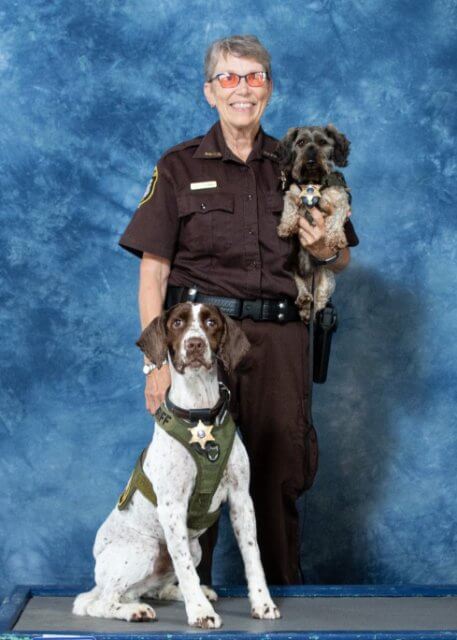
Sue Stejskal: As a Special Deputy for the St. Joseph County Sheriff’s Office (having been an HRD handler with my first dog, CH Lone Pine’s Ms Chili Dawg CGC RN TD for over 12 years and then K9 Buzz CGC RN RA RE SAR-U1, TDI certified, USPCA HRD certified), I had been a member of USPCA for many years. As a USPCA member and active LE K9 handler, Maple passed the HRD/cadaver certification annually.
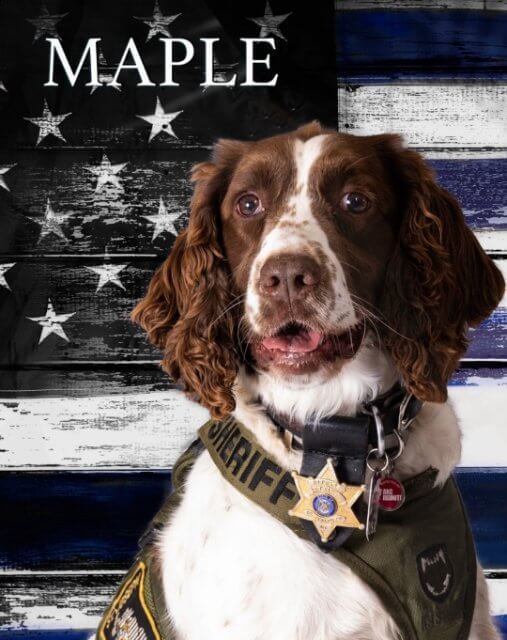
Sue Stejskal: That is an interesting point. Maple is definitely willing to learn as evidenced by her amazing career. Eager to please? That, I am not sure. A true working dog at heart, Maple’s greatest joy is hunting. Whether it’s for bed bugs, human remains, or a bee bacterium, she is the happiest when she works. I think what is really important in a detection dog or SAR K9 is one that has a high hunt drive along with a good play drive, and an ability to focus and learn. That is what Maple is all about.
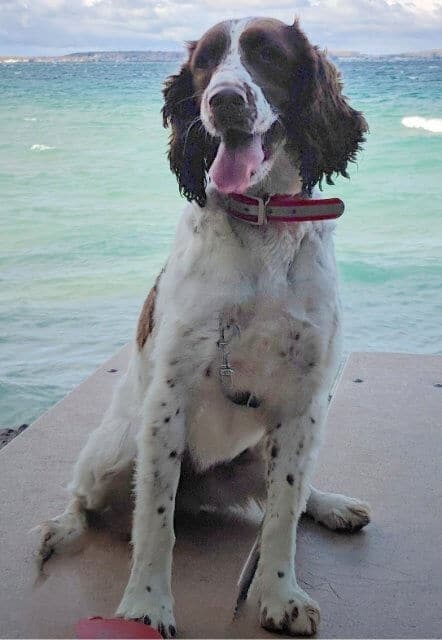
Sue Stejskal: Much of Maple’s HRD career has primarily focused on cold case investigations throughout Michigan and in Canada. With that, many of the searches have involved following up on tips that come in. These, of course, need to be done, most often without resolution.
Two memorable cases. The first was when she was able to work alongside two other HRD Springers from the same breeders. What a joy to watch Springers work! Their enthusiasm, energy, and sheer joy of working (hunting) is amazing. Second, her most memorable water search for a drowning victim in a river. In typical Maple-fashion, once she entered the odor pool, she reached to dip her nose over the front of the boat. She moved so quickly to check on the odor that she lost her footing and fell off the boat. Of course, that was not her trained final response (which was a sit). After I got her on the boat, we marked the spot and reported it to the dive team lead. K9 Maple was right and the unfortunate victim was recovered.
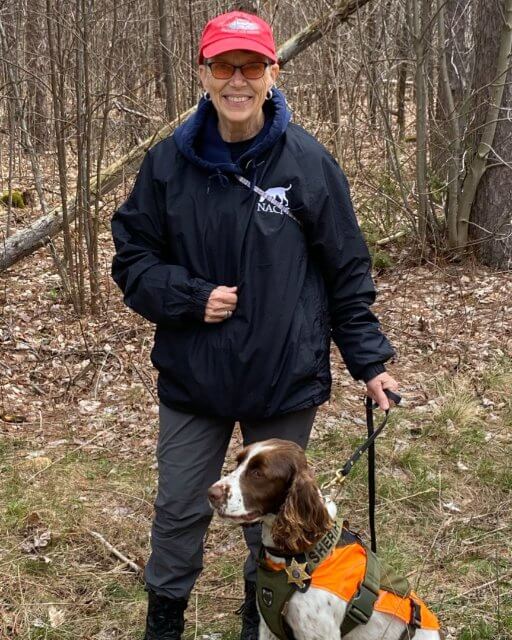
Sue Stejskal: It is said that when one door closes, another one opens. After an injury in the field resulting in Maple being medically retired, we found another project to keep this working Springer happy. We are now working on a project for the Michigan State University Pollinator Performance Center in bio-detection of a bacterial disease that kills honey bees around the world. This project was just what we needed—it keeps Maple happy as she is able to work in smaller areas, and for me, I continue to contribute in a different way. As the project finishes up, I am writing a training manual that will hopefully help other canine teams provide early detection and control of this devastating disease. Maple’s energy, will to work, and her contributions are what a working Springer is all about. Plus, she is special because she has been my partner for 10 years.

Agility