Members
Learn how Ovarian Remnant Syndrome affects spayed female dogs, its symptoms, diagnosis, and treatment options.
The Weekly Brief
The best of SHOWSIGHT editorials, weekly wins, and breeder commentary — delivered to your inbox every Sunday morning.
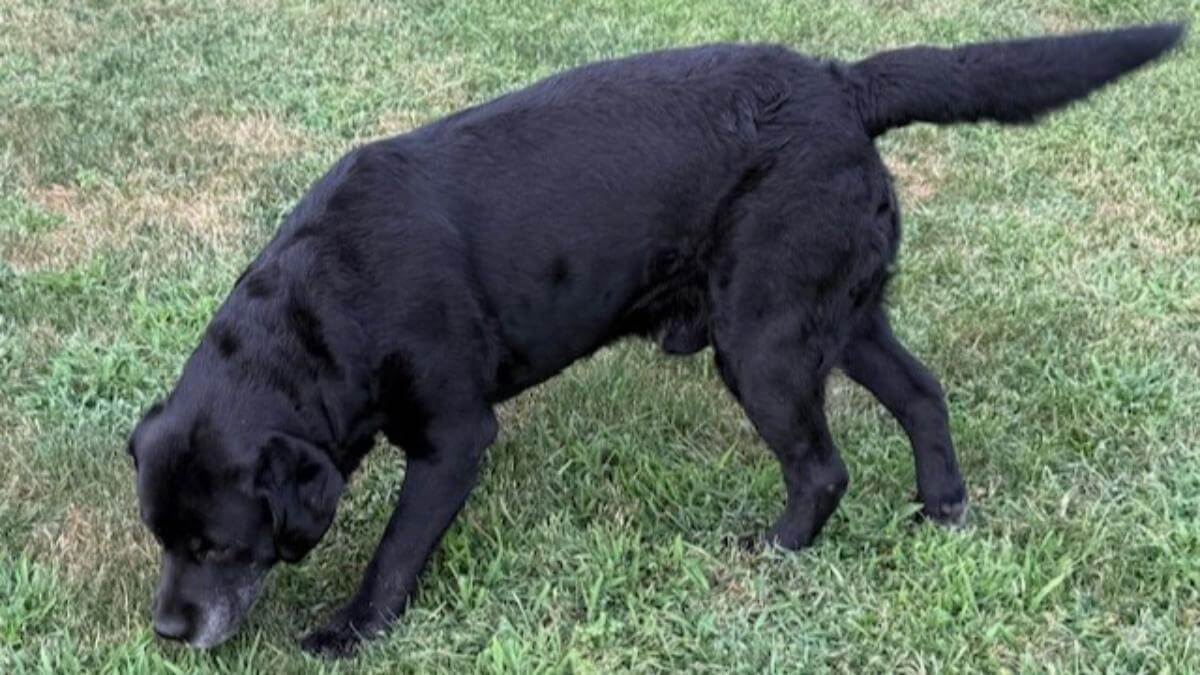
Claire, a six-year-old Conformation Champion, is training to earn her Master Hunter title. She loves birds, marks well, and though she isn’t as fast and flashy as my field dogs, she works respectably. I decided she was ready to enter events, and she proved me right by passing two Master tests. But then things changed at her next two hunt tests for reasons I did not understand. I could not believe what I was witnessing and did not recognize the dog I was running; she acted like she didn’t want to go when sent, and when she did go to retrieve she hesitated and looked over her shoulder at me as if to ask if she had to. On one water mark, she ran to the edge of the pond, tried to reach the bird from the edge but couldn’t, and pulled away from the pond and trotted off in the opposite direction, stopping to urinate twice. In another series, after picking up her third mark of a land triple, she came back, passed me, and went into the holding blind to sit. She did not want to run her blinds. Again, on that series, she peed several times on her way back from picking up her birds. I decided it was time to go to the vet, thinking she must have a bladder infection.
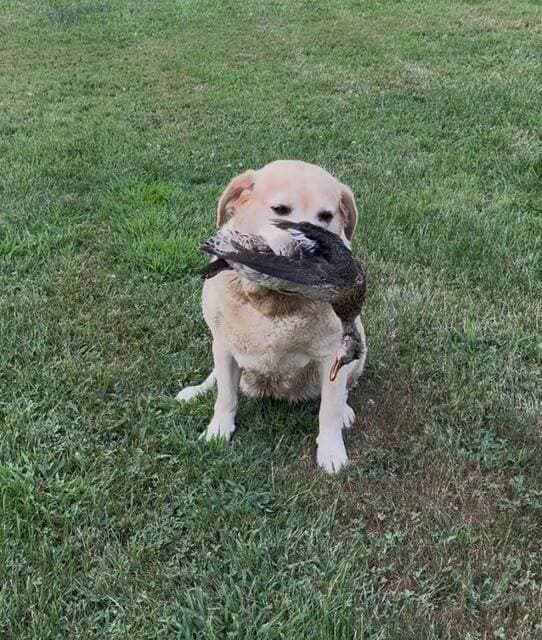
Her veterinary visit was unremarkable in that the vet could not find any physical signs to explain Claire’s behavior and her urinalysis was normal. We discussed her past health status to try to figure out what might explain her behavior. Claire had a litter of seven puppies in November (seven months earlier). Her pregnancy was troubled with infection and treated with antibiotics for most of her term. During delivery, her uterine contractions were not very effective, probably because of poor muscle tone from the infected status of her reproductive tract. She never delivered a puppy on her own and was taken to surgery for an emergent (emergency) C-section. All puppies survived and have done well, but an incidental finding during surgery was a small tear in the uterine wall, probably due to friable tissue effected by the infection. For safety’s sake, she was spayed after the puppies were delivered. She has done well, and I am thankful that we did not lose her or any of her litter of seven girls. So, what does this have to do with her recent behavior? Quite possibly, since there are no other explanations, Claire may have Ovarian Remnant Syndrome (ORS). What in the world is that?!
Ovarian Remnant Syndrome is a condition caused by the presence of ovarian tissue that remains in the abdomen after a total hysterectomy. Of all complications of ovariohysterectomy, 17 percent are ovarian remnants. In the case of an emergent C-section with an enlarged uterus and other displaced organs, ovarian tissue can be difficult to find and remove. It has also been found that ovarian tissue that touches the abdominal wall can adhere and revascularize well enough to develop into functioning tissue, producing sufficient amounts of hormones to create estrus in spayed females. Thus, estrus cycles can resume in spayed females from three months to five years after their spay. Symptoms these ladies exhibit are typical of any intact female, including swollen vulva, bloody discharge, and attraction to male dogs and vice versa. After such a cycle, many bitches experience pseudopregnancies, including enlarged nipples and mammary glands. So now, what and how does one manage a spayed bitch who is being campaigned in performance events that prohibit in-season bitches. If the bitch has bloody discharge, it is obvious, but in some cases, including Claire’s, there is no discharge.
Step one is an accurate diagnosis. There are several ways to determine if a spayed female is cycling. The easiest and most economical is vaginal cytology. By collecting a vaginal smear and inspecting it under a microscope one can see cells with the characteristic appearance of cornification, which only develops when there is estrogen in a female’s body. One can also do hormone assays to evaluate the presence of ovarian tissue. The assays used include progesterone levels, Luteinizing Hormone (LH) and Anti-Mullerian hormone (AMH).
As we know from our breeding practices, progesterone levels rise during estrus, so progesterone tests can be done about two weeks after estrus-like symptoms have subsided to assess its presence. A high progesterone level in a spayed female most likely represents the presence of ovarian remnants. A second option is a blood test for LH levels. LH is a hormone produced by the pituitary gland that stimulates the ovaries to ovulate. The pituitary also produces a gonadotropin releasing hormone that keeps the ovaries in check and controls LH levels. That feedback system results in a low LH level in females that are intact, except during estrous when the bitch ovulates. If ovarian tissue is not present (in spayed females), LH levels are high all the time. So, veterinarians can use “Witness LH” testing when bitches have no symptoms of estrus. If results reveal a high LH, experts suggest that, to be sure the bitch isn’t in estrus and ovulating, the test should be repeated in two to three days. If it remains high, ovarian remnants are not likely present. Lastly, the Anti-Mullerian hormone (AMH) may help to assess the possible presence of ovarian remnants. AMH is produced by ovarian tissue to support the development and preservation of eggs in the follicles. AMH is low or nondetectable in spayed females. So, the best diagnostic tool for Ovarian Remnant Syndrome is a combination of AMH and progesterone levels in which the AMH and progesterone levels are elevated. Such elevated levels in spayed bitches are most likely due to the presence of ovarian remnant tissue. Okay, now what?
If your girl’s hormone picture appears to suggest that she has Ovarian Remnant Syndrome, what are you going to do about it? Depending upon the frequency and significance of her symptoms you may consider anything from surgery to nothing. If one decides to do surgery, a CT scan is done to locate the remnant tissue before the operation. Locating the ovarian tissue, preoperatively, makes surgical success more likely but still difficult. One can also decide to just monitor the female’s behavior and symptoms to assess frequency and symptomatology. If occurrences are infrequent and the symptoms are not creating problems, one may choose to postpone surgical intervention. However, this approach for a performance bitch may set handlers up for experiences like mine previously described unless cycles are recognized in time to avoid entries or withdraw. If not recognized, do these girls create distractions for males? This could create a new category for event refunds that include spayed females who have elevated hormone levels per veterinary checks. Something to think about. My plan, today at least, is to watch Claire and see how often she cycles. If it is infrequent, I will not send her to surgery but rather avoid entering her in Hunt Tests or Obedience events when she is showing signs of estrus or when the timing may predict she is due. If she cycles often and symptoms are very obvious, I will consider surgical treatment not only for my sanity but to reduce her chance of mammary cancer and to allow her to keep playing the games she loves.
Ovarian Remnant Syndrome really is a condition that not many people are aware of, and I’m glad you are writing about it! I remember I gave myself nightmares with the first few spays I did out of vet school, fearing that I’d accidentally leave ovarian tissue or inadvertently ligate a ureter (tube that attaches the kidney to the bladder). I suppose every surgeon goes through this anxiety. I remember I used to exteriorize the ovaries as far out of the abdomen as I could. Sometimes, in certain bitches, that’s unfortunately not possible as the ovaries can vary in where they are attached via the suspensory ligament to the abdominal wall.
It’s pretty easy to spay puppies, so this complication isn’t as much of an issue, but I foresee as we are recommending spaying later in life for the health of the dog that we will likely see this happening more often. From the surgeon’s perspective, spaying an older, developed bitch does present some challenges, including but not limited to more bleeding or more adipose (fat tissue) in the abdomen, possibly making the identity of structures a challenge and the possibility of firmer development and stronger adherence of the suspensory ligament to the body wall and ovary. This means that the surgery will take more time to locate and exteriorizing the ovaries. Secondarily, in older bitches, the health of the uterine horns and uterus can be compromised with a history of infections or cysts, the possibility of tumors, and the structures may be larger due to previous heat cycles or litters, and as you know, the worst-case scenario is a pyometra (pus-filled infected uterus) or emergency C-section.
Thank you for writing this article!
Christina Holbrook DVM
Capitol Illini Veterinary Services
1. Lofsted R. M., Vanleeuwen J. A. Evaluation of a commercially available luteinizing hormone test for its ability to distinguish between vasectomies and sexually intact bitches. J Am Vet Med Assoc. 2002 May 1:220 (9):131-135.
2. Place, N. J., Cheraskin, J. L., & Hansen, B. S. Evaluation of combined assessments of serum anti-Müllerian hormone and progesterone concentrations for the diagnosis of ovarian remnant syndrome in dogs. Journal of the American Veterinary Medical Association, 2019; 254(9), 1067–1072. https://doi.org/10.2460/javma.254.9.1067
3. Website Reference: Animal Surgical Center of Michigan, Flint, MI “Ovarian Remnant Syndrome.” http://www.animalsurgicalcenter.com; 8/1/2025.
4. Brooks, DVM, DABVP, Wendy; “Ovarian Remnant Syndrome in Dogs and Cats.” http://www.veterinarypartner.vin.com; published 10/28/2013, revised 7/25/24.
Canine Health