Members
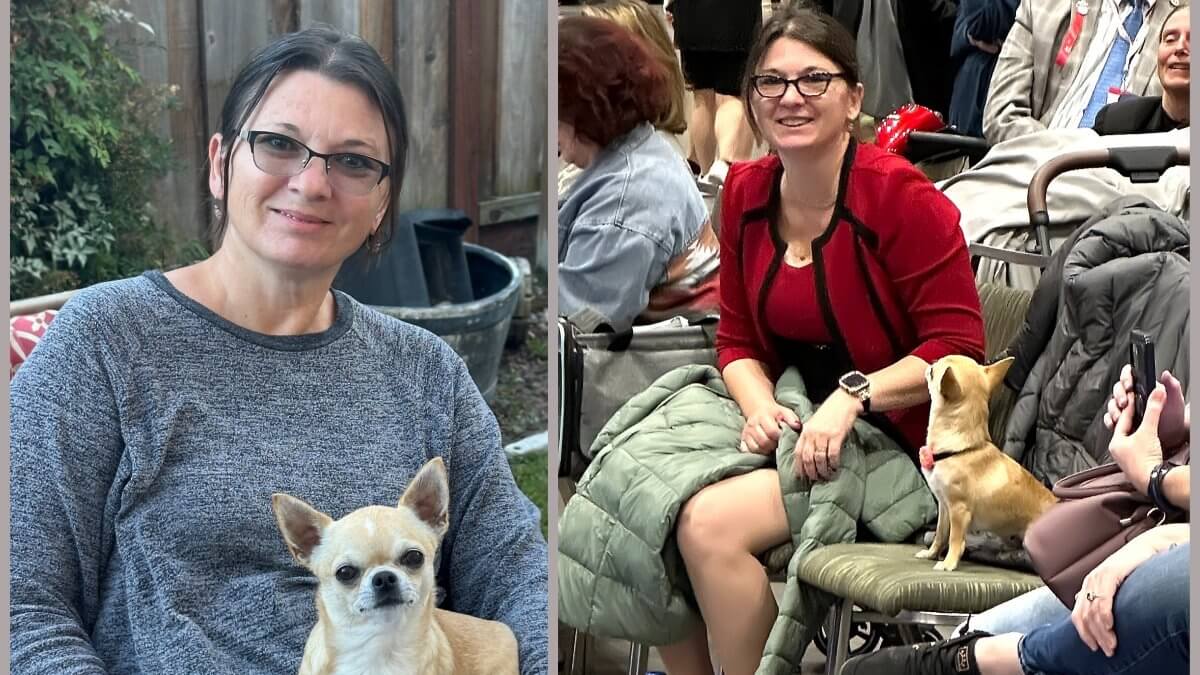
Meet Edna, the 5.5-pound Chihuahua who senses blood sugar drops before any device, saving lives with her tiny heart. Read more!
Tea Rendic
The Weekly Brief
The best of SHOWSIGHT editorials, weekly wins, and breeder commentary — delivered to your inbox every Sunday morning.
Reprinted with permission from the Chihuahua Club of America. Originally published in the Chi Chatter Fall 2025 issue.
When I became aware of myself that morning, the alarm clock on my nightstand read 4:51 AM. Lying on my chest, licking my face, nudging me, and softly barking was my 5.5-pound creature—Edna—determined to wake me up and tell me something was wrong. That I wasn’t okay. That I needed to take glucose pills. That she wanted me to stay alive.
My name is Tea Rendic and I’m a brittle Type 1 Diabetic, diagnosed in early childhood. “Brittle” means that my blood sugar can drop from over 100 to below 40 in a matter of minutes. For someone like me, anything under 70 is hypoglycemia, and if untreated, it can quickly lead to unconsciousness or even a coma. Immediate treatment with fast-acting carbs is absolutely critical.
As a child, I didn’t have a CGM (continuous glucose monitor). I didn’t even have a glucose meter at home—just a vague awareness of “feeling off.” I lost consciousness too many times to count. I’ve woken up in hospital beds after being in a coma, taking days to stabilize.
And here’s the cruel irony: the longer you live with Type 1 Diabetes, the less sensitive your body becomes to low blood sugars. You just don’t feel the warning signs anymore.
I’ve been using a CGM for about 16 years now—it constantly tracks my glucose levels and gives me alerts. But even with that technology, Edna is faster. She senses my lows 15–30 minutes before my CGM catches them.
She has an almost perfect record. The only exceptions? About 10 days a year during ovulation—and even then she still tries, just with slightly less intensity. That means for 355 days a year she’s on full alert. And believe me, she’s saved me more times than I can count—especially when my CGM has been wrong or delayed.
Edna is a purebred Chihuahua, born in our home, with an impressive pedigree and a successful show record. No “service dog” genes in her bloodline—unless you count her mother, who also had a strong bond with me. When Edna’s mom was pregnant, with hard pregnancy she stopped alerting me to sugar drops, we disconnected. So, with that hint of potential, I began Early Scent Introduction (ESI) with Edna and her littermate on Day 3, using low blood sugar scent samples taken during my hypoglycemic episodes. Daily from Day 3 to Day 16, I recorded their reactions—and Edna’s were noticeably stronger.
She grew up like a normal puppy. Wild, curious, joyful.
Until she was about seven months old.
That was the first time she came up to me looking intensely worried—paws on me, head tilted, eyes locked on mine. When her brother tried to get her to play, she pushed him away and stayed focused on me. I had no idea what was going on. I picked her up, checked her over for any injury, and put her down. She didn’t leave me. Twenty minutes later, I started feeling “off.” My CGM read 180 (which is actually high), but I trusted my instinct—poked my finger—and it read 47.
That happened again. And again.
By the fourth time, it clicked: this “annoying puppy” wasn’t being weird. She was telling me “something.” And thank goodness she kept insisting, even when I ignored her at first.
Now, when Edna starts acting “strange,” I listen.
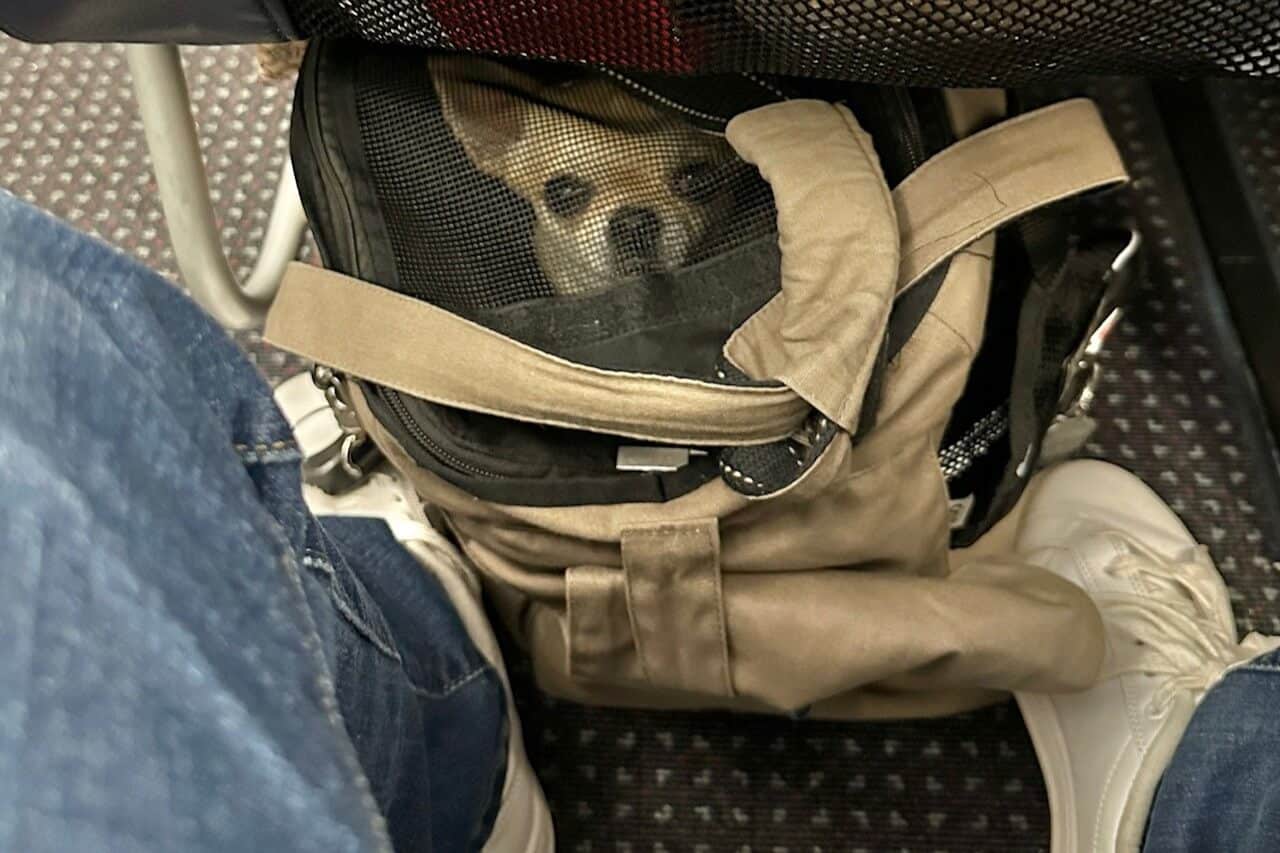
Out walking, she’ll pull back from the end of her leash and come directly in front of me, walking backward on her hind legs, making low noises to get my attention. On hikes, she does the same. If I’m sitting, she jumps on me, locks eyes, and doesn’t budge until she sees me eat something. Then she watches me—like a hawk—for a good 30–40 minutes until she knows I’m okay.
From show rings to hiking trails, restaurants, planes, hotels, and home—she is always watching. Always alert. Always making sure I am okay.
And as if that weren’t enough, two years ago Edna took on another job—one we never expected she would do.
Our 17-year-old daughter, Nicole, began experiencing fainting episodes. Edna stays downstairs with me, but on the rare occasions when Niki fainted downstairs (teens, they just don’t like hanging out with you), Edna would run to me, leap on me frantically, then race back toward where Niki was. She’d repeat this until I understood and followed. It didn’t take long before I learned to respond immediately.
Edna isn’t officially a trained service dog. She’s not from a line of working animals. She’s just a deeply bonded, intuitive, fiercely loyal little soul who’s decided—on her own—that keeping me (and now my daughter) safe is her job.
I don’t know how many times she’s saved my life. I just know that without her, I likely wouldn’t be here to write this.
She may be small, but Edna’s heart—and her impact—are immeasurable.
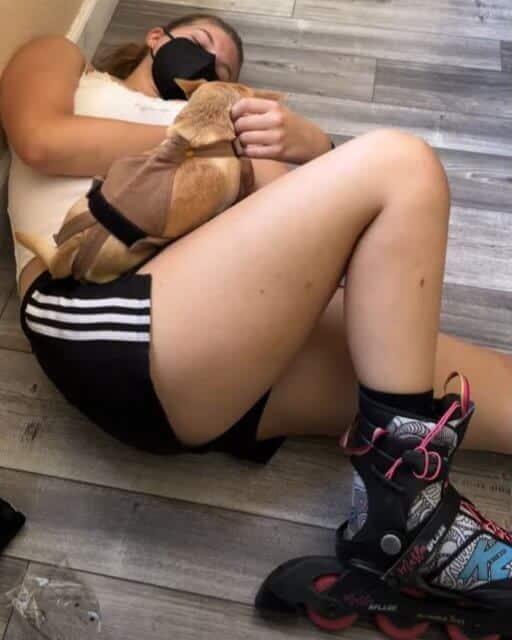
“It was a hot morning when I returned home from rollerblading around the neighborhood. As I was entering my house, the dizziness hit—a familiar, unwelcome wave. I barely made it through the door and sank onto the floor.
Before I could even process what was happening, Edna was there.
She hurried over and immediately started licking my face, urgently and without pause.
Her usual playful licks were different this time—insistent, she knew something was wrong.
Then everything went dark.
When I came to, Edna was still with me.
She hadn’t stopped.
She was nudging me and licking my face, trying to pull me back to consciousness.
Still too woozy to sit up or do much of anything, I just reached out and rested a weak hand on her fur.
Even that felt like a huge effort.
She laid down on top of me, her warmth grounding me as I fought to steady my heart and breathe through the storm inside my body.
She didn’t move.
She just stayed there, quietly guarding me, as if she understood that her presence was exactly what I needed to regain my bearings.”

American Kennel Club (AKC)
Maple the English Springer Spaniel earns the AKC Humane Fund ACE Award for Search & Rescue Human Detection with handler Sue Stejskal.