Members
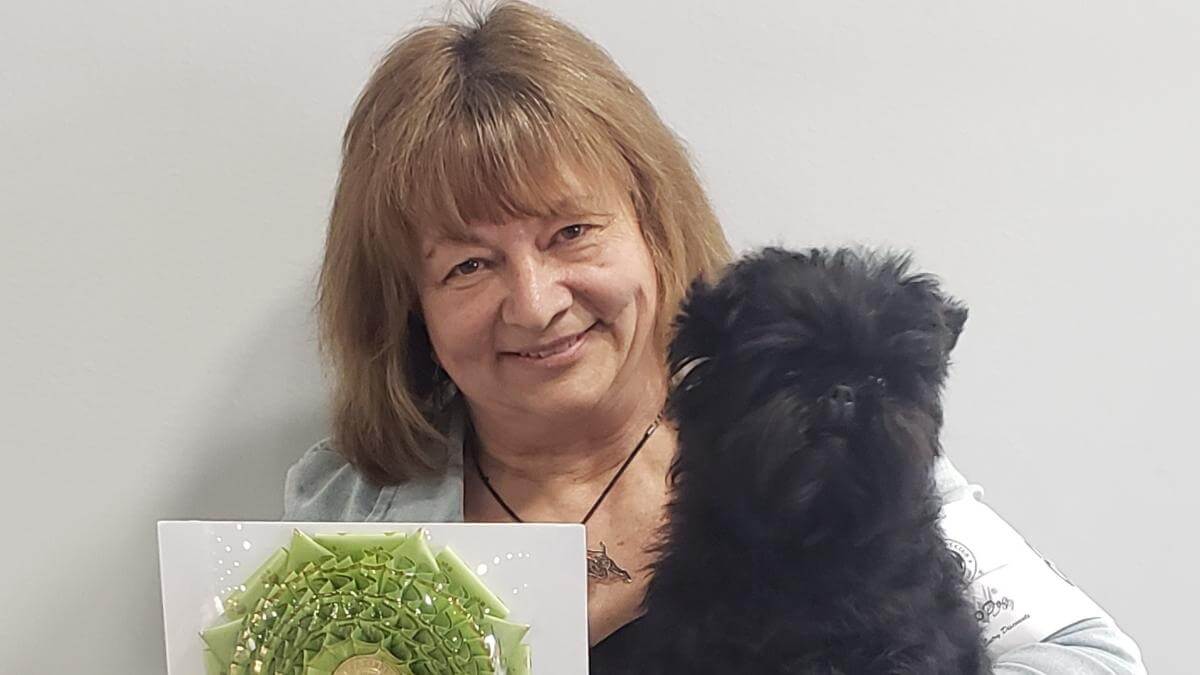
Kathie Timko of Gizmo Affenpinschers shares her journey, breeding philosophy, and insights on the Affenpinscher breed standard.
The Weekly Brief
The best of SHOWSIGHT editorials, weekly wins, and breeder commentary — delivered to your inbox every Sunday morning.
Kathie Timko
1. My name is Kathie Timko of Gizmo Affenpinschers. I live in Centennial, Colorado, a suburb of Denver. I began showing Akitas in 1985 after obtaining one from my sister, who was showing at the time. I had my first litter in 1988, but only bred a couple of litters and finished a handful of dogs due to time constraints being a working single mother.
In 2003, I obtained my first Affenpinscher, as my daughter was doing Junior Handling and wanted a little dog to show. Despite being a sworn “Big Dog” person, I fell in love with these little “monkey dogs” with their big personalities. After losing my last Akita in 2011, I have devoted myself to breeding top-quality Affens on a limited basis. Since my first litter in 2009, in collaboration with Linda Ferris (Ferlin Affenpinschers), I have produced several Top 10 Breed and All-Breed dogs, as well as the No. 1 Lifetime NOHS (National Owner-Handled Series) Affen. I prefer to handle my dogs myself, but on occasion have reached out to friends or a handler for help.
2. Affenpinschers are a “head breed” in that the monkey-like expression is the hallmark of the breed. A correct bite is undershot, giving the dog a pouty expression. The coat is “shaggy but neat,” the eyes are brilliant, dark, and round, with ears set high. Ears may be erect, semi-erect, or dropped. An Affen should be square, although bitches may be longer. The neck to withers is surrounded by a cape, the jacket area is harsh, and the furnishings may be softer. The Affen is a sturdy breed, so they should have sufficient bone and spring of rib, and not be weedy or light of bone. A level topline and moderate angulation are essential to maintaining breed type, as movement should be brisk with moderate reach and drive. Excessive angulation, reach and drive, or “lift” should be faulted—it may be flashy, but it is incorrect. Affens were bred as mousers, a job that required them to pounce on their prey and twist and turn in tight spaces. A square body and moderate angulation are necessary to enable this. Nor should an Affen be overly groomed to look like a variation of a Poodle or Bichon Frise; grooming should be moderate. Affens come in six colors: black, gray, silver, belge, red, and black and tan. All colors are acceptable and should be judged equally.
3. As I only breed for my own purposes, I may only have one or two puppies each year and often refer potential buyers to other breeders whom I respect and trust. There is always a wait list for Affen puppies as the litters are so small and the neonatal death rate is so high. Breeding Affens is not for the faint of heart.
4. As I have a Bachelor of Science in Biology, I subscribe to using all of the tools that science and technology bring to the table to produce a quality litter. Progesterone testing is a must to ensure that I can time the breeding and whelping date as best as possible. I believe it is imperative to have this knowledge should a situation arise where a C-section is needed.
I’m not big on social media as it can be very misleading. I prefer to communicate via email, phone conversations, and face to face meetings to discuss matters with fellow breeders and to get to know potential puppy buyers. As a scientific-minded person, I research health and breeding issues from reputable online sources, as well as with my veterinarian and reproduction clinic vets.
5. Colorado is a very dog-friendly state. That said, the general public seems to have bought into the “adopt, don’t shop” mentality and there have been several legislative initiatives over the years to limit dog ownership. Fortunately, we have a very active dog community that works diligently to educate legislators and ensure that appropriate laws are put in place. A few years ago, I worked with the local city council on revising its dog ordinances. It was an opportunity to educate them on the differences between the average “rescue” dog owner and dedicated hobby breeders, and to ensure the ordinance revisions took these differences into consideration.
There is a mix of purebred and mixed breeds in my neighborhood. Most seem to be from a rescue situation, but a few are from a “backyard” breeders. When I’m stopped on my daily walks (a usual occurrence because of the rarity of Affens), I take the time to explain the breed and that my dogs are show dogs, sprinkling in information about their success to try to pique the person’s interest in purebred dogs. I always invite these individuals to local shows in hopes they will come to be educated about the benefits of purebred dogs and ethical breeders.
6. Aside from the well-known trend of more shows with fewer dogs and majors, I’ve noticed that clubs are adding on more options to compete, such as Fast CAT and Dock Diving. I think these are wonderful additions to bring in folks who are not inclined to compete in Conformation and those who have mixed breeds. Any opportunity to educate the average dog owner is a positive as far as I’m concerned.
One thing that is not a new problem is the lack of volunteers. It has long been my perception that 10 percent do 90 percent of the work, resulting in burnout for the dedicated individuals. We need more people to step up to run the shows and lighten the load for the dedicated few, along with knowledge transfer, which is key to ensuring continuity and minimize repeating mistakes when there is a changing of the guard.
7. As I’ve mentioned, the addition of extra events such as Fast CAT, as well as health clinics that offer critical services at a discount, are a positive thing. The broader the audience that attends a Conformation show, regardless of the primary reason, the better it is for the dog fancy in general. Opening the doors to all dog owners to compete and learn about an area of the sport that resonates with them is a good thing for purebred dogs and dog breeders in general.

Meet the Breeders