Members
Explore the Bullmastiff breed standard – structure, temperament, and history of the powerful Gamekeeper’s Night Dog.
The Weekly Brief
The best of SHOWSIGHT editorials, weekly wins, and breeder commentary — delivered to your inbox every Sunday morning.
The AKC (American Kennel Club) Breed Standard describes the physical impression of the Bullmastiff under General Appearance. A strong Working dog that places emphasis on the structure (nearly square, substantial, powerfully built, symmetrical with great strength, endurance, and alertness) and the purpose for which it was bred.
Developed in England by the gamekeepers who managed the estates of the wealthy, nobleman and royalty, these purpose-bred dogs provided protection against poachers. Animals that were hunted or poached during those early times belonged to those who owned the land. Therefore, it is understandable that those resources were closely guarded, especially during times of hardship.
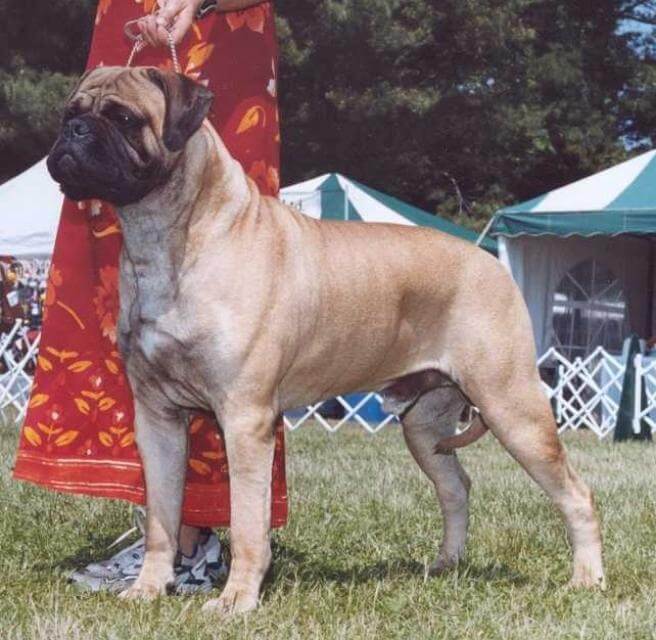
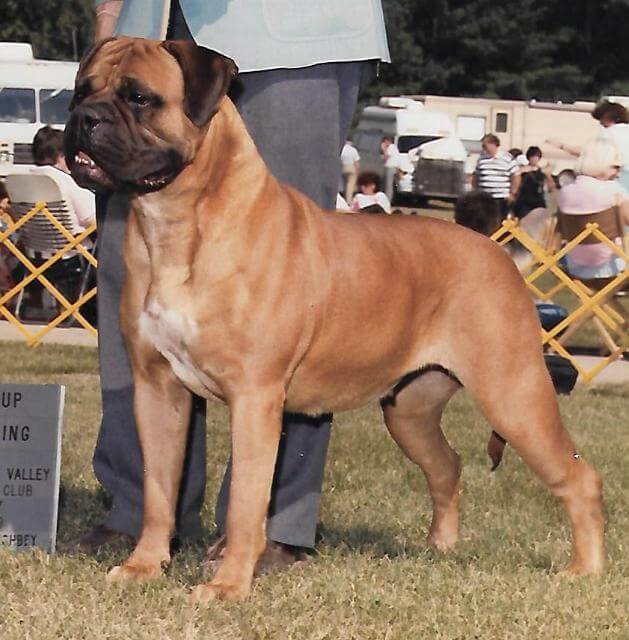
The Bullmastiff should have a nearly square appearance upon first impression. Looking at the dog in profile, the length of body from tip of breastbone to rear of thigh exceeds the height from withers to ground only slightly. Additionally, a dog should be deep in body that is approximately one-half of its total height from withers to elbow and from elbow to ground. This gives the impression of balance, symmetry, and power.
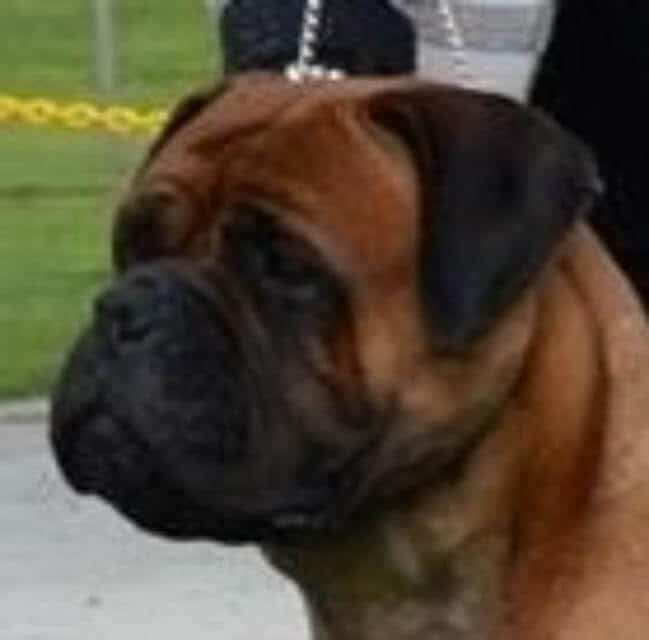
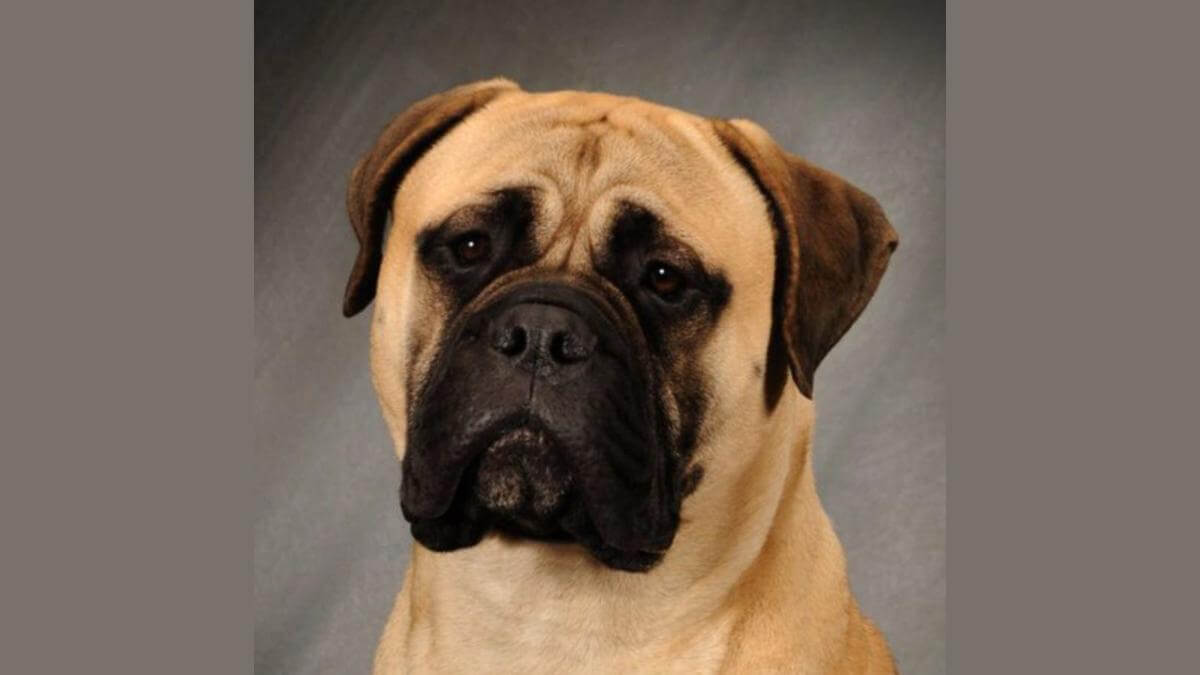
The headpiece of the Bullmastiff is its crowning glory and a crucial element of breed type. Without the correct proportion of one-third muzzle to two-thirds skull, the Bullmastiff could be identifiable with any other Molosser breed. The majority of the Breed Standard is devoted to describing the head. A broad, shortened skull, inherited from the Bulldog ancestry, lacks a backskull. The occipital bone is set between the ears rather than behind them. The muzzle is broad and deep, which is one-third the length of the entire head from tip of nose to the occiput. Muzzle width should be the same as the length, a square that is attached to the square head. Be mindful that the Bullmastiff should never have so little or so much wrinkle that the pattern of it is unchanging when the dog is alert. This wrinkling of the headpiece was a form of prized communication between the dog and the gamekeeper when sight/sound/smell detected the presence of an intruder.
When examining the bite, only the front of the bite needs to be considered. Observing for complete dentition or counting of teeth is unnecessary; simply look at the placement of the canines (both upper and lower) for width and to ensure the bite is not wry. The width of the canines contributes to the depth and strength of the underjaw and adds to the deep, square muzzle conformation. Bite should never be considered as a preference for placement. There are far too many other crucial aspects of judging that should take preference, such as correct front/rear assembly, topline, or tail set. Assuming the bite is within the range of level or slightly undershot, the most important concern is that the upper and lower canines are set wide apart. A degree of leeway may be given to a dog that has a bite which is less than level or slightly under due to the Bulldog ancestry.
Mentioned in the Standard is “Lack of foreface with nostrils set on top of the muzzle is a reversion to the Bulldog and is very undesirable.” Muzzles that approach the one-quarter rather than the one-third length are undesirable and are also a reversion to the Bulldog. Small or pinched nostrils can result in restricted and loud breathing. The muzzle is dark, typically black in all colors. Brindles should have the same pigment, dark mask, and dark ears as their self-colored counterparts.
The dark and medium-sized eyes contribute to the alert and intelligent expression. The rims should be tight, and the eyes should not protrude so as to be injured by vegetation, humans, or animals. The medium-sized, dark, v-shaped ears should be in balance with the rest of the head and give a square appearance to the skull. Set on wide and high, they are carried close to the cheeks and are level with the occiput and cheeks. Long ears or flews presented the poacher with an opportunity to grab and hold during an altercation.
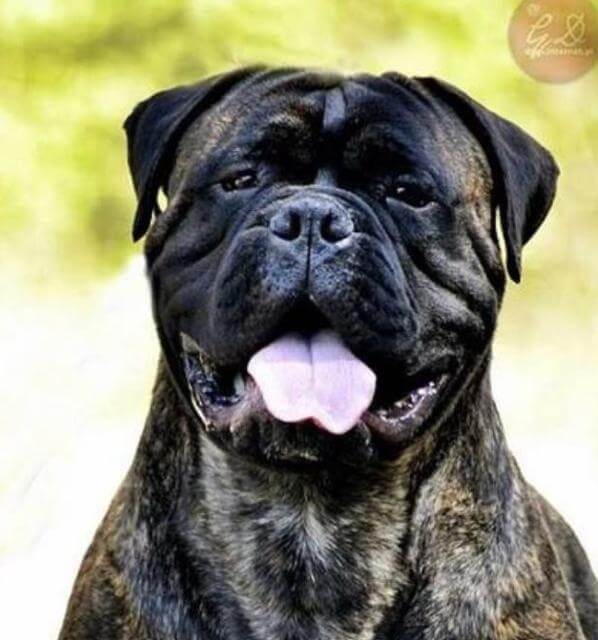
Being slightly longer than tall (at the withers), the Bullmastiff should give the presence of power and stamina to work all night with the gamekeeper of old. Its skeletal structure should be sound and accompany a substantial musculature without compromise to health. A powerfully built Bullmastiff has a short, level back, tail set on high, and matching moderate angles fore and aft. The tail is to be set on high as an extension of the spine, trailing or straight out, never carried hound fashion. Cow hocks and splayed feet are serious faults addressed in the Standard and should be severely penalized. The medium-sized feet should have well-arched and tight toes, black nails, and thick pads.
There are three acceptable colors: fawn, red, and brindle. The early gamekeepers preferred the brindle color as it was camouflaged in the darkness of night, but today’s Bullmastiff should be judged equally regardless of color or sex. A small white spot on the chest is acceptable while more invasive white markings on the toes, throat, or feet should be penalized according to the degree of the deviation. The Bullmastiff has a short, dense, and double coat, which provides protection from the elements.
The gait of the Bullmastiff is to be free-moving, powerful, and smooth. Consistent with most other Working breeds, the feet converge towards a centerline as the speed increases. It is not unusual for the Bullmastiff to single track, but it is not expected. Good movement should not be fast but rather consistent with the ancestral duty of the breed, which was a moderate trot while at work. This pace will reveal more about soundness and construction when gaited at a steady and deliberate speed.
The temperament is confident and stable, but not necessarily tail-wagging friendly to every person or dog that it meets. The independent working nature of the Bullmastiff was to down a poacher and hold, but not savage, him until the gamekeeper arrived. Bullmastiffs should be agile, good-nosed trackers and endurance-minded. A quiet worker, he should not be prone to bark or growl unless warranted by a threat and is a dedicated guardian to his family.
When examining the Bullmastiff, approach the dog from the side or front, never from behind. After a visual inspection of the head and examination of the bite, proceed to allow the hands to confirm what the eyes saw for muscle fitness, coat quality, and confirmation of two testicles. Keep one hand on the dog’s back or withers during the exam; when removed, the dog will realize the exam is over. There is absolutely no reason to massage or feel every muscle, and the exam should be 15 seconds or less.
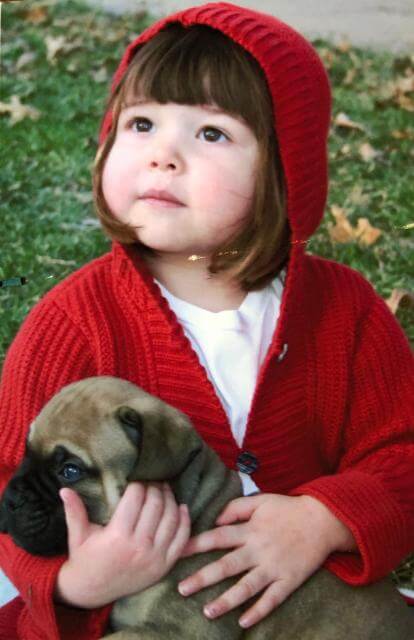
Bullmastiffs can be discerning and watchful of those they do not know, yet once properly introduced, they are accepting of strangers approved by the family. Additionally, Bullmastiffs tend to be naturally affectionate towards children and the elderly when raised with them or casually acquainted.
This is not a breed for everyone; the independent and solitary working nature of the breed can make for difficult training sessions. However, once Bullmastiffs are understanding of a command or task, they are faithful and consistent workers. Same-sex dog aggression can be common and is usually breed-specific.
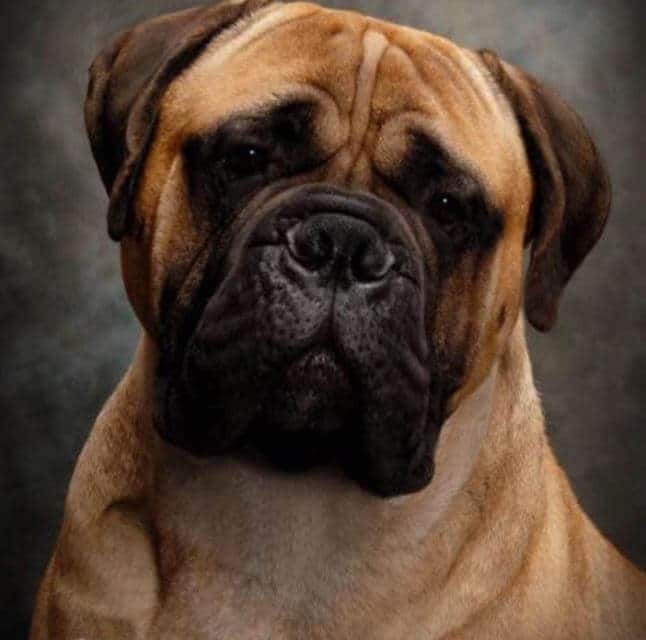
The essence of the Bullmastiff is all of these things. Owners, breeders, and judges need to be mindful that all of these components present the total package of the Gamekeepers Night Dog.

All About Judging