Members
Gambit Collies reflects on 45 years of breeding, showing, and preserving the Collie’s expression, temperament, and legacy.
The Weekly Brief
The best of SHOWSIGHT editorials, weekly wins, and breeder commentary — delivered to your inbox every Sunday morning.
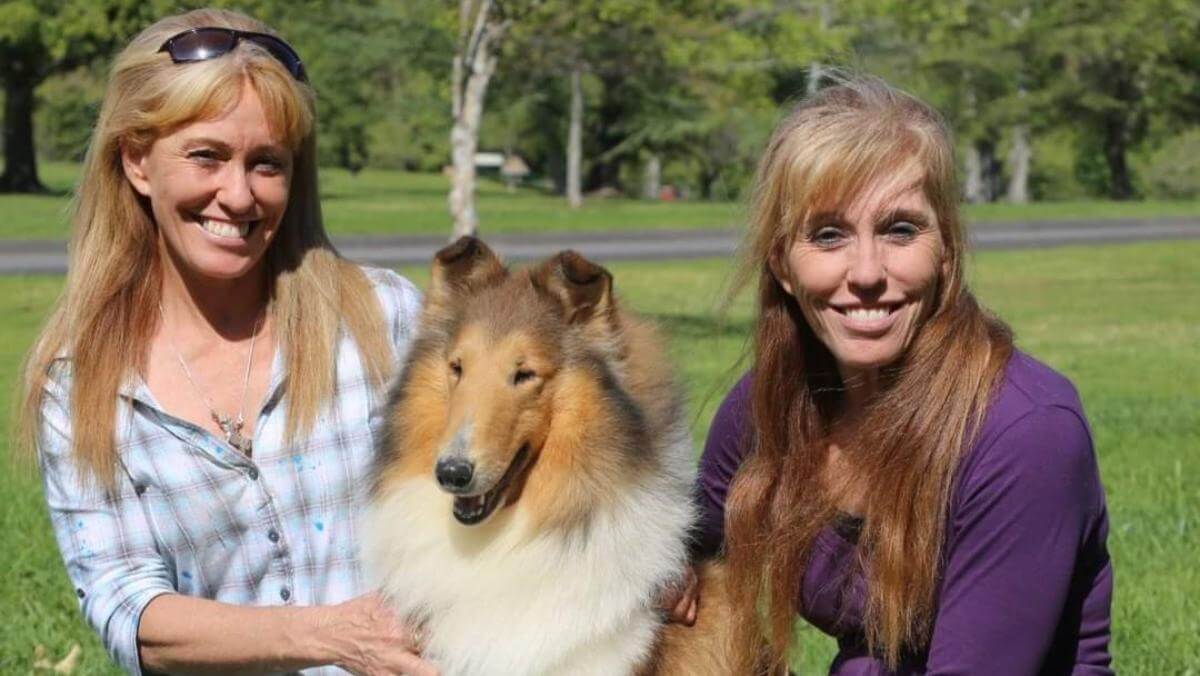
Linda Hash-Davis & Barbara Hash-Okeefe
1. My name is Linda Hash-Davis. I got my first Collie from a breeder when I was 16; I worked at a summer job to save for the puppy. That breeder introduced me to the world of dog shows. Along with my identical twin sister, Barbara Hash-Okeefe, we attended our first dog show 45 years ago and we were instantly sold. This was destiny, as we knew from that moment on that we wanted to breed and show Collies. We were lucky to have great mentors in those days. We decided on the kennel name “Gambit” because it means to strategize and make sacrifices for a better outcome. That summed up what breeding and showing dogs meant to us. We have lived in Southern California for most of our lives. Barbara lives 15 minutes away from me, which has allowed us to keep more dogs, have two inputs, and bounce ideas off one another. In the 45 years of breeding, we have finished over 100 Champions, won the Breed at our National three times, and have paid it forward by mentoring many newcomers to our breed. I also have a judging license for Collies.
2. The Collie is known as a head breed; one-third of our Breed Standard is devoted to the qualities of the head, eye, and expression. Judges are encouraged to feel the head, feel for smooth bones, filled skulls, and flat cheeks. Expression is a combination of correct eye placement, size, and shape. Eyes should fit into the skull as a fluid, thoughtful placement, allowing for a sweet but intelligent expression. It’s hard to teach expression; one mentor said, “You will know it’s right when you see it.” Expression is just as much a feeling you get when you gaze into the face of a Collie. The correct expression is when the combination of all the parts of the head come together properly. The expression is part of their persona. When you see the soft but alert face of a Collie it is a calming and gentle reminder of their sweet nature. This is not to say structure and movement are not as important; as a herding breed they must be able to perform their original intent. But expression makes it a Collie.
3. Although the Collie as a breed has lost some of its popularity, we still find many homes that “had a Collie growing up” and want to experience this loving relationship again, or many who have replaced a Collie with another Collie. New people to the breed often comment that their dogs are wonderful additions to their homes. They experience the sweet nature, and willingness-to-please demeanor, and express how wonderful they are to live with. Collies are known as family dogs, protectors, and loyal. If the coat is a challenge, they can find the same stable temperament in the Smooth Collie. The Collie breeders have carefully maintained their “family dog” qualities.
4. The CCA (Collie Club of America) breeders are encouraged to DNA breeding pairs. I have been thrilled to introduce this new technology and tool into my breeding program.
5. The push from the public to “Adopt, Don’t Shop” makes it unpopular to purchase purebreds. Unfortunately, many of these new owners may not have discovered the world of dog shows, as I did after purchasing my purebred. This adds to the decline of new people in the breeds.
6. I worry greatly about the decline in show entries, and breeders who devote themselves to a breed. There are many reasons, but the results are going to be the loss of genetic “lines” of dogs. More people are buying one or two dogs to show (and not breeding litters). This limits the number of dogs within each breed to perpetuate those breeds, and the choices in studs from other families.
7. I think the introduction of Grand Champion points and Owner-Handled Groups was a brilliant move on the AKC’s (American Kennel Club) part. They encourage owners to show their dogs themselves. This also encourages entries beyond finishing dogs. It gives the owner a chance to compete and have success in a different arena than the professionals. Encouraging owners to compete in other forms of dog activities, like Agility and Rally, is also a way to bring and keep people involved in our sport.

Meet the Breeders