Members
Dog shows offer more than competition. Dan Sayers explores social fitness, human connection, and why meaningful interactions still matter.
The Weekly Brief
The best of SHOWSIGHT editorials, weekly wins, and breeder commentary — delivered to your inbox every Sunday morning.
I learned something new recently. It’s called “social fitness” and it refers to the ability to form, maintain, and optimize relationships based on things like communication, empathy, flexibility, and resilience. A person’s social fitness is determined by having meaningful connections with others, both personally and professionally, and just like physical fitness (and mental acuity), those connections can be strengthened through practice. Symbiotic relationships with family members, friends, and coworkers depend on regular exchanges that are supportive and encouraging. This is nothing new; however, in the digital age, genuine relationships are no longer taken for granted, and the benefits they bring to our contemporary (and occasionally chaotic) lives are considered by some to be the antidote to the feelings of isolation, loneliness, and depression that affect an increasing number of people today.
What does this have to do with dog shows? Well, I’m glad you asked.
The first dog show I visited left a lasting impression on me. The year was 1979 and the event was hosted by the Kennel Club of Philadelphia. Back then, the show was a one-day affair that brought together breeders and exhibitors from across the country who packed up at the end of the day before heading to Atlantic City. Like many shows at that time, it was “benched.” Every dog entered was given an assigned location where it was expected to remain when not competing in the ring. The mandate to “stay put” gave people time to socialize in a breed-specific way, and it offered visitors (who purchased tickets by the thousands) a chance to connect with those who had experience to share, and ultimately, puppies to provide. At the risk of seeming melodramatic, that long-ago show was a magical experience for me and it piqued my interest in learning more about a world that I had no idea existed. All these years later, I am still enamored of purebred dogs and dog shows, and “Philadelphia” remains a place where spectators connect with breeders and discover a bit of the magic for themselves. Philadelphia—and Westminster—still allow visitors a chance to connect with preservationists and purebreds in a relaxed way that is no longer typical in our “show and go” reality.
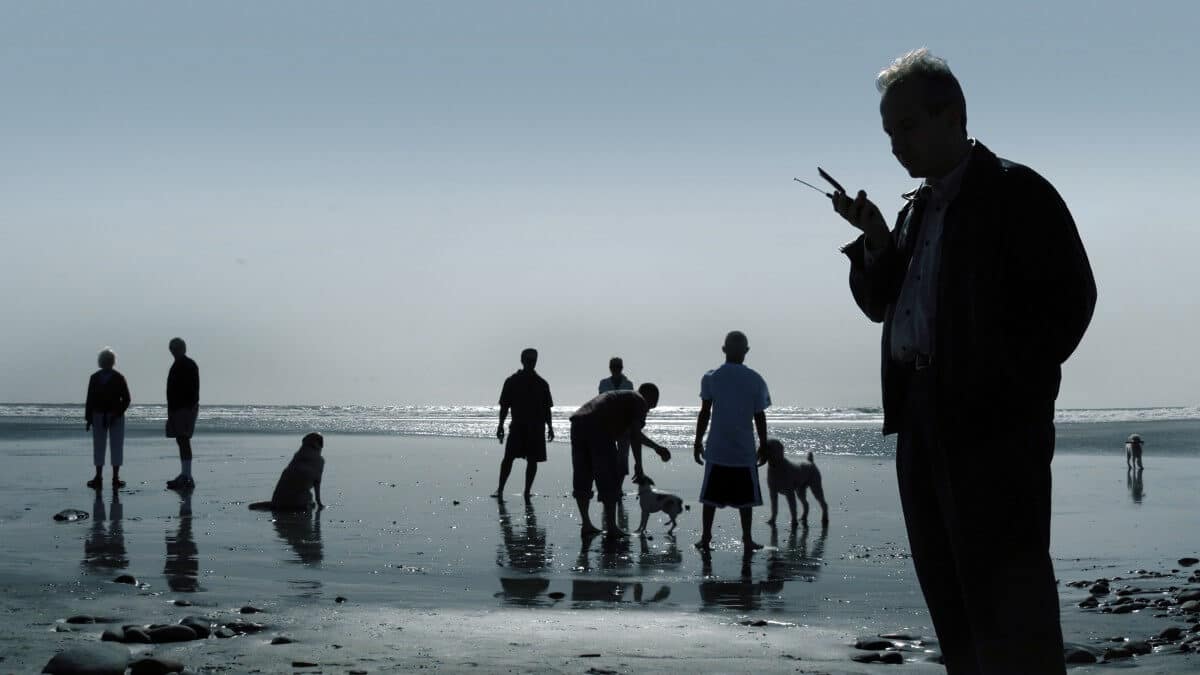
Dog shows today, by and large, have become places where interactions that were once taken for granted are no longer guaranteed. This is not exclusively a dog show phenomenon, of course, but it is now possible to attend an event without ever having a meaningful exchange with another person—or with a dog that’s not on the end of our own lead. Ringsides today are typically scattered with folks looking at their cell phones, and some exhibitors even glance at them while in the ring. And the conversations that do take place are often limited in scope: “What time do you show?” “Is so-and-so here?” “Who won the Group in Topeka or Tampa or Tucson?” Meaningful conversations can and still do take place at dog shows today, but they require more effort on the part of those who have something to say—or something to learn.
When it comes to socialization, the experience should not be presented solely for the benefit of insecure puppies and green-as-grass show prospects. People need socializing too, and a dog show is a great place to exercise the right to participate in safe and stimulating conversations. As “dog people,” we’re all part of a community that comes together regularly and in-person, with a published schedule that facilitates making plans with those who share our interests and passions. Dog shows—especially those that offer pleasant experiences outside the ring—have never been about the competition exclusively. At any show, a pop-up tent can become a meeting spot for Meet the Breeds, Breed Rescue, and other experiences that encourage interaction. Every dog show is an event that offers opportunities to support our need to make real-world connections.
In an era that defines human connection in terms of “connectivity,” dog shows still provide the kinds of things that social media cannot, no matter how advanced the technology; dog shows encourage physical exertion, provide mental stimulation, and offer emotional fulfillment—and they support the all-important (but often-neglected) need to maintain everyone’s individual and collective social fitness.

Dog Show Community