Members
Exploring how evolving language shapes perceptions of dog breeders, purebreds, and the sport – past, present, and future.
The Weekly Brief
The best of SHOWSIGHT editorials, weekly wins, and breeder commentary — delivered to your inbox every Sunday morning.
Language is always evolving, despite its seeming permanence on the pages of dictionaries prepared by several well-known publishers. Definitions of words expand to acknowledge new technologies and cultural shifts (e.g., virtual, text, catfish), place names are routinely adopted from other languages (e.g., California, Colorado, Connecticut), and new words are created by combining existing ones (think Bullmastiff, Greyhound, and of course, the portmanteaus of those ubiquitous watchamadoodles). An established word can even take on particular significance simply by defining an era perfectly. Take, for example, Merriam-Webster’s 2024 Word of the Year; polarization: a state in which opinions, beliefs, or interests of a group or society no longer range along a continuum but become concentrated at opposing extremes. Hmmm…
The vocabulary embraced by breeders and exhibitors in the sport of dogs is certainly not immune to change. Breed Standards are occasionally revised, for example, much to the chagrin of a breed’s purists. Though specific language can be enormously influential—and, too often, divisive—when it comes to describing dogs and dog sports it can also become static and seemingly out of touch with the community at large. Over time, words like “fancier,” “stern,” and “bitch” can seem antiquated or even offensive. Eventually, they can be replaced by newer terms that have greater appeal and better reflect a society as it is—not how it was. “Fancier” becomes “exhibitor,” “stern” becomes “tail” (docked or undocked?), and “bitch” becomes “girl.” (How many breeder websites today have a page with the heading: Our Bitches?) Currently, words like “versatility” and phrases like “do it all” reflect the prevailing enthusiasm for performance events. Some participants, however, might see their usage as an omen of a continued shift away from breeding dogs according to a written Breed Standard to a “one size fits all” approach for participating in the sport. Depending on your point of view, that participation has either regretfully strayed from the wisdom of the past or it is boldly embracing a brighter future. Maybe it’s a bit of both.
Among the established words that have all but defined the sport of dogs through the years, a few can seem out of touch with today’s prevailing attitude towards dogs in general. Here are three conventionally used terms that might be due for a refresh.
Since the sport’s inception, the word “kennel” has been used in a variety of ways. It defines a family of related dogs and it describes the building in which those dogs are housed. It’s also used to characterize a dog’s portable home away from home. But just as the word “crate” is used in lieu of “cage,” many people today take offense at boarding their dog in a kennel while on vacation. Instead, those same people are happy to check their furry family member into a doggy daycare or pet resort that offers flat screen televisions and a list of exclusive spa services. They’re even happy to pay more for such indulgences if they’re marketed as “luxury” options. It is in this pampered environment that the word “kennel” may no longer be the best choice for today’s dog clubs. Although the Mytown Kennel Club may be celebrating its centennial this year, a name change to Mytown Dog Club could ensure the organization’s next one hundred years by signaling a more inclusive mission that speaks to everyone who possesses an interest in a community’s dogs and the people who support their general welfare.
Historically, dog shows have been the provenance of pooches with pedigrees. It is only in recent years that dogs of unknown ancestry have gained access to activities that are merit-based rather than subjective in their assessment. After all, why would it be relevant to know the parentage of a dog that can catch a frisbee or chase a plastic bag? In fact, an argument could be made that the results of a DNA test are every bit as meaningful as a written record of a dog’s family history. (Perhaps even more so, as the branches of royal family trees have been known for eons to bear fruit that is, well, suspect.) And in the age of genetic testing, any pedigree’s purity can rather easily be determined with certainly. So, is the use of the word “purebred” still meaningful today? To some, the term evokes 19th century Darwinism and 20th century eugenics. Maybe the time has come to embrace dog breeds for what they truly are: culturally significant domestic canines with a pedigree: pedigreed dogs. This term has been widely used for years by registries around the world, and its usage leans more towards a written record than it does a sacrosanct genealogy. Pedigree requires documentation, but purity requires a deeper faith that cannot be proven or disproven.
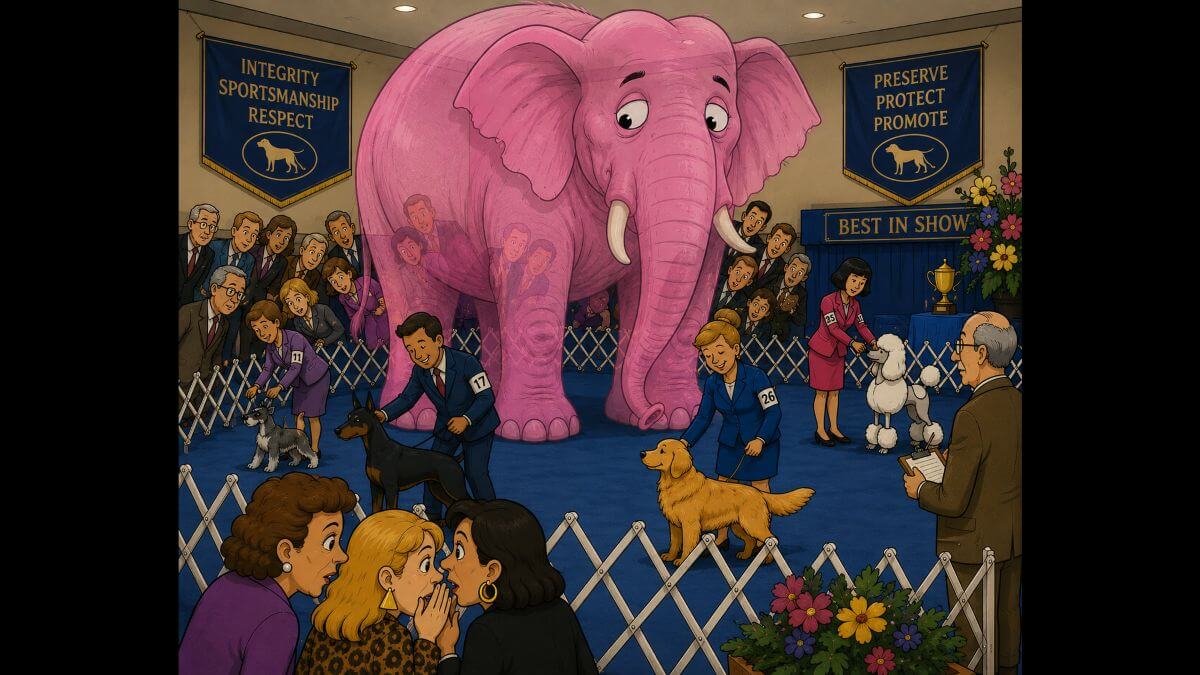
It is no secret that the term “breeder” has become a bad word in the minds of many people who claim to care about dogs. Of course, those same people seem to have little trouble purchasing puppies they find on the Internet, though they don’t always understand that their new family member is typically the result of someone’s decision to produce baby dogs: a breeder. Today, puppies that are produced from health-tested parents are no longer the ideal for many, replaced by DNA-verified mixes and “rescues” with unverifiable hard luck stories that are shuttled cross-country in cargo vans. Their appeal isn’t their purity. Instead, the draw is directly linked to either popularity or poverty. Dogs that are intentionally bred for profit make sense in a culture that has become increasingly consumer-driven, and those dogs marketed as damaged goods do likewise to self-described sufferers who have become disenfranchised by the same system. (Exactly how these two things can exist at the same time is, I think, an indictment of a polarized society.) In any case, puppies are still the result of intentional decisions made by people motivated by profit or pity—or preservation.
Maybe the term “breeder” is still the right word to describe puppy producers, but maybe it’s time to take back authorship. Maybe it’s time to launch a new marketing campaign:
I’m Not a Breeder, I’m Better!
(Ask Me About the AKC.)
Though some of today’s current dog language can seem old-fashioned, the efforts of breeders who produce dogs according to a standard, both written and implied, should never go out of style.

Dog Show Community