Members
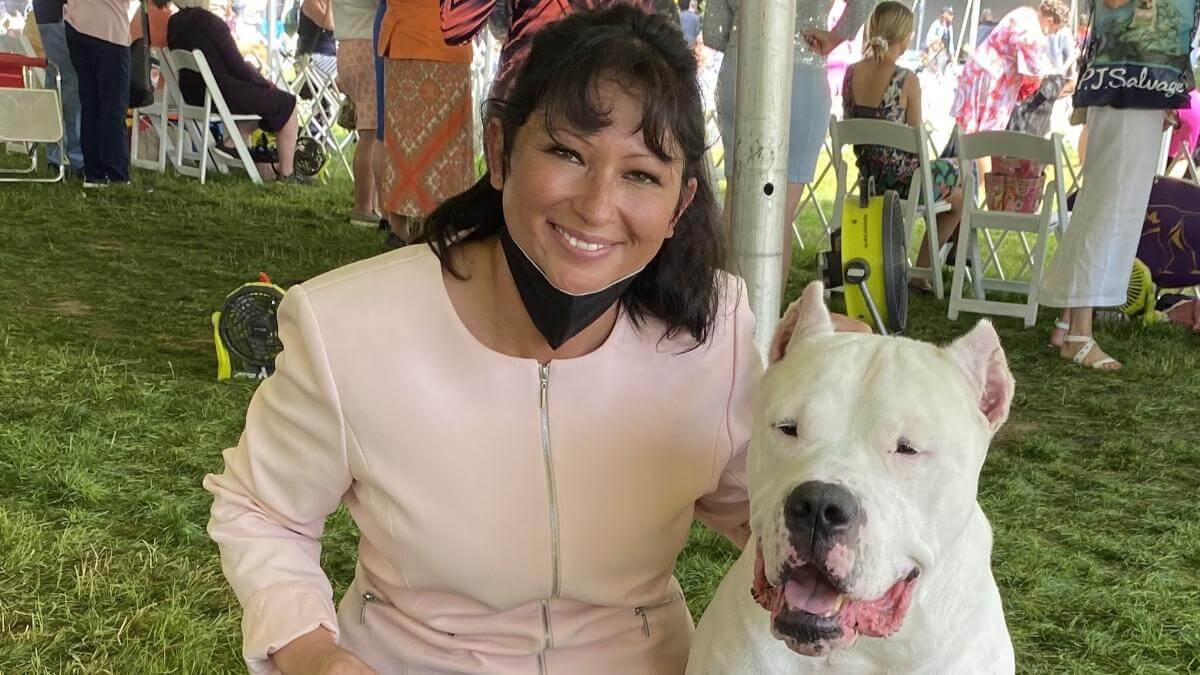
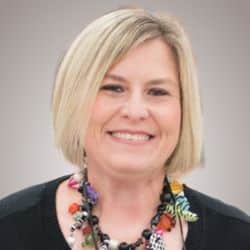
Meet Aggie Wasson, breeder, owner, and handler of Dogos and Mastiffs, sharing her journey, insights, and show ring success.
The Weekly Brief
The best of SHOWSIGHT editorials, weekly wins, and breeder commentary — delivered to your inbox every Sunday morning.
Agnes “Aggie” Wasson: My love of purebred dogs started with my dad and his Doberman Pinscher, AKC-registered Von Rocky Hambone Maxamillion, back in the early 1980s. I obtained my first AKC Doberman in 1996. Star was my heart dog, and after losing her, another Doberman wouldn’t compare.
Agnes “Aggie” Wasson: My husband, A.J. Wasson, and I have been breeding purebred dogs for almost 27 years. We began to talk about other breeds after Star passed, and had been interested in the Mastiff. My husband was recently out of the military, and we had time to explore more with dogs. We both like large Working breeds and had found an ad for Mastiffs in Topanga Canyon, California. It was love at first sight and we came home with Daisy. We moved to Texas in 2007. Shortly after that we began showing dogs.
Growing up military and moving around so much made it difficult to learn about and find the right resources. We found breeders and stud dogs from newspapers before the Internet, but computers helped us access more breeders. After moving to Texas, it was mentioned to us that we should “show” our Mastiffs. This is where we met Bonnie Blink, Quietwood Mastiffs.
Bonnie would mentor us on appropriate health testing, how to look at the structure of the Mastiff, showing in AKC, and she recommended a handler. She introduced us to other breeds, too. We dove in and began showing Mastiffs.
Agnes “Aggie” Wasson: Our handler had an exclusive special, (we learned this is where the handler is exclusive to one client), so I started attending handling classes where we met Denise Tatro. Going to Denise’s handling classes is where we learned how to show our own dogs and what being an Owner Handler was all about.
During this time, we were introduced to the Dogo Argentino. Our first Dogo was a beautiful pet that we loved for 11 months. We lost her at a young age to unforeseen circumstances. We absolutely loved our Mastiffs, but something about the Dogo intrigued me and my husband; we decided it was a breed that we couldn’t live without. With the encouragement of my husband and my dad, we imported our first show Dogos from Russia and Iz Lunnoy Stai Kennels, owned by Marina Rusakova. Dogos were not yet recognized by AKC but were shown in Russia with Russian registry and with FCI (Fédération Cynologique Internationale) registration. My husband imported Yanga Iz Lunnoy Stai, “Raina,” and my dad imported her brother a month later, Yadgar Iz Lunnoy Stai, “Dmitri.”
It wasn’t long after owning these two that we knew we had to further understand them better. That’s when we began looking for other resources to learn more about the breed. We found DACA (Dogo Argentino Club of America) and went to our first Dogo Specialty in 2013. This would be the first time we met so many other Dogo enthusiasts; it was a blessing to see so many Dogo lovers in one place. We made connections that led us to hunting with our Dogos and really learned firsthand what the breed was created to do.
Agnes “Aggie” Wasson: If you decide that you want to become a breeder of the Dogo, or any breed for that matter, it is important to know the dogs’ history. What was the purpose of the creation of the breed in the first place? Then look at the written Breed Standard and connect how the function of the dog correlates to the structure of the dog. Surround yourself with knowledgeable mentors of the breed and gain knowledge on how to breed.
I have attended seminars on breeding, AKC Canine College, and multiple educational opportunities that AKC provides. Some are free, some cost a fee and offer certificates. All are worth your time to better yourself as a breeder. Taking these courses will help you see the structure of dogs and how to correlate that with your Breed Standard. Give yourself knowledge by reading, watching, and listening to experts in the field, like other successful breeders, successful judges, authors like Pat Hastings, and all the resources AKC provides.
Agnes “Aggie” Wasson: As a Breeder/Owner Handler, it is important to put yourself in line with people who also want to see you succeed. If you just want to show, be sure that your breeder has your success in mind so that you can compete. If you want to breed, don’t breed for ribbons and titles, instead breed to pedigrees and dogs that will complement and improve your breed. The ribbons and titles will come if you focus on breeding good, sound dogs that represent the breed. Showing Dogos can be difficult because we are still new to AKC. We aren’t as common as some of the other breeds, so numbers can be low, and judges’ education can sometimes be difficult to find. Over time, like with many other new breeds, we expect this to improve.
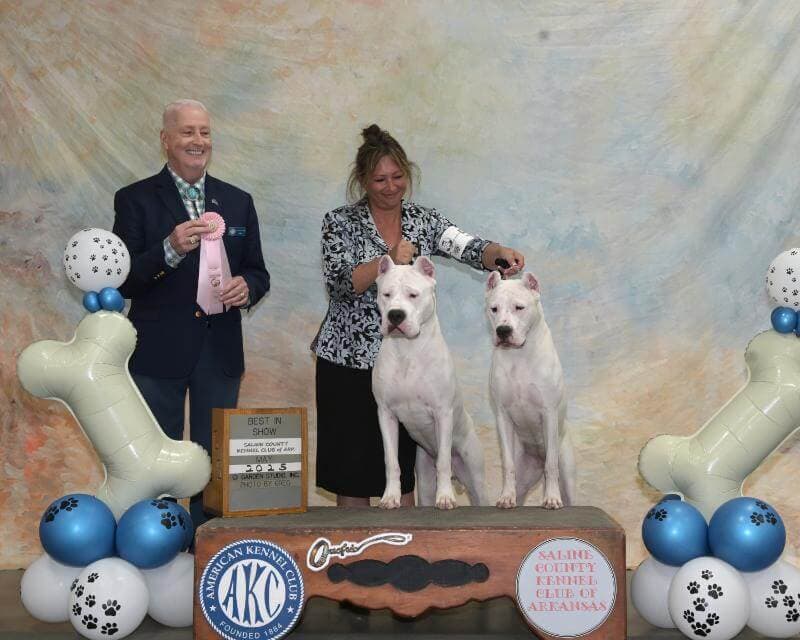
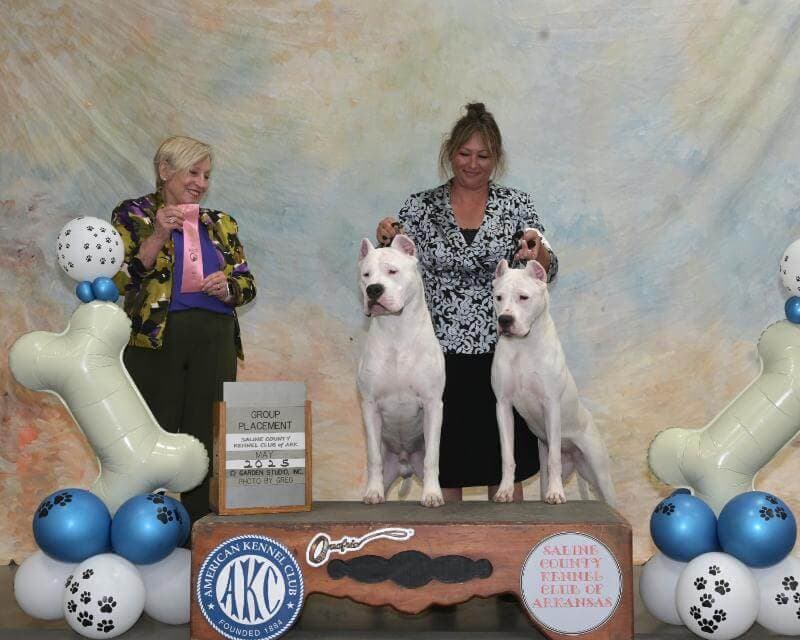
Agnes “Aggie” Wasson: As a Dogo Breeder, Specialties are important. Ol Glory Kennels (name inspired my husband’s love of our flag and country) has had many successes, including owner-handled wins. We have the most bred-by Dogo Champions and Grand Champions. We won Best Brace and Best Junior at the first DACA National we attended under Breeder-Judge Horacio Rivero in 2013. We won Best of Breed in 2014 along with Best of Winners and Best Puppy. We won the first Owner-Handled Best in Show under Judge Michael Faulkner with Owner Handler Kim Roberts at the end of the lead. We won Best of Breed 2023 under Breeder-Judge Massimo Inzoli, with Robin Massingill showing. We won Westminster Best of Breed in 2021 under Judge Mr. Rick Gschwender. We won Group One in 2023 under Judge Miss Patricia Nemirovsky-Alsina and that led to the first Dogo Best in Show under Judge Glen Stark, expertly handled by Terry Smith.
Thank you to all the judges, handlers, owner handlers, mentors, and clients who have recognized our dogs and encouraged us as breeders to continue. Most importantly, thank you to my husband and children for all the support and for your mutual love of dogs. Without you, I am nothing.
Agnes “Aggie” Wasson: As a Breeder/Owner Handler, always try to have perspective. There is no perfect dog, just an idea of creating the perfect dog. As a Breeder, its most important to me that my Owner Handlers have a good representation of our breed to have success in the OH ring. Owner Handler/Breeders will be the ones continuing with your lines. Your legacy lives with them. Give them something worth talking about.
Agnes “Aggie” Wasson: Jason and Jacobi Schweitzer, Eric Edwards, and Chris Scott have given us firsthand knowledge of all their experiences in and out of the field. We have connected with other breeders from afar like Angel Rios and Martin Bellavitis, who have been breeding Dogos for decades. It is important to find people who share the same passion about breeding as you do. It was amazing to watch and take part in the Dogo going through Miscellaneous and becoming completely recognized by AKC in 2020.
I have found that the more mentors you have in multiple breeds, the more understanding you have overall, especially learning about other breeds that make up the Dogo, like the Great Dane and Bull Terrier. Melissa Dreyer has been amazing. Finding a great mentor is invaluable. It’s great to be able to compare the knowledge of other Breeders, Judges, and Owner Handlers. The support from mentors and clients is what helps you make it through the tough days. The mentors, owners, and other breeders help make up what you become as a breeder. They help you aim for higher goals, get you through the losses, help you grow in knowledge, and help you become the best breeder possible. I appreciate the photos they send, the successes in and out of the ring, and the stories about how the puppy you sent has changed their lives. They may not realize they have changed my life, too. My breeder has changed my life. My husband has changed my life, like when he hit a bucket-list goal by going from the ring to the field to catch wild hogs and back to the ring, barely in time to champion his dog, Mickey.
It is thanks to people like JT and Liz Nemit, Mary Dalton, Kim Roberts, Mike Reid, Angel Rios, Juan and Dalys Maya, Michele Watkins, Dan Reeves, Candace Husk, Robin Massingill, Melissa Dreyer, Meg Reidy, Alivia Wasson, Ava Wasson, Chad and Heather King, and Peter and Aubrey Harrison—along with so many others—that our community continues to grow, achieve success, and gain a deeper understanding of our breed. They help us reach our goals. These are the moments we live for. Not just producing dogs, but helping the Dogos and clients grow with their owners and helping owners achieve individual goals they have for their puppy.
Agnes “Aggie” Wasson: Firstly, it is important to remember to have fun when showing your dog. At the end of the day, you’ve already won because you’re going home with your best friend. Don’t be afraid to ask questions. Be able to take criticism from people who care about your program, to help you avoid kennel blindness. Be able to point out all the positive things about your dog and compare those positives to how important they are to your Breed Standard. You should be able to weigh pros and cons before doing a breeding.
Make sure you have completed your necessary health testing before doing a breeding. Always use AKC as a resource to learn about health testing, how to breed, how to reach parent clubs, and the many different activities available to do with your dog.
Agnes “Aggie” Wasson: If you are an OH thinking about breeding your dogs, take your time. Knowing your breed and knowing what good potential owners look like is important to breeding Dogos. Dogos are not meant for everyone. You need to be able to question potential owners—and they question you. Treat your potential clients the way you want to be treated and be able to give them as much knowledge as necessary to be successful with their new companion.
Understanding the Dogo as a hunting and guardian breed will help you understand the Standard. The creator of the breed, Dr. Antonio Nores Martinez, had a passion for dogs. He created the Dogo to be versatile in regard to function. The Dogo is a noble companion, protector, and hunter. The Dogo is a balance of mind and body. This is not a head breed. They are balanced. “A study in harmony,” per the AKC Standard. When judging the Dogo, and thinking about the function of the dog, all parts are important; large nostrils to find game, balanced body and deep chest to chase game, balanced head to catch and then hold game for an extended period. They must possess all these traits (balance of head, body, and mind), then come home and love and guard their owners and home.
The power and intelligence of the Dogo demand a pack leader mentality. If you don’t plan to stimulate the mind and exercise the body, the Dogo will find things to do. They like attention and work. The more knowledge you have and the more knowledge you share, the more successful your owners will be. Owner Handlers are important because they are out there introducing other people to their breed. The more knowledge and support our Owner Handlers have, the more successful our breed will be.
Agnes “Aggie” Wasson: I have a goal to compete in the Owner-Handled (OH) Class and Bred-by Exhibitor; I just haven’t had the time and opportunity yet. I’ve been enjoying watching my girls compete in the show ring with their Owner Handlers.
One day, I would like to become an AKC judge.
Agnes “Aggie” Wasson: I think one of the funniest parts about showing as a group is how supportive we are at the setup, even when the nerves are flying; you could cut the air with a knife, with the tension at ringside and in the ring. Then we go straight to congratulations after staring each other down in the ring. It makes competition fun. It is nice to have a group that supports you and critiques with love and intentions of seeing you succeed.
Breed Conservation
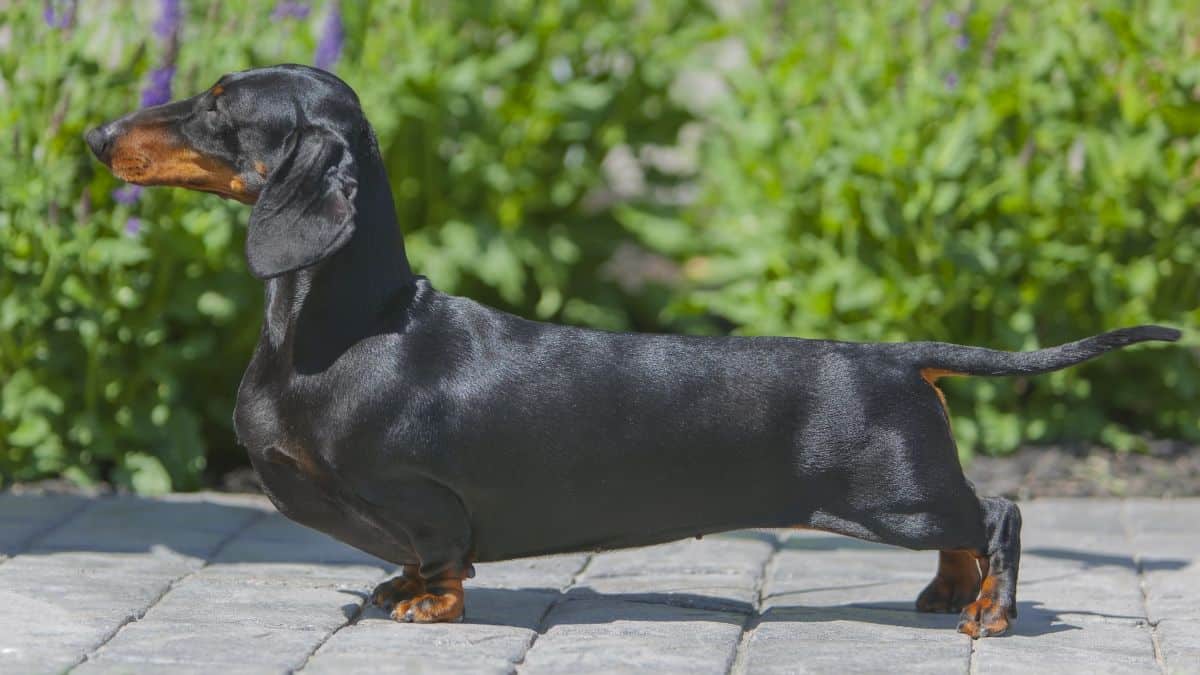
Using the Dachshund as a case study, Lexa Richmond explores how breeding decisions, mentorship, and education shape breed preservation.