


Harnesses are popular in the dog world, and they are touted by manufacturers and well-meaning trainers as ideal for all dogs. However, not all harnesses are created equal, and at least one study has shown that they may not be ideal for most dogs.
Some harnesses, and particularly those that are advertised as “no-pull,” have a band of webbing that runs across the shoulder joint (Figure 1). This severely restricts the ability of the dog to move the front legs forward, and can lead to a chronically restricted gait, even when the dog is not wearing the harness. Further, the band that lies across the shoulder often has a metal or plastic buckle that lies right over the biceps and supraspinatus tendons, which lie just under the skin, creating pressure and potential injuries to these sensitive soft tissue structures. Veterinarians have long identified injuries to this tendon as one of the most common injuries in active dogs, and some have suggested that restrictive harnesses contribute to shoulder injuries.
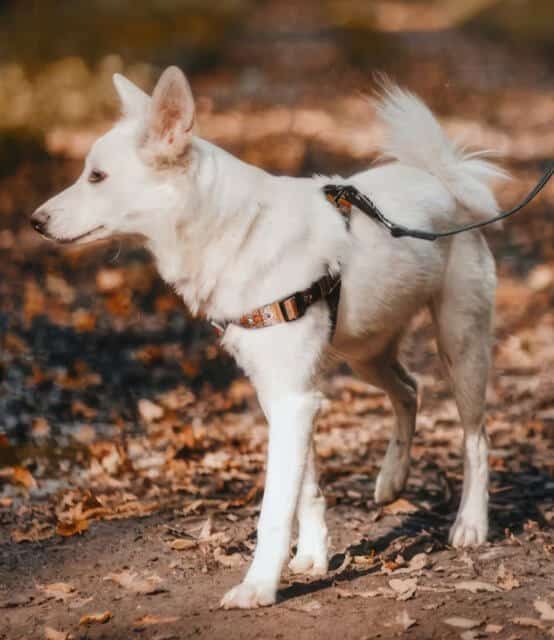
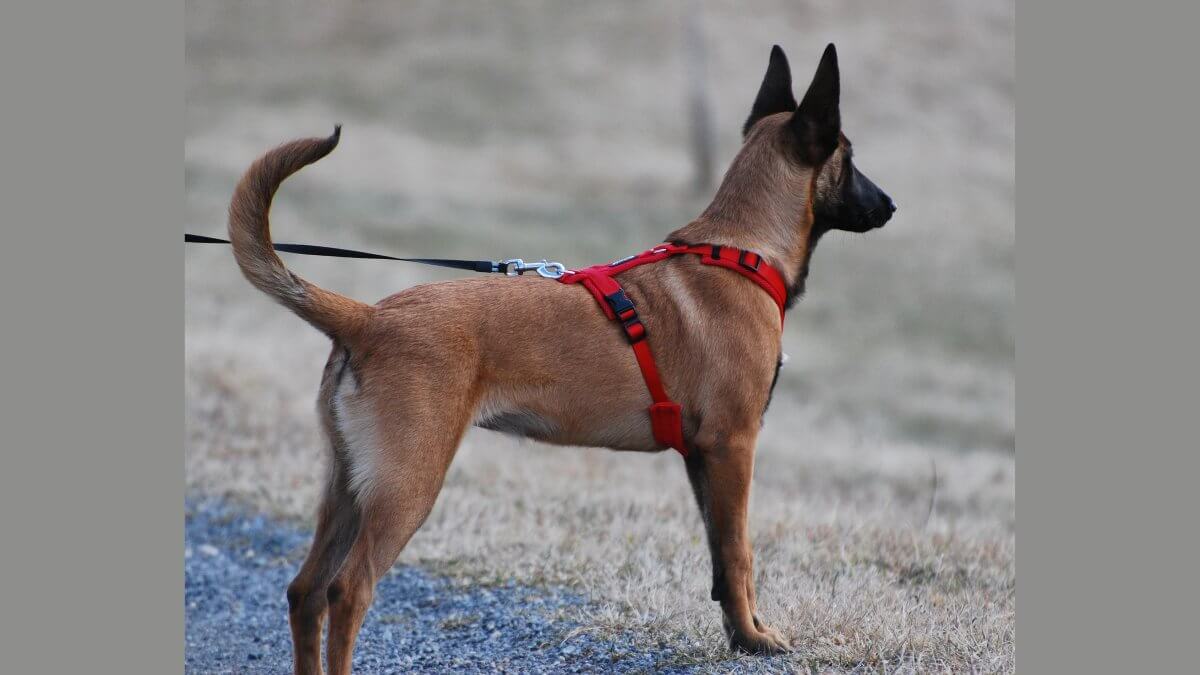
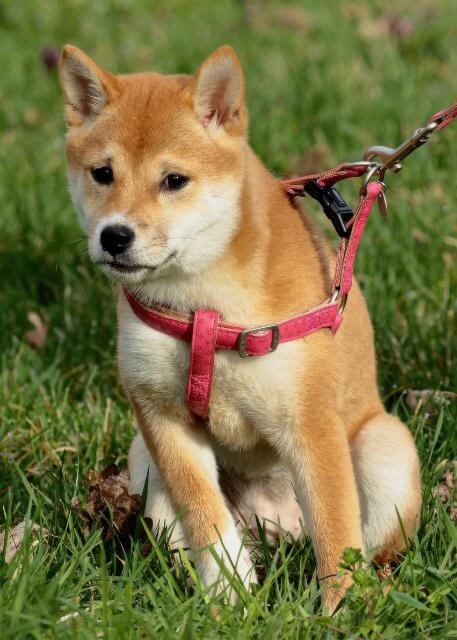
The ideal harness is Y-shaped in front (Figure 2), with a band that goes under the dog’s chest, and two bands that closely encircle the neck, leaving the shoulder blade free to move. When using one of these harnesses, it must fit closely to the body (Figure 3), and to accomplish that, it should have a clip around the neck portion so that it doesn’t need to be large enough to slip over your dog’s head. If the neck section of the harness is too loose, the bands that are meant to stay above the shoulder blades will drop down and restrict the shoulder blades (Figure 4).
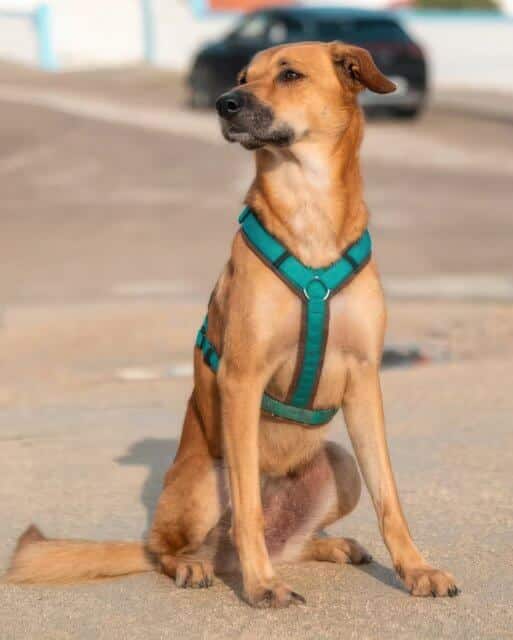
In one study, ten Border Collies were fitted with five different harnesses, both no-pull harnesses and ones with a Y-shaped front, and their gaits were analyzed objectively on a pressure-sensitive walkway. Those gait parameters were compared with those of the same dogs when wearing just collars. The results of this study showed that both types of harnesses significantly altered dogs’ gaits, although the no-pull ones altered the gaits more. In addition, the more surface area that the harness had, the more it altered the dogs’ gaits. Further, in every instance, the dogs’ gaits were more normal when collars were used.

There are some instances when dogs should wear harnesses. Any dog that has any impairment to breathing, such as brachycephalic dogs or dogs with a collapsing trachea or any abnormality of the upper airway, or any dog with an injury to the neck, should wear a well-fitting, Y-shaped harness to take the pressure off the neck.
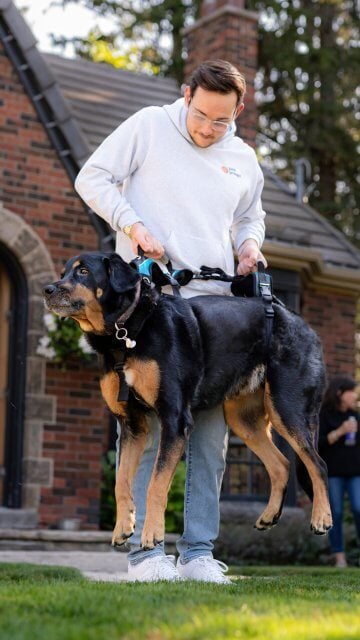
In addition, a harness can be an excellent solution for elderly dogs that need assistance standing, moving, or ascending/descending stairs. The ideal harness for this purpose is the Help ‘Em Up Harness (Figure 5).
In fact, there is no ideal harness to stop a dog from pulling. This is not surprising, since harnesses were designed to help dogs pull. So, if you really want your dog to stop pulling on the leash when you are going for a walk, a much better solution is to train them not to pull. This does take an investment of time and consistency, but it is so worth it, for both you and your dog. There is an excellent book on training dogs not to pull, called My Dog Pulls, What Can I Do? by Turid Rugaas. Ultimately, that is the ideal solution for a dog that pulls.