Members
Frank Kane discusses Crufts 2026, judging integrity, breed preservation, and the visible and unseen pressures influencing dog show judges.
The Weekly Brief
The best of SHOWSIGHT editorials, weekly wins, and breeder commentary — delivered to your inbox every Sunday morning.
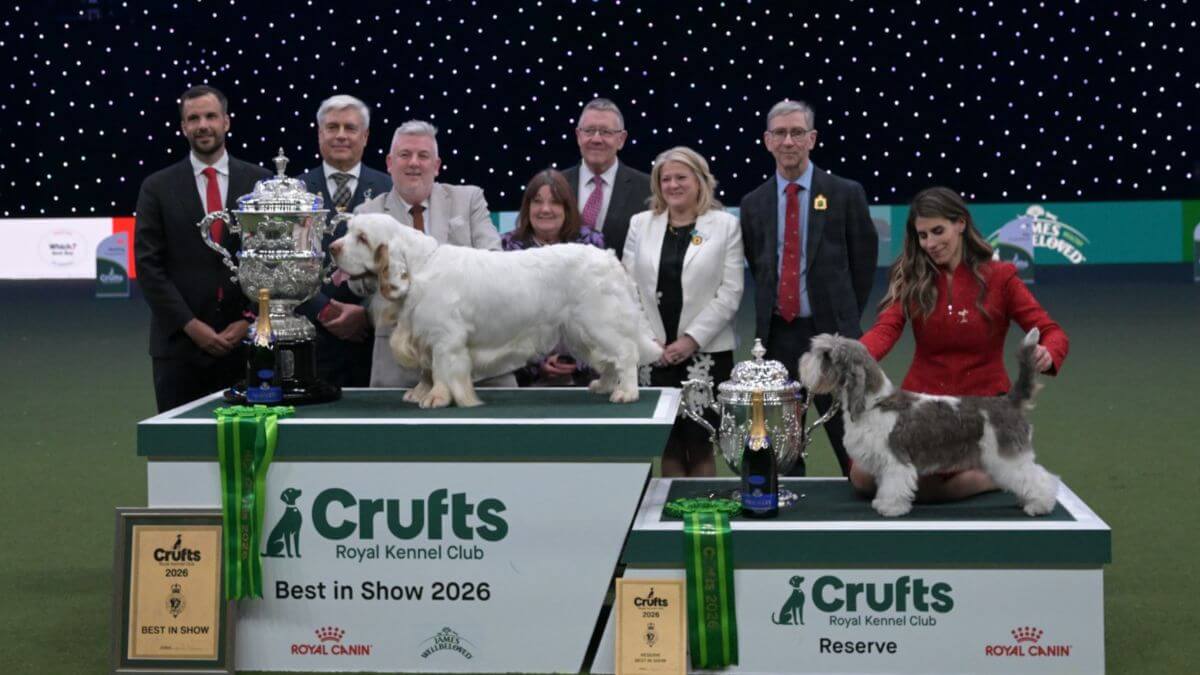
Technology guru Steve Jobs once wrote, “You can’t connect the dots looking forward; you can only connect them looking backwards.” And so, to start these musings, I would like to reflect on this year’s Crufts and in particular what was, for me, a dispiriting post-Crufts reaction.
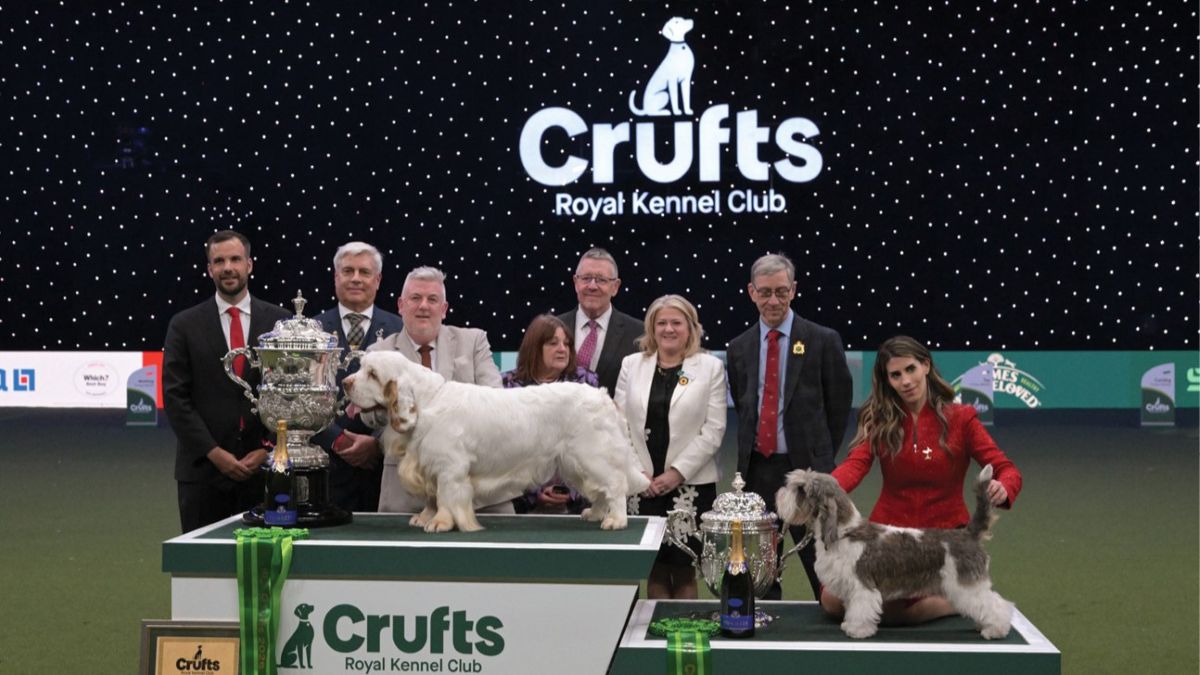
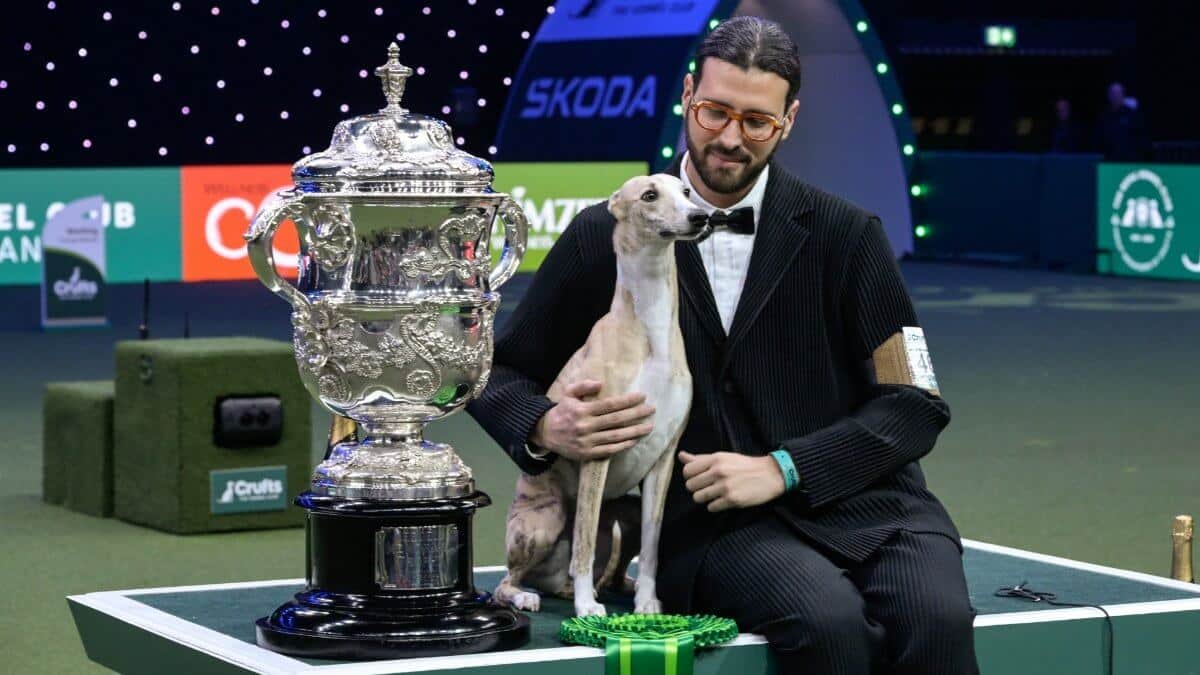
The condemnation of some breeds in the press; on social media; by animal rights groups; by veterinary bodies; the public (where everybody seems to be an expert) brings into focus the precarious nature of our pastime and the importance of perception; how others see us and how we present ourselves and our hobby. Crufts is the only show to receive coverage on mainstream television, enjoying generous broadcasts on four afternoons and evenings, culminating in Best in Show night when viewing figures top the rankings.
It is our shop window for the world, and I have always viewed it as a great opportunity to educate viewers about our sport, to tell them what judging involves, what the judge is looking for, and that it is not, as some view it, a “freak show” of exaggerated breeds in fancy hair styles. I talk about breed type, soundness, and breed movement, and I know that people do take this on board and come to view the show in a positive light. However, we tread a fine line and we all need to be vigilant to prevent giving ammunition to those whose aim is to spark off the whole shooting match, thus potentially undoing the fine work that breed clubs alongside the Royal Kennel Club are undertaking to promote the health and wellbeing of pedigree dogs. And of course, this is now a worldwide problem as you will know of the American Kennel Club’s work along with breed clubs handling similar problems. Look at some of the European countries to see how animal welfare groups have influenced government measures to affect dog showing. We seem to live these days in a culture of resentment and negativism, and social media has fostered this with anonymous keyboard warriors snowballing the negative, and often malicious, criticism.
I have sympathy for our Royal Kennel Club, which does its utmost in the run up to Crufts to prepare judges for the extra pressure of a judging appointment at Crufts; with correspondence reminding them of Breed Standards, the importance of soundness in movement, and the need to prioritize wellbeing (with no signs of any welfare or health issues) as paramount in their decision-making. On the eve of the appointment, Breed judges and Group judges have a meeting to revisit these features and answer any questions. We have in the UK some breeds known as Category 3 breeds, which have features which might be prone to exaggeration or bring with them welfare or movement issues, and which have been placed on this register after comments received from judges. The Best of Breed winners in these breeds must undergo a veterinary inspection to ratify their Best of Breed award. If they fail this examination, they are not eligible for the Group. This year, the German Shepherd Dog BOB winner did not receive veterinary endorsement. Such backward steps can be very disheartening for those of us who believe in the value of dog shows and cherish the preservation of pedigree breeds of dog. The critics call for banning breeds and want immediate action while our kennel clubs work with breeders to improve the breeds. The road ahead is not going to be straightforward.
I do, however, rather like the comparison ironically made by one of the sternest critics of the pedigree dog world who compared the potential evolution of dog showing to the changes many zoos have made over the last few decades. Zoos were once vilified as places where animals were there only for our amusement, with little concern for their welfare, but they have now become havens with conservation at their heart. Maybe the world of dog showing can indeed take a lesson from them?
A government enquiry in the UK some years ago came out in support of dog shows as a force for good. Remember that the early dog shows were seen as the sources of the best breeding stock. For these reasons, I was very heartened when I saw at the AKC shows in Orlando the Royal Canin banner above the judging rings proclaiming: “Preserve and Protect Our Breeds.” Spot on!
Without going into more depth about specific issues following this year’s Crufts, there is no doubt that judges and their decision-making have a huge part to play in driving progress towards the utopian dream of dog shows becoming a universally applauded celebration of outstanding pedigree dogs. In relation to ensuring the quality of judging, I think it is of value to consider this often-overlooked factor that all judges experience to a greater or lesser extent; the visible and invisible pressures affecting decision-making.
Crufts does bring added pressures to judges; public scrutiny; the television presence; and the general hype and buzz around the show. There is the excitement of overseas dogs to assess. It is, after all, the pinnacle of any judge’s career to have a Crufts appointment, and obviously they want to do a good job. It is also very relevant to remind you that most judges in the UK are specialist judges, judging their own breed or breeds and in which they regularly compete alongside the people they will now be judging at Crufts. Is that an extra pressure? Specialist judges face extra pressures when they are judging their own breed as they usually know all the dogs and their breeding, their owners, and their track records, and it is important that they can put all of that outside of their agenda.
It has often been a criticism of Crufts judging from overseas visitors that British specialist judges favor their own because it makes life more comfortable, as they are judging their own breed and they usually know all the dogs and their breeding as well as their owners. However, in recent years, the number of overseas entries accounts for around 20 percent of the entry, and overseas dogs account for many Best of Breed wins and Group winners, and Best in Show winners. Look at this year; three out of the seven Group winners were overseas exhibitors and every Group contained many overseas dogs. The UK might have left the EU, but it has certainly embraced the world in its dog scene, and I think that every exhibitor would agree that Crufts is a more exciting show because of that.
However, Crufts aside, I have long thought that, important though they are, seminars and exams on conformation and movement, breed type, and ring procedure do not fully equip the aspirant judge for their future in the ring. I think there is a real need for a module on the psychological pressures that a dog show judge is likely to face, and I think most judges would agree that these are very real. Can integrity, honesty, and having the courage of one’s convictions be taught? Probably not, no more than an eye for a dog can be taught… but awareness is the first step towards managing these pressures.
There is much talk about the importance of “doing your own thing” and advice to “just judge the dogs.” That all sounds basic enough, but I feel we could do more to prepare judges for some of the scenarios and pressures which could face them when they step into the ring, especially when judging a breed at the first time, although they can be ongoing throughout every judging appointment. The center of the ring is a lonely place, and it can be an intimidating one. It may be the pressure of ringside spectators, many of whom may have more experience than the judge; the exhibits may include well-known dogs with impressive winning records; and they may be faced by top handlers. But if the judge has knowledge of breed type, can assess movement and performance, what else do they need?
Advertising and social media promotion have undoubtedly brought greater pressures on judges. Full-page spreads, glossy photos of dogs with handlers, and often listing the string of judges who have rewarded a dog are another source of pressure that could tempt a judge to go with the flow. The sight of famous faces and famous dogs could be an intimidating factor and tempt a judge to play safe and put up the current winning dog which has been well advertised. Nothing wrong with that if the judge thinks it is the best example of the breed in the class. It is sometimes comforting to put up a dog knowing that it has a great record and that you will be in the good company of other judges before you; a sort of peer pressure syndrome or, to put it simply, the feeling that there is safety in numbers. It takes a judge assured in their knowledge, with a strong mind and assured confidence, to go against the flow.
However, it should be stressed to judges that there is no obligation to agree with every other judge’s opinion; they are just that—opinions. And just because a dog is widely advertised and seen regularly in the press it does not automatically follow that it is a top specimen of the breed. It seems now almost traditional to have Monday morning posts celebrating the weekend’s wins, always under an esteemed judge and always over a great entry of quality dogs, thus acting as subliminal (or maybe not so subliminal) advertising by the owners. I am sure that there are many readers who can think of a dog whose career was created by advertising. The adage: “Nothing succeeds like success” has a ring of truth to it.
Conversely, there is the psychology and “ego” that might drive some judges to show the ringside that they are NOT playing safe and are “doing their own thing.” Unfortunately, this can be carried to extreme in doing something different just for the sake of it and going out deliberately to find something to beat the big-winning dog. This can lead to a deserving top dog and best on the day being defeated for the sole reason of doing something different. That too, is not good judging. It might be popular with some exhibitors who are bored, or jealous with the continued domination of one dog in the breed. But if it is the best, then surely it should win. Judging should be about rewarding the best dog on the day, not about ringing the changes just for the sake of it. This attitude has resulted in some grave miscarriages of justice. A judge is invited to judge the dogs on the day, on an even playing field. I have heard judges come out of a ring saying, “I could find nothing to beat X” as if it had been their mission to put the dog down. Surely that is an agenda of prejudice when the top winner starts at a disadvantage.
Applause, applause! Wonderful to hear all the class winners applauded, creating a very good atmosphere and very morale building for the judge. In some Breed rings, however, there is silence. This can be worrying for some who might be led to think that the ringside doesn’t approve. Thick skin is required; the judge is not there to please the ringside but to satisfy themselves in doing what they think is correct. Besides, in some breeds the lack of applause comes because the breed is split into factions who don’t like to see their rivals winning. Beware also of the very organized support for some dogs, some of which might have a genuine fan club, but there are others where there is a rent-a-crowd cheering in the hope of influencing the judge to make a decision which will be popular with the crowd. The judge, not the “clap-o-meter,” should make the decisions.
This year at Crufts, I was about to start judging when I heard tumultuous cheering from a neighboring ring. I went over to see what was the cause; it was the awarding of Best of Breed to a beautiful dog from overseas which was making its first appearance at Crufts and which the ringside obviously loved. There was genuine happiness to see the best dog winning. On the other hand, I have heard loud cheering for a very popular defeat, witnessing the downfall of a deserving dog for no fault of its own, but as the result of a well-organized cheerleading which influenced an impressionable judge.
Gamesmanship from handlers giving the long hard stare to the judge at decision-making time (an attempt at hypnotization perhaps?) or the look of entitlement which is worn by some handlers; and the unhappy loser, shaking their head in disbelief at a decision; all of these are theatrics to psyche out the judge to shake their confidence and assurance. Remember the quotation, “No man is an island unto himself.” Well, in the middle of the ring the judges need to be just that; cut off from the outside world and its politics and antics, and focused entirely on the dogs in the ring before them.
Unfortunately, there has been a rise in another influencing agenda: the “spiking” of dogs by subtle implicit criticism. “You couldn’t like a head like that, could you?” or “It’s a pity he is not a good mover,” and so on. This sometimes starts from a rival in the breed but then spreads subtly and rapidly with some people accepting it without question. Another relatively new trending word, “influencer,” is now used in the dog world for a person, sometimes a judge, who sees themselves as a trail blazer in setting off a dog with a big win and then takes pleasures with their ego massaged by others following in their path. I find this insidious spiking of dogs, or promotion of them, an abhorrent trend, a cabal of judges combining to promote or demote. This is a very sad reflection of judges in a world supposedly dedicated to the appreciation of dogs. One of the great complaints of exhibitors is the prevalence of “follow my leader” judging when a dog “gets on a roll.” It can be accepted when the dog is deserving, but sometimes that is not always the case.
I could go on further but I don’t want to give the impression to a newcomer, or an outsider, that the dog world is full of unsporting, ruthless competitors who want to win at any price. But I think that aspiring judges, whose decisions have the power to influence the future of breeds and the ethos of the dog world, should be aware and be prepared for the ruses before they get into the ring. It will make their job simpler and happier.
I joke to new judges and advise them: “Do your homework, (that means studying the breed and the Standard rather than studying the latest show results), and after that, the less you know, the better you will judge. You should have an even playing field for every dog and every handler in the class, with no interest in past wins and reputation. You will be judged by the ringside on your first attempt with a breed. Make it a good one.”
The preface for my book Judging the Gundog Breeds starts with the sentence: “There are judges and there are those who stand in the middle of the ring. The two are not the same.”
I want to end with an uplifting experience. I remember well the first championship appointment of a lady who had bred and won with consistently good stock in her breed, and I was keen to watch her judging. The Open Class was full of the top-winning dogs and exhibitors in her breed. She looked as cool as a cucumber going through the class and took appropriate time before placing them. Afterwards, I was ringside when her traveling companion came to collect her and remarked on the quality of the class saying, “That must have been a real headache for you.” The answer was immediate: “Not really, I just judged the dogs.”
Refreshing and inspiring. Take heart!

Dog Shows
Crufts 2026 celebrates 135 years with new features, expanded events, and top honors for Clumber Spaniel “Bruin” and PBGV “Meghan.”