Members
A detailed look at the Border Collie Standard in motion, highlighting functional gait, balance, stamina, and the breed’s herding purpose.
Border Collie Society of America JEC
The Weekly Brief
The best of SHOWSIGHT editorials, weekly wins, and breeder commentary — delivered to your inbox every Sunday morning.
Of all the attributes one considers when judging the Border Collie, movement is foremost, but it is easily misunderstood in favor of a generic two-beat gait.
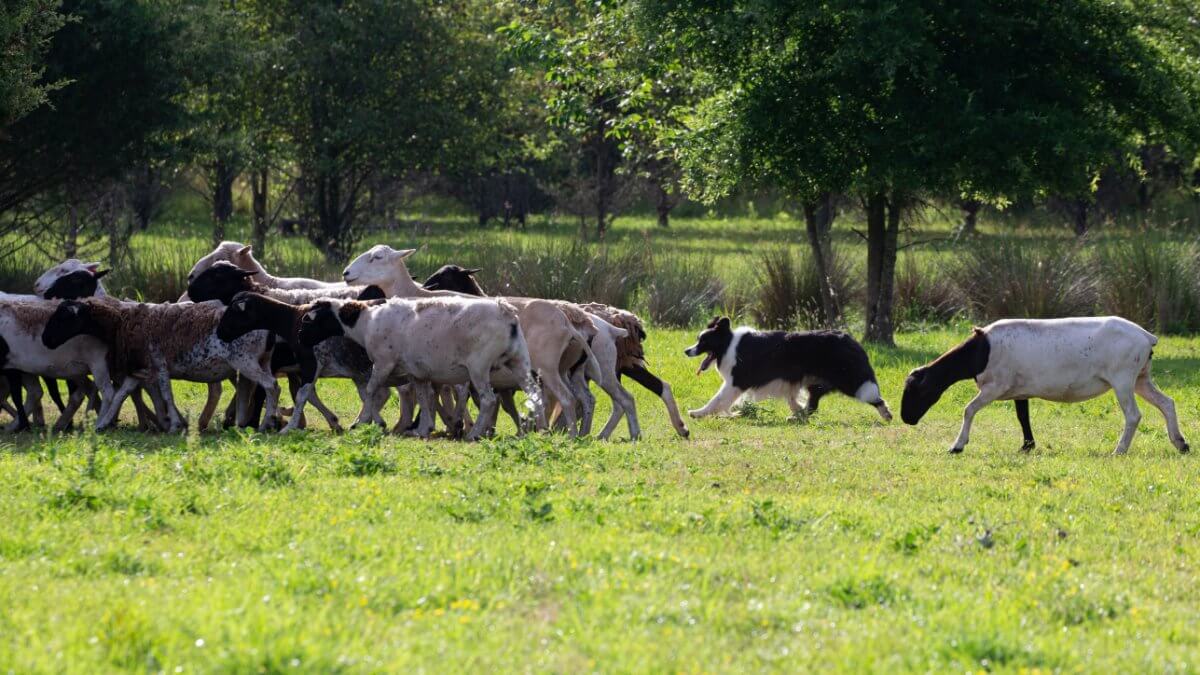
While foot-timing is important, head carriage is one of the traits that truly distinguishes the Border Collie from other herding breeds. The Breed Standard states that the head is carried level with or slightly below the withers when gaiting. Relatedly, the forequarters require sufficient width between the tops of the shoulder blades to allow for the characteristic crouch when approaching and moving stock. It is in a creeping, crouching position that Border Collies use “the eye” to control livestock—a trait that is unique among herding breeds. Although one will not see “the eye” or the crouching posture in the show ring, the lowered head carriage when gaiting indicates that the exhibit should be able to crouch—a necessity for the function of the breed.
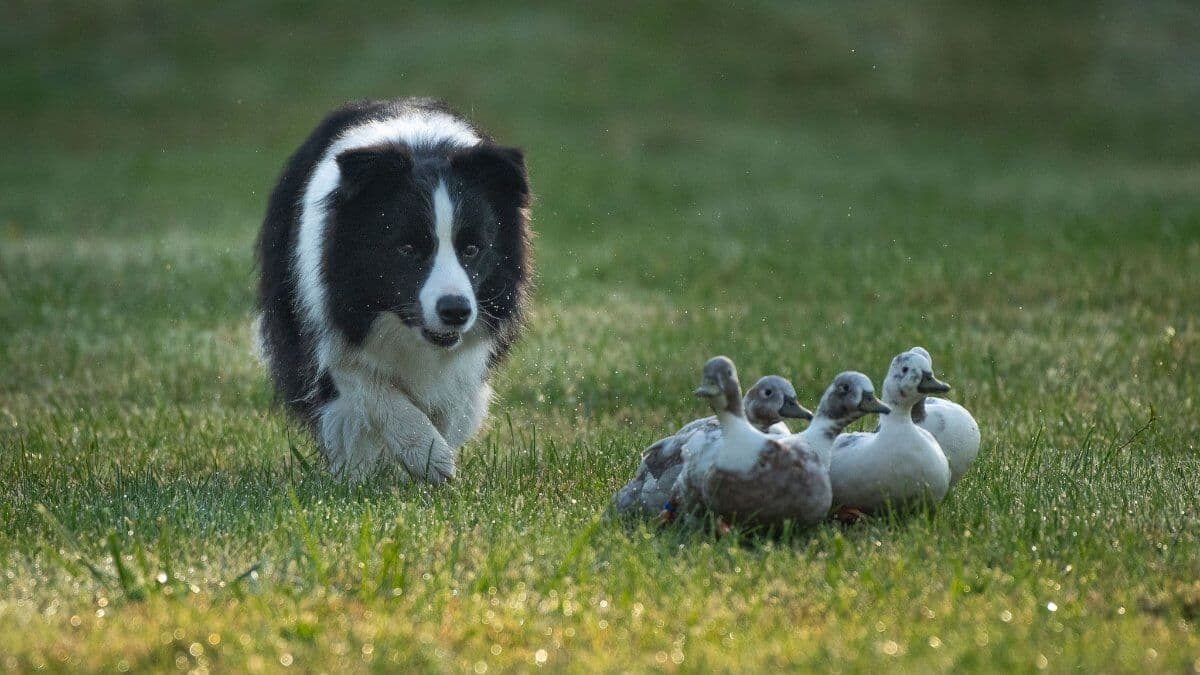
Furthermore, the Standard indicates the back is level. When moving, the topline is firm, with no roll or bounce.
The Standard also calls for a low-set tail of moderately long length. The ideal tail carriage is low when the dog is concentrating on a given task and may have a slight upward swirl at the end, like a shepherd’s crook. The upwards swirl of the tail, along with the white tail tip, is an identifying feature of the breed.
When taken together, the lowered head carriage, the level topline, and the low-set tail make for a silhouette that is aerodynamic, sleek, and graceful. Minimum lift of feet helps to ensure that the effortless gait is smooth and quiet.
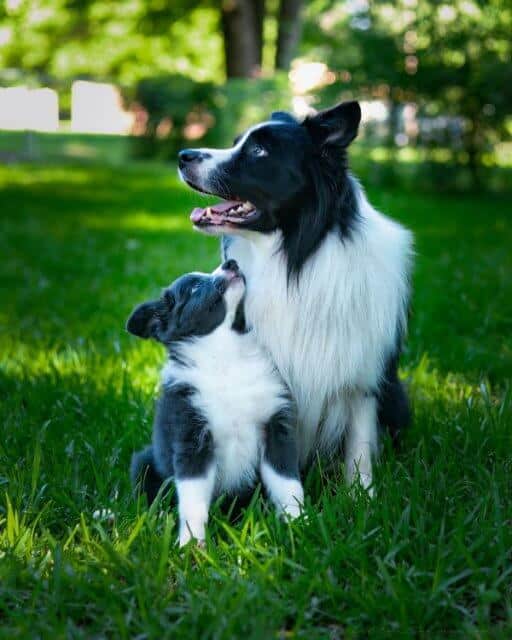
Additionally, the unique working style of gathering and fetching stock with wide-sweeping outruns requires strength, stamina, and power. The body of a Border Collie is athletic in appearance, with a deep, moderately broad chest. Endurance is its trademark.
Power comes from hindquarters that are broad and muscular; in profile, sloping gracefully to a low-set tail. The thighs are long, broad, deep, and muscular. Stifles are well-turned, with strong, well-let-down hocks.
There is a slight muscular rise over the loin, falling to a gently sloping croup. This rise is felt on examination and is generally not seen in movement. The croup should not be steep or flat, which would inhibit rear drive.
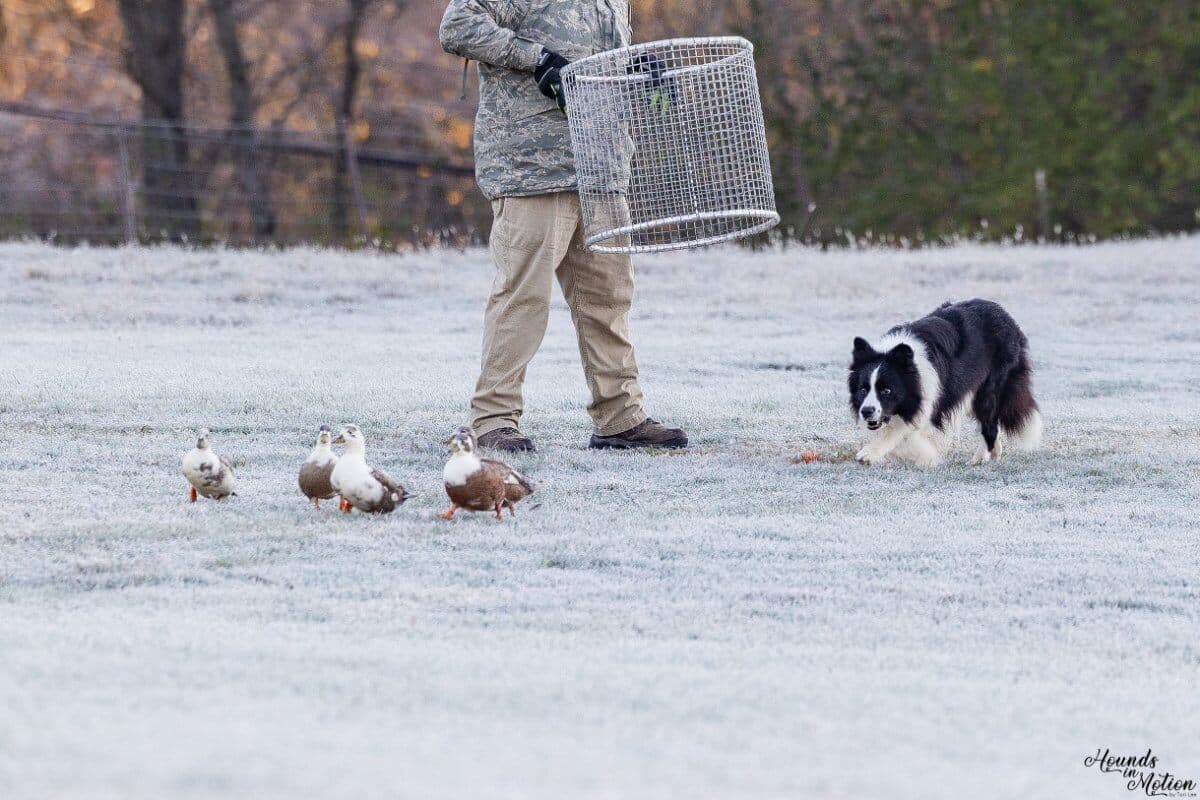
Balance between front and rear is crucial. Conformation that inhibits thrust and maneuverability must be faulted.
A Border Collie’s hard, muscular body conveys the impression of effortless movement and endless endurance. Though it takes more time, it is recommended that exhibits be moved twice around the ring when initially viewing the group moving together. This should showcase stamina and ease of movement. It also gives the dogs the opportunity to settle down and relax into the proper stride. Tails that might be raised in excitement to begin with usually relax and lower. Lowered tails can act like rudders and facilitate turning. Tails that are too short lack functionality.
The Border Collie is an agile dog, able to suddenly change speed and direction while maintaining balance and grace.
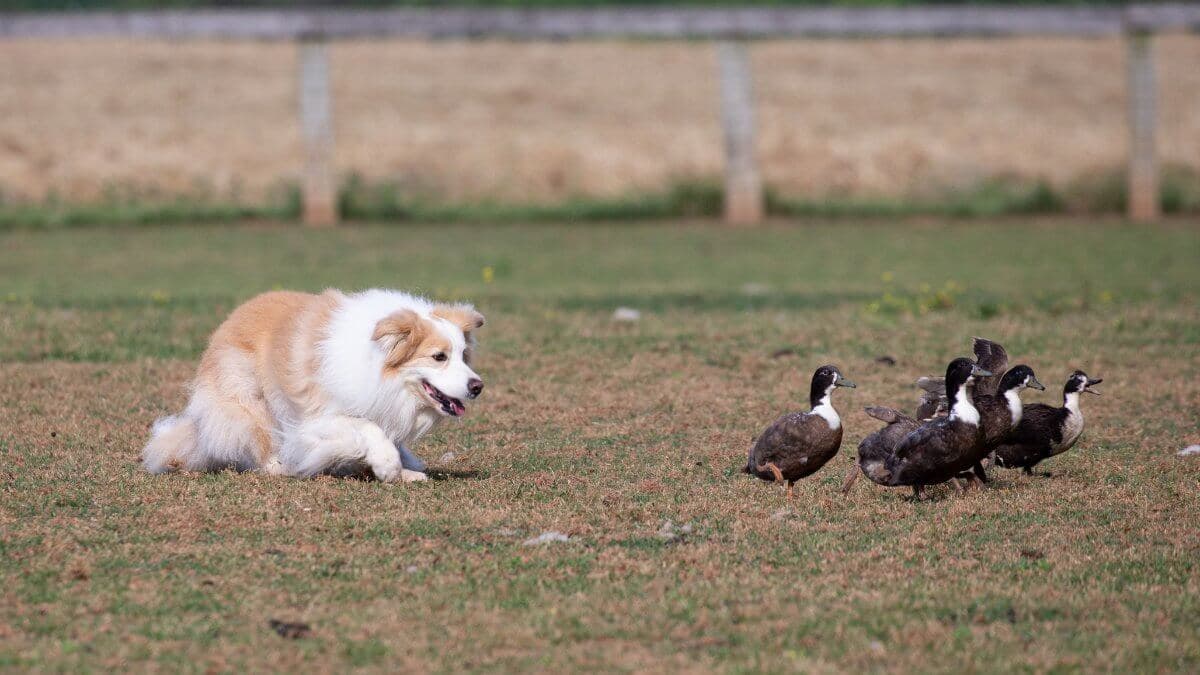
When viewed from the side, the trot covers the ground effortlessly, with minimum lift of feet. There should be no struggle or exaggerated movements, such as high back kicks.
Viewed from the front, action is forward and true, without wasted motion. Viewed from the rear, hindquarters drive with thrust and flexibility, with hocks turning neither in nor out, moving close together but never touching. The Standard for the Border Collie allows for rear feet to toe-out slightly when freestanding, a legacy of the breed’s ability to make quick changes in direction; however, toeing out should never be seen when observing rear movement.
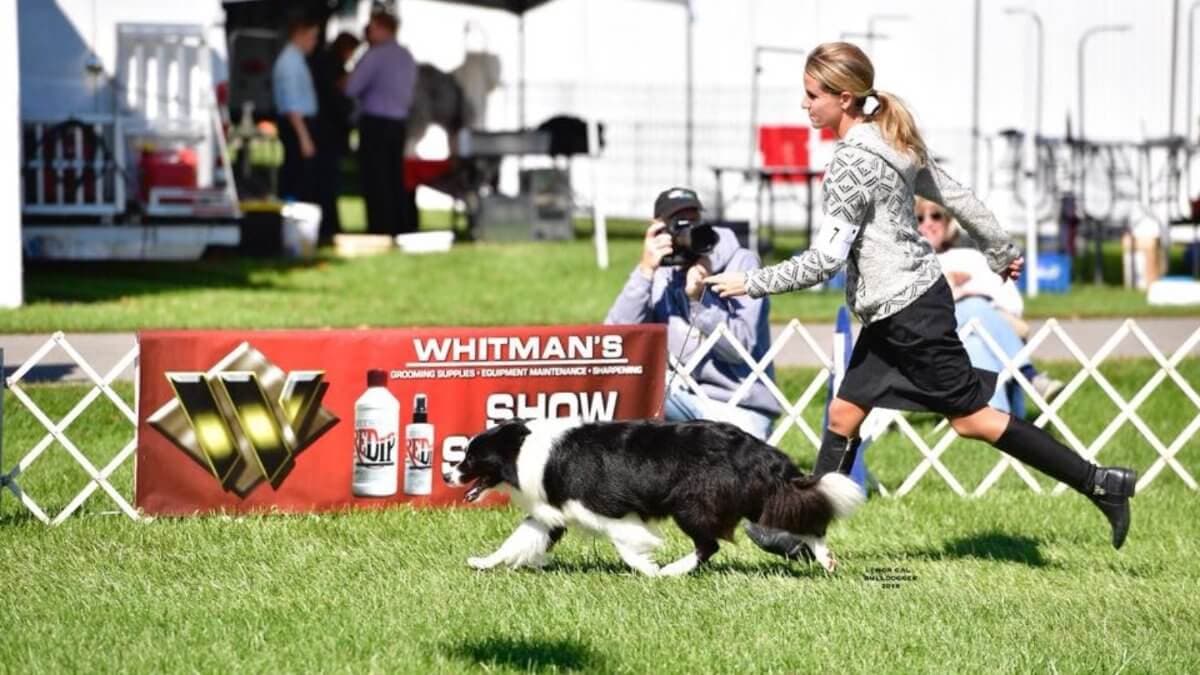
Overangulation of the rear can result in crabbing or a sidewinding movement, which are faults.
The legs, both front and rear, tend to converge toward the centerline as speed increases. The center of gravity is low.
Front reach and rear drive are symmetrical, with the front foot meeting the ground directly under the nose, and the rear foot pushing back without kicking up. When the rear foot is coming forward, it should reach to the spot just vacated by the front foot. Overreaching or interference between the feet should be faulted.
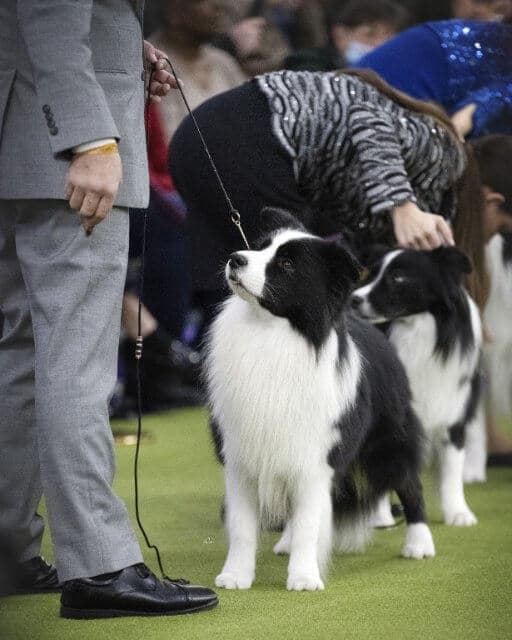
The Standard also gives a warning: Border Collies should move on a loose lead and at moderate speed, never raced around the ring and never with the head held high.
From head to toe, movement in the show ring should exhibit an economy of effort while conveying agility, power, and gracefulness, with the attributes that facilitate the livestock-herding function always being first and foremost.
The Border Collie Society of America celebrates the breed’s legacy as the world’s premier livestock-herding dog, a job it does today, and it is our hope that far into the future, Border Collies will still be herding livestock.

Dog Show Candids