Members
The Dogo Argentino’s value lies in harmony – beauty, strength, and purpose united in a breed built for function, not fashion.

Joshua Faulkner
The Weekly Brief
The best of SHOWSIGHT editorials, weekly wins, and breeder commentary — delivered to your inbox every Sunday morning.
The Dogo Argentino was never intended to be beautiful; that is a side effect. It was created for the purpose of hunting dangerous and destructive species. Every element of its body and mind must serve that purpose. The Dogo must be a “study in harmony,” meaning, it must exhibit total balance between form and function, courage and gentleness, beauty and utility. This harmony defines the breed’s identity and must guide all aspects of evaluation.
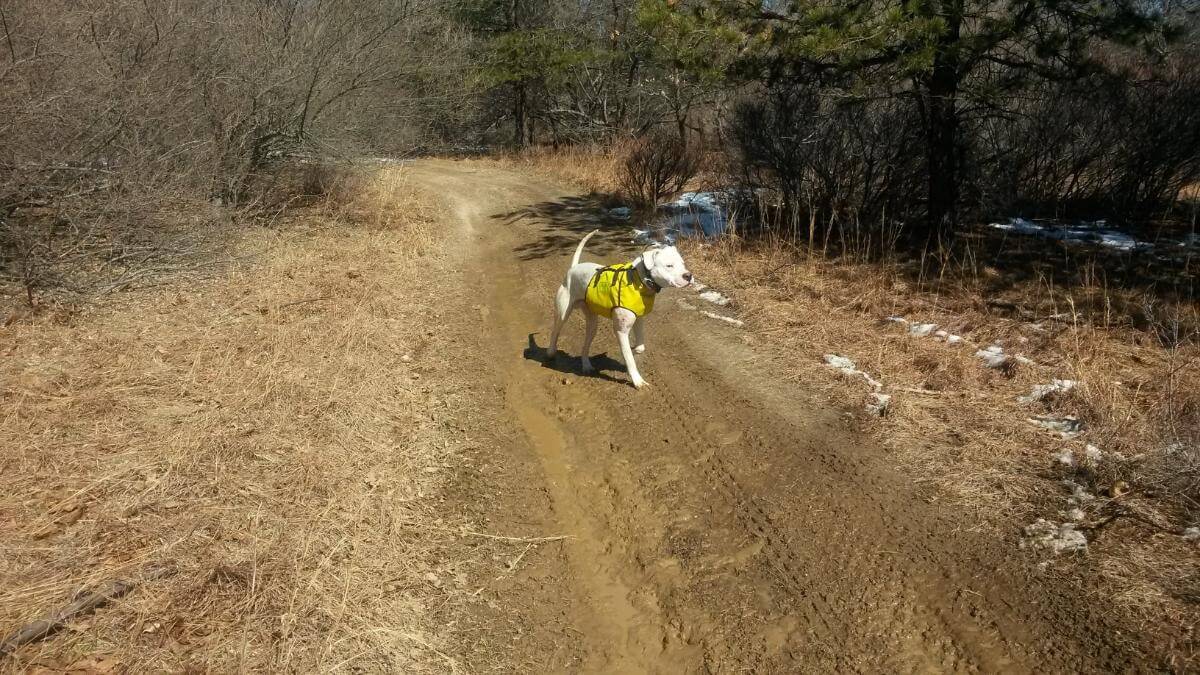
To be harmonious is to say that all of the Dogo’s physical and temperamental traits must work together to fulfill its destiny. This includes structure that allows both agility and power, a temperament that is stable yet bold, and a head that leaves no ambiguity of the breed’s identity and purpose. We must reject superficial beauty and define the Dogo’s appeal as a form of zootechnical beauty. “Zootechnics is the scientific art of maintaining and improving domesticated animals,” according to Merriam-Webster. The very essence of this mindset is a balance between the stereotypically dichotomous worlds of science and art.
Harmony is essential. A dog that looks the part but lacks the ability to perform is of no value. A tenacious dog without stable character is a liability. The Dogo was bred to be powerful and fearless in the field, while also remaining calm and tractable with its people. If either of these qualities is lost, the breed no longer fulfills its role.

Physically, the Dogo must remain powerful yet agile. It should be fanciless in endurance and refined in function. A mesomorphic, athletic frame supports performance. Morphological exaggerations, whether overly heavy and muscled, or conversely, small and flaccid dogs, detract from utility. Weak jaws, flat skulls, narrow muzzles, and incorrect heads all reduce the effectiveness that Dr. Antonio Nores Martinez envisioned so many years ago. A dog that appears correct but cannot work due to shortcomings, in its frame or its frame of mind, is a breeding failure.
Temperamentally, the Dogo must balance docility with courage. It must be easy to manage, amiable, and confident. At the same time, it must have the bravery to face wild boar that exceed the Dogo’s weight and strength by, sometimes, hundreds of pounds. Dogs that are fearful, unstable, or overly aggressive cannot be trusted in hunting situations or in society. These dogs must be excluded from breeding, regardless of how closely they adhere to the visual Breed Standard. Preserving this harmony requires comprehensive selection. As described in “El Reproductor” by Dr. Eduardo Lavado, there are three types of selection: natural, morphological, and functional. Each plays an important role in the breed’s development and preservation.
Natural or physiological selection favors rustic, resilient, and overall healthy Dogo Argentinos. Morphological selection focuses on structure and conformation. Functional selection identifies dogs with courage, work ethic, and durability. All three phases of selection must be considered together because focusing only on appearance produces dogs that look correct but cannot work. On the other hand, ignoring morphology leads to dogs that function but no longer represent the breed.
Breeders and judges have a responsibility to thoroughly understand the purpose of the Dogo and interpret the Breed Standard accordingly. The Standard should not just be a list of traits; it should serve as a guide to a functional representative of the breed. Breeders must produce dogs that meet this Standard in a visual sense, while still hunting effectively, all while passing their traits on to the next generation.
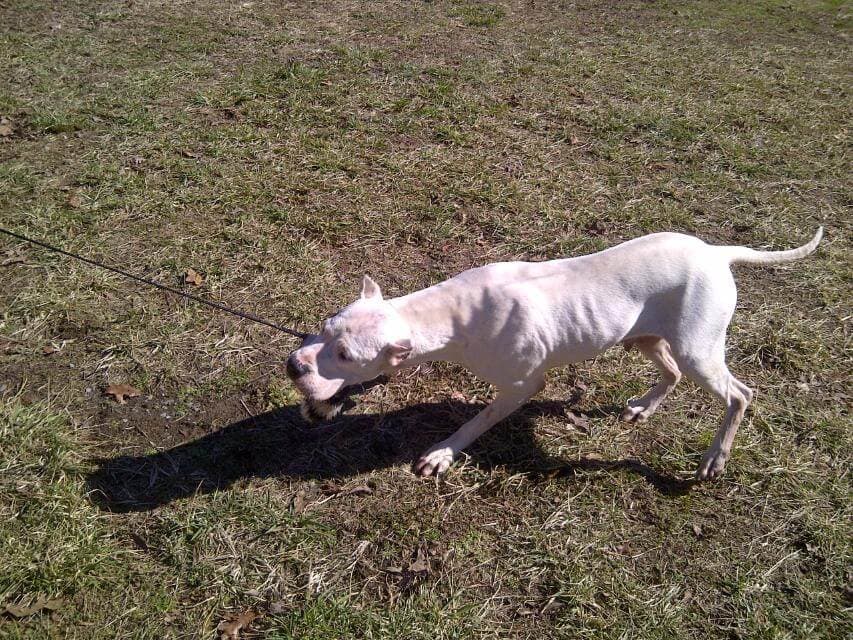
We must emphasize the importance of heritability. A dog’s value lies not only in its qualities but in its ability to transmit those qualities. A great reproducer may not be a champion, but it can produce generations of well-balanced, functional offspring, while a show winner that fails to pass on its traits does not contribute anything noteworthy to the breed’s future. Production is more important than presentation.
One of the most important aspects of harmony in the Dogo is its dual nature. It must be rugged and relentless in the field while remaining calm and friendly at home. These qualities must not compete with each other; they must exist in balance.
A Dogo that is too soft cannot fulfill its role as a big game hunter. One that is uncontrollably aggressive or difficult to manage becomes a liability. This balance must be bred into the dog; it should not be expected that training will rectify improper character. While a dog can be taught to act a certain way, acting is not genetically predisposed. It should be an innate and heritable trait. Without it, the Dogo loses its identity.
Focusing only on beauty or show success puts this balance at risk. Preserving this dual nature is essential. It is the contrast between strength and gentleness that defines the Dogo’s uniqueness and usefulness. Keep in mind, breeding is not about matching attractive dogs. It requires deep knowledge of the breed’s purpose, structure, and history. A good breeder must understand function, heredity, and type, and must be able to evaluate not only the individual dog but also its bloodline and how well it transmits desirable traits.
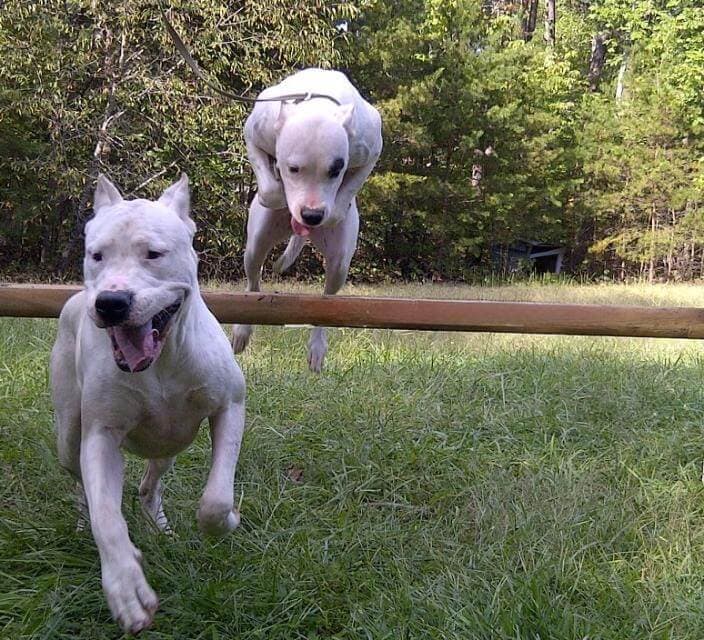
As breeders, we must use all of the tools at our disposal, including advances in technology and in dog shows and fieldwork. Conformation shows help to track physical traits and measure how bloodlines express themselves morphologically in relation to the climate of the breed in general. Fieldwork confirms ability. Together, they allow meaningful and informed selection.
Breeders must understand that the breed was created to function in harsh conditions. To preserve that legacy, they must use all tools available to measure structure, temperament, and field ability. Breeding decisions must be guided by facts proven by functional fitness and physical expression.
In conclusion, the Dogo Argentino is not defined by looks alone. Its value comes from its ability to work, endure, and coexist with people. Its identity lies in the harmony between appearance and performance, strength and gentleness, instinct and control. Without harmony, the breed will decline. Breeders, judges, and enthusiasts must select dogs that reflect the complete Dogo in every sense. The true Dogo Argentino must not only look like a Dogo and work like a Dogo, it must also produce offspring that carry forward this balance. Only by doing so can the breed remain strong, useful, and true to its original purpose.


Dogs in the Media