Members
Explore the German Wirehaired Pointer’s history, temperament, coat, and structure – bred for versatility in field and home.
Karen Potter, DVM
The Weekly Brief
The best of SHOWSIGHT editorials, weekly wins, and breeder commentary — delivered to your inbox every Sunday morning.
The history of the German Wirehaired Pointer (GWP) has been covered in many articles through the years. Developed in Germany in the late 1800s, they were made to be the rugged, all-around hunting dog, pointing and retrieving upland game and waterfowl as well as being sharp and tough enough to dispatch fur. Their structure and coat had to be suited to hunt in all different terrain, from fields to forest, heavy cover, and water. This dog was then expected to return home to be a companion and watchdog for the family and homestead. The true versatile dog that could help families with any task.
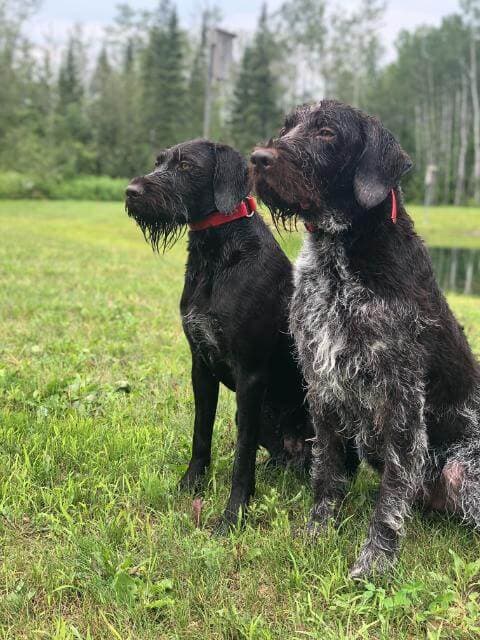
Today in the US, the GWP is still extensively utilized as a gun dog. Many seek out this breed due to the dogs’ versatility in upland and waterfowl and their ability to handle all weather conditions. There are characteristics and features that we must keep at the forefront to maintain their reputation as a sought after gun dog.
“Of sound, reliable temperament, the German Wirehaired Pointer is at times aloof but not unfriendly toward strangers; a loyal and affectionate companion who is eager to please and enthusiastic to learn.” – The American Kennel Club German Wirehaired Pointer Breed Standard
The jobs we ask of the GWP as a fur and feather hunting dog require a confident dog that must be comfortable with new environments or situations, be able to accomplish tasks even sometimes outside of the view of the hunter, and be brave enough to take on fur species such as fox. Every field, forest, mountainside, or body of water has new sights, sounds, and scents. A dog without a sound and reliable temperament cannot adjust to these changes and perform its job.
Hunting is a social hobby. Groups of hunters frequently gather and spend downtime between hunts, enjoying the company of each other and their dogs. While the Standard states the GWP to be aloof, this is not a synonym for shy. The Oxford definition of aloof is, “not friendly or forthcoming; cool and distant.” This breed should lend themselves to be astute to their owner’s actions and needs while still being confident in a group of people and accepting of trusted strangers.
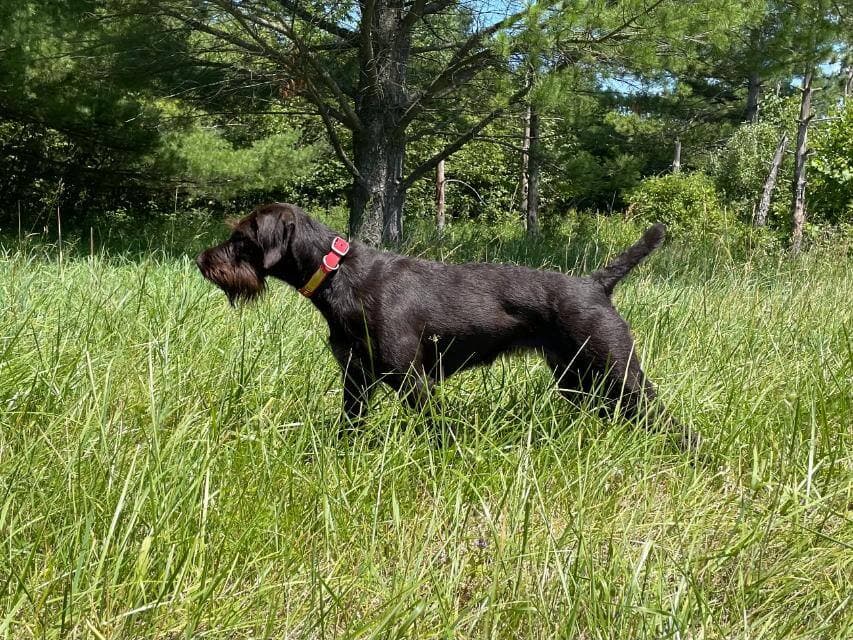
The GWP is an intelligent breed that thrives on challenges. If they are not kept mentally stimulated with training or a job, they will often develop their own games, and their owners may not appreciate these games. This is typically seen as dogs that are destructive or misbehaving, simply because their brains are not being stimulated and challenged. Even in the offseason, they do best with continued training along with physical activity.
While many people enjoy hunting with their GWPs, hunting season is not year-round in most places. They must be sound minded to be a companion 365 days a year. This includes potentially traveling with their families, being confident with trusted people in their homes, and be easy to live with as long as their physical and mental requirements are fulfilled. Overall, the GWP should be a high-drive and desire hunting dog with an “off switch” that makes them year-round companions.
“The functional wiry coat is the breed’s most distinctive feature. A dog must have a correct coat to be of correct type.” – The American Kennel Club German Wirehaired Pointer Breed Standard.
We have all read this statement in the GWP Breed Standard, but what are the characteristics and importance of the functional coat as a versatile hunting dog? The GWP wire coat should be protective from brush and briars, and insulating from cold weather and waters. The coat is water repellent in some ways, which encourages faster drying times, allowing dogs to stay more comfortable in cold, wet conditions.
A proper wire coat on the legs is one of the most important parts that require protection. The legs take constant direct contact of underbrush and briars while these dogs drive through the land in search of game. Dogs with soft, long furnishings will quickly lose their protection, leaving them at risk of raw areas of skin, particularly on their toes and wrists. While these dogs may still hunt due to their heart and desire, continuing to run with open, raw skin taking constant abuse is not ideal for the extent of a hunting season. A soft, woolly coat, as listed as severely penalized in the AKC GWP Breed Standard, will also collect more from the field and forest such as “stick tights” or debris that will be painful to remove, whereas the few that manage to attach to a correctly textured coat are easily removed by comb or fingers.
The body coat is to be one to two inches in length. A coat that is too short will not provide the protective armor valuable to the breed. This coat should have a dense undercoat in the colder seasons that provides additional insulation from the cold. The undercoat will often shed out in the warmer seasons to further assist in temperature regulation.
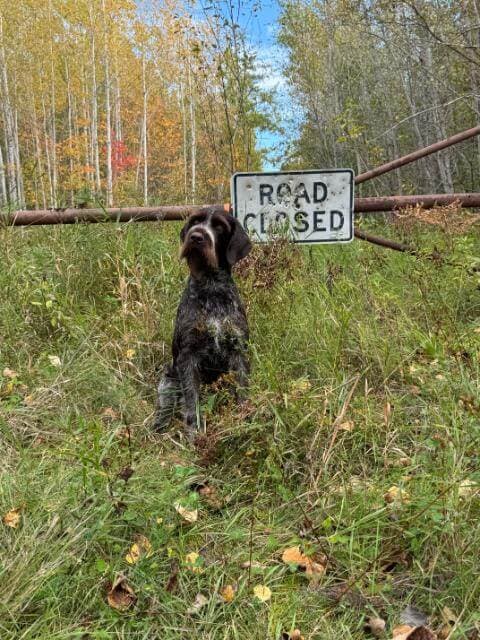
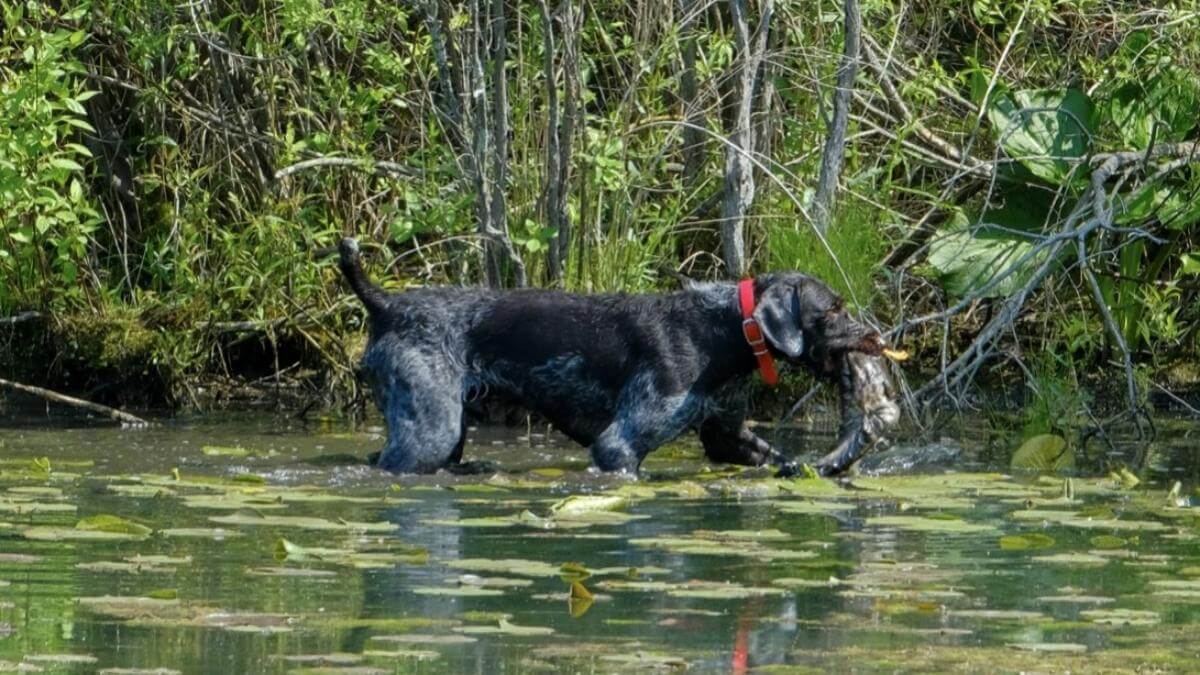
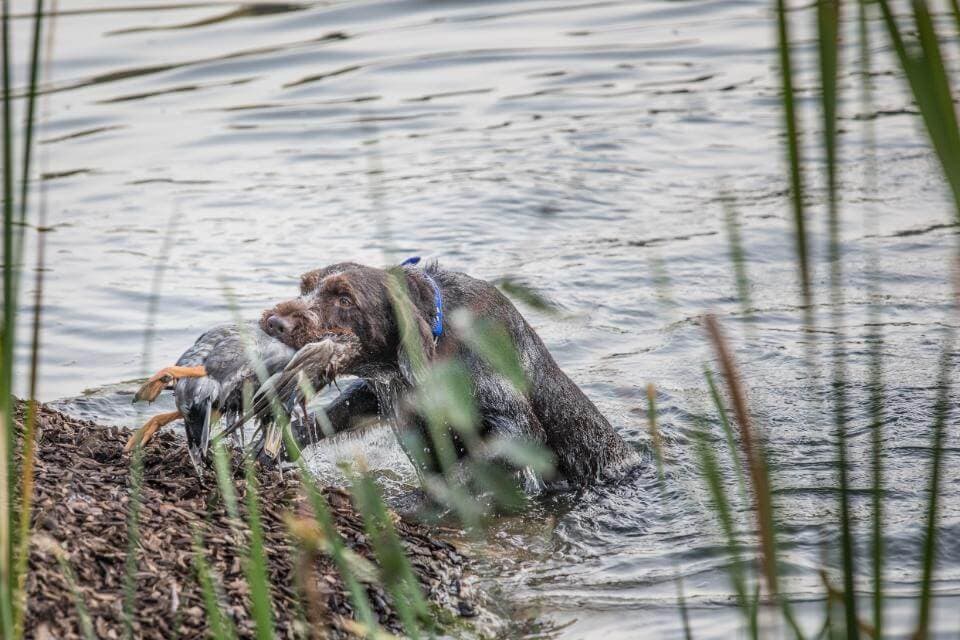
A correctly coated GWP will leave you with a sense of their coat being water resistant. It is not uncommon to see a well-coated dog emerge from the water, shake a good portion of the water from their coat, and dry in the matter of a few minutes. The GWP coat should be flat-lying, even while wet. The water-repellent ability of their coat allows them to dry faster and maintain comfort while making retrieves in cold waters while duck hunting.
The wire characteristic of the GWP coat is front and center in the breed’s name. This should continue to be a priority for these dogs to have a coat of armor while pursing game.
“The German Wirehaired Pointer is a versatile hunter built for agility and endurance in the field.” – The American Kennel Club German Wirehaired Pointer Breed Standard
As a breed developed to hunt in any terrain, the GWP should be strong and agile. A properly structured dog will be able to hunt during long days and long into their lives. Balance between the fore and hindquarters allows for efficient movement without tiring quickly. As a breed, many will have such desire and heart to hunt beyond the limits of their structure. An emphasis should be placed on correct structure with efficient ground-covering movement to hunt long and hard without only having to rely on heart.
It is not uncommon to see a GWP over 10 years of age hunting just as strong as they would as a four year old. This speaks volumes to their sound structure, allowing them to continue long into their lives. An unbalanced or overangulated dog will not be able to continue to perform to the same level, as they will tire more quickly due to the extra effort required in movement.
These characteristics of the versatile German Wirehaired Pointer should be easily recognized in the show ring; a confident, wire-coated, well-balanced dog with ground-covering, efficient movement.

Canine Health