Members
Explore the rare Norwegian Lundehund – agile, flexible, and uniquely built for puffin hunting on Norway’s rugged coastal cliffs.
The Weekly Brief
The best of SHOWSIGHT editorials, weekly wins, and breeder commentary — delivered to your inbox every Sunday morning.
The Norwegian Lundehund, the Puffin Dog, developed during the Ice Age on Norway’s remote Lofoten archipelago. The Lundehund possesses a number of unique characteristics which enabled him to climb steep cliffs, investigate rocky crevices, and carry birds down the dangerous slopes. The breed’s historical function was vital to the hearty residents of these islands. The meat from the puffins provided needed protein and the bird’s down provided warmth and a valuable trading commodity.
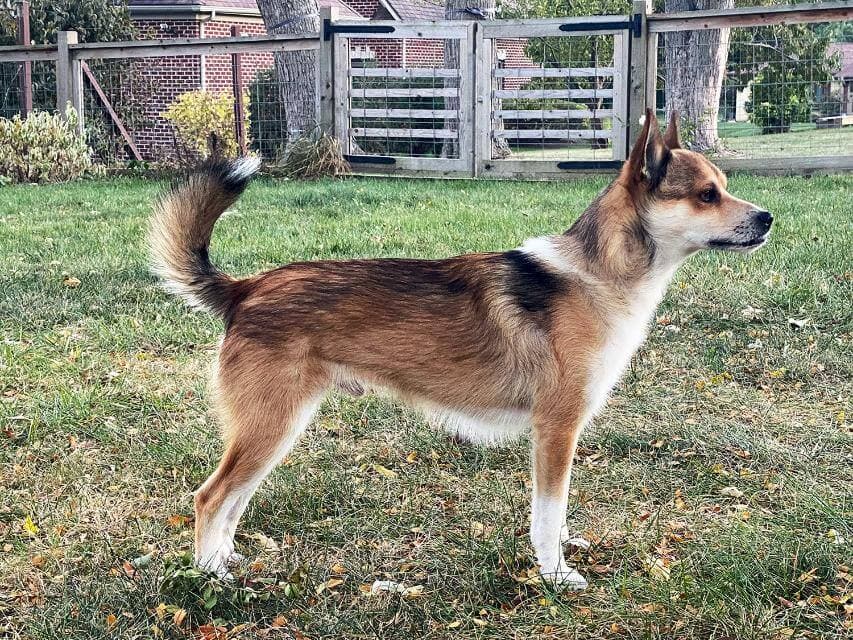
Judging a Lundehund, or “Lundie,” is not an exercise of the generic sort, once you get past the proportions and the side gait. He is a small, agile spitz breed that is slightly longer than tall. Males range from 13 to 15 inches and females from 12 to 14 inches. Size is important. The dog must be small enough to enter the puffins’ burrows yet large enough to carry the bird or birds, each weighing approximately one pound.
The Lundehund proclaims his spitz heritage with a wedge-shaped head and a double coat. However, the head differs from other spitz breeds in a number of ways:
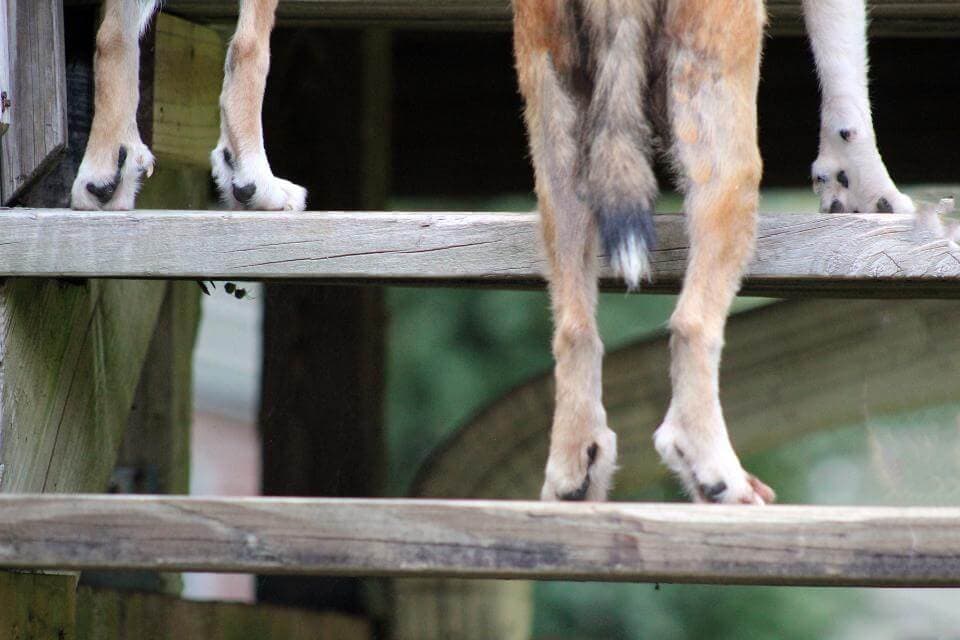
The essential elements for his historical functions are the extra toes, his rotary front gait, and his flexibility of neck and shoulders. The extra toes enable him to grab a foothold while climbing the mountain and enable him to brake during the descent. The flexibility of neck and shoulders enable him to reach for a foothold and to maneuver in the irregular crevices. Do NOT ask the handler to demonstrate the neck or shoulder flexibility. Harm could be done to the dog if the dog is not “warmed up.”
The flexibility is judged by the rotary front. Without that rotary, the Lundie has no flexibility. If the dog is not exhibiting a rotary front, please do not discount immediately. Ask for the dog, especially the veterans, to go around again before re-evaluating the rotary. Think about touching your toes without limbering up. I am more likely to be able to touch my toes if I stretch first! The last look at the Lundehund should be a down and back to assess the all-important rotary front movement.
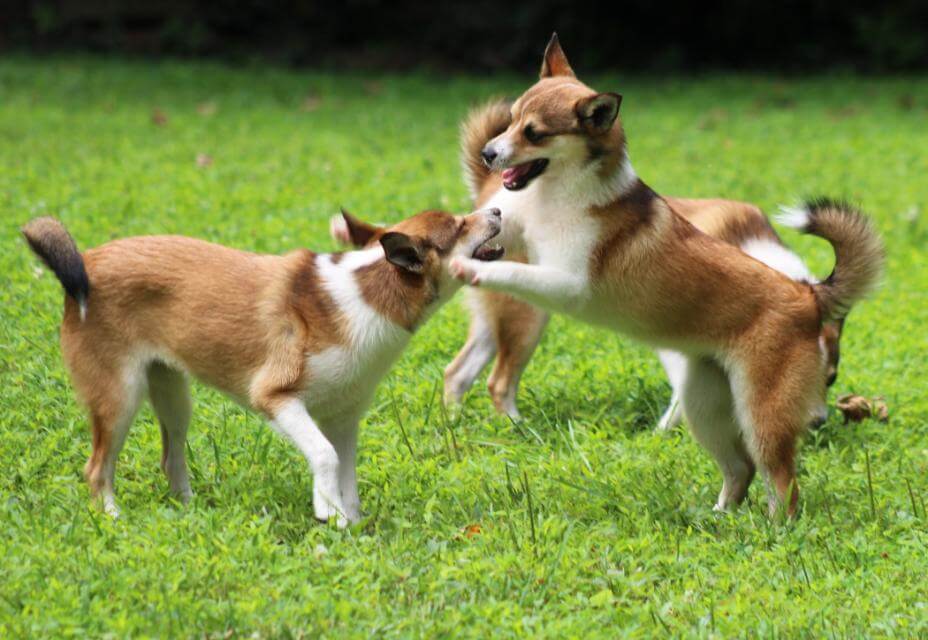
The gait can be off-putting. The rear is not doing the same thing as the front. The front rotary is flexible and wide. The flexibility must come from the shoulders, not the elbows. The rear is close and parallel.
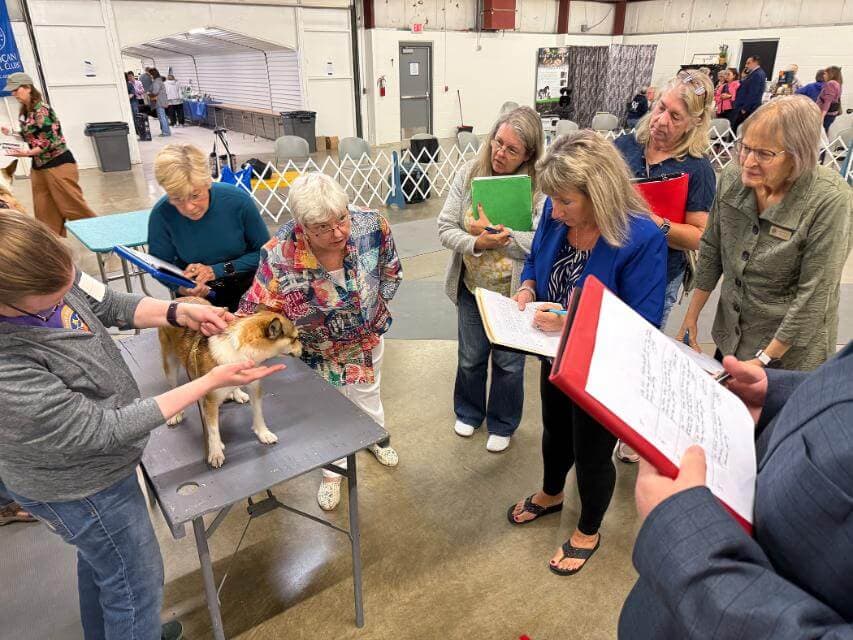
The second essential of the breed are the feet. This is a breed where the toes must be examined. Each oval foot must have a minimum of six toes (contrasted with other breeds, which have four toes). Please count the toes! The Lundie’s extra toes are not “dewclaws” but fully formed toes, clearly evident at birth. When you count the front toes on the table, five toes should touch the table.
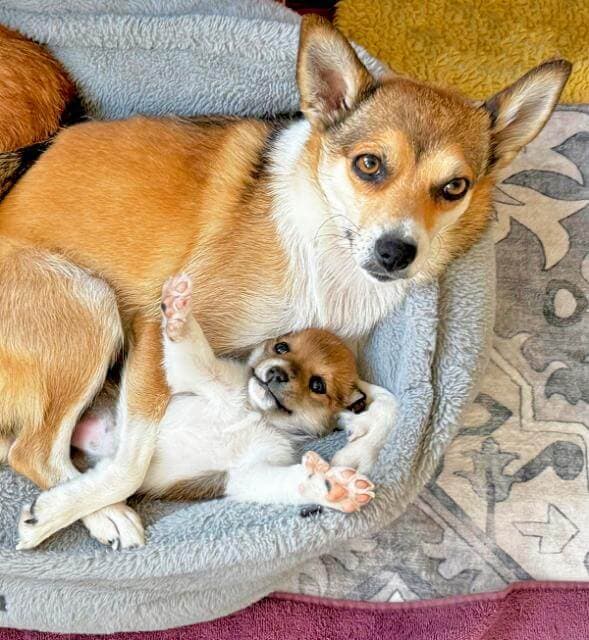
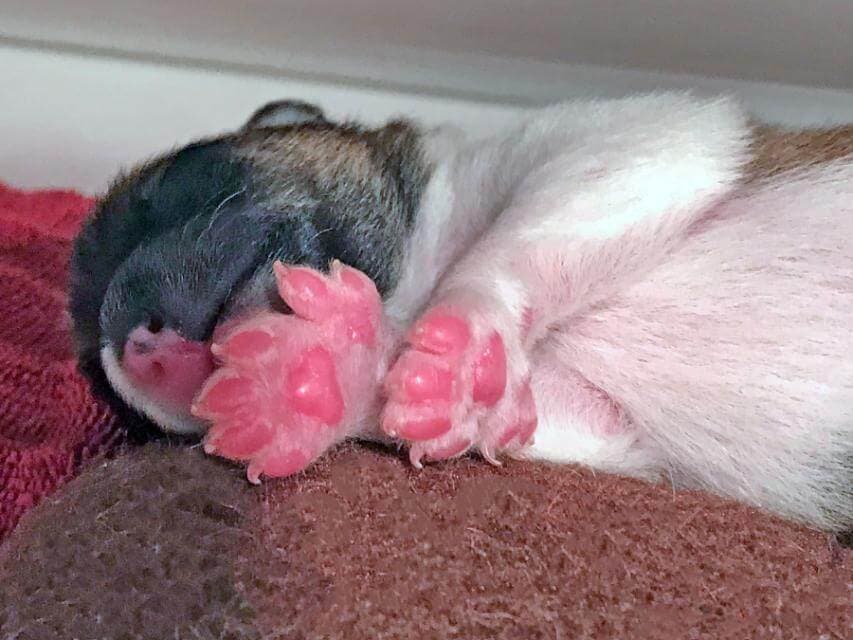
The rear feet need only have four toes which make contact. After you have completed the entire exam, please ask the handler to lift the dog to show you the unique pads. The front feet will have pads corresponding to the number of toes. The rear feet will have a distinctive “swoosh-like” pad. It is common for the feet to turn slightly outward. This should not be penalized.
The slightly longer-than-tall body has a level back and a short loin. The Lundie should possess good length of rib cage and a slight tuck-up. There should be lung capacity but never a barrel chest. The tail sits on the slightly sloping croup. The tail is furred and is of medium length. The tail has two acceptable carriages, with no preference. The tail can be carried in an arch over the back or trailing. If carried over the back, the tip may touch the back. However, the tail should not be tightly curled or extend downward beyond the top of the back. If trailing, the tail may have a slight curve.
The Lundehund’s color ranges from fallow (only two American Kennel Club Breed Standards [Lundehund and Bulldog] mention “fallow”) to reddish brown, to tan. They can have black tipping and white markings.
The Standard allows for a white dog with the colored markings; however, I have not seen those markings in the US, nor have I seen a dog with a completely white head or head predominantly white. We had to search for an example.
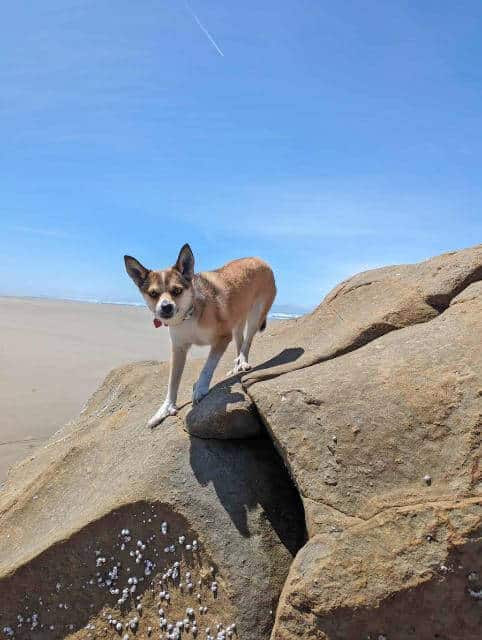
If the head is white or predominantly white, please determine that the eye rims and lashes are dark.
The double coat is not what you would expect for a dog domiciled in the Arctic Circle. Other spitz breeds in the Arctic Circle have a heavier coat. This heavy coat is not needed on the Lundehunds because their native islands have a weather anomaly that brings a temperate climate and does not bring extreme cold or heat to the islands.
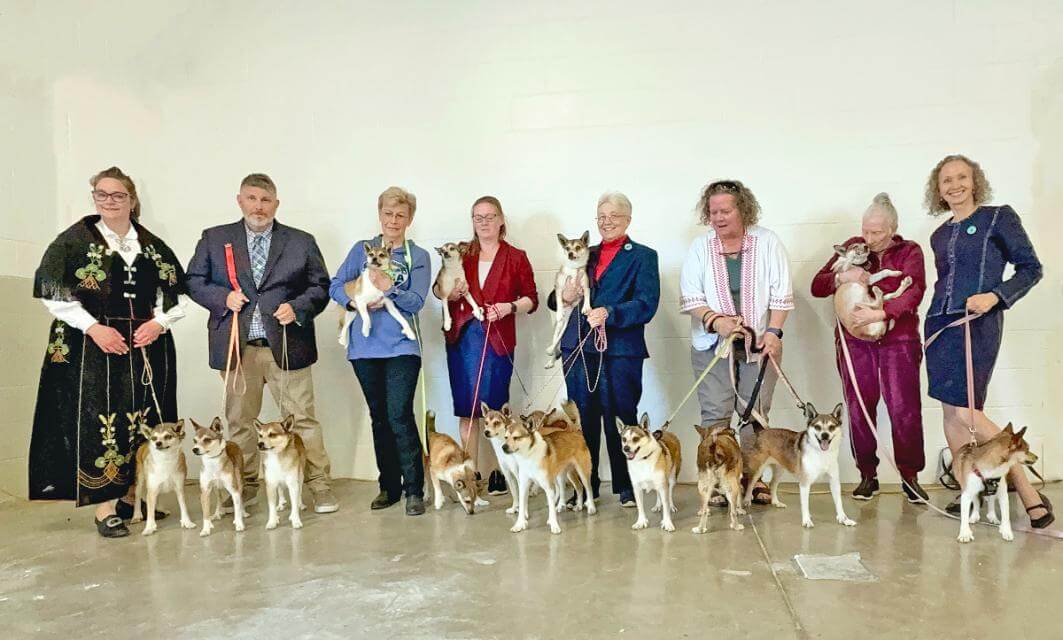
The breed, isolated for centuries, is somewhat wary of strangers. Make your touch light and simple. Sometimes you can see the barely disguised disgusted forbearance as you examine the dog; however, this is not translated into aggression in any form—just an indifference to the show ring. We hope that you enjoy judging this rare and unique breed. It is a study of what nature can produce when there is a need.
News