Members
Anne M. Tureen examines the canine spine as the “electric rope,” explaining how structure, energy, and topline define soundness in dogs.
The Weekly Brief
The best of SHOWSIGHT editorials, weekly wins, and breeder commentary — delivered to your inbox every Sunday morning.
This is the third in a series on anatomic theory, applicable to many breeds, which will limit itself to Terriers, a Group uniquely rich in types, from toy to molossoid, yet genetically interconnected. Limiting myself in this way, I can make more relevant comparisons. It also refers to FCI Groups and Breed Standards, since this umbrella entity covers most of the earth by membership or association, and rigorously uses Standards from the country of origin; perhaps we can say, original documents? Hopefully the readers will all find a juicy bone of contention in the material—a sign of a healthy scientific atmosphere.
An old saying tells us, “a dog walks on his back.” This absurd image reveals a deep truth; the topline reflects the virtues and faults of the rest of the structure that will fit or limit the dog for a long day of work in the field. The spine is a messenger, not a cardinal player in conformation. In the prior article of this series, we looked at the leading duets of sticks and boxes; how the head and chest, and then the sets of thoracic and pelvic limbs, determine type, balance, and function in dogs. Before that, we had a good look at the croup, which plays a much undervalued supporting role. However, without the spine holding them together, those pieces all fall apart.
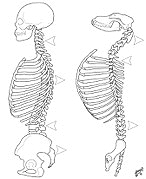
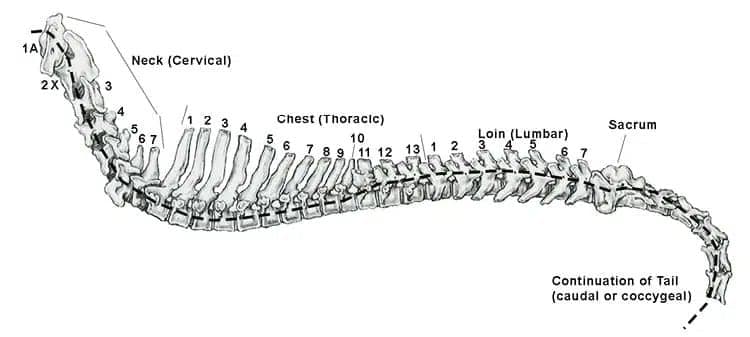
Unlike humans or horses, the canine spine is not weight-bearing. It is a flexible but tough rope, like the mooring lines on a boat. Primarily, it functions as a conduit, connected to the brain stem. It is the key element of the central nervous system, transmitting impulses from the sensory and motor cortexes of the brain to the body.
When the dog world began in the UK, shall we say in 1865 when John Henry Walsh published the first document we would recognize as a Breed Standard today, the measurement of length of the dog was based on the length of the back (withers to croup) compared to height at withers (ground to cranial angle of the scapula). Today, we evaluate general proportions using body length (manubrium to ischial tuberosity 1) in comparison to height at withers. So, the back is no longer a basic measuring point. Interestingly, the older measuring method used a more stable statistic, since axial length has been found to vary only slightly within a certain breed.
Differences in axial length appear significantly in the region of the tail, which can appear too long or short.3 This is the only region of the spine that can vary in number of vertebrae.
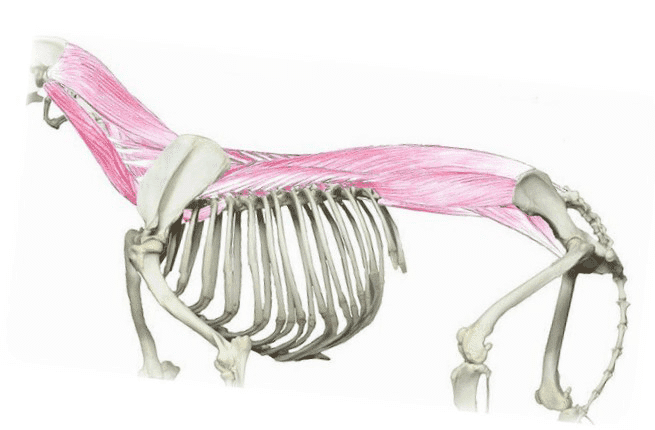
Each vertebra is individually crafted and the pieces fit closely together from the atlas, connecting the cranium to the final coccygeal vertebra of the tail. They house the spinal cord in their central canal, and like a row of tiny sailboats, each vertebra carries a mast: the spinous process. Like sheets and sails, ligaments and muscles of major and minor orders attach here. The epaxial muscle group (fig. C) surrounds and envelops the spine like a sheath, providing solidity and stability; they also pull the vertebrae in movement. Cynognostically,4 they are important since this muscle group is what we see and feel when we assess the topline.
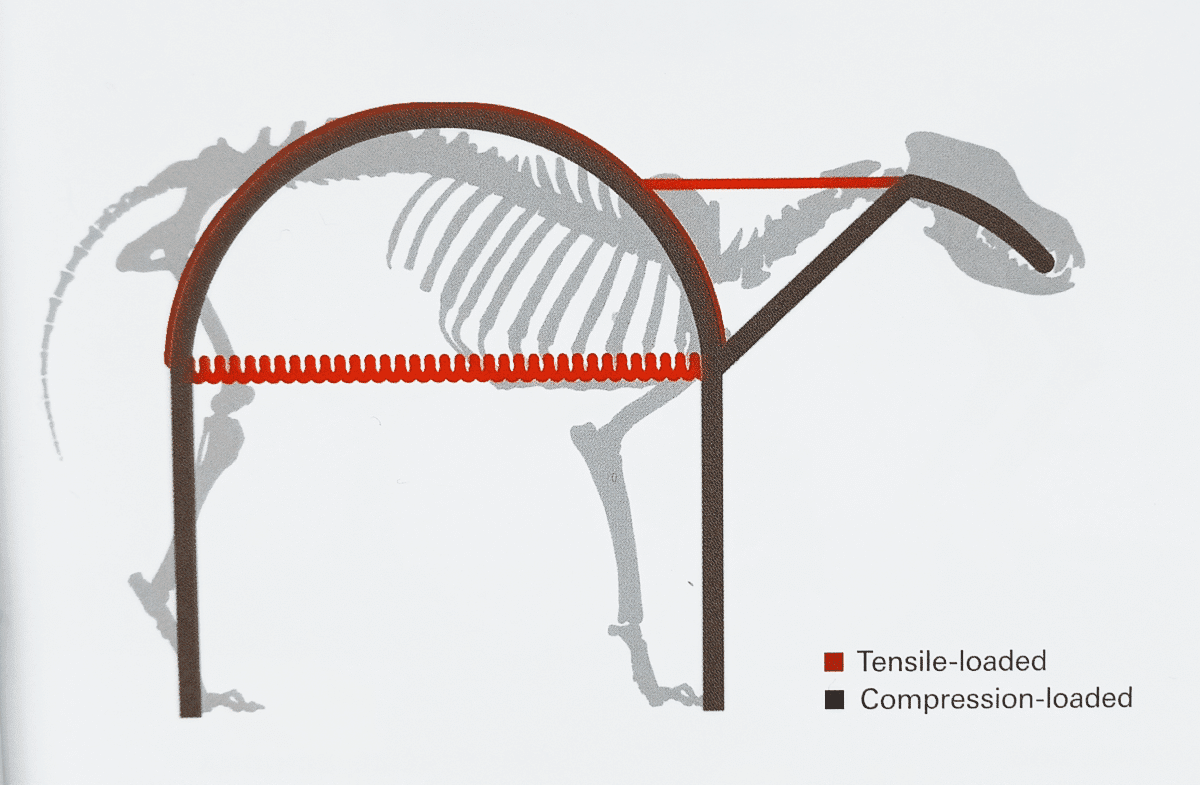
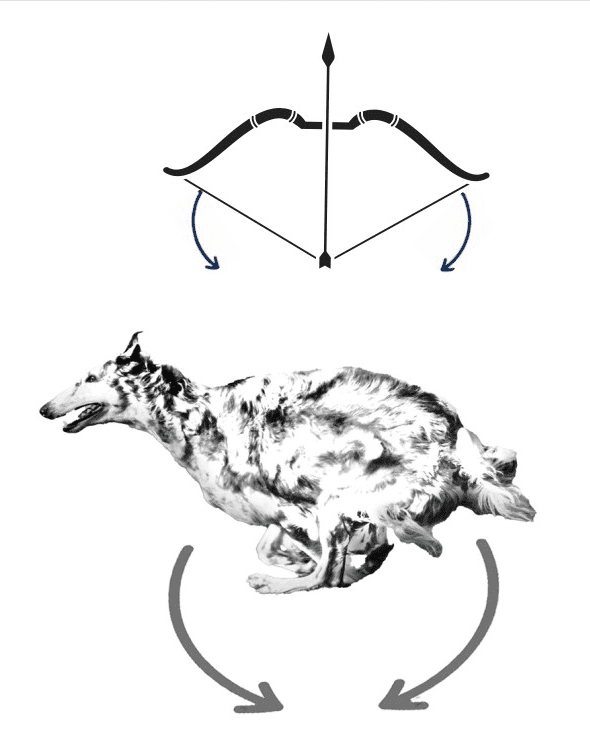
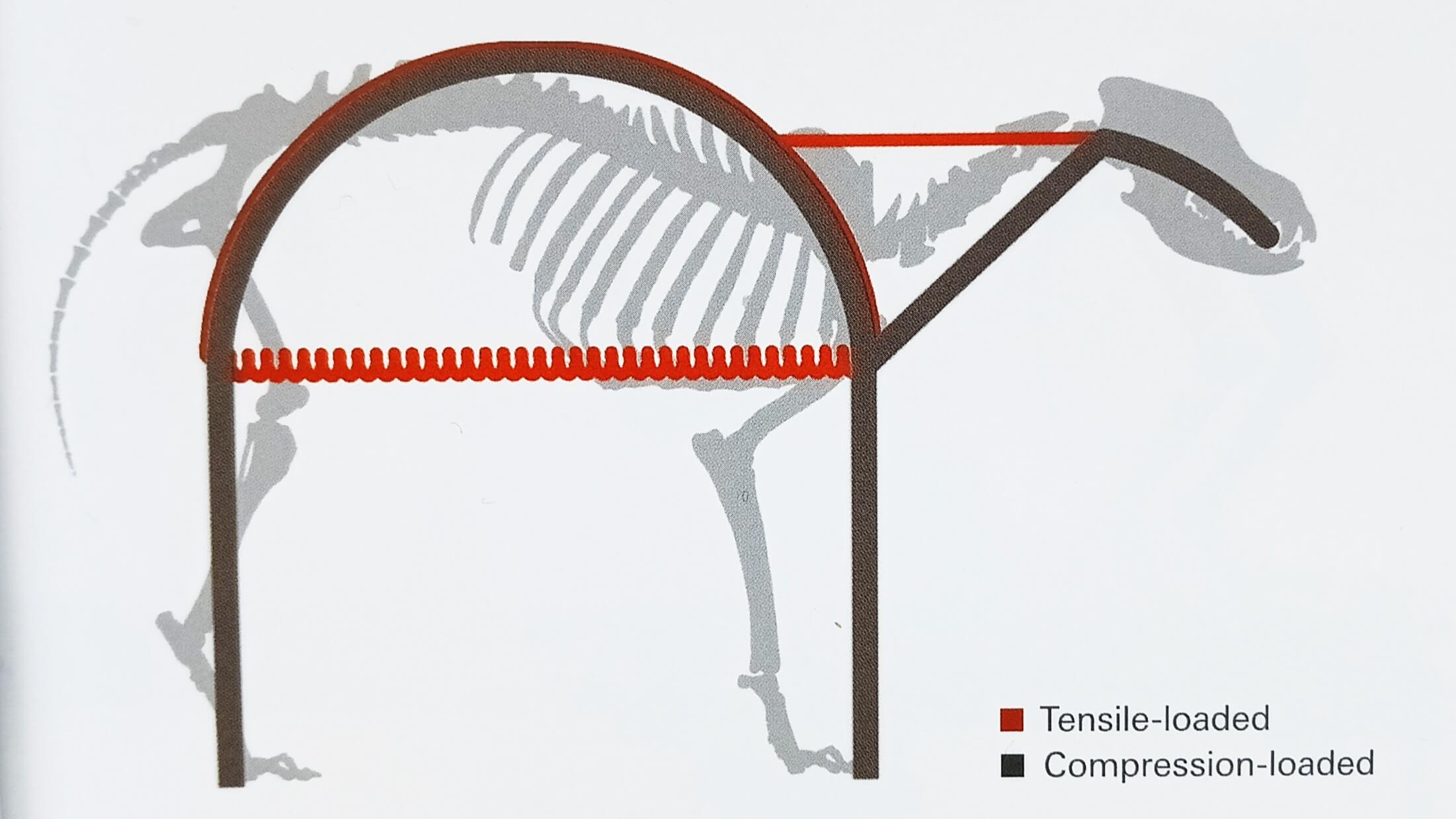
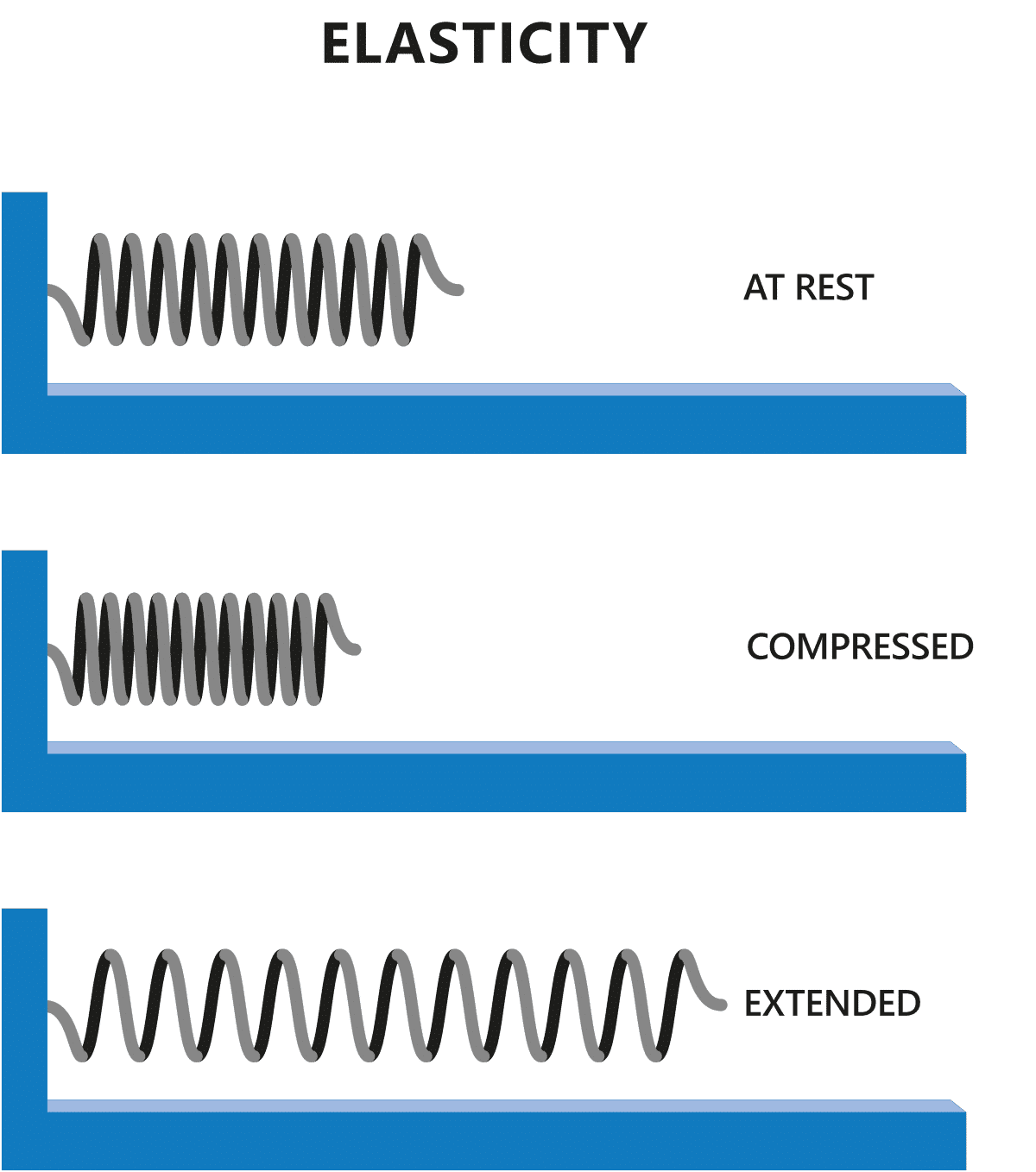
Kinetically, the major role of the spine is to store and release a combination of tensile and compression energy during the gait. Imagine an archery bow. Muscles of the dog’s body between the thoracic and pelvic groups contract during the first suspension phase of the rotary gallop, causing the spine to curve, then they lengthen again for contact. In the extended suspension phase, the spine is stretched to its maximum capacity, and this also releases energy when it snaps back to the rest position.
The judge, however, does not send dogs galloping around the venue, but evaluates the entries standing in the lineup and then at a trot. In a free-stack, the spine will highlight the virtues and limits of the dog’s conformation. If the neck is not correctly arched, there is structural weakness in this region. Bumpy or low withers5 will indicate limited development of the muscles and/or of the scapula and humerus, or insufficient angulation between these. If the muscles (epaxial) are insufficiently developed, the topline will dip, especially in the anticlinal region where the masts of vertebrae are lowest.6 If the spine is slack, the chest of the dog is probably underdeveloped in length, leaving a long loin. A noticeable rise over the loin might reveal poor angulation in the rear, and if the ilium causes a bump over the lumbar region you will likely find a very sloping croup.7 A goose rump is when the sacral vertebrae develop downwards; desirable in some breeds but disastrous in others. However, if the topline is fluid, continuous, and develops evenly according to the Breed Standard, the limits in construction of that dog will probably be minor.
One major limitation that can be found in the spine, which does not refer to any other part of the anatomy, is joined vertebrae. This fault is carefully described in the Dachshund Standard but applies to all breeds. A kink or knot in the tail, indicating two vertebrae fused together rigidly without a cushion of cartilage, can reoccur in the dog’s progeny at any point along the spine. This is important to the judge since it is a genetically inherited fault.8 If our Champions are dogs recommended for breeding, such a fault as this is indeed grave.9
While the spine is a passive element of structure, it is the informational highway and great connector within the dog. All major regions of the dog are linked to it—the axial regions linearly, the appendicular laterally. During the assessment, it tells us much about where to focus our examination of the dog. In this sense, it will advertise quality, or the lack of it, in the first few seconds of the lineup.
Canine Health