Members
Doug Johnson breaks down the realities of breed conservation, emphasizing the need for more breeders, stronger numbers, and urgent action.

The Weekly Brief
The best of SHOWSIGHT editorials, weekly wins, and breeder commentary — delivered to your inbox every Sunday morning.
For all of my dog show life, I have worked with the lesser-known breeds. They have been, and continue to be, my priority as a breeder. I don’t know why, but they have always intrigued me. I am just genetically predisposed to have an affinity for the obscure. For me, the rare and unique things are more interesting than the common or plentiful. It is why I have devoted so much time and hard work to developing dogs that come from this segment of our AKC registry. Over time, I have turned my focus to a broader audience, to bring some much-needed attention to the plight of breeds that are struggling for their very survival.
The beginning of the preservation movement was about identifying specific breeds that were limited in number, and asking for new individuals to help produce dogs of those breeds that were in need of a population boost. It was about building a population of dogs to work with and work from. By doing so, we would preserve the best genetic traits of those animals for the next generation. It was never meant to become the global phenomenon that it became. The brilliant AKC breeder and judge Bill Shelton and I coined the term “preservation breeder.” We are the architects of the movement that took over the dog world and we’re both proud of the message and the attention it has received, even if its current use was not our intention. That happened because the global community took the word “preservation” and ran with it, and used it as a buzzword for breeders. It worked. And while I like the word preservation and think you can still be a preservation breeder, I have never associated the preservation movement with such a wide variety of popular breeds. Yet today, we see preservation breeders of Labrador Retrievers and Poodles. For me, that doesn’t apply because there is no need to preserve those breeds. They are actually safe and plentiful. In my mind, their popularity and the extreme genetic resources within those breeds defy the very definition. This is not to say that the very best qualities of those breeds, those that are unique to those breeds, should not be retained. They most certainly should be, but those breeds are not in jeopardy of extinction like many others we all know, like the Norwegian Lundehund.
Fast forward a few years and we’ve lost some control over the narrative of what we meant with the PRESERVATION breeding concept. However, a trip to Kenya revealed a new, clearer perspective on the word’s true meaning. In Africa, we stayed at a conservation breeding camp for the White Rhinoceros, where they have been working to increase the species’ population with great success. Upon our return, it became clear that their approach was what I was after. As a result, a handful of breeders started a Canine Conservation group and switched from “preservation” to “conservation.” We’ve moved to conservation because we felt like there needed to be more of a concerted effort to conserve dog breeds, to keep planning breeding programs of breeds that have been identified as vulnerable. This approach is the true conservation of a breed’s genetics. We understand that we’ve needed to encourage the breeding of as many bitches as we can in order for a breed to be preserved. Otherwise, vulnerable breeds could slip away because their propagation is limited. There is a numbers game here—and a race against time.
Over the years, we have learned of many different designations for the recording of dog populations. Rare, vulnerable, and endangered are all commonly used terms to define them. Within the AKC system, there is a “low entry” designation which is based on the number of dogs shown in a given year. It represents limited opportunities for judges to see a breed and adjudicate them at dog shows. That’s your Low Entry Breeds List, a designation for awareness that these breeds are less prevalent at shows. This, however, can be a double-edged sword for breeders. A designation as a low entry breed, in my opinion, can diminish a breed’s importance when it is just based on an arbitrary number of entries from the previous year. The educational requirements for new judges is therefore reduced because the dogs in the ring are few and far between. And while that’s appreciated by the aspiring judge, it’s probably damaging to the breeder (and as a result, the breed) because judges are not learning the finer points of the breed. This can work against the breeder who is entering their dogs for an opinion or direction on their breeding program. Maybe the Low Entry Breeds List should look at a five-year period instead. Interestingly, the Royal Kennel Club in the UK has a “Vulnerable Native Breeds List,” and that list identifies breeds that are teetering on extinction due to a vulnerable state for reproduction. Some British and Irish breeds are so scarce in numbers that we are witnessing the decline of their population. To me, that list is much more concerning than the Low Entry Breeds List.
It would be nice to have a separate list of vulnerable breeds that are identified as “high-jeopardy” breeds. A breed like the Lhasa Apso, which is on the AKC Low Entry Breeds List, is not a vulnerable breed. It doesn’t have a genetic component to the struggle; meaning, their conception rate is not at issue, unlike many of the others on the list that are challenged with an inability to actually get pregnant. The Lhasa is experiencing what many of the “low Entry” breeds are experiencing: a lack of breeders, consumers, and individuals who are willing to put in the work to keep and present a breed that requires so much upkeep. I would like to see a movement by any governing registry or parent club that takes a stand and says, “Hey, low entry breeds, you need to do better. You need to work to showcase your breed more often, to get more people involved and get your breed off the list.” We need to focus on breed awareness and buyer recruitment, so the breeds that are in jeopardy can alert their breeders and the fancy of their low breed population due to a lack of puppies being born. It would be great if we could make this happen while there is still time to turn things around!
I think of the existence of breeds like the Otterhound, the Dandie Dinmont Terrier, and the Sussex Spaniel, breeds that are truly vulnerable due to a lack of interest to breed them, house them, and raise them. These breeds suffer with low conception and limited options for matings. Their gene pools are often referred to as gene puddles. A breed like the Clumber Spaniel, my own breed, I don’t really see as vulnerable, because the breeders are active and aware that the breed is on the cusp of being vulnerable. Current breeders are actively pursuing breeding and cultivating new breeders, and the number of dogs born each year is sufficient—and there’s a market for them. They are in a guarded place. The breeds that don’t have a market, the ones that don’t have breeders who breed them, they are truly in jeopardy.
The American Water Spaniel is always on that list of “rare” breeds, but having judged their National Specialty, with a big entry of 21, I’ve realized something important. When I went to the club’s banquet with the Obedience Judge, Nancy Simmons, there were 20 round-top tables with eight people at each one, and I thought, “What is going on here that there are all these people attending the banquet for an entry of 21?” Well, I was told there were nearly 40 dogs entered the next day at the field day! I’ve also attended the Entlebucher Mountain Dog National Specialty and they had 30 dogs at the hotel, but only five were entered at the AKC show. Participants in these breeds are focused on the work the animal does, the job of the breed rather than the Conformation venue. Neither breed seems to be in jeopardy, but the parent clubs need to show a reason why the dogs could be entered in both venues. It was a missed opportunity to showcase their breed.
There are, of course, low entry breeds in our country that are truly endangered, and there’s a growing concern that some breeds are vanishing. That’s why an “endangered” list carries more weight. Endangered species has been my wheelhouse for decades, because I don’t want to see any animal face the fate of being non-existent. The focus on these breeds should be to increase the number of dogs bred from and the number of puppies produced each year. This is in addition to getting breeders more active in the whelping box. Breeders must increase their litters per year to help a breed grow.
Parent clubs have a responsibility to be involved in the preservation of their breed. Without the breed, the club doesn’t exist. It is their primary focus to protect the breed, and over the years, some parent clubs have been proactive in this process. Just look at the Basenji Club of America members who went to Zaire (now the Democratic Republic of the Congo) to bring back dogs to help with their gene pool. I’ve been to the coast of Croatia and have seen the Dalmatians there. I distinctly remember judging some beautiful dogs that were outside the height parameters of the AKC Breed Standard, but I’m not so sure they wouldn’t be of significant value to the breed in this country when dealing with some of the lethal genes. Of course, importing a dog is an expensive endeavor, but maybe that parent club could decide to invest in a dog from Croatia or sponsor the purchase, and that dog would have five to ten stud services a year, available to anybody who wants to use him, paying expenses only. There are ways to do things to advance a breed that people may not be thinking about, from the parent club on down. If we are truly invested in the preservation and the “protection” of a breed, the parent club could, and should, play a vital role. You have to think of the possibilities!
I say to parent club members all the time: We need more breeders. That was the whole point of my initial preservation speech. We need to concentrate on cultivating breeders before a breed dies out. We need to encourage breeding on every level. Breeder to breeder, we need to seek out those who are successful and ask them to help with other breeds that are facing insecurity.
The longer you are in the sport, you will find inspiration from outside sources, and some of that is starting a new endeavor with a different breed that triggers some of that old joy from breeding. Who is up for this challenge? I always look to Golden Retriever breeders to help because they generally have space and they breed often, so why not slip something else in for fun? I’ve recently seen many Newfoundland exhibitors getting involved with Sussex Spaniels with great success. They are a contingency of skilled, successful breeders who have a critical eye and critical thinking skills. They are used to testing and have a clinical sense of how to breed and improve health. They come to Sussex well-educated. This is the whole point of conservation breeding, formerly known as preservation breeding.
To save our breeds will require a lot of effort from many different sources within our community. We need to be asking ourselves, “Are we developing enough new breeders? Who will replace us? Are we doing all we can to promote healthy breedings to ensure the future of our breeds?” In order to make sure our breeds are safe from extinction, everyone must participate. Time is of the essence. Developing breeders, recruiting established breeders to assist, and convincing parent clubs (or even a country’s governing registry) to supplement or encourage more breeding is the answer. It will take great effort and hard work, but the alternative is too difficult to imagine for this writer.
Together we can play a part in the advancement of the lesser-known breeds. Remember, the dogs are the reason we are in the sport to begin with. Their overall well-being, their beauty and uniqueness, is what attracted us to the community. Consider this a call to action, to all breeders around the world, to look around and see what role you can play in the conservation and reproduction of breeds that might otherwise be vanishing before our eyes.

Breed Conservation
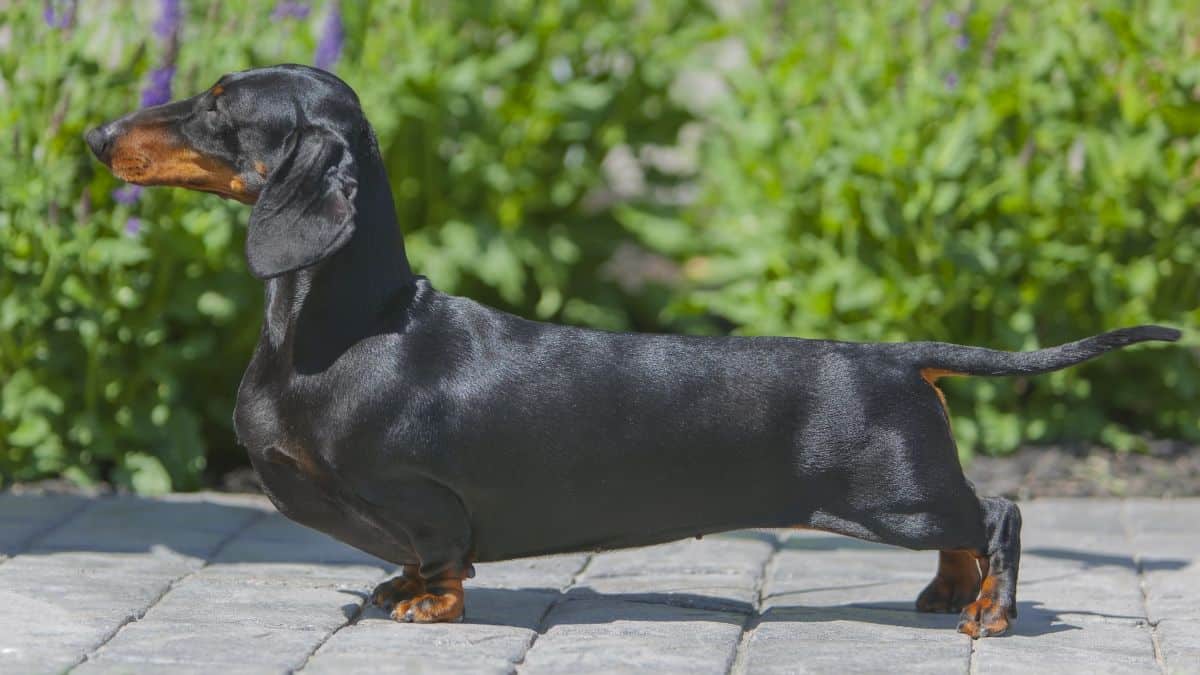
Using the Dachshund as a case study, Lexa Richmond explores how breeding decisions, mentorship, and education shape breed preservation.