Members
Genetic tests clarify some dog diseases – but many remain complex and untestable. Know what to ask and what to expect.
The Weekly Brief
The best of SHOWSIGHT editorials, weekly wins, and breeder commentary — delivered to your inbox every Sunday morning.
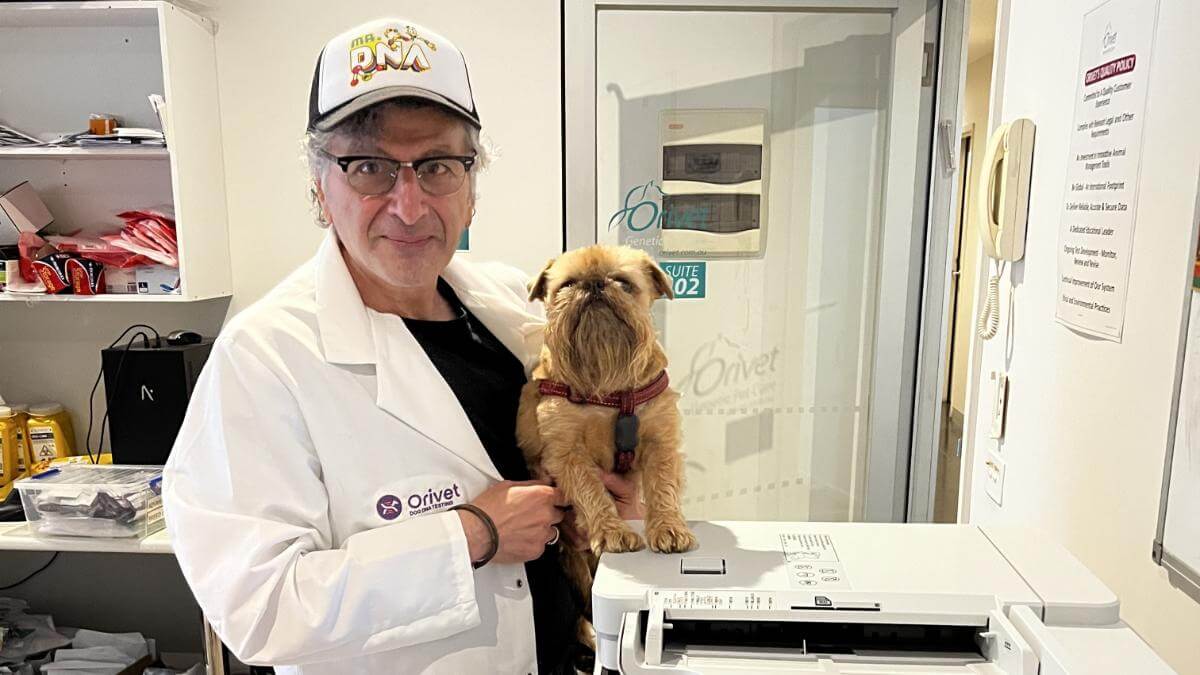
One of the most frequently asked questions I encounter is: “Can you test for this?” The answer, however, is rarely straightforward. Genetics is an inherently complex and often unpredictable field—as my colleague Charlie, with more than 14 years in the discipline, used to emphasise: There are always more questions than answers.
Similarly, Mary, who spends her days supporting breeders, reminds us that the real challenge often lies in interpreting what a genetic test can (and cannot) tell us. In this month’s article, I will outline why certain conditions can be tested for while others cannot, and what breeders should realistically ask when considering hereditary versus spontaneous disorders.
Whether at a dog show, online forum, or in direct consultation with breeders, the inquiry is consistently the same:
In most instances, the answer is no; not because the technology does not exist or because laboratories are unwilling to develop it, but because the biological reality of genetics is far more complex than a binary yes-or-no test.
The most critical factor to understand is that not all diseases are controlled by a single gene. Many disorders are polygenic, influenced by numerous genes, each exerting modest effects. Layered on top of this are non-genetic modifiers such as nutritional status, environmental exposure, or infectious triggers. Together, they create a multifactorial landscape. Thus, even a clearly hereditary disease may elude the development of a simple, reliable DNA assay.
This is why two dogs carrying the same “faulty” gene can live very different lives—one developing disease early, another never showing any symptoms.
Another key distinction: hereditary does not always equal testable. Some conditions may be inherited but involve too many genetic and environmental factors to isolate into a single DNA test. Others may arise spontaneously—a developmental accident in utero or an isolated immune response that no genetic screen could have predicted.
When you see a condition appear in a litter, ask yourself:
Genetic testing has revolutionized modern breeding practices, but it is not yet a crystal ball. Science is advancing, and every year the list of available tests grows. Still, some conditions, such as epilepsy, cleft palate, and immune disorders, remain beyond reach.
At Orivet, our mission is not just to provide tests but to educate breeders, share the latest research, and help to interpret what the science means for your program. As Charlie liked to say: “The more you learn, the more you realize there is still more to understand.”
As part of our commitment to breeders, I’m offering a special giveaway: the first five readers to email me at: george@orivet.com, with your breed and the genetic or hereditary issue you’re most concerned about, will receive a complimentary Full Breed Profile (valued at over $130).
This is my way of giving back and encouraging more open conversations about genetics, challenges, and opportunities in your breed.
Now, I don’t want breeders to feel overwhelmed. Just as Charlie never failed to bring back his ball, even if it took a few detours most of the time, genetic testing is actually very straightforward. For the majority of conditions, results fall into three simple categories: Normal, Carrier, or Positive. These tests are well-validated, easy to interpret, and can be used immediately to guide breeding strategies.
It’s only when we start pushing into the more complex diseases—the “tough throws” in genetics—that the ball doesn’t always come back cleanly. That’s where science is still catching up. But rest assured, technology is advancing rapidly. So, will we bring the ball back eventually? Absolutely. Watch this space; the science is moving forward every year.
The Takeaway: DNA testing is powerful, but it’s only one piece of the breeding puzzle. Always combine test results with pedigree, clinical history, and phenotype
Specialty & Group Club News
Discover how the Collie Health Foundation advances Collie health through research, education, and community support.