Members
From Siberian origins to global recognition, the Yakutian Laika’s history, purpose, and rise in international breeding and dog sports.
Brazilian Yakutian Laika Breed Club - Alanna E. Fontenele & Beatriz Ayres
The Weekly Brief
The best of SHOWSIGHT editorials, weekly wins, and breeder commentary — delivered to your inbox every Sunday morning.
(Article written by the Brazilian Yakutian Laika Breed Club, represented by Alanna E. Fontenele and Beatriz Ayres, in partnership with the Yakutian Laika Club of America.)
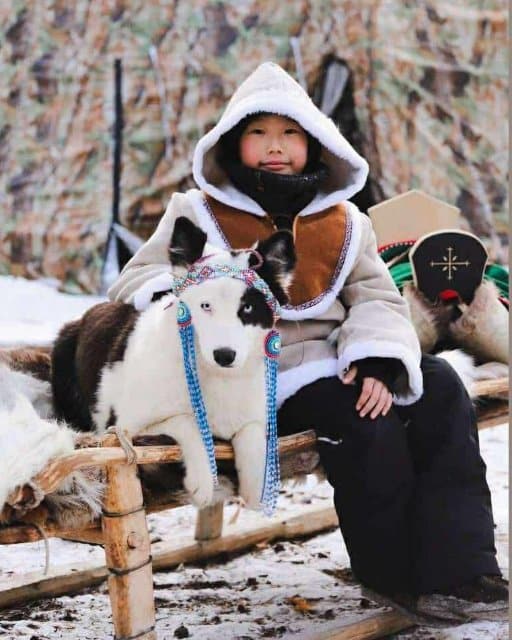
The Yakutian Laika is an ancient Northern breed that originated in the Sakha Republic (Yakutia), located in northeastern Siberia, Russia. It developed naturally under extreme Arctic conditions and has long been associated with the survival and cultural traditions of the Yakut people and other indigenous populations of the region.
Archaeological evidence supports the existence of sled and hunting dogs in the territory of present-day Yakutia as early as 8,000 years ago. Excavations on Zhokhov Island (New Siberian Islands) revealed sled fragments, harness parts, and canine remains dating from 7,800–8,000 years before present, which represent the earliest known evidence of dogs being used for transportation. Additional discoveries along the Syalakh River near the village of Tumat included mummified dog remains dated to approximately 12,500 years ago, confirming the long-standing presence of domestic dogs in the Arctic zone of northeastern Asia.
The Yakutian Laika was traditionally used for three main purposes: transportation by sled, hunting of both small and large game, and guarding of reindeer herds and family dwellings. Written references to the dogs of Yakutia appear as early as the 17th century, during Russian explorations of Siberia. In 1843, Ivan Pavlovsky’s Guide to the Geography of the Russian Empire described the Yakutian dog as a “special breed used for sledding and hunting,” marking one of the first formal breed descriptions.
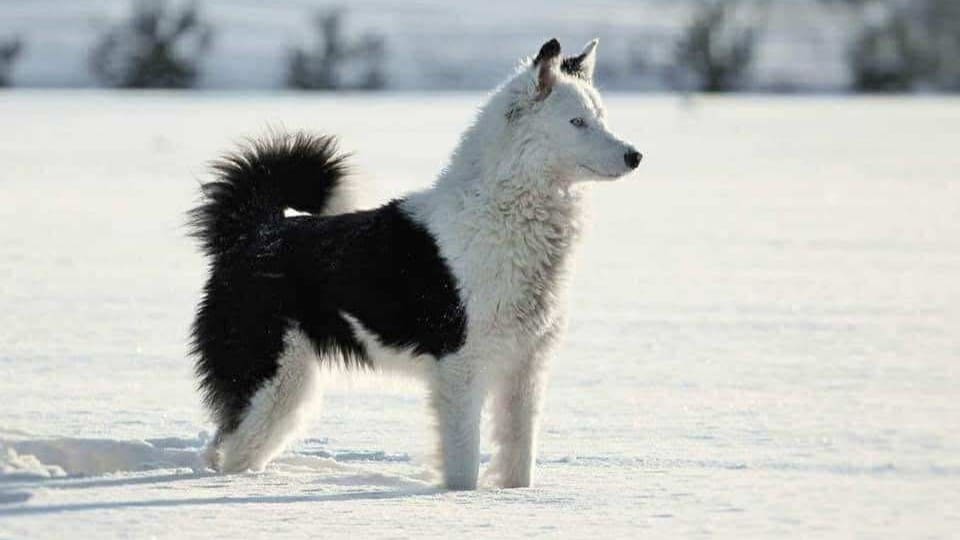
The Yakutian Laika is a medium-sized, strongly built, and well-balanced dog with a thick double coat, erect triangular ears, and a tail carried in a sickle or curled over the back. The breed exhibits strong sexual dimorphism, with males being larger and more robust. Eye color varies from dark brown to blue or heterochromic, which is typical for the breed. The coat color is predominantly bicolor, with combinations of white, black, and brown being most common.
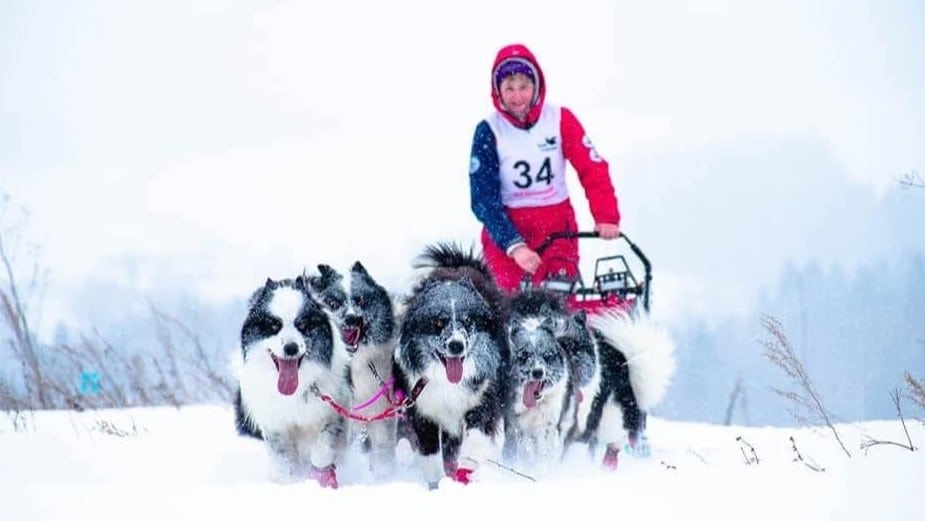
Functionally, the Yakutian Laika was developed for endurance rather than speed. It was capable of pulling moderate loads over long distances across frozen terrain and through deep snow. The breed’s intelligence, adaptability, and cooperative temperament made it equally valuable as a hunting companion and household guardian. Yakutian Laikas are known for their high work ethic, stable temperament, and strong bond with humans.
During the mid-20th century, mechanization and the introduction of snowmobiles led to a significant decline in the use of sled dogs across northern Russia, resulting in the near disappearance of the Yakutian Laika population. By the 1970s, only isolated dogs remained in remote Yakut villages. Efforts to restore the breed began in the 1990s under the guidance of regional breeders and zoologists who collected and selected foundation stock from indigenous populations. The Russian Kynological Federation (RKF) officially recognized the breed in 2004, establishing the first Breed Standard. The Fédération Cynologique Internationale (FCI) provisionally recognized the Yakutian Laika in 2019, granting it full recognition in subsequent years.
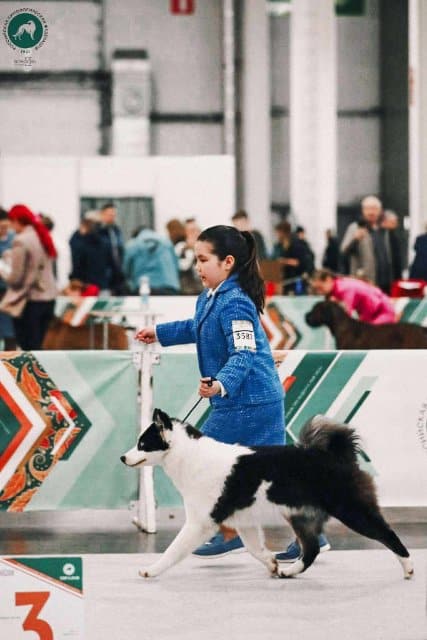
In recent decades, the Yakutian Laika has attracted growing international interest due to its balanced combination of functional ability, intelligence, and sociable temperament. The breed is currently established in Russia, Europe, North America, South America, and Australia, with an increasing number of breeders participating in genetic preservation programs and international Conformation shows. Outside its native region, the Yakutian Laika is often used in sled dog sports such as Canicross, Skijoring, and recreational Mushing, as well as in family environments where its calm and loyal disposition is highly valued.

In the United States, the Yakutian Laika has also begun to establish a formal presence within the registry system. The breed was accepted into the American Kennel Club’s Foundation Stock Service (FSS) in 2017, allowing for official documentation and controlled pedigree tracking under the Working Group classification. Following steady growth in population and breeder participation, the Yakutian Laika advanced to the AKC Miscellaneous Class on June 26, 2024. This status permits the breed to compete in AKC-sanctioned Conformation and Companion events while undergoing continued evaluation toward full recognition. Admission into the Miscellaneous Class represents a significant milestone in the international expansion of the Yakutian Laika, confirming both the breed’s genetic stability and the increasing interest of American breeders and owners in preserving its working heritage and balanced temperament.
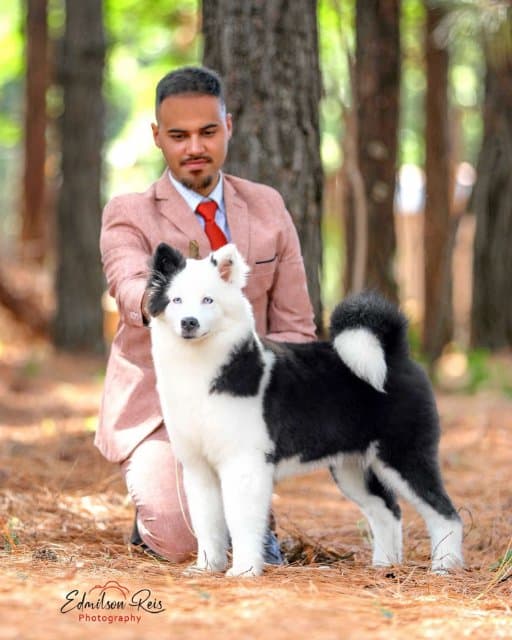
The international expansion of the Yakutian Laika has accelerated in recent years, supported by growing numbers of dedicated breeders and the establishment of official breed clubs in multiple regions, including Europe, North America, South America, and Australia. This global growth emphasizes the need for active collaboration between national breed clubs to maintain uniformity in breeding standards, health testing, and genetic management. Coordinated efforts across countries are essential to safeguard genetic diversity while preserving the breed’s original working characteristics and temperament. In Brazil, for example, the Yakutian Laika Breed Council operates under the supervision of the CBKC, Brazilian Kennel Club Confederation, to ensure adherence to the official FCI Breed Standard. This structure promotes the exchange of information on bloodlines, health programs, and educational initiatives among breeders. Such international cooperation not only enhances the quality of breeding programs worldwide but also strengthens the cultural and scientific preservation of one of the oldest Northern breeds in existence.

The Yakutian Laika represents an important component of Arctic cultural and biological heritage. Its development reflects thousands of years of coevolution between humans and dogs under extreme environmental conditions. The breed’s reestablishment and expanding international presence demonstrate the resilience of traditional genetic resources and their relevance in contemporary canine breeding. Continued attention to genetic diversity, health testing, and preservation of working traits is essential to ensure the sustainable future of this historically significant breed.

Dog Show Community