The Pointer Standard Revisited
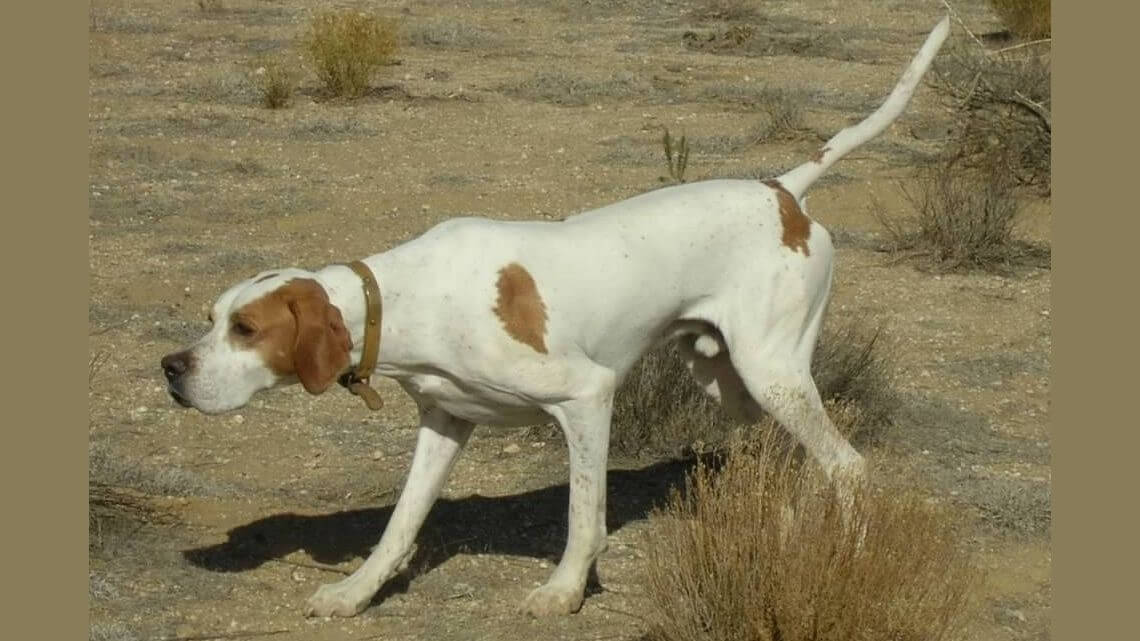
The first line in the General Appearance section of the AKC Breed Standard for the Pointer states the following: “The Pointer is bred primarily for sport afield; he should unmistakably look and act the part.”
It does not say the Pointer should hit a perfect free-stack in the show ring.
Are you losing sight of the fact the breed’s most important function is that of a hard-driving hunting dog, possessing stamina and courage and a desire to go?
Our Standard is a blueprint for the breeder and a guide for the judge.
Its entire purpose is to provide parameters for the breeder to create a Pointer that can do what it was bred to do. If those parameters are corrupted, the result cannot be the ideal that is described in our present Standard.
If the blueprint is altered, what can we expect as the result; will the ideal change?
Our Standard calls for a strong back and moderate loin, which is a dog that is slightly longer than it is tall. What would happen if you altered that verbiage to a square Pointer? How would that affect the sum of these parts?
The main reason a Pointer can quarter a field with speed and grace, with the “turn on a dime” capability, is the foot that is oval with long, closely set arched toes. Yet in the ring, the faulty cat foot is far too common. Those compact feet may handle a small ring easily, but to run in the field with any success, those cat-footed Pointers will never be able to grab the ground to make those high-speed turns that are a hallmark of our breed in the field.
The entire front-end assembly is built like a finely tuned machine. The slight bend of the pastern is a shock absorber coupled with a well-angled upper arm to keep the shoulder from undue stress at the trot or from the speed of the gallop. If any of these components are not correct, the function is corrupted. The stress of poor structure will cause a loss of efficiency and stamina, and eventually will break down, leading to a multitude of maladies.
Nature compensates, and most of the time the rear of the dog will follow the structure of the front. If you have a poorly angulated front, the back of the dog will most likely be that of lacking rear angulation, with long hocks and a rounded, low-set croup. A correct front will have a correspondingly angulated rear and well-let-down hocks. All these statements are not just words on paper; they are a well-written, time-tested blueprint of an ideal Pointer.
There are so many wonderful, articulate descriptions in our Pointer Standard. If you just take the time to read and understand the document, it will open a world for the aspiring breeder or judge.