

Last month, I discussed considerations when pairing a newbie Junior with a dog show partner. Creating a winning team, though, is a complex formula combining the pragmatic and practical with, surprisingly, the illogical and undefinable. Head and heart must be given equal consideration.
Certainly, it’s easy to comprehend basic realities. In theory, tall kids should be paired with larger dogs, right? Maybe…
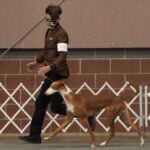
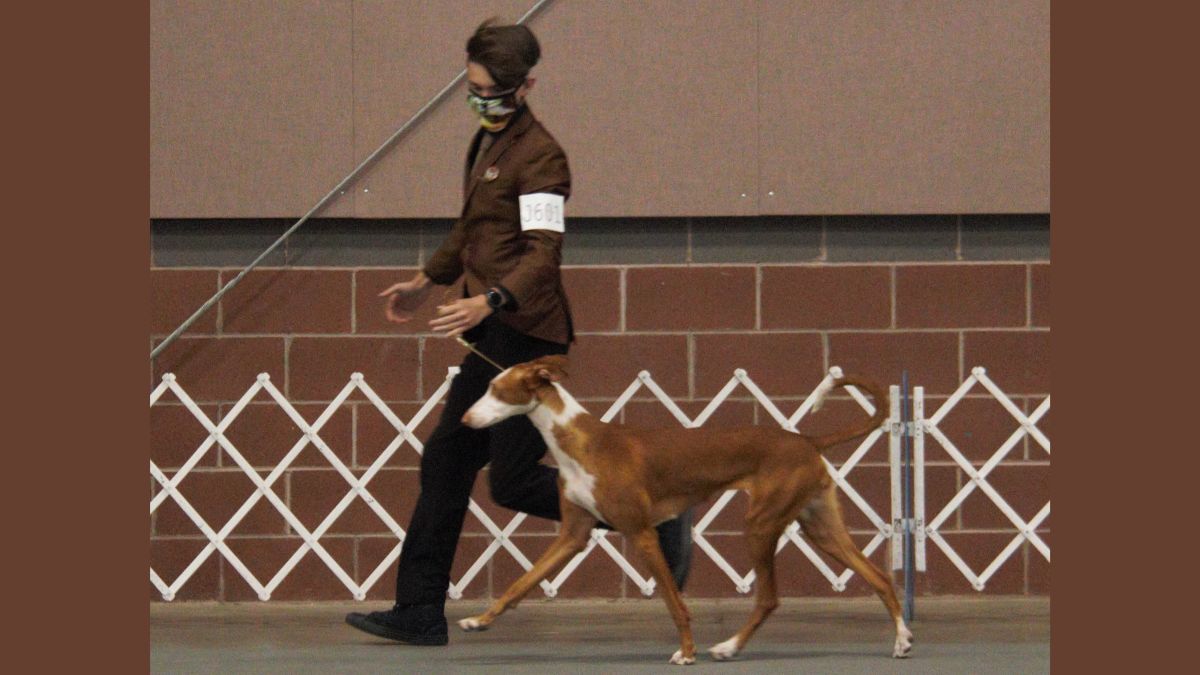
I had a Junior years ago showing a Pharaoh Hound, with moderate success. Neither kid nor dog did anything “wrong,” but the team never looked “right.” For the boy to move at the dog’s ideal speed, he had to shorten his stride, making his run look awkward and choppy. When the boy opened his stride, though, to a point where he flowed around the ring, the dog simply couldn’t keep up. It scrambled and galloped. The dog’s height in relationship to the boy was a poor fit. After much consideration, we moved the Junior onto a different dog, an Ibizan Hound owned by his family. The leggier dog was paired with the leggy teenage boy to create a team that won/placed consistently. So, tall with tall wins, yes? Maybe…
I had another equally talented—and equally tall—young man around the same time. His legs stretched nearly to my shoulders, with a body equally lanky. And OMG, could this kid run: huge, graceful, ground-covering strides. In my perfect world, I’d have had him on a Setter, a Doberman, or even a German Shepherd.
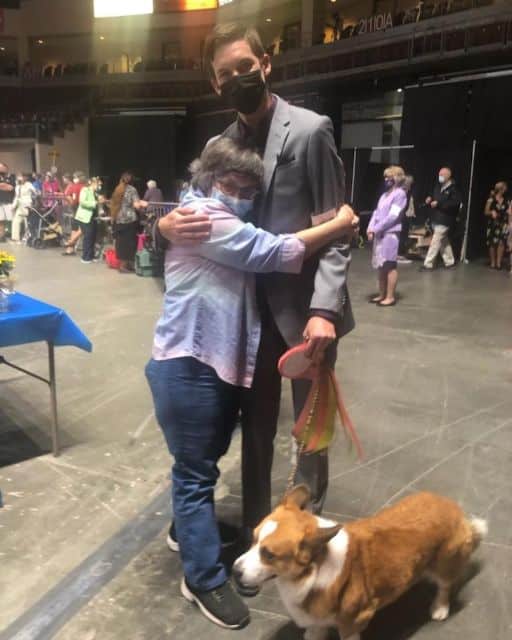
However, remember the head/heart conundrum? This young man’s heart was with his family’s breed… Cardigan Welsh Corgis! Despite my “urging” (and believe me, I STRONGLY urged) I could not convince him to switch breeds. How did this unlikely team do? They qualified for the AKC Juniors Finals five times and Westminster four times. He was also the No. 1 Junior in the breed in his final Junior season. He co-bred several litters, took multiple Group placements with his dogs, and was a fantastic ambassador for his beloved breed. Could he have had a more impressive Juniors career paired with a more appropriately sized breed? Absolutely! However, passion for a breed and/or a special dog should lie at the heart of any great Juniors team.
The bond between Junior and dog is also a critical, if not the most crucial, factor in a successful team. I’d argue with those who worry that kids borrowing big-winning, champion dogs they don’t own will dominate in the Juniors ring. In reality, just because a dog is a seasoned/well-known campaigner doesn’t mean they’re a robot! Professional handlers will tell you that every dog has its quirks, and the great ones can have significant opinions/attitude. It doesn’t matter if a dog has all the bells and whistles if you don’t know what to “ding” and how to “toot.” When a Junior walks into the ring holding the lead of a top-winning dog, it can easily backfire. Here’s a dog that judges have seen regularly, flawlessly handled by a professional with a deep understanding of, and connection with, the dog. The expectations on the Junior are immense, and, in my experience, it’s a strategy which often fails.
I propose that a Junior living with their dog has the advantage every time IF they’re smart and committed. Even if we are talking a family pet. Even if the dog only has a PAL (Purebred Alternative Listing) registration.
What these kids have available to them is time—time to bond, time to learn a dog’s idiosyncrasies, time to train and perfect show ring skills. Want a free-stack with cues so invisible it looks like you and your dog communicate telepathically? It takes 20 minutes a day, several times a week. That’s time those kids with fancy borrowed dogs don’t have! Want to move your dog in perfect synchronicity at both of your ideal speeds? Practice gaiting when out for your regular daily walk. What gets your dog up/happy in the ring, putting more “gas in their tank?” Take time each day to perfect a new trick, play with a different toy, try another bait. This creates a foundation of trust and understanding that no kid handed a dog at ringside can ever replicate.
This next bit of advice is for parents… If you want your youngster succeeding in the show ring, allow their dog to be THEIR dog. Feeding, grooming, exercise, play, and training are the Junior’s responsibility. Depending on the Junior’s age/experience, limited support and guidance is appropriate. Trust me, a dog standing in the ring looking frantically for mom/dad, while your kid struggles desperately to get the dog’s focus, doesn’t demonstrate a strong Junior/canine bond.
The most common feedback my students receive from Juniors judges often relates to the “bond” between handler and dog. Though not in the rulebook, judges like to see the Junior and the dog enjoying their shared show ring experience with each other. That deep connection comes from time spent together.
A Junior with a purebred or “purebred-ish” family dog with no real dog show experience doesn’t have to be at a disadvantage. I believe in a schoolmaster/“loaner” dog to start with in the Juniors ring. While learning with their loaner, I encourage newbie handlers to practice every day with their family pet on the skills they’re learning from the experienced dog. With regular daily practice at home, and eventually in classes, most dogs pick up the dog-showing-gaming fairly easily.
I hesitate counseling a Junior to train their dog for the Junior Showmanship ring if the dog has reactivity issues, though. In these cases, I strongly recommend formal training in Obedience to help the dog develop a stable, secure temperament.
Yes, not having a well-bred, fancy show dog might put you at a disadvantage. It shouldn’t! As clearly stated multiple times in the Junior Showmanship Rulebook and the Junior Showmanship guidelines: “Junior Showmanship classes are judged on the ability of the Junior to handle his or her dog. The quality of the dog is not judged.” Remember, though, judges are dog fanciers. On a subconscious level, they are impacted by seeing a quality animal.
And yet, I’ve personally had students qualify for Orlando and Westminster with dogs from shelters, bred from hunting/working lines, or purchased from backyard breeders. A rescued Aussie helped his young owner win his way through Novice into Open where the team qualified for the AKC Finals, picking up several BJHs for Westminster along the way. One little girl won her first dog show ribbons with a backyard-bred Pekingese adopted from a local shelter. Another student had great success with her mother’s sled dog, a Siberian Husky from her racing team. Again, time spent building a relationship counts!
Now, I need to point out the obvious when building a Juniors team. Kids grow, changing physically, gaining (but sometimes losing) coordination as their bodies develop. Kids mature in their thought processes and focus. Kids’ personalities change as they gain confidence in the sport. All this is going to impact the team. The perfect partner for a shy, insecure, wisp of a nine-year-old novice likely won’t suit the confident, extroverted, athletic fifteen-year-old she matures into.
More significantly, it’s a rare show dog that’ll last through an entire nine-year Juniors career! I’ve found in most cases, assuming an active show schedule, dogs generally start to lose interest/enthusiasm at about the fourth/fifth year, sometime during the Intermediate years (ages 12/13/14).
Therefore, we use the time in Intermediate to build their Senior dog. By Open Intermediate, most of my students have had three or four years of regular showing. They’ve experienced working with and training a variety of dogs, helping friends at shows or even working with professional handlers.
Some of my students breed or co-breed their Senior dog. Some stay with the same breed. Others select breeds better suited to the young adult they’re becoming. Whenever possible, we start with puppies or young dogs. We choose dogs suitable for the Juniors ring but also competitive prospects in the Breed ring. The new dog gains experience showing in the Conformation ring as the young handler puts in all the “bells and whistles.” This may take anywhere from six months to a year. Towards the end of this training period, the Junior starts to alternate between the two dogs in the Juniors ring. Within the year, the transition becomes permanent—although kids will often bring out their “old-timers” for special shows.
Right now, I’ve eight Juniors in varying stages of this changeover, each diligently working to foster the new relationship. I see potential in the new teams. How they’ll succeed, only time will tell. Some matches look great on paper, yet in spite of everyone’s best intentions, never truly connect.
Watch a few Juniors classes at your next show. If you’re lucky, you’ll spot them immediately; a team with that certain “something.” A kid and a dog bringing out the absolute best in each other. In the ribbons or not, that’s an unbeatable partnership.