

Goodness knows that the second-favorite activity in dogs is grousing, but that doesn’t necessarily mean we don’t need to take a minute and listen for trends. What I am seeing lately all has a similar flavor. Many breeders are breeding less, considering other breeds, or simply leaving Conformation for what they perceive as more enjoyable Performance and Companion dog activities like Fast CAT, Obedience/Rally, Scent Work, etc. To be fair, no one is getting any younger, and slowing down is pretty understandable, but the main reason exhibitors site is a declining quality in their breed. This is pretty easy to blame on breeders, but the thing that is upsetting these experienced folks the most is that lower quality is being rewarded in the ring.
Now that is inflammatory stuff; stuff that is usually brushed off as sour grapes. But before we do the usual knee-jerk reaction, let’s do some contemplation.
While I usually stick to the maxim that if you have to tell people you’re the king, you’re not the king; i.e., if you keep having to decry that you are qualified, maybe you have a credibility problem.
I realize that I may not be known by this audience, so here’s a little history.
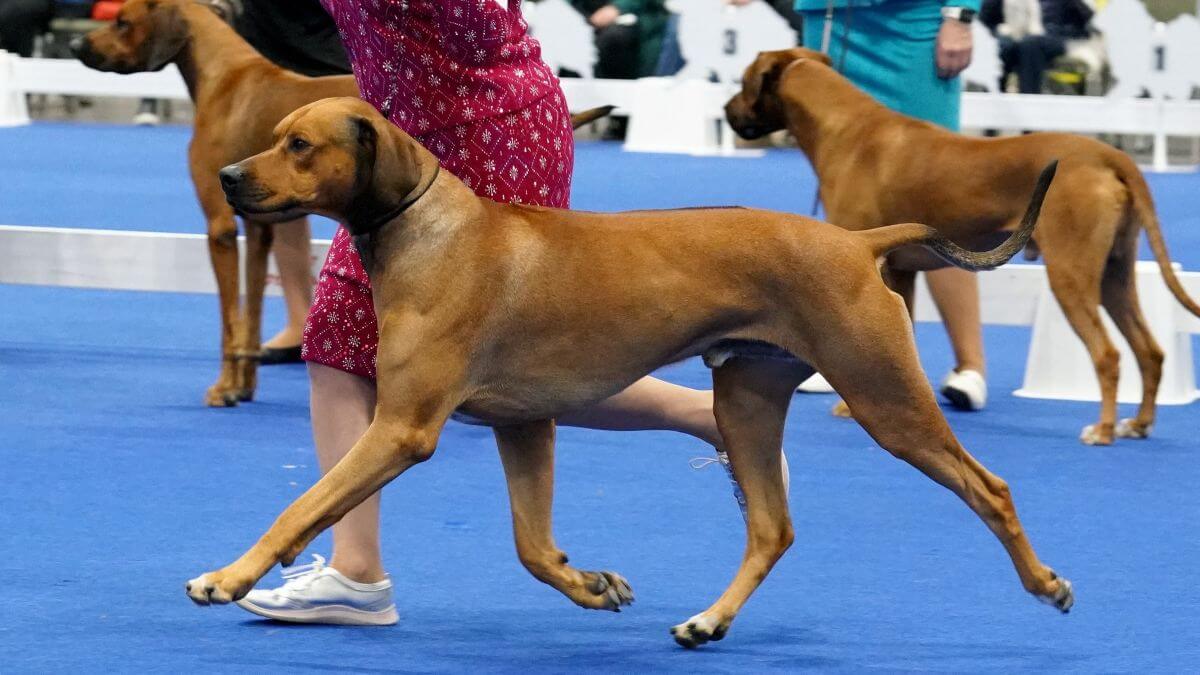
I got my first Rhodesian Ridgeback and show dog in 1993. In those days, there were lots of Fun Matches and I think I went to all of them for months, winning a Puppy Hound Group at one point that sealed the deal on my dog show addiction. My first real dog show was the 1994 National Specialty and my dog earned his first major on the way home, finishing his championship four weekends later—all with me at the helm. In those days, there were mostly breeders and owners showing their own dogs in the classes, with maybe two Specials out with a professional handler. Entries were large, with majors not being terribly hard to find. I can remember the spring shows in Kentucky drawing over 4,000 total entries, and my local shows in the Mid-Atlantic area having close to 2,000 or more.
Since then, I have known the breadth of experience common to most people who have been in dogs for 30-plus years. I have known the sorrow of puppies that didn’t make it, show hopefuls that didn’t turn out, and beautiful dogs that failed health tests, as well as the joy of seeing wonderful puppy homes come back time and again, multiple dogs in the Top 20, multiple Group placings and Group winning, and the incredible honor of winning a National Specialty. And in that time, I’ve tried to keep learning, put in the time and hard work, recognize my mistakes, and build on the good. I also pursued a career outside of dogs that I enjoyed and found very rewarding. Having a job outside of the dog world does more than just keep you grounded. It adds skills that come in very handy for building breeding programs and show campaigns. For a time, I was a project/program manager. While I lovingly called this role a glorified cat herder, it also required setting up a plan to achieve specific results, steps to execute on that plan, time management, team building, budgeting, and identifying and resolving problems along the way.
So, when I started to see some real problems in my breed, I brought all of that experience and skill set to bear by asking myself the question we must all ask ourselves from time to time: What was my part in this problem?
This is not an easy thing to face. Many breeders simply point at other breeders and say that they are the problem. These breeders will find no fault in their own programs when maybe they have become kennel blind. They will say it is all “politics” and nothing can be done. This allows them to keep the status quo in place, which requires the least amount of effort on their part and can be a self-fulfilling prophecy. It’s a weird and very frustrating reinforcement loop to witness, but there are those who are okay with failure as long as everyone else is also failing.
When I asked myself this question a few years back, I concluded that while always needing to improve my dogs, I simply wasn’t putting many dogs in the ring. I am a terrible salesperson, so I have a tough time talking people into showing my puppies. And I had that career thing as I’ve said that got in the way of my dog-showing habit. Still, there is the simple reality that judges can only judge what is in front of them. I have often felt sorry for the poor judge with a dismal entry where they must be asking themselves, “What am I going to do with this?” It was clearly time to give those judges something worth looking at, and so, I rededicated myself to that task.
At first, this approach seemed to have some success. I had two good puppies that finished both their Championships and their Grand Championships quickly. I started Specialing a boy and he did quite well. My evil plan was working! But it may have just been a timing thing, as multiple well-financed dogs proceeded to come to my usual haunts and be handed the win. But I hung in there, still trying to put worthy specimens in front of judges.
Unfortunately, the problems with the breed persisted and perhaps got worse. I was seeing basic faultiness that impact the overall purpose of the breed: short upper arms, cathedral fronts, short rib cages with long loins, weak rears, incorrect toplines. All of these impact endurance and speed. So, if a judge was fault-judging there were some pretty bad ones to be had. If you were looking for positive attributes, the overall picture was lacking. And while one incident may be dismissed as anecdotal, when they start to pile up there’s a problem. For example, a breeder I know told this wonderful story about a good judge who put up a class entry and then thanked the exhibitor for bringing something of quality, since the Specials were “less than expected.” Less than a year later, when presented with the same lineup, only this time that class entry was now a Special, the judge proceeded without hesitation to put up a dog that they had said previously was poor quality! What happened? The Best of Breed winner had not improved during the year, to put it mildly, and the class entry had matured nicely—and was handled by the breeder.
So, here’s where we amateurs become tempted to bash the professional handlers. But we need to stop this. Are the handlers giving themselves the ribbons? NO! In fact, I feel a little bad for them. Many pros long for the days when you showed on the weekend. One prominent handler told me that his typical week was getting home around 2 am on Monday, cleaning out the truck after a few hours’ sleep, reloading it, driving on Tuesday, showing Wednesday through Sunday, wash/repeat every week of the year, never getting a whole day at home. How many handlers do you know who have had their knees replaced? How about hips? Back injuries? And they can no longer run a boarding kennel and grooming business when they are on the road six days a week, so showing dogs is now their living.
There is the usual belief that pros are pros because they are good at what they do. They are knowledgeable about conditioning, training, presenting, and motivating dogs. But I have seen many an amateur present their dogs well and in perfect condition. In addition, they have that relationship with their dogs that only comes from the love and passion for an animal that will always live with them. So, there is something more going on. Honestly, I think it is a little subconscious human behavior. For lack of better terminology, owners who hire handlers are “in it to win it.” Nothing says you are serious about getting your dog ranked than being willing to plop down a college grad’s starting salary or more every year on a dog campaign. And yet, this has always been the case, and honestly, I have been feeling a shift lately that the age-old excuses just don’t cover.
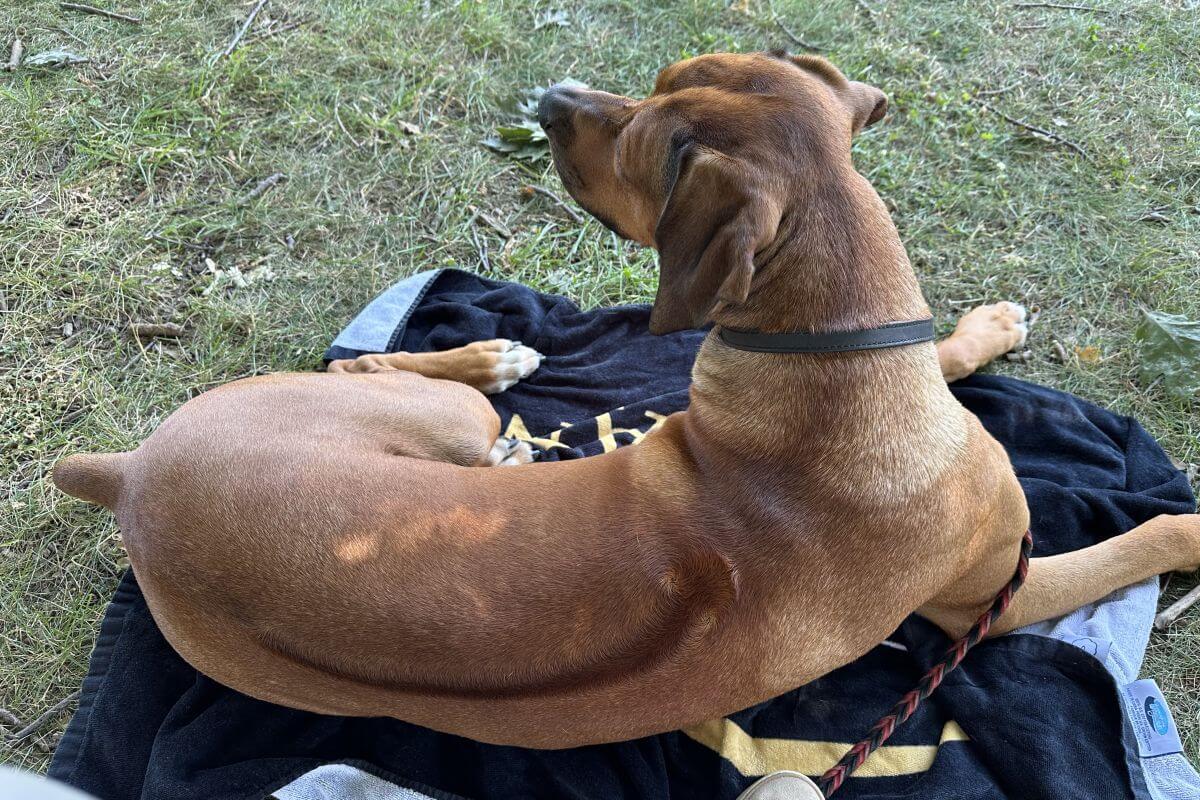
I have many stories that have contributed to the feeling I now have about showing dogs.
While I was training these two promising dogs, I would check the box for Owner-Handled competition. But, as a breeder concerned about my breed, I don’t consider the Owner-Handled program to be my focus. After all, the purpose of entering Best of Breed is to be considered the best representative of that breed on that day. I have never made a breeding decision based on the top OH dogs and don’t expect anyone else to. The Owner-Handled Group ring provides a great experience, though, for promising dogs that we believe can help our breed improve. However, on many a day, the discussions outside the Owner-Handled Group ring have been enlightening in all the wrong ways. There can be numerous long-time breeders—ones with similar accomplishments in their breeds as I’ve had in mine—who had beautiful dogs in the OH ring that were overlooked for Best of Breed. The breeders I talked to said the very thing I hate to hear, which has yet become the mantra of the dedicated breeder who has the audacity to enjoy showing their own dog: “At least this way, I get something.”
But still I kept trying. Having two Specials that I felt were worth campaigning did lead to some troubles, since handling both at the same time was a tad difficult. So, on a few occasions, I decided to hire handlers to take the easier of the two, my girl, into the ring for me. Most of the time I was in the ring as well, and had a front-row seat to my girl fighting each of these handlers, not moving out and generally looking dejected. Imagine my surprise then when she would win. She would win looking less than stellar under judges who did not award me the win when I’d handled her. When I handled and lost, some of the judges would go out of their way to share a comment with me, after judging, one saying that my girl looked “even better” in the Owner-Handled Group ring than she did in Best of Breed—where he did not award her.
In that moment, I felt something for the first time since stepping in the ring in 1993: unwanted.
Show your own dog? Unwanted. Not willing to get a second mortgage to pay a top handler? Unwanted. Not on the Board of Directors for some AKC organization? Unwanted. Not donating large sums to AKC charities? Unwanted. I have been hard-pressed to find a judge who cares about sound structure more than bank accounts. And I have never been more discouraged. But the AKC will decry the decreasing entries and make up more titles or gimmicks (Championships for Limited Registration, for example) instead of just ensuring the competition is fair. The idea of making judges understand that the future of the sport is in their hands and that they should care about quality never gets mentioned. Meanwhile, we unwanted breed specialists who have a passion for the sport end most of our show days wishing the judge would just judge dogs.
And here is the other elephant in the room. Do you honestly believe those owners who are bankrolling the wins understand their dogs’ faults? Do they come out of the weekend where their dog with Joe Big Handler won every day of the entire circuit and think to themselves, “I really need to work on my fronts?” You know the answer. They will breed that front and not select away from it. After all, they have a top dog, so it must be correct. But judging decisions in the ring send a message about what we as breeders should be concentrating on. It is the core message that judges are sending about the state of each of our breeds they judge. When they reward glaring faults, they can compound issues that devastate a breed. Ambivalence has no place in the show ring.
I will give one more story from the Wayback Machine.
Most are familiar with the Philadelphia dog shows and how they can be a bit trying since they are benched. Entering these shows is an all-day commitment, and one year I had my entry in the building before I found out that I had a judge change. While I had been excited about trying the assigned judge, I can’t honestly remember who it was because my substitute was none other than Jane Forsyth. I was practically giddy, not just because Mrs. Forsyth had finished my first home-bred champion (who wouldn’t love that?) but because she was an icon of our sport. I knew I would definitely have to work for the win, but I also knew that she took her role as an adjudicator seriously and would not suffer fools lightly. When I entered the ring with my Specials girl, I knew by about the third stride that it was mine to lose. Some may question this as I am not a mind reader, and sure, it won’t hold up in court, but we all spend our lives reading situations. We learn to recognize when a co-worker is not paying attention to our presentation, a family member is going through something, a baby is either hungry or has gas, or a car salesman is lying to us even more than we’d expected. It is often body language and micro-expressions that we pick up on without having to call it out consciously. A judge will spend more time watching your dog go around the ring instead of moving to the next entry, stand up straighter perhaps, or just stop blinking so that they don’t miss anything.
So, I concentrated on not messing up too much on that day and got the nod. Because Jane Forsyth didn’t care that the dog in front of me was in the Top 10 and handled by a professional, and she also didn’t care that the Regional Specialty winner behind me was handled by an owner with health issues. She evaluated what was in front of her and sent what she thought was worthy on to the Group, and by doing so, she’d indicated who she believed should contribute to the gene pool. And make no mistake, on any other day with different dogs present it could have gone differently, and I would have had to concede to a better specimen of the breed—because that’s what this should all be about. And I believe Jane Forsyth cared deeply about what we are trying to accomplish by showing our dogs.
To be honest, I don’t know how to make judges care, but I do know this: Words alone will not prove that a judge is concerned about my breed. Judges cannot tell me they care, they need to show it with their actions, their selections. Because right now, I am not the only one who can’t see a dog they want to breed to because the “top” dogs appear to have too many aspects we will have to pay the devil to get out of our breeding programs. We see what judges are rewarding and think, “If this is what they want us to produce, I’m out.”
Judges need look no further than the dismal class entries and the lamentations of exhibitors who are unable to find majors. They need to understand that their actions drive what is happening—or not happening—in the whelping box. Judges need to judge the dog. Judges need to be like Jane.