

Home » Observation or Anthropomorphism? Where Thoughtful Breeding Draws the Line
Like many breeders, I spend a great deal of time watching my dogs. Over the years, those small details accumulate into something that feels like knowledge—although perhaps “awareness” is the better word.
My bitch is expecting her second litter. Lately she has been noticeably more tired than usual. She sleeps more deeply than I remember from the first time around. She moves more deliberately. Activities that normally spark enthusiasm are met with a much slower response.
Part of my curiosity around what looks like exhaustion came from my own experience. Years ago, I was pregnant with twin boys. The fatigue was unlike anything I had experienced during my pregnancy with my daughter. Carrying two babies placed demands on my body that felt exponentially greater compared to what I experienced with a single pregnancy. I have joked that, having experienced a “litter” myself, I might be qualified to make these comparisons.
I wondered: Does the same thing happen in dogs? Does a bitch carrying a larger litter become more fatigued than when carrying only a few puppies? And more to the point, what does pregnancy feel like to her? These seem like reasonable questions. Yet almost immediately another thought followed. How would we know? Not how would we guess. How would we actually know?
Part of the challenge is that we often treat observation, interpretation, and anthropomorphism as though they are interchangeable. They are not.
Observation is seeing that a pregnant bitch is sleeping more than usual. It is noticing that she moves more slowly than she did a few weeks ago, or that she appears more fatigued during this pregnancy than during a previous one.
Interpretation is asking what those observations might mean. Perhaps carrying a larger litter places greater physical demands on her body. I know when I was pregnant with my boys, with higher hormone levels than during a single pregnancy, my body was affected differently. Interpretation does not claim certainty. It simply seeks understanding.
Anthropomorphism is something different. It occurs when we assume a dog is experiencing the world exactly as a human would. It is the leap from observation to statements such as: “She is worried about becoming a mother.”
Science is something else entirely. Science is the process of testing whether our interpretations are correct. It allows us to move beyond assumptions and determine whether the patterns that we think we see actually exist.
This brings us to one of the most persistent questions in the dog world: Where does anthropomorphism end and thoughtful observation begin? For many people, the answer seems simple. Dogs are not humans. Therefore, we should avoid assigning human emotions, motivations, and experiences to them. Fair enough. Most experienced dog people would agree. Dogs are not children in fur coats. (We do not use the term “furbaby” around here.) They do not spend their days dwelling on social slights or career disappointments. Anyone who has lived with dogs long enough understands that they experience the world differently than we do.
At the same time, acknowledging that dogs are not human does not require us to pretend they are unaware of their own experiences. A heavily pregnant bitch may not think about pregnancy the way a woman does, but that does not mean she feels nothing. She may experience discomfort, fatigue, hunger, or restlessness in ways that are uniquely canine.
The challenge is determining where thoughtful interpretation ends and projection begins.
The modern conversation about dogs often treats science and experience as opposing forces. In reality, they are partners. Science provides evidence. Observation provides questions. Without observation, there would be no hypotheses to test. Without science, there would be no reliable way to evaluate those hypotheses.
Long before genetic testing existed, breeders recognized that certain traits tended to run in families. Long before sophisticated reproductive medicine, breeders observed differences in fertility, maternal instincts, litter size, and puppy development. Long before behavioral studies became commonplace, trainers and breeders noticed patterns in temperament and learning.
Were they always right? Of course not. But being occasionally wrong does not make observation, or simple wonder, worthless. In fact, many advances begin with someone noticing something that cannot yet be fully explained.
What concerns me today is that we seem to be losing appreciation for the value of accumulated observational knowledge.
For generations, dedicated breeders spent lifetimes studying their dogs. They observed multiple generations, tracked pedigrees, recorded outcomes, and shared information with fellow breeders. They developed insights that could only come from long-term experience.
Today, fewer people breed dogs. Fewer maintain multi-generational breeding programs. Fewer spend decades immersed in a single breed. At the same time, public criticism of breeding has become increasingly common. This creates an odd contradiction. Society demands evidence-based decisions regarding dogs while simultaneously discouraging the very people who generate many of the observations that eventually lead to evidence.
The reality is that preservation breeders occupy a unique position. We are not simply producing litters. We are maintaining living populations. We are tracking health, temperament, structure, longevity, reproduction, and behavior over time. We are observing patterns that may take decades to emerge. That role carries responsibility.
This is also where anthropomorphism becomes more than a philosophical puzzle. It is a fault line in the way different communities talk about dogs.
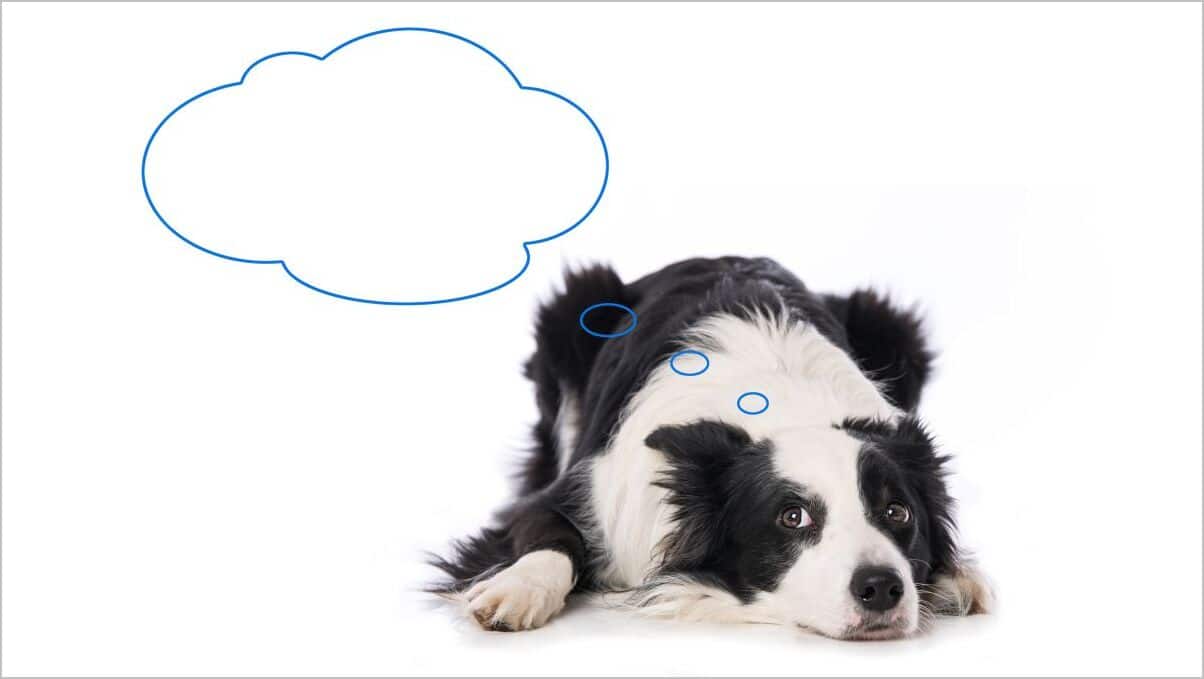
Animal rights campaigns often rely on explicitly anthropomorphic stories; a shelter dog is “wondering why she was abandoned,” and a laboratory Beagle is “thinking about the day he will finally be free.” These narratives are powerful because they invite people to see themselves in the animal’s place, and that human-animal identification can dramatically increase empathy and support for animal rights.
In that sense, anthropomorphism functions as a deliberate strategy: If animals love, fear, hope, and suffer just like we do, then the moral distance between “us” and “them” collapses. Practices that once seemed acceptable—certain training methods, breeding itself, even ordinary ownership—can come to feel like violations of a shared moral code.
But anthropomorphism also shows up as a weapon in the other direction. When breeders, trainers, or veterinarians raise concerns about overly sentimental narratives, they are frequently accused of “justifying cruelty” or “reducing dogs to commodities.” In response, critics deploy the charge of anthropomorphism as a way to discredit animal rights arguments: “They’re just projecting human feelings onto animals,” “They care more about feelings than facts,” “They’re making up an inner life to manipulate people.” The implication is that if empathy has been stirred by anthropomorphic language, the resulting concern for animal welfare must be irrational, unscientific, or hysterical.
Both moves distort the underlying problem. Unexamined anthropomorphism can create unrealistic expectations of dogs and knee-jerk opposition to any husbandry that does not resemble a human ideal of “freedom” or “family.” Dismissing every effort to understand canine experience as “just anthropomorphism” then becomes an easy way to ignore legitimate welfare questions and shut down uncomfortable conversations. I am always keen to keep “animal rights” and “animal welfare” distinct; one questions whether we should keep animals at all, while the other asks how we can keep them better (although this nuance of rights vs. welfare has become increasingly muddy and is a topic unto itself).
For preservation breeders, this is familiar territory. We are asked to defend our role in the future of purebred dogs in a landscape where empathy is sometimes amplified by anthropomorphism and sometimes attacked with the accusation of anthropomorphism. The temptation, from both sides, is to lean on certainty—to insist that we know exactly what dogs feel—or to insist that we know they feel nothing like what is being claimed.
Good breeders understand the difference between observation and certainty. Observation says, “This bitch appears more fatigued during this pregnancy than she did during a previous one.” Certainty says, “I know exactly what she is feeling.”
The first statement is useful. The second may not be. The same is true in our broader debates. It is one thing to say, “This dog’s behavior and physiology indicate stress,” and quite another to declare, “He is lying there thinking about how unfair his life is,” or, conversely, “He’s fine; that’s just people projecting.”
Perhaps that is where thoughtful husbandry lives. Not in pretending dogs are people. Not in pretending they are unfeeling objects. But in acknowledging that they are sentient animals whose experiences deserve our attention, even when we cannot fully understand them.
Thoughtful breeders remain curious. Rather than assuming they already have the answers, they pay attention to patterns, ask questions, and remain open to learning. Experience is valuable, but it is not a substitute for curiosity. In many ways, the best breeders are lifelong students of their breed, always observing, always questioning, and always refining their understanding.
I still don’t know whether a bitch carrying a larger litter experiences fatigue the same way I did carrying twins. But asking the question led me to something worth considering. The observations that deepen our understanding of dogs often begin not with certainty, but with curiosity.
And perhaps that is why the debate over anthropomorphism sometimes misses the larger point. The goal is not to imagine that dogs are just like us, nor to weaponize the charge of anthropomorphism whenever empathy makes us uncomfortable. The goal is to understand dogs as they are. And that understanding begins the same way it always has—by noticing.