Members
Alicia Figueroa Carlo traces the Toller’s journey from Nova Scotia’s hunting shores to a versatile, energetic retriever celebrated worldwide.
Alicia Figueroa Carlo
The Weekly Brief
The best of SHOWSIGHT editorials, weekly wins, and breeder commentary — delivered to your inbox every Sunday morning.
For more than two centuries, the Nova Scotia Duck Tolling Retriever was a local secret, known only to the hunters and families of southwestern Nova Scotia. Officially recognized by the Canadian Kennel Club in 1945, the breed was historically sometimes called the “Yarmouth Toller,” the “Little River Duck Dog,” the “Little River,” or simply, the “Toller.”
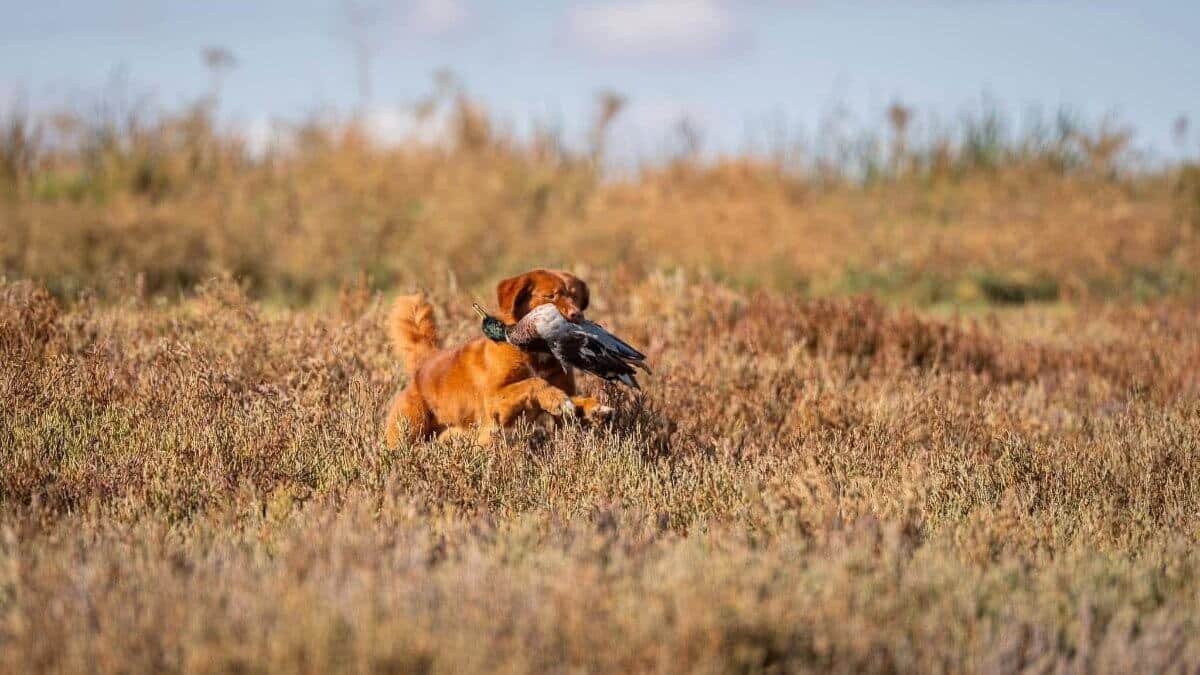
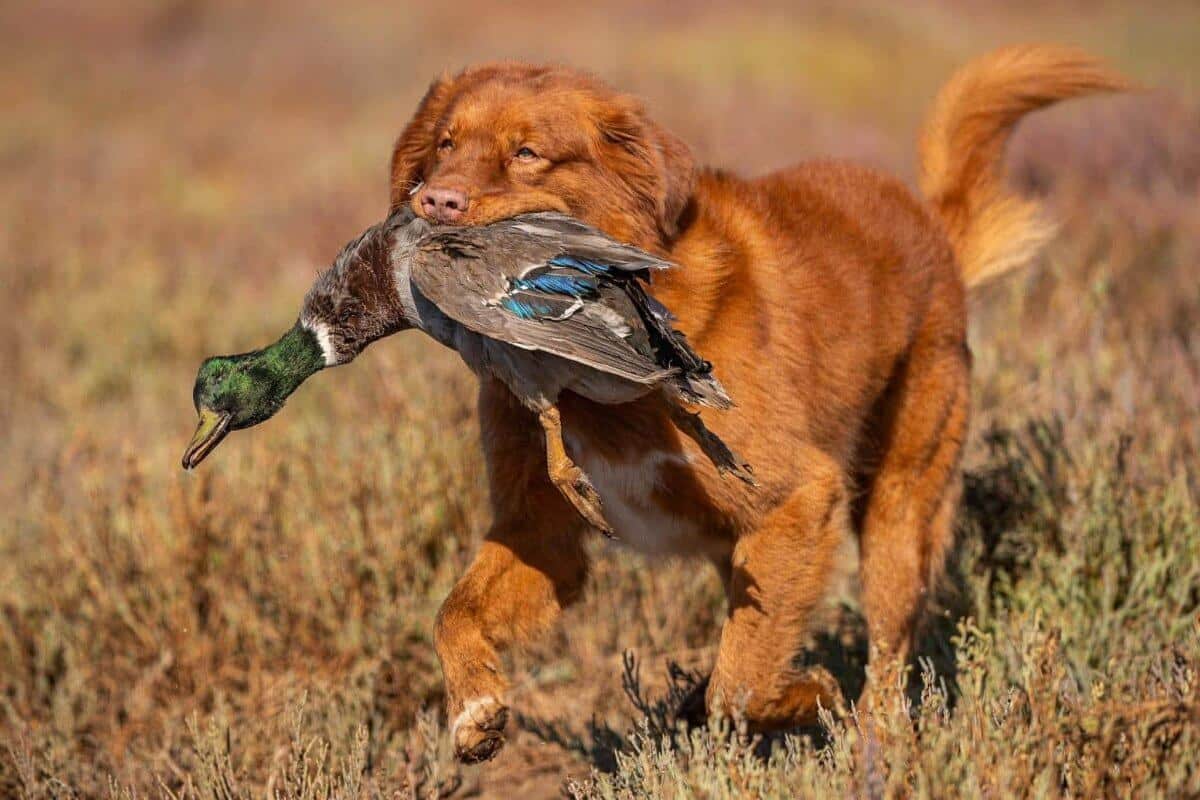
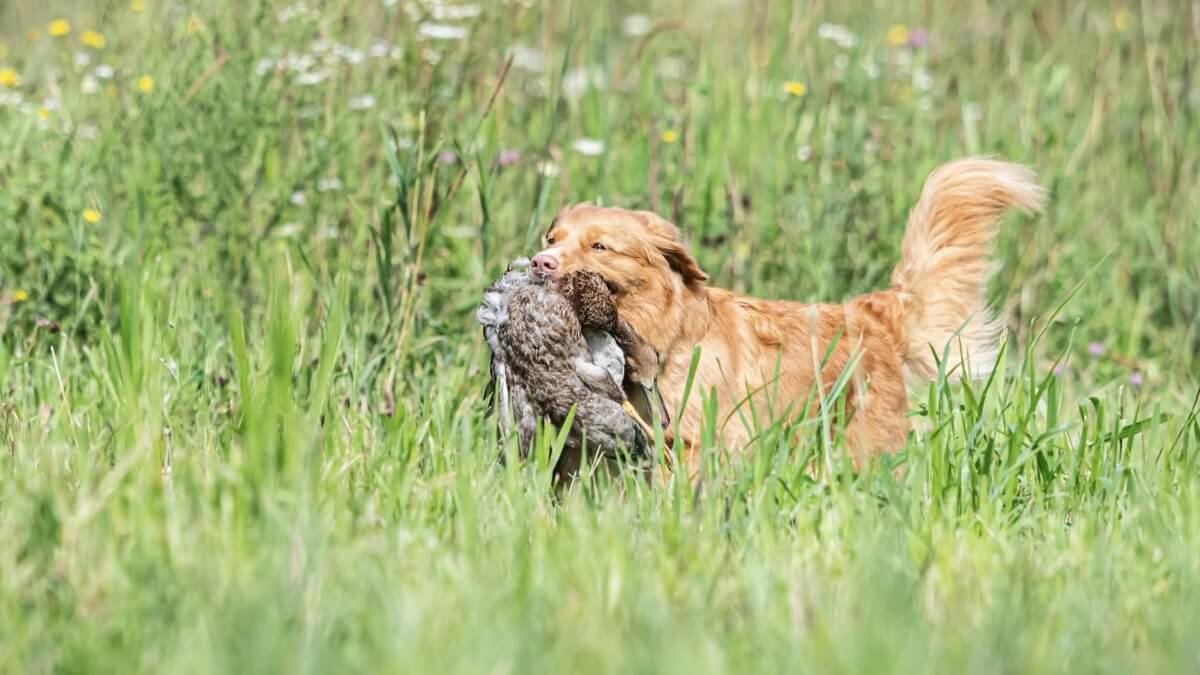
Hunters noticed that ducks in bays and estuaries would investigate the playful antics of foxes along the shoreline, drawn by the flicking tail and lively movements of the animal. As the ducks crept closer, the fox’s partner would spring from cover in the reeds to make the catch. Inspired by this clever method, people began breeding dogs that could mimic both the appearance and the behavior of the fox. Tollers were developed to “toll,” or lure, ducks closer by playing along the shore, drawing the birds within range of the hunter. A Tolling Retriever could lure waterfowl within gunshot range, through its spirited activity along the shore, and retrieve it, becoming an indispensable partner in the hunt and a reliable hand in bringing game back to the table.
The true makeup of the breed is unknown, but the Tollers we know today descend from Eddie Kenney’s stock (1874–1953), the last of his immediate family to breed them. Kenney never explained where the dogs originally came from, but no other family in the province has such a long history of raising Tollers and distributing them to other breeders. Historical records show that through at least one documented breeding, Kenney’s stock may have merged with that of Senator Paul Hatfield—the first person to begin a tolling retriever breeding program with the goal of having the dogs recognized as an official breed by the Canadian Kennel Club. These dogs became the foundation of Col. Cyril Colwell’s kennel, whose dogs were the first to be officially recognized as Nova Scotia Duck Tolling Retrievers.
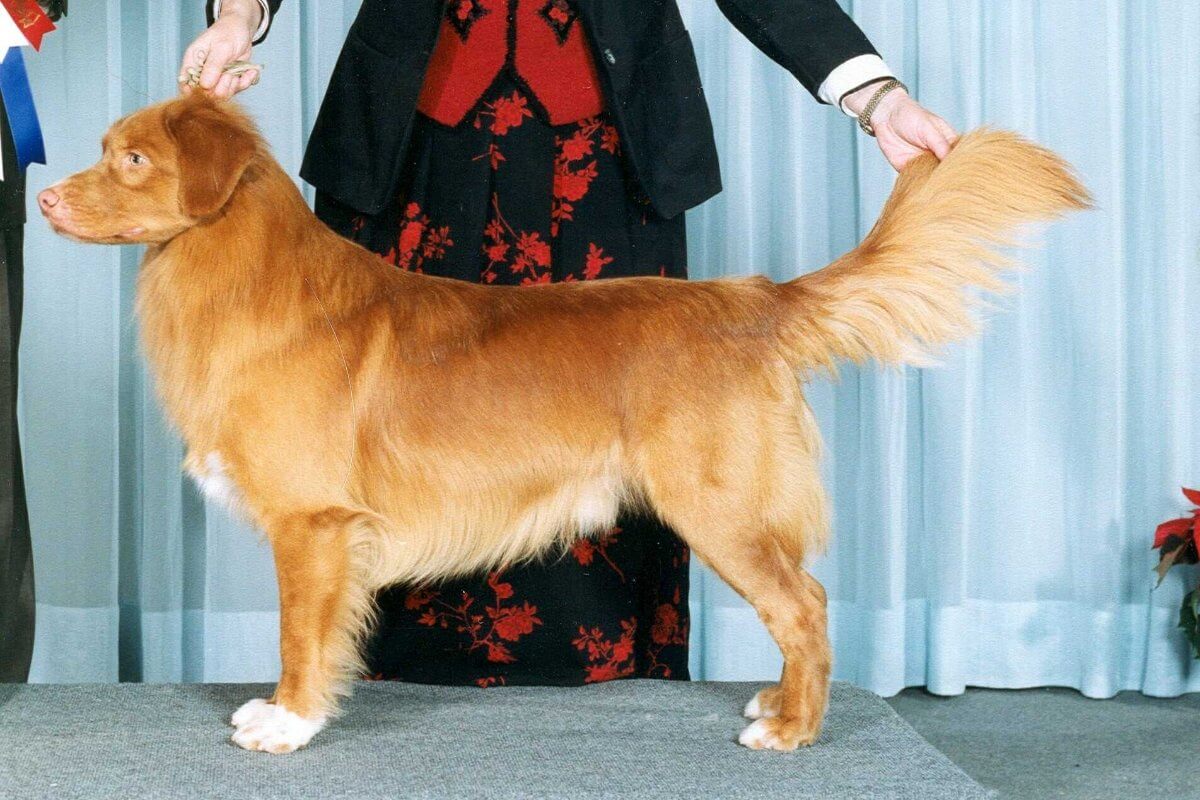
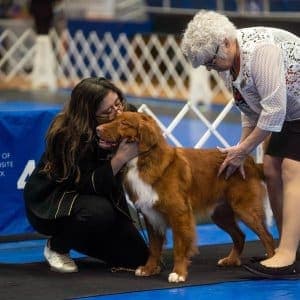
In the year 1980, the little red dog from Nova Scotia suddenly became the object of some serious show ring attention. In June of that year, Sproul’s Highland Playboy, bred by John and Mary Sproul of Springhill, Nova Scotia, and owned by Linda Barnes, won Best in Show at a Canadian Kennel Club event in Saskatchewan. Only days later, Westerlea’s White Ensign, owned by Roy and Alison Strang, earned the same distinction in British Columbia. These wins brought the breed into view for judges and fanciers across the country. A breed once almost invisible beyond Nova Scotia was suddenly impossible to ignore. Judges noticed a dog that was lively, smart, and self-possessed—equally at ease chasing ducks along the shore or dancing down a show ring.
The Tollers’ profile continued to rise. In 1988, to mark the Canadian Kennel Club’s centennial, Canada Post issued a thirty-seven-cent stamp depicting the breed. Nine years later, the Royal Canadian Mint released a sterling silver fifty-cent coin featuring a Toller. And in May 1995, largely through the efforts of Yarmouth MLA Allister Surette, the Nova Scotia Duck Tolling Retriever was named the province’s official dog—the first and only breed in Canada to hold that distinction. In June 2003, the Toller was officially recognized and inaugurated into the American Kennel Club’s Sporting Group, and Vesper Mariner Coupe De Vale, bred by Diana Semper and owned by Deb Gibbs, took home the breed’s first Best in Show at an AKC show that same year. The rest is dog show history.
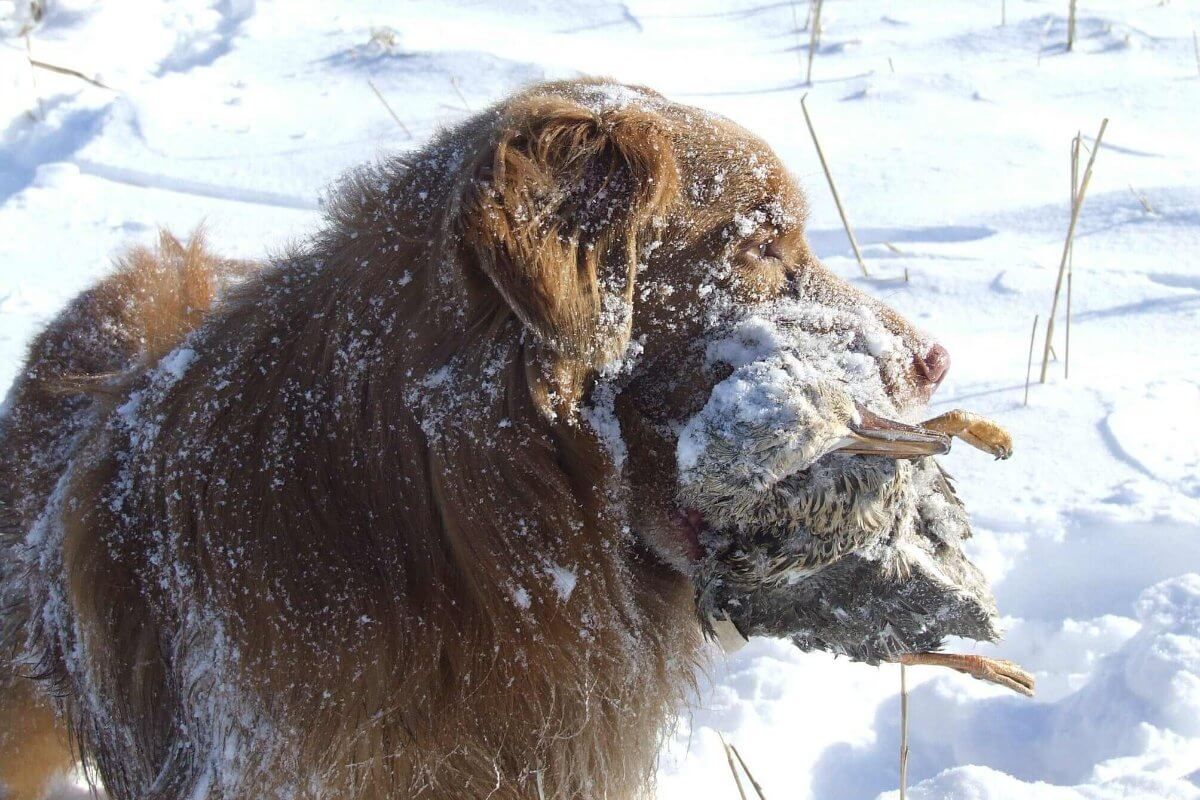
Widely recognized by the fancy as the smallest of the retrievers, the breed should be medium to heavy in bone, depending on the Breed Standard referenced. Adult Tollers generally range from 35 to 50 pounds, with heights at the withers from 17 to 21 inches. Females tend to be slightly smaller, with an ideal height of 18 inches, while males average 19 inches. Proportionally slightly longer than tall, the Toller should display a characteristic high tail carriage that should be no lower than the level of the back while in motion, and preferably curved in a high C while standing at attention. Their stature, substance, and high-set tail give Tollers the tools and the balance they need to work for hours along the shoreline.
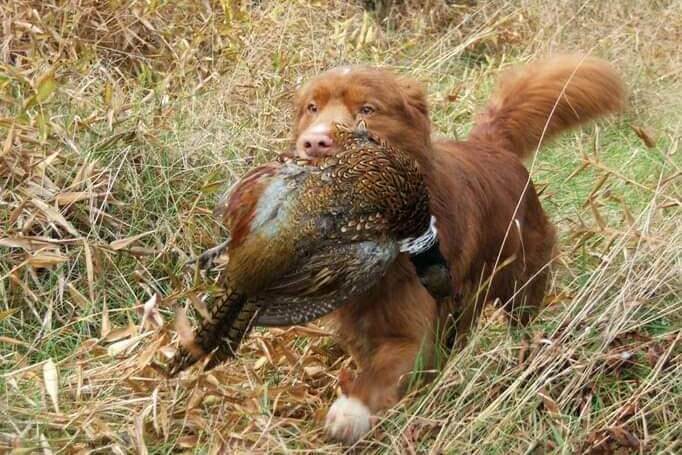
Toller temperament is unlike that of most retrievers. These dogs often resemble herding breeds such as Border Collies or Australian Shepherds more than Labrador or Golden Retrievers. They are intelligent, analytical, and independent. While they should never be timid or fearful, Tollers often greet strangers with reserve and most are far from naturally clingy. They are generally good with families, other dogs, and household cats, and the American Kennel Club Breed Standard notably calls for a dog that is “good with children.” The combination of independence and energy distinguishes them from more gregarious retriever types, and unsavvy prospective owners expecting a small Golden Retriever will often be surprised by the breed’s energy and more challenging nature. However they may compare to similar high-energy working breeds, one thing is for certain: Tollers need a job, particularly in the first few years of life. Mental stimulation often exceeds physical exercise requirements. While mature Tollers often grow calmer with age, puppies and young adults are exuberant and occasionally intense. Young tollers benefit from consistent and steady training to channel their energy and develop reliable self-control. While not necessarily soft dogs, they do not appreciate a heavy hand, and they are less forgiving of handler mistakes than many other retrievers.
Within the show ring, some misconceptions about color have begun to take hold. White-tipped tails are not required; the AKC Standard allows for their absence and penalizes only excessive white, and specifically states that a dog of “otherwise high quality is not to be penalized for lack of white.” Misunderstandings about the white tip as a working lure are also widespread. It is the action of the tail—not the color of the tip—and the motion of the dog that make tolling effective. Similarly, pink and black noses are equally acceptable. Natural variation in type, whether in acceptable coat length and texture, markings, or size, is expected and desirable. Judges should prioritize structure, movement, and temperament over finer points like markings, avoiding the mistake of narrowing the breed to a single “correct type.”
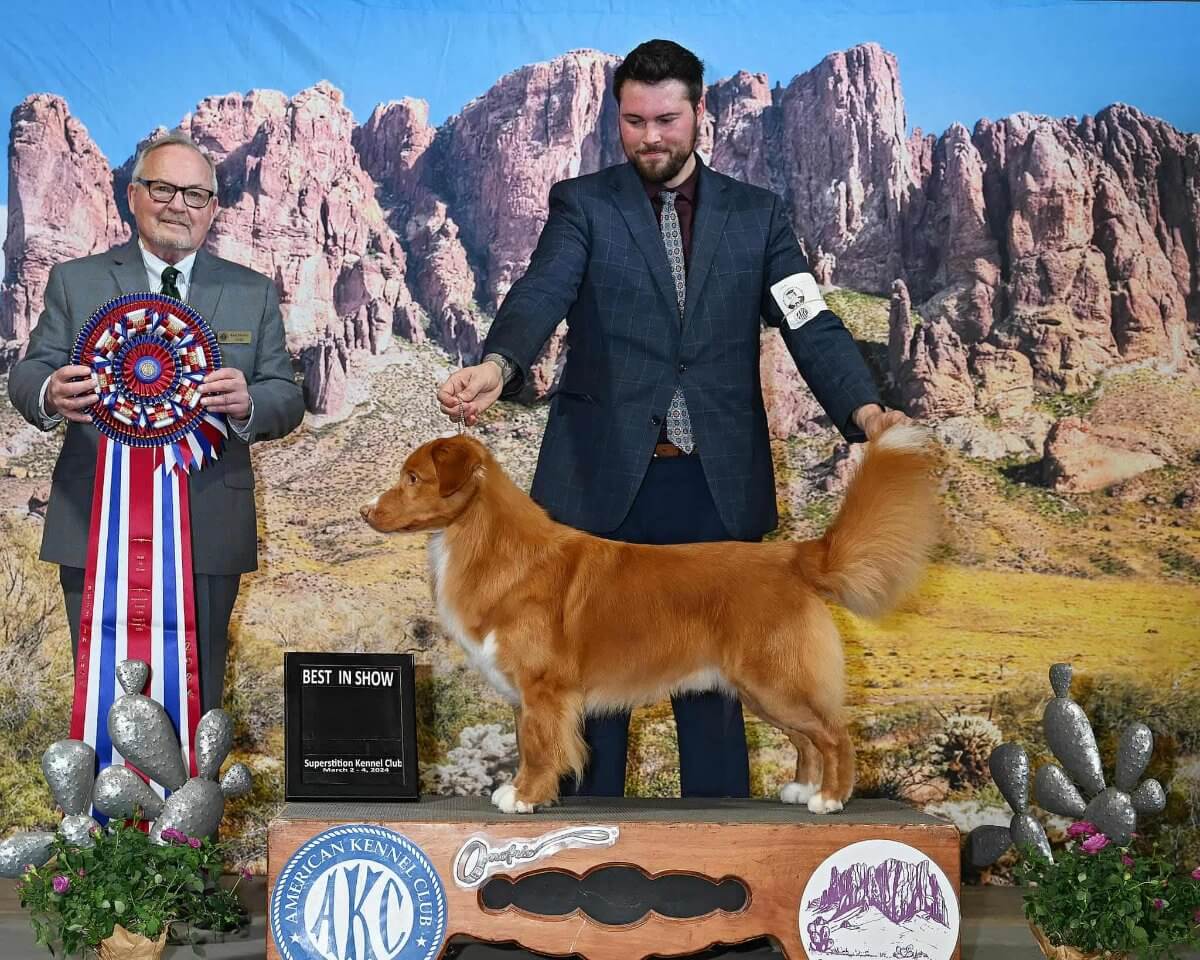
Acceptable coat colors range from “golden red to dark coppery red,” with white markings being entirely optional according to the AKC breed standard. Naturally occurring disqualifications include sable, buff, or dilute coloring, and excessive white. Grooming is straightforward for Tollers with correct coats. Regular brushing and occasional bathing are generally sufficient, with minor ear and foot care as desired. Tollers do shed, but the hairs are typically longer and soft, rather than coarse. Owners and breeders should also be aware of breed-specific cautions, such as resource guarding tendencies, misinterpretation of high tail carriage by other dogs, and the vocalization commonly called the “Toller scream,” which is typically heard in moments of heightened excitement or arousal.
Continued efforts toward the safeguarding of the breed and responsible breeding are crucial. Within the United States, the NSDTRC-USA provides breeder referrals. Globally, Tollers are rarely easily available, with most reputable breeders maintaining 1–2-year waitlists. Prospective owners should carefully verify breeding practices and health testing. Meeting related adult dogs is also preferable due to variations in Toller temperament. Recommended health testing currently includes a hip evaluation by OFA or PennHip, yearly eye exams, and a breadth of important DNA testing that includes over a dozen genetic diseases at the time of writing.
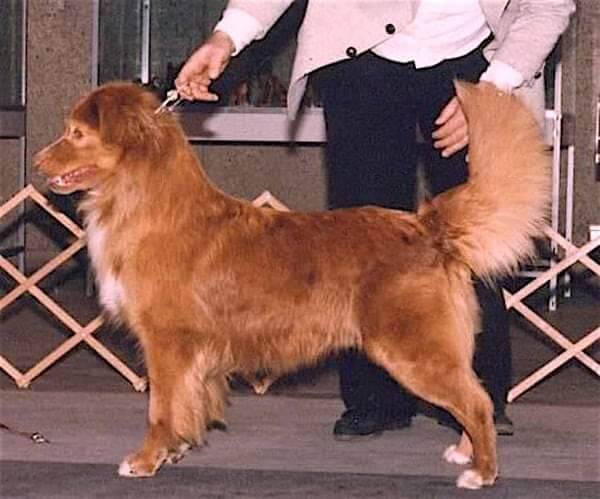
The journey of the Nova Scotia Duck Tolling Retriever from local secret to national symbol was propelled by the thoughtful stewardship of a breed whose qualities eventually spoke for themselves. Today, the Toller community continues to balance their enthusiasm for the breed with a deeply-held sense of responsibility for its future. Tollers excel across a remarkable range of disciplines, with many top-performing sport dogs placing in Obedience, Rally, Agility, Scent Work, and Barn Hunt trials throughout North America and the world. In modern-day retriever stakes as well as in the field, they demonstrate the same intelligence and drive that first made them indispensable on the shores of Little River, Nova Scotia. They are an increasingly familiar sight in advertising and commercials, and some have appeared in film, most recently in the indie hit Good Boy. Tollers also work a wide range of specialty canine jobs, including search and rescue, avalanche recovery, service work, and scent-based disease detection. Hunting- and sporting-titled dogs have historically and enduringly been a common sight in the Conformation ring, indicative of dogs that can succeed wherever they are tested. The combination of energy, intelligence, and work ethic that rendered them successful in the marshes continues to set them apart in every new arena.
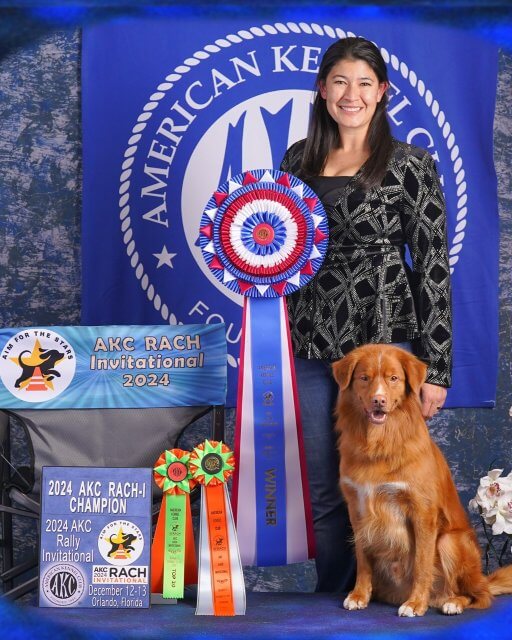
Breeders, judges, and owners share a common purpose: to preserve the qualities that make the breed exceptional; namely, intelligence paired with independence, energy balanced by aptitude, natural variation within sound type that supports both function and health, and substantial hunting ability. Those who understand these traits see beyond the Toller’s charming looks and characteristic quirks and embrace the breed for what it truly is. It is within this balancing act that the Nova Scotia Duck Tolling Retriever continues to flourish as both a partner and companion—for families, for hunters, for competitors, and perhaps even for thee.
The information in this article was compiled from the following sources:
The Nova Scotia Duck Tolling Retriever by Alison Strang and Gail MacMillan, and A Breed Apart by MacMillan, and the famous “Toller Blurb” written by Kelly Schur of Foxpoint Tollers, who also provided her input regarding the white-tip. This piece would not have been possible without the diligent help of fellow breed club volunteer Hillaré Parfait, who contacted the primary and secondary sources used to verify early show win information.”
Canine Health