Members
Explore the Flat-Coated Retriever’s hallmark head, working build, and joyful spirit that define this enduring breed.
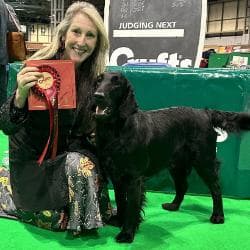
Marla J. Doheny Breeder of Flat-Coated Retrievers and Norfolk Terriers AKC Judge of Sporting Dogs and Terriers
The Weekly Brief
The best of SHOWSIGHT editorials, weekly wins, and breeder commentary — delivered to your inbox every Sunday morning.
Dog breeding is a passion that hopefully translates into a lifetime of goal achievements. Breeders are forever sharing their heads and hearts about the breeds they love. It is the goal of this article to impress upon the reader the unique headpiece, utilitarian nature, happy heart, and active demeanor of the Flat-Coated Retriever.

It is common to hear that the head of the Flat-Coat is one of the hallmarks of the breed. It is described as “one-piece” or “cast in one piece.” I often describe it to future judges as being carved from a single brick of clay, but here is where we can get into a bit of trouble. Some may say they instantly know what that means, although it can take many years to truly understand all the nuances of a great head. In over thirty years of showing, judging, and observing Flat-Coats across the entire country, as well as in Europe, I’ve had the good fortune to see thousands of Flat-Coated Retrievers, and I don’t see lack of type in heads being the main problem in the breed today. It is, however, a hallmark of the breed, and for the purpose of this article, we will discuss it.
Better than singling out the headpiece, let us instead look at it from the overall perspective of silhouette, both standing and moving. This is far more important than just looking at the head alone. After all, the Flat-Coat should always be first seen as a working, dual-purpose retriever.
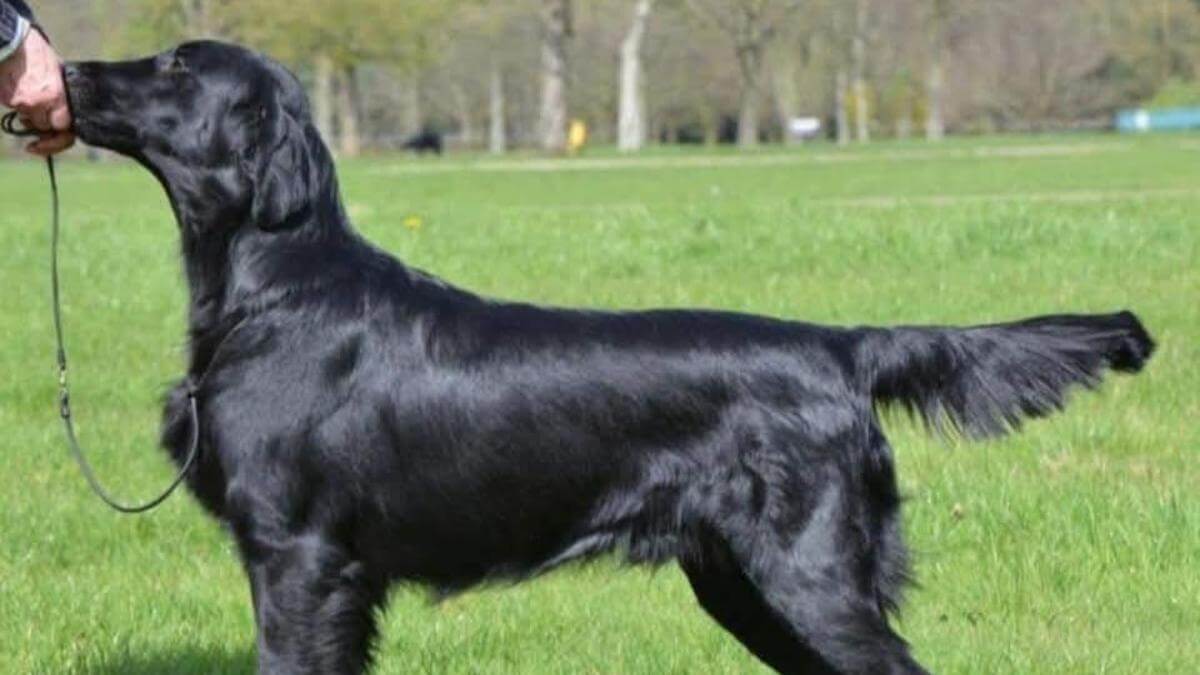
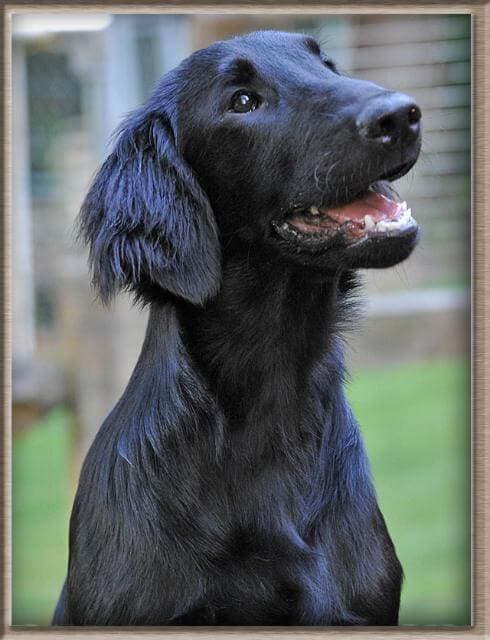
If you were to look at most any breed’s blackened silhouette of the head, you should be able to tell what breed it is. This should be true of the Flat-Coated Retriever as well—differentiating the breed from the other retrievers and most certainly from the rest of the Sporting Group. Understanding the subtle nuances and how they appear in silhouette when observing are key. In the Illustrated Standard, the outline of the head in silhouette is shown without ears. This is because the ears should be relaxed and blend into the hair of the neck when the head is being evaluated. The skull is fairly flat and equal in length to the muzzle, with a barely perceivable stop, thus creating the look of the long, smooth, one-piece construction.
The backskull should not be wide. The head shape from the side and from above should show the barely perceivable stop and the width of the backskull in comparison to the foreface. The dog should have an alert and kind expression, dark almond-shaped eyes set widely apart. The zygomatic arch should be clean and flush, and foreface should be well-filled. As I have said before, although the headpiece of the Flat-Coat is one of its most distinguishable characteristics, at times the emphasis on head is so heavily weighted that the overall silhouette is lost. Consider the head as part of the overall silhouette.
The Flat-Coat should have a strong, moderately long neck that enables the dog to carry heavy birds from the ground to the handler. A prominent prow, well-laid-back shoulder, and well-developed chest cavity contribute as much to the unique silhouette as the head.
The topline is strong and level. Coat is a moderate length, dense and full, with a high luster. Coat should never be confused with substance. The dog should have medium bone that is flat or oval. Although the Flat-Coat has a racier build throughout, with a unique head, coat, silhouette, movement, and character, it should never be fine or weedy.
The length of the body should be in the rib cage. A dog lacking fore and depth of chest, and a short rib cage with lack of graduated return, consequently affects the breed’s underline and topline, and dogs lacking in bone are much more prevalent now than are coarse or blocky heads.
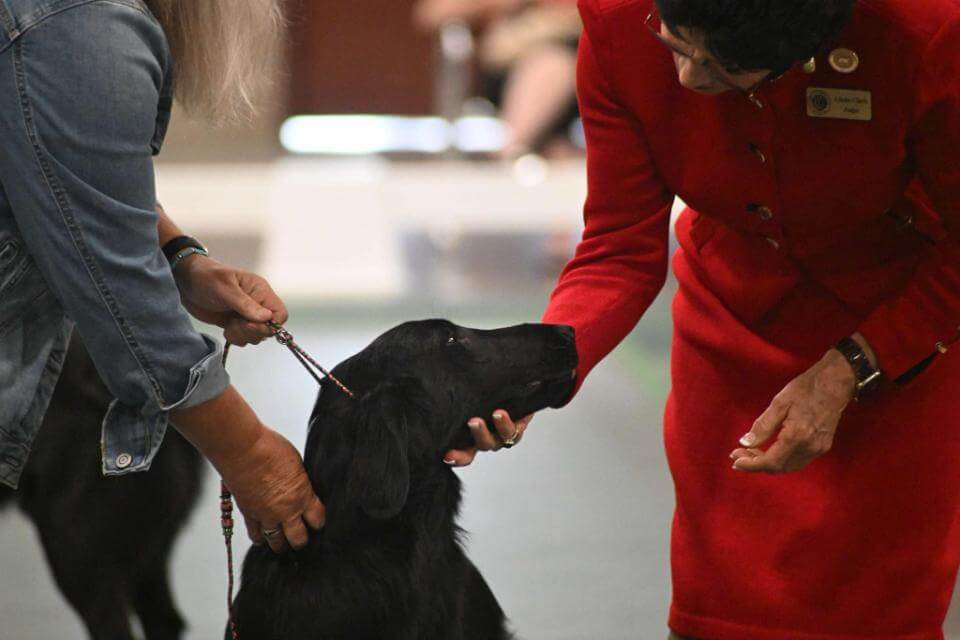
The gait of the Flat-Coated Retriever should be sound and efficient. This is of critical importance to a working retriever. The Flat-Coat, when viewed from the side, should have well-coordinated, free-flowing movement. True movement should be appraised while moving at a working trot on a loose lead, never raced around the ring or strung up on the lead. An efficient retriever will cover the maximum amount of ground with the least effort. Movement should never be choppy or minced. The tail should move freely with confidence. The tail should never be tucked or lifeless.
To complete the picture of the Flat-Coated Retriever, in standing and moving silhouette, consider the unique one-piece head, a proud carriage, overall strength, style, symmetry, and above all, a wagging tail.
Throughout the history and development of retrievers, the term “retriever” referred to function rather than a specific breed. The same would hold true for “setters” and “pointers.” The Flat-Coated Retriever was, however, one of the first retrievers developed.
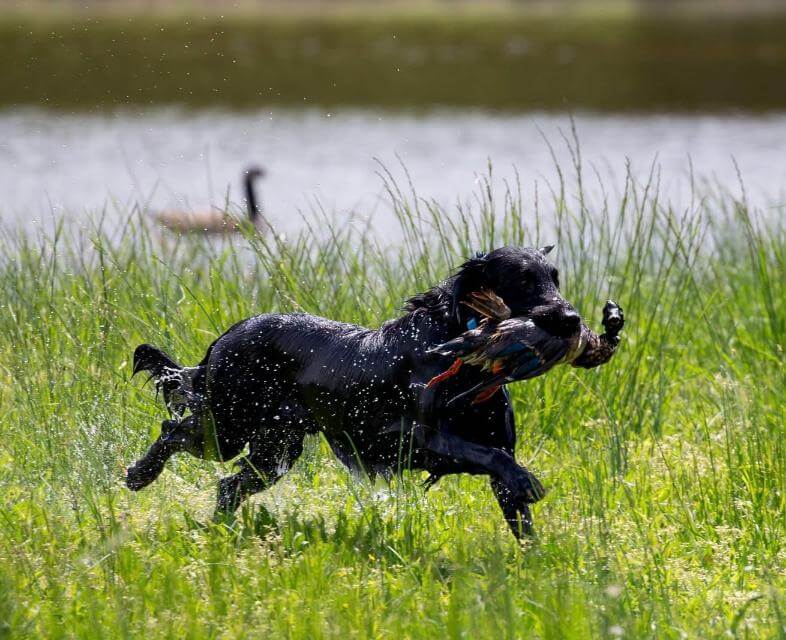
The Flat-Coated Retriever development in mid-late 1800s was primarily as a resourceful game finder and determined retriever on land and water. The Flat-Coat today is an enthusiastic dog that is bright and durable, whose character and temperament are well- suited for many sports. Although the quality of structure of all parts standing and moving is essential, the overall temperament and attitude are what make this breed well suited for so many different jobs.
The Flat-Coated Retriever is a moderately popular breed, currently ranked as the 89th most popular dog by the American Kennel Club (AKC). While not as popular as the Golden Retriever and Labrador Retriever with pet owners, the Flat-Coat has a dedicated following from dog sport enthusiasts who appreciate their working abilities and suitability for most dog sports.
Serious and knowledgeable breeders continue to emphasize breed type as well as sound temperament and working ability to retain the Flat-Coated Retriever as a dual, multi-purpose breed. In the field, Flat-Coated Retrievers excel as a companion for the individual hunter. The breed’s natural hunting ability and birdiness make them well suited for hunting within gun range and retrieving from land and water.
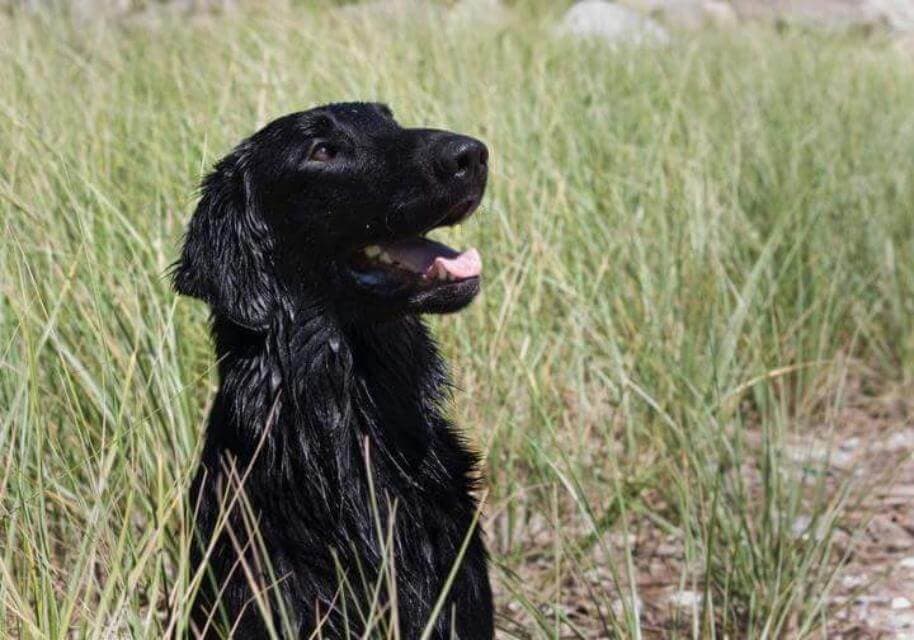
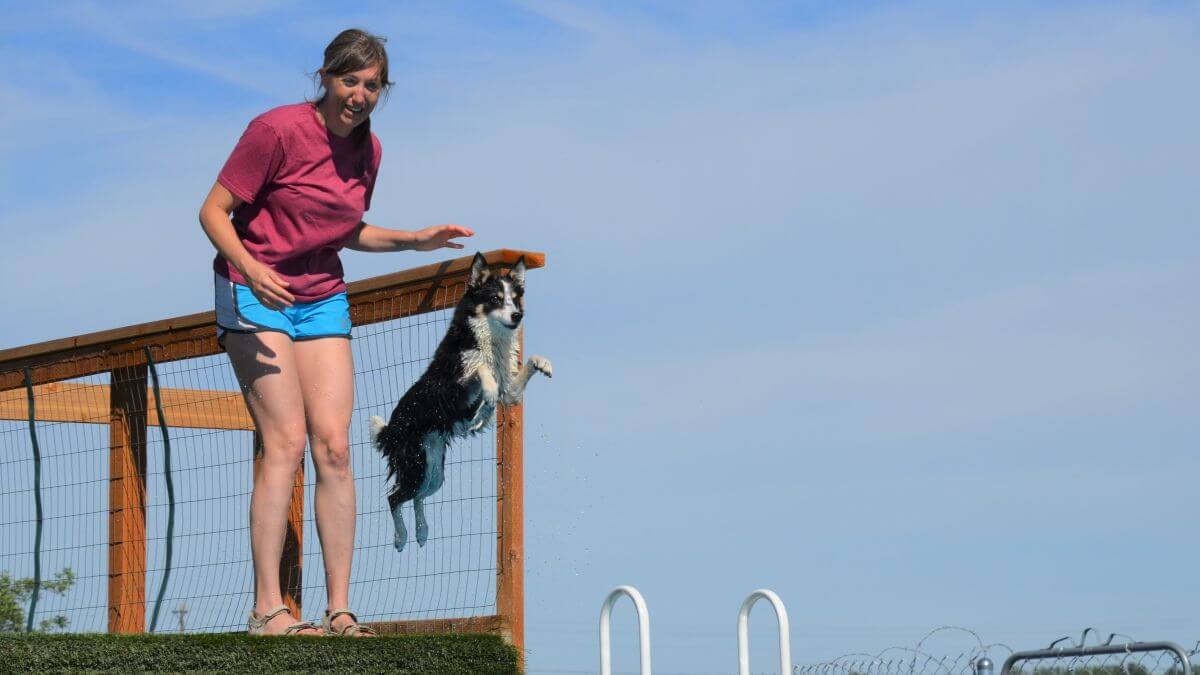
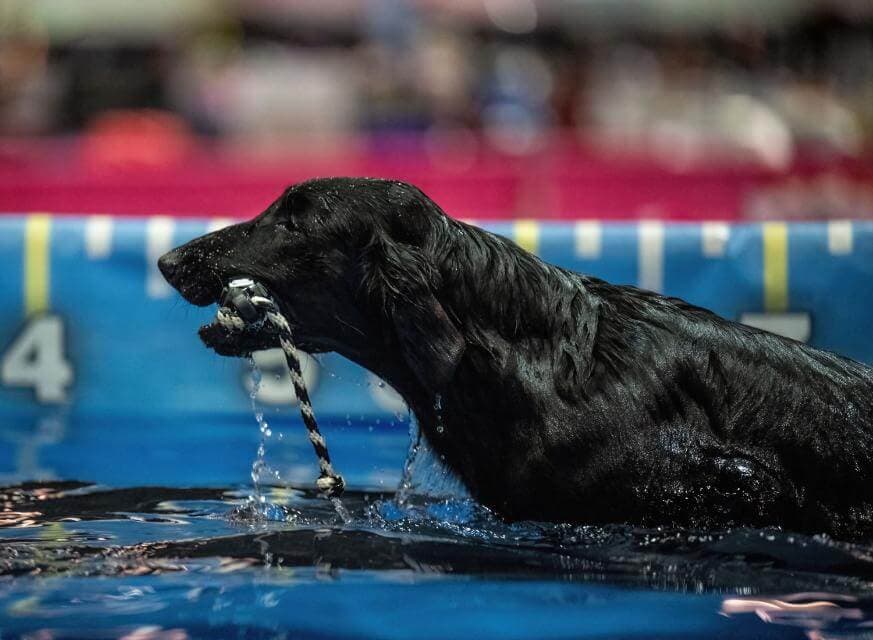
Flat-Coated Retrievers today have been adaptive by using their natural abilities to compete in many different areas of AKC Performance and Companion Dog Sports, including Retriever Hunt Tests, Retriever Field Trials, Scent Work, Fast CAT, Obedience, Rally, and Agility, to mention a few. From Dock Diving to Hunt Tests and Field Trials, this breed can serve all levels of competition from beginner to advanced. In 2024, Flat-Coated Retrievers earned AKC titles in almost every eligible area of sport competition.
The heart of the Flat-Coated Retriever is to be a loving member of the family, while remaining a versatile working dog that is sensible and trainable. With his great desire to please, he is referred to as “The Peter Pan” of retrievers. That being said, what would you expect of Peter Pan? It would be a mistake to dare say a breed with that coin of phrase be anything but forever youthful, and of course, at times, misbehaved.
In a recent SHOWSIGHT article, Breeder/Judge Doug Johnson-Clussexx spoke volumes. He talked about expecting all seven breeds in a Best in Show line up to all perform the same way as being simply wrong. “To require the same standard of motion and expression of each animal would be a disservice to many breeds with distinct and unique temperament and behavior traits. Should you ask a Clumber to stand and free-bait and compare it to the Doberman? Should the Bulldog be asked to stand and pose like a Poodle? Should the energy of the Border Collie be compared to the performance of the Border Terrier?”
He went on to say, “Remember, part of breed evaluation is assessing breed character. We select our breed of choice because they are all unique. You find one that fits your lifestyle, one that fits into your own personality. You wouldn’t get a dog that’s high-strung for an apartment and think that you’re going to make him become a couch potato. It doesn’t work like that. The reality is that dogs have individual personalities and each breed has an inherent behavior, how they are as a breed. The manifestation of those two things results in their showmanship in the ring. I want all breeds to behave in a certain way that is their known life design.”
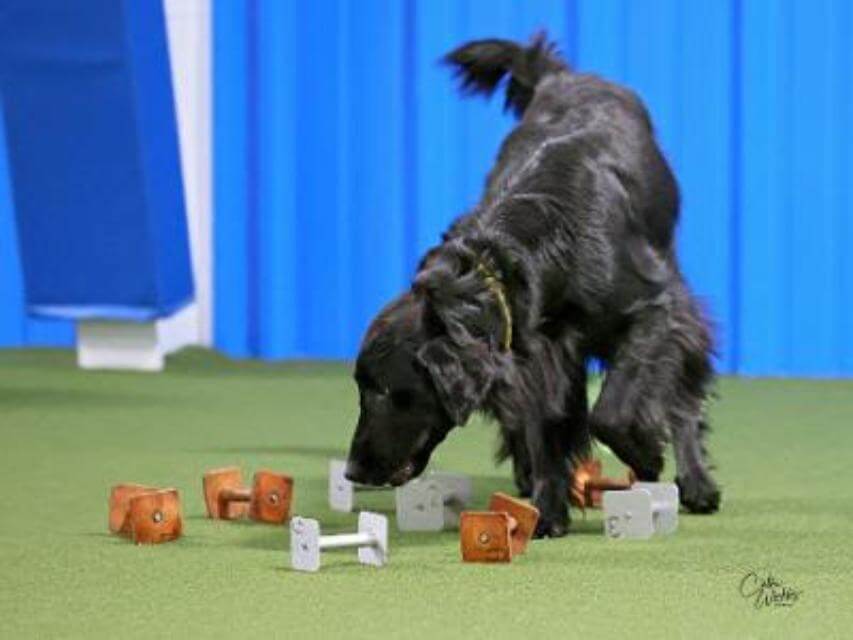
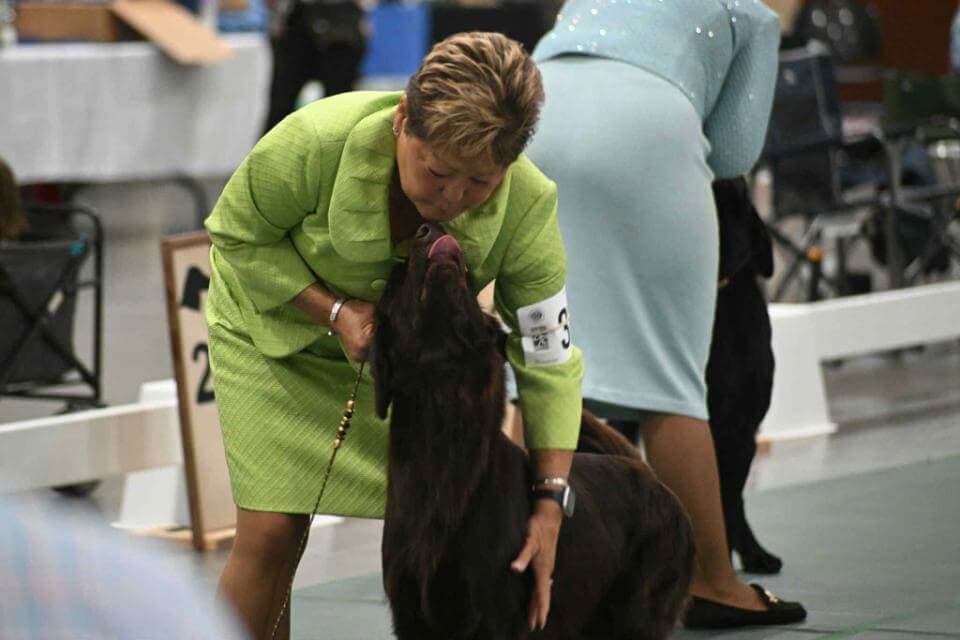
The Flat-Coated Retriever is not described as just a happy animal but as exuberant and light-hearted. It should never be shy or apathetic, reserved, or obstinate. I will go further to say that the owner, handler, and exhibitor should never try to “train out” any of the characteristics for which the breed is historically known. In the show ring, it is a bit like judging a moving target. The Flat-Coat should also be known for an outgoing attitude that is characterized by an ever-wagging tail. With regard to judging or evaluating the breed, it should be noted that the Flat-Coat moving freely on a loose lead and standing naturally is more important than judging him posed. Handlers should never string up or pose this breed. It is a mistake for a judge to choose the wrong dog because it stood better. A nervous or unenthusiastic animal should never be rewarded in the show ring. It is of utmost importance that the Flat-Coat has a wagging tail at most times. It can be said “no wag, no win.” In other words, when evaluating the Flat-Coated Retriever, ask yourself, does the silhouette fit and is there a wagging tail attached? Just remember to bring an intact sense of humor when judging or handling this breed.
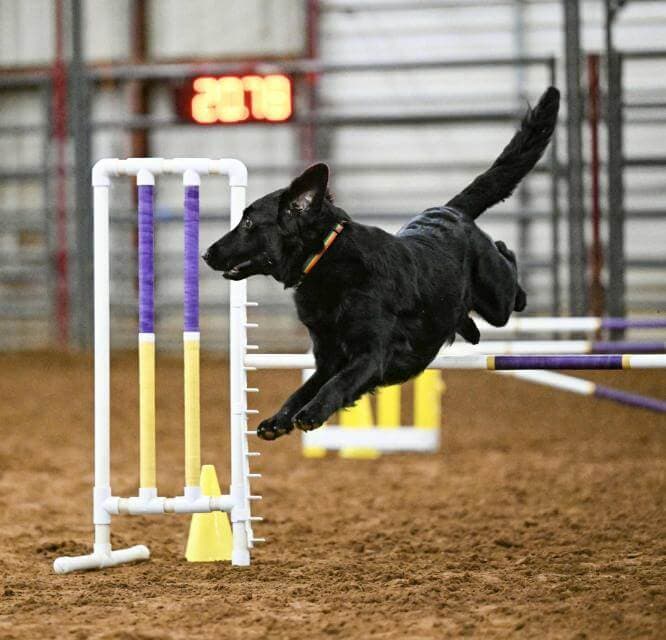
In the end, when assessing the head and overall silhouette, and the light-hearted demeanor of this utilitarian retriever at work, play, or show, first decide if you have correctly identified the hallmark characteristics—identified as a sleek silhouette, with working retriever build and a lively presence. I can guarantee you that there are many excellent Flat-Coats acting like fools in the ring, while many overly posed with less than desired temperament take home the ribbons. It is your job as judges, breeders, and owners, without bias, to sort it out. Rewarding at high levels Flat-Coated Retrievers that do not display these characteristics puts conscientious breeders trying to preserve this unique breed with its temperament intact at a disadvantage, as the incorrect, unanimated dog will soon manage to be perceived as true. Let’s collectively use our heads, as breeders and judges, with continued education, thoughtful breeding, and diligent adherence to the Breed Standard. The reward will be the preservation of a beautiful breed, and it will hopefully be accompanied by a smile. By far, this is the heart of the matter.
Agility