Members
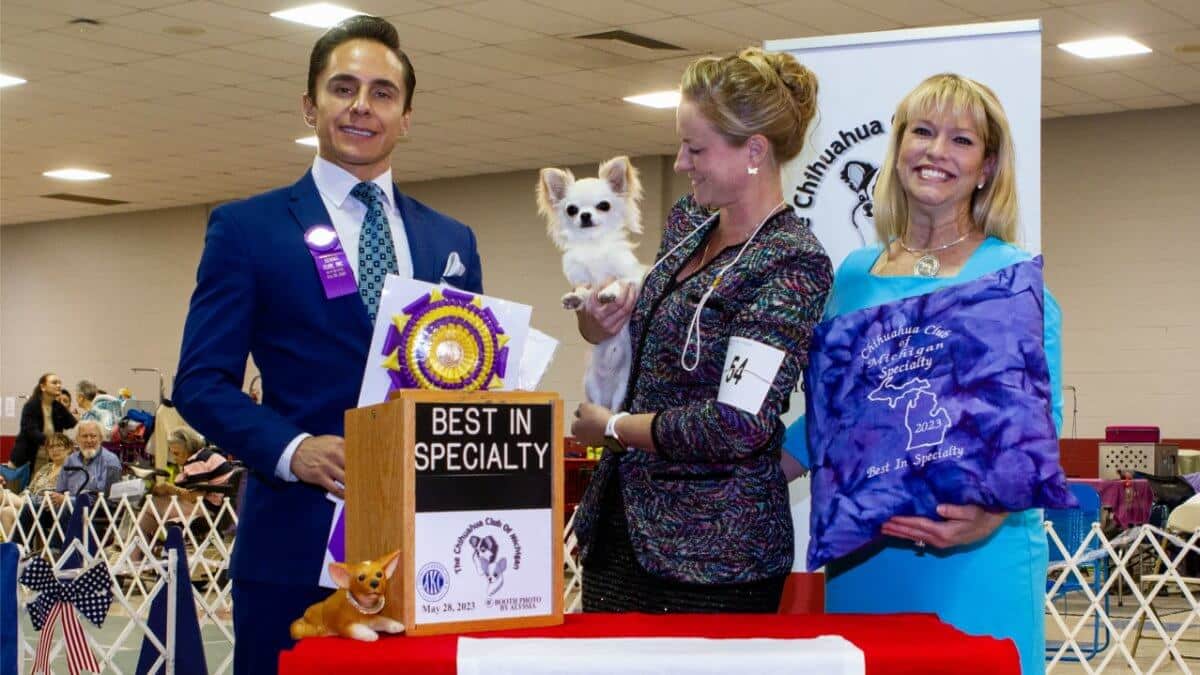
Allan Reznik sits down with breeder Kristi Green to discuss her journey, influences, and the breeding philosophy behind Knockout Chihuahuas.
The Weekly Brief
The best of SHOWSIGHT editorials, weekly wins, and breeder commentary — delivered to your inbox every Sunday morning.
Kristi Green: I grew up in Maine.
Kristi Green: I grew up in a family that had a “pet dog,” but there was never any interest in or exposure to the sport of purebred dogs. Throughout my childhood, I loved animals and critters of every sort, and was the kid who was always bringing something home that needed to be nursed back to health. We raised pet ducks, and that introduced me to the concept of breeding on some level. A few years after graduating college, I acquired a pet Chihuahua that I fell head over heels in love with. She had a laundry list of issues, but despite that, I was absolutely obsessed with her. I wanted more like her but “better,” which led me down the rabbit hole of “maybe I could make my own,” and then “what does that entail?” My research taught me that I should buy a dog from show lineage, health test it, and show it before considering breeding. My journey began there, and a year or so later, I got my very first “show dog.” The trajectory since that point has been anything but a straight line, and the learning curve is steep—one I am still on.
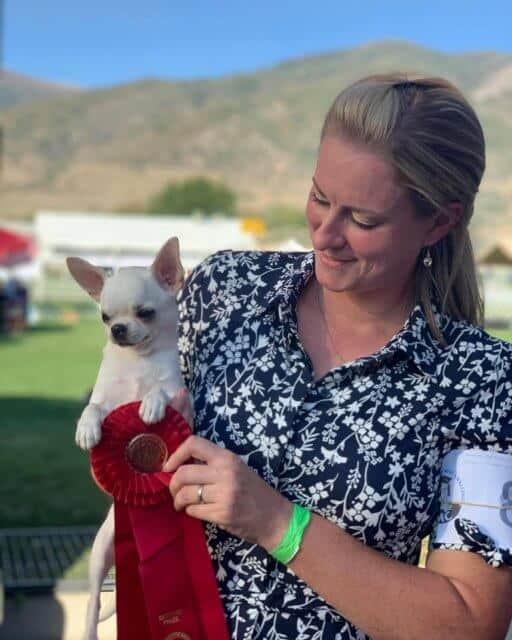
Kristi Green: I can’t directly credit any one “mentor,” but I did have several key influences. Darwin Delaney of the Dartan Chihuahua legacy was probably my biggest influence and the closest to a mentor that I had. He was the “great” at whose feet I got to sit to learn about breed type and how to prioritize qualities within the breed. Justin Ward of Shorepointe Chihuahuas spent an immense amount of time discussing the finer details and genetic aspects of the breed and breeding with me, at a level that most had no interest in. Shirley Banderet was one of my early influences who really drove home the importance of trying to breed for healthy companion dogs.
Kristi Green: I believe it’s important to always move forward. It certainly isn’t the most economical means of breeding dogs, but it is one of the most effective. You have to start somewhere, but you don’t have to stay there. If you get an improvement, don’t keep breeding the parent indefinitely, especially if you don’t like the parent. The more times you add any animal into your population, the more times you’re going to see it show up in various forms.
I avoid breeding to pacify the fads and trends that happen within the breed, and consciously try to work toward my goals of a happy, healthy, correct dog. There’s a lot of “noise” out there and if you let it guide you, you will end up pretty lost.
If, by the third time you breed a bitch in various ways you haven’t gotten anything—you’re not going to, and it’s time to move on.
For a stud dog to impact your breeding program, you will want to use him three or four times to keep only the best. It’s always best to avoid keeping something “just because you got it.” Better to call it a failed, attempted generation than have it haunt you indefinitely.
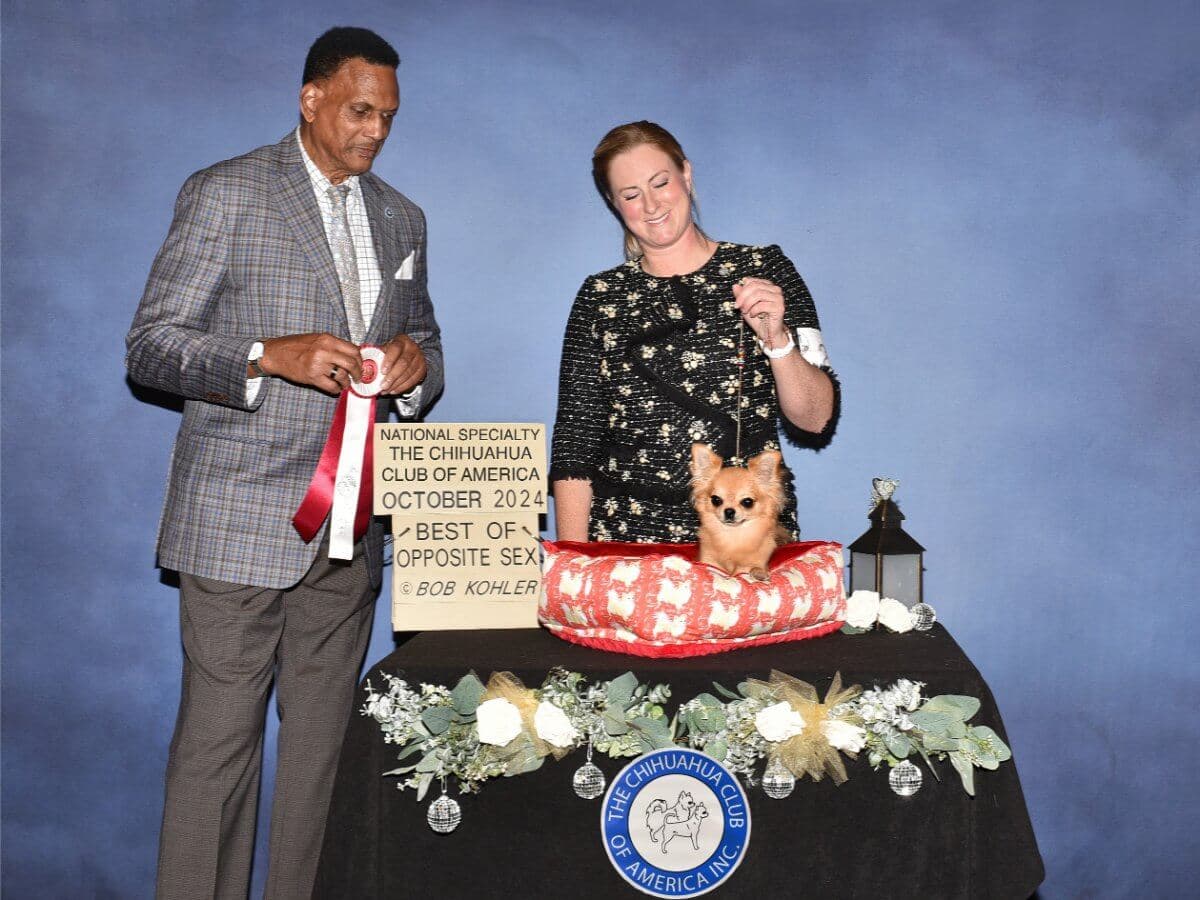
Kristi Green: My program generally consists of five to seven stud dogs and 10 to 14 bitches. The dogs live in my home; adults are in a large, all-season sunroom attached to my kitchen, and puppies and teenagers are in the main living room/kitchen area of my house. Everyone gets lots of playtime outside, weather permitting, in a securely fenced yard, as well as time to run around the house where I can keep an eye on them.
Kristi Green: I am happy to say that health testing has become a lot more commonplace and accepted as standard practice.
A trend that bears watching is the “I have it, I love it, I prefer it, so it’s the best!” mindset. I worry that very few are taking time to understand breed type and breed priorities, and this is reflected in the dramatic differences in type that can be seen in the Breed ring as well as in the dogs that are ranked. Preference only applies where a Breed Standard is not specifically clear.
I’ve heard it said that “you always bring the best dog home.” I disagree. You may bring home the dog that you love the most, but that doesn’t mean it’s the best one. There’s always work to do, even if that statement is true on a given day.
We are seeing a trend toward various eye deviations that are very concerning: small, almond eyes; bulgy eyes with excessive white showing; eyes set too high in the skull. A Chihuahua’s eyes should be full, round but not protruding, balanced, set well apart, and luminous dark or luminous ruby. They should never appear small.

Kristi Green: Between an aging population and the fact that plain-and-simple showing, and especially, breeding, is EXPENSIVE, we have lost a great number of breeders. “Adopt, Don’t Shop” has made being a breeder practically a crime.
I know that in Chihuahuas we are seeing an unfortunate number of breeders start but fail to launch. They don’t stick around because it’s a difficult breed to raise and costs are high, with a very low return on investment.
I think that we need to consciously work on developing free-whelping bitch lines again (and encourage newcomers in this direction as well), because our litters simply are too small to justify $4,000 to $6,000 in expenses directly associated with getting a litter of two to three puppies on the ground (that isn’t including anything beyond JUST the litter expenses).
As established breeders, we can help newcomers navigate these challenges, but we can’t take them away. Getting people to remain in the sport means fostering their love for a given breed and creating a drive to preserve and protect it.
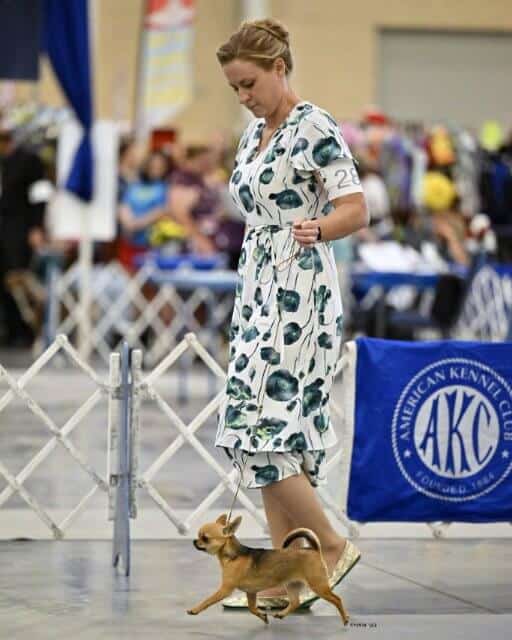
Kristi Green: My goals center around continuing to breed a very typey, sound dog with excellent movement. I am working on shifting back to better whelping lines and hope to see that reflected as time goes on.
Kristi Green: I enjoy gardening, international travel, creative writing, and spending time with family. The dogs do keep me pretty busy, and it seems there are never quite enough hours in the day.

Meet the Breeders