Members
Dan Sayers highlights the need for unity among dog advocates, using a real-world example to show why understanding breed purpose matters.
The Weekly Brief
The best of SHOWSIGHT editorials, weekly wins, and breeder commentary — delivered to your inbox every Sunday morning.
People today love their dogs every bit as much as they did 50, 100, 250 years ago. The affection shared between our two species is a constant aspect of our symbiotic relationship, though this has been expressed variously depending on place, time—and need. If you want to know who someone truly is, just look at the dog they choose to live with, or the breed they’ve developed and call their own. For example, Americans can be city slickers (Boston Terriers) and country gentlemen (American Foxhounds), but they’re also diehard do-it-yourselfers with an independent streak (coonhounds and their kin). The same is true of every culture around the globe; however, a more interconnected “modern” world seems to have narrowed what is acceptable when it comes to the choice of canine companion. In 2026, the preferred role of dogs in society seems to be emotionally determined, with “designer dogs” signaling status and “rescue” dogs offering (and receiving) comfort. Of course, dogs with 10-generation pedigrees provide these same services, but their specialized usefulness is no longer valued to the same degree in an increasingly digital world. This shift in priorities has resulted in an “us versus them” mentality that pits dog owner against dog owner, despite the common desire to share this thing called life with a dog in the house.
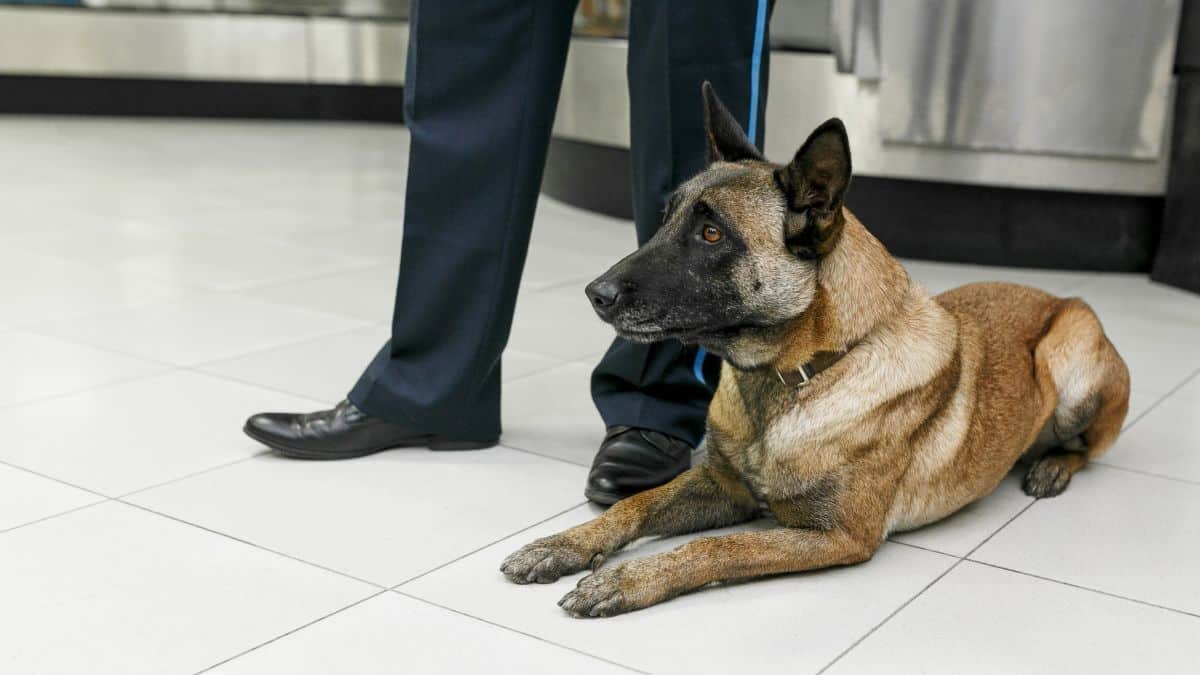
The contrasting ways in which dogs are viewed today was made clear to me several years ago. Interestingly enough, the experience took place in a queue at an international airport where hastily positioned stanchions created a single line that weaved back and forth and back and forth… You might say it was business as usual, but the appearance of a TSA Officer and his K9 partner generated plenty of interest from the business travelers and vacationers waiting to pass through the security checkpoint. This particular dog was a Belgian Malinois, which sniffed energetically from bag to bag and person to person in search of explosives and illegal contraband. The pair moved briskly, the man wearing a polo shirt, cargo pants, and black boots, with the dog in a tactical harness, buckle collar, and braided lead. Both officers were identified by their embroidered DHS logos, but the dog’s apparel included a “DO NOT PET” warning. As I watched them work, I was mesmerized by the dog’s intensity. His devotion to the task at hand was precisely as described by his breed’s written Standard: “Correct temperament is essential to the working character of the a Belgian Malinois. He is alert, intelligent, inquisitive and confident, showing neither fear nor aggression. He is energetic, ready for action, yet highly responsive to his owner’s direction.” This characterization was certainly on display for everyone in line to witness, and I for one was captivated watching the dog behave precisely as expected. So, imagine my surprise when I heard a voice behind me say, “Oh, that poor dog!”
Among the travelers in line that day, at least one person seemed to view the K9 officer’s role as a mistreatment of some kind. (I suspect many others shared the same opinion.) Perhaps what surprised me most about this revelation was that my point of view, that the dog was willingly and eagerly serving a role as would be expected of his breed, could be viewed in any other way. Since I’ve spent decades around purebred dogs and have come to appreciate the unique qualities of temperament and behavior that are recognizably breed-specific, I’d wrongly assumed most people understood this too. After all, are we not living in the same world where Cocker Spaniels are “free and merry,” Scottish Terriers are “alert and spirited,” and Dachshunds are “courageous to the point of rashness?” And though there may be individuals of these breeds that might be able to perform their own version of the tasks for which the Malinois is ideally suited, most would certainly not pass muster with the DHS.
Naturally, I struck up a conversation with the couple standing behind me. I asked if they were familiar with the breed of dog we were watching and why that particular animal was likely selected for the job—a job they’d deemed as “abusive” (their word, not mine). They told me they did not know the breed, only that the dog looked “overworked.” I thought, “That dog LOVES his job!” but chose not to speak on his behalf. Instead, I told them the name of his breed and shared a few interesting facts. I mentioned that the Malinois is one of four breeds/varieties developed by Belgian farmers in the late 19th century from local shepherd dogs. I shared that the breed has served many roles since, including guarding, tracking, carting, and military and police duties. And I related how the teamwork we were witnessing was inherent in the breed and fine-tuned through training that takes both the dog and his breed into account. I also told them how the breed has become popular in the aftermath of 9/11 and that it is a very poor choice for people who desire an unemployed dog hanging around the house. With that, we turned in unison to watch the dog inspect another line of people waiting their turn to pass through the metal detectors. If anything, it was the human officer who looked tired and weary.
Exchanges like this one, where purebred dogs can be promoted in a positive light without defensiveness or apology, are essential for building a unified coalition of dog advocates that understands all dogs—including purebreds—have a right to exist and serve useful and rewarding roles in society today.

American Kennel Club (AKC)
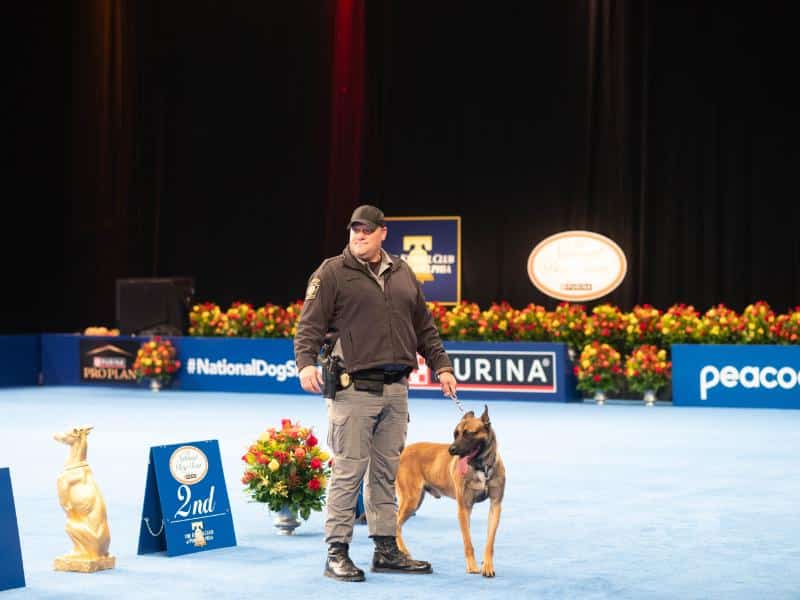
Rosco, an AKC Award-winning K-9, aids in child exploitation and trafficking investigations, offering support and detection expertise.