Members
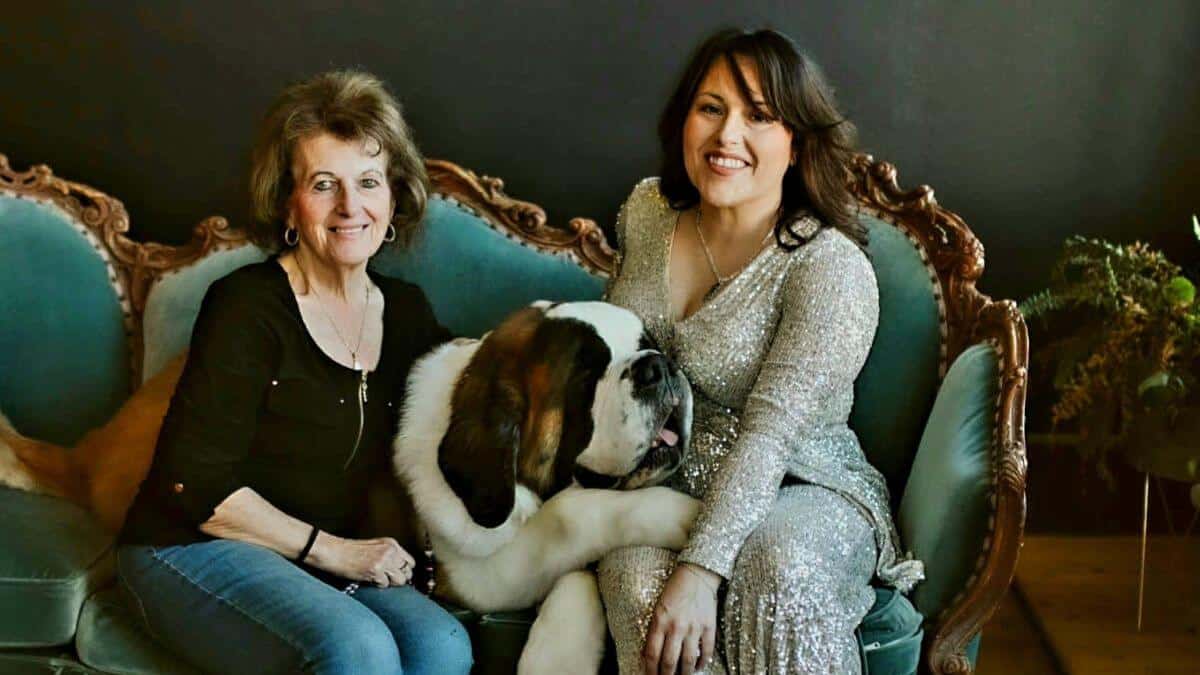
Pamela Brandau and Stacy Pagel discuss breeding, Owner Handling, and promoting the Saint Bernard in today’s sport of purebred dogs.
The Weekly Brief
The best of SHOWSIGHT editorials, weekly wins, and breeder commentary — delivered to your inbox every Sunday morning.
Pam: My journey in Saint Bernards started at age 16 when I attended my first dog show as a visitor, the International Kennel Club in Chicago, Illinois. I saw a litter of Saint puppies, fell in love with the breed, and still have the same deep love for the breed today. After I was married, my first dog was a Saint. I showed her a few times, but we started a family and our life got busy. My passion for Saints was put on hold but still remained alive in my heart.
Pam: As a child, we always had a dog or two. I learned at a young age to care for them. Always had a true friend in them. I helped neighbors train their dogs and practiced showing my own dogs at home. I learned some grooming skills on one of our Poodles. I always just loved dogs and at one point I thought I would attend veterinary school. For over 65 years, I have owned dogs and got my first Saint 50 years ago. I have been breeding Saints since 1998. I love everything about breeding, researching pedigrees, health testing, longevity, and structure. Breeding is not an easy job. Preparing for puppies is hard work and not for the faint of heart. Socialization and training are key to producing great temperament and gentleness in this large breed. The work is definitely worth the reward of watching babies grow and flourish, and finding only the best homes for them.
Stacy: I’ve been an Owner Handler since 2015. It started when I fell in love with a particular Saint Bernard I saw on Instagram. At that time, we had Saints from more general backgrounds, and getting into showing was a bit of a journey. We ended up importing a Saint from Russia, Nika. She was my first show dog and the one who really got me into the ring. We had a lot of learning experiences, including my first show where my nylons fell down in the Group ring! But it was all worth it when we took Nika to our first St. Bernard National Specialty and she won her class and did well against stellar competition. That’s how my Owner Handler journey began.
Pam & Stacy: Yes, we attend handling classes with young puppies at our local kennel club of which we are members. Mom has served on the board for several years and we both volunteer with set up and take down at our show in October. Even with a busy work schedule, we try to attend whenever possible.
Stacy: Absolutely. I learned how to groom a Saint Bernard largely by watching YouTube videos, especially from groomers like Penny Schubert. Even when she was grooming Newfoundlands, I could adapt those techniques for Saints since they have similar silhouettes. I basically learned everything from holding scissors to drying and grooming properly through online resources. It’s been very rewarding to have professional groomers compliment my work at shows, and it all started with virtual learning.
Stacy: I used to compete in the National Owner-Handled Series, especially when I was showing my dog Yuker. It was a great way for both of us to get more practice and ring exposure. It also added a bit of friendly competition and camaraderie with other Owner Handlers who were there for the love of the sport. Eventually, I shifted away from Owner-Handled competition because I found out my dog was doing better in the professional ring, which gave me the confidence that he could compete at that level. So, while rankings can be a nice milestone, for me, it is more about the experience and trusting in my dog’s abilities.
Pam & Stacy: We didn’t fully appreciate the Bred-By Class and Specialty Shows until we started to campaign our first Bred-By dog, Panda. He finished entirely in the Bred-By Class. It’s an honor to win when the judge knows you’ve bred the dog. It’s a unique class to showcase dogs we have worked hard to breed to best represent our Breed Standard. Specialty Shows are great because Breeder-Judges evaluate the dogs against the Standard and every one of those wins is very special because you are showing against a large number of stellar Saints. We value those experiences as they are a very important part of the journey.
Stacy: I used to think it was a challenge, but having a dog like Panda changed my perspective. Panda had the substance, drive, coat, expression, and confidence to really stand out. He has always had a demanding presence in the ring and showed me that when a dog truly has that spark, you can absolutely compete as a Breeder/Owner Handler. I feel incredibly lucky to have been on the end of his lead.
Stacy & Pam: When I first got Nika, I felt a bit frozen and didn’t know where to start. I contacted Martin Glover who has been my mentor ever since. I approached him saying, “I don’t know much about show dogs, but I know you are the best of the best in Saints and I’d love to learn.” He helped me understand the basics, like how to get a dog to bait, to more advanced handling. Martin’s guidance has been invaluable to me both as a Breeder and an Owner Handler. Kristi Libsack, Tikki Smith, and many others have also mentored us along the way. I hope we can continue to pay it forward and help other new people discover the joy of competition in this wonderful sport of showing purebred dogs.
Stacy: Being a Breeder/Owner Handler is vital to the future of the sport because it creates a unique bond between dog and Handler. It’s not just about ribbons; it’s about the dedication to bettering the breed and the personal commitment involved. My own journey, from facing challenges with early dogs to now carefully studying pedigrees and health, shows how much impact we can have. It’s about the journey, the growth, and the deep connection that ultimately enriches the breed and the sport.
Pam & Stacy: Our advice is to thoroughly study lineage and prioritize health and the well-being of the breed over simply producing puppies. Breeding is not for profit; it’s about dedication, understanding, and sometimes heartbreak. It requires commitment, sleepless nights, and the willingness to learn from every experience. It’s important to know that every dog is not meant to be bred, and that process involves both triumphs and challenges. Ultimately, it’s about improving the breed and making thoughtful, informed decisions.
Pam & Stacy: The one eluded win is a Group ribbon at Westminster. We have been very fortunate to cross off most of the hopes and dreams we never thought possible from our bucket list. Dreams do come true with hard work and dedication.
Stacy: Over time, my perspective on showing has evolved. While I once focused heavily on competition and the need to win, I’ve learned that the well-being of my dogs and the bond we share are far more important. With my new job and my dog getting older, I’ve shifted to attending fewer but more meaningful shows, focusing on quality time, grooming, and the joy of the process rather than just the outcomes. This journey has taught me that setbacks, like canceled shows, are just part of the experience and there’s always another opportunity ahead. My biggest reward has been the growth and the meaningful moments with my dogs—the pride of being invited to prestigious events like Westminster is just a bonus. Ultimately, it’s about being a good sport, appreciating the journey, and always putting the dogs first.

Meet the Breeders