Members
Scott Toney, breeder behind the Midwood Japanese Chin, shares his journey, mentors, breeding philosophy, and insights on the breed’s future.
The Weekly Brief
The best of SHOWSIGHT editorials, weekly wins, and breeder commentary — delivered to your inbox every Sunday morning.
Scott Toney: I grew up in Jacksonville, Florida, attended college at the University of Florida, in Gainesville, and was transferred by Barnett Bank (later, Bank of America) to Charlotte, North Carolina, in 1999. Jacksonville exemplifies the very best of a typical, “sunny” Florida city, but it is also a true Southern town with massive, moss-covered oaks and a rich variety of architecture, including mid-century modern, traditional Southern colonial, and gorgeous Spanish-style stucco homes with barrel-tile roofs. Growing up on the St. Johns River as well as the Atlantic coast meant a young life filled with boating, fishing, skiing, and outdoor activities.
Scott Toney: My family always had purebred dogs (Poodles and German Shepherd Dogs), and later, I began showing Lhasa Apsos. I took a break from the dog world when I went to college, and in 2003 picked up again with Japanese Chin.

Scott Toney: My first mentor was Marion Knowlton of Knolwood Lhasa Apso fame. She lived a block away from my family, and I would spend hours at her house talking dogs, learning about grooming and breeding, and studying pedigrees and old photos. I was eager to accompany her wherever she went, whether it was a visit to the vet or to a handling class. When she traveled, I would care for her dogs, and I worked hard to keep them perfectly clean and groomed so that she’d be proud of me when she returned home. I was too shy to handle the dogs, so they went off with handlers, including Emily Gunning and Jean Lade. I never showed a dog myself until I was 40 years old, and I regret that I could have gained so much handling experience when I was young, if I had only gotten over my nerves at the time. Marion helped me develop an eye for balance and quality. She kept an immaculate kennel, with her dogs always in perfect condition, and her example set a template for how I kept my own dogs.
When I first started with Japanese Chin in 2003, I lived in a neighborhood called Plaza Midwood, and as a nod to Marion’s kennel name, Knolwood, I adopted the affix Midwood for my Japanese Chin.
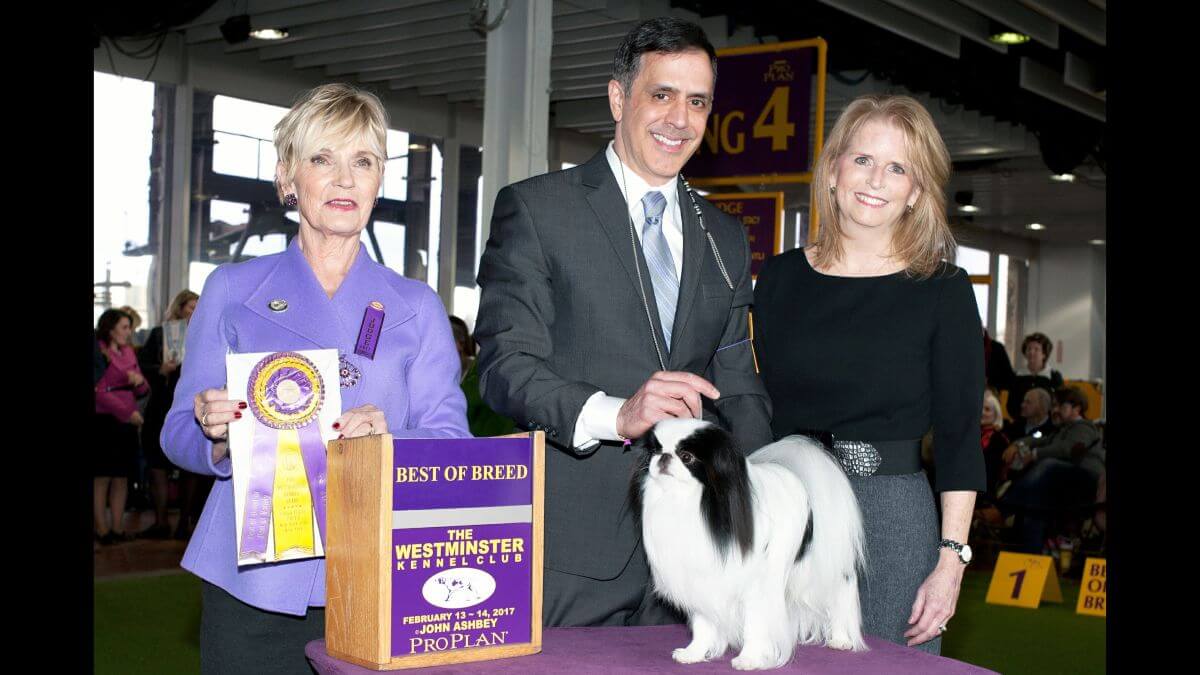
My Japanese Chin mentor is Sheila Vincent of Yama Kennels in England. Many years ago, Sheila was kind enough to let go of her very best bitch puppy, Ch. Yama Miss Moneypenny, who served as my foundation bitch. Sheila produced incredibly consistent Chin with beautiful head type for many years, by linebreeding with an occasional outcross. Observing her breeding practices and pedigree management helped incredibly as I started my own breeding program. We have worked together through the years, and with her endorsement I will be judging at the Blackpool Championship Show in 2026, my very first English assignment.
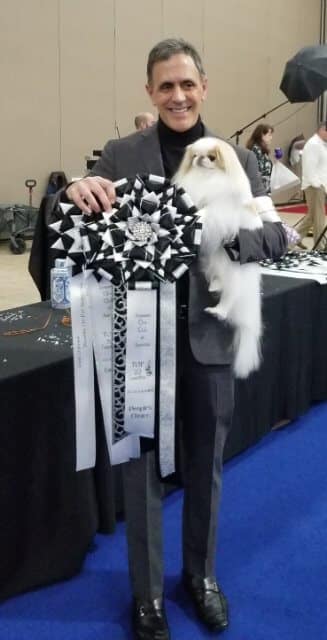
Scott Toney: From the start, I only bred from dogs that displayed beautiful breed type. I’m a firm believer in traveling whatever distance or paying whatever price is necessary to obtain the best stock and use the best stud dogs. I’ve seen too many people cut corners by trading second- or third-pick puppies or breeding to the least expensive stud dogs, and they produce mediocrity generation after generation. I’ve also never gotten so caught up in health testing or fault judging that it prevented me from using a bitch or dog that could contribute to my program or to the breed. I’d rather work around a minor fault than breed to a dog that, among other things, may be long in back, notch-nosed, or otherwise lacking in breed type. With that said, all my breeding stock is Embark-tested clear for genetically detectable, heritable diseases, and heart/eye/patella tested at specialties or health clinics. I will not use a dog that is a carrier of GM2 or other serious health issues.
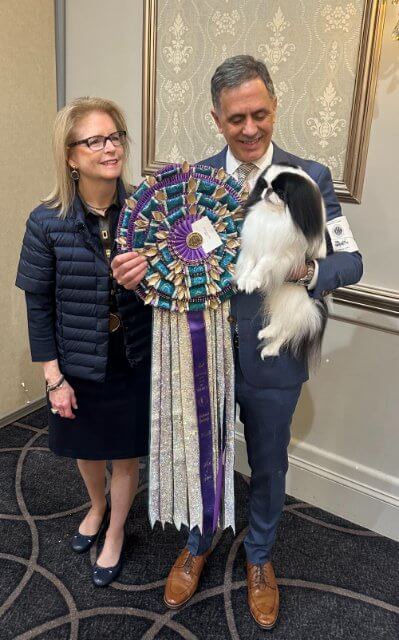
Scott Toney: I’m lucky enough to have a few of my actively shown Chin living with my co-owners, Susan Link, Gwendolyn Wells, and Daniel Chavez. My number at home is typically three to four bitches, and they live in the house having the run of my living areas and kitchen, and at night sleeping in an oversized utility room. My older girls do share the bed with me occasionally.
Scott Toney: I am happy to see how much the overall soundness, grooming, and conditioning of Chin have improved in the last 25 years. When I think of a dog like the Japanese Chin that was revered in the royal courts, or a breed that should be dainty and elegant like the Papillon, the last thing I want to see when judging are pink-stained faces and feet, or urine-stained skirts! I’m also pleased that, overall, head type is good, and even when looking back at photos from 100 years ago, you can see that our breed has changed very little over the years. Some of those specimens from many years ago could easily be shown today. I do see a trend of Japanese Chin winning more at the Group and Best in Show level, and while this makes me very proud, I do want to implore breeders and judges to produce and recognize correct Chin, not generic “show dogs” that are rewarded solely based on showmanship and side gait. The Chin is not a breed that “asks for it” and our Standard does not mention side gait; it simply says “stylish and lively in movement. Moves straight with front and rear legs following in the same plane.” Judges, please take note.
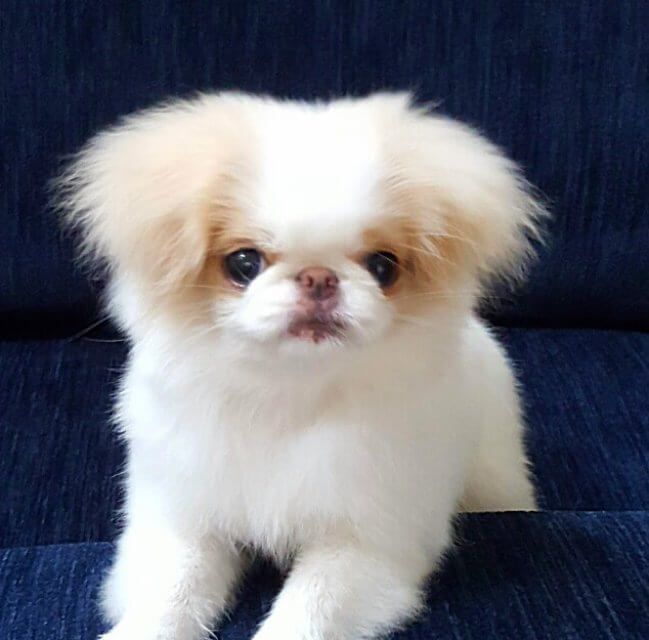
Scott Toney: I had never thought much about judging, but I was asked to fill in to judge a couple of matches and loved the experience. I feel I have a good eye for form and function, and I very much enjoy bringing this skill to the ring. I’m also the odd bird who loves the whole mentoring, paperwork, and approval process set up by AKC’s Judging Operations, and it suits my sense of organization and goal setting. I jokingly call non-doggie people “civilians,” and unlike civilians who vacation at the beach or the mountains, my vacations are traveling around the world to judge or exhibit dogs.
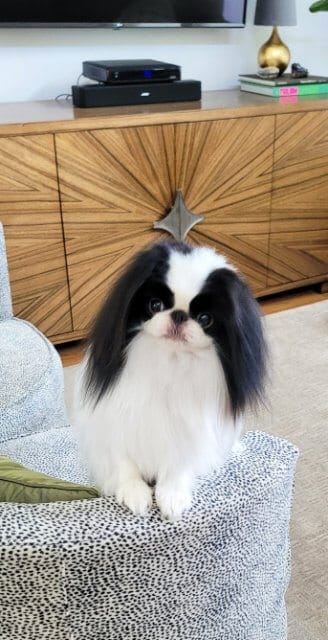
Scott Toney: I’m an eternal optimist, and think our sport will work its way through cyclical declines and thrive. I love going to the shows and seeing people of all ages participating in the sport. One of my favorite things is seeing handlers or exhibitors having their young children in tow, and watching these kids in their first attempts at walking a dog on a lead, grooming, or bringing them into the ring. One thing that is a bit discouraging is the lack of newcomers or apprentices wanting to show dogs with higher grooming requirements, like the Poodle. They require such an eye for detail and long hours of grooming, and a lot of the young apprentices aren’t up for the task. There are people much cleverer than me who likely have great ideas for bringing newcomers to the sport, but I’d love to see the AKC and parent clubs continue to develop events, training, and incentives to bring new people to the fancy. Something as simple as offering Pee Wee, Junior Handler, and adult handling classes in conjunction with Conformation shows could be very attractive. These classes could be taught by some of our most successful handlers who would volunteer a small bit of their time to teach ringcraft and technique. It would be a fantastic way to give back, and also provide great experience and inspiration for those who get to learn under these icons of our sport.
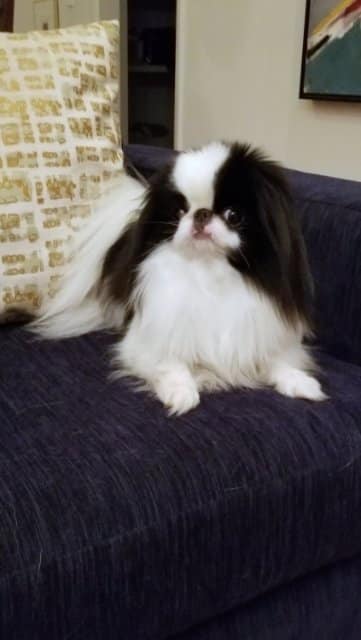
Scott Toney: I see it slowing down as I continue judging. I’m currently approved for the Toy Group, have completed the requirements for most of the Non-Sporting Group, and am still deciding which Group I may want to pursue after that. I have at least two to three more years of breedings planned. I am also growing up an eight-month-old dog that I hope to special after I retire my current boy.
Scott Toney: I worked for 18 years at Bank of America, primarily as a senior vice president in the commercial real estate segment with a heavy emphasis on community development and marketing. I took an early retirement in 2006 and have been practicing residential real estate as a broker in both North and South Carolina since then. I have been an avid tennis player for years, regularly work out, and love gardening, with a focus on growing roses. Of course, just like I want the very best dogs, I also want special roses. So, I have some very cool varieties, including a few Japanese imports which are a nice link to my breed!

Meet the Breeders