

Home » Sharon DiGennaro | DireWolf Kennel
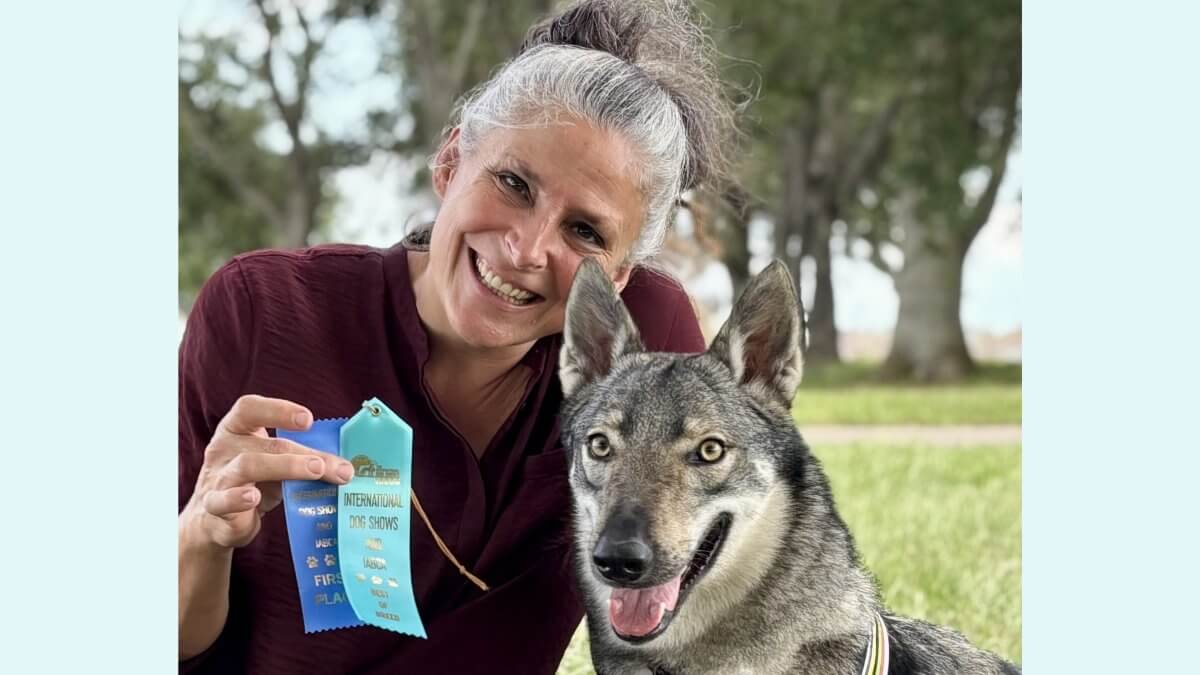
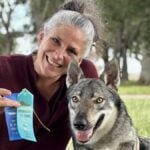
Sharon DiGennaro: My name is Sharon DiGennaro, breeder at DireWolf Kennel in Central Florida. Dogs have always been central in my life. I spent over twenty years training and breeding German Shepherd Dogs in IGP before discovering Czechoslovakian Vlciaks (CSV). My passion is working with my dogs and helping others reach their full potential. After leaving my role as a Law Enforcement Police K-9 Handler due to injury, I feel fortunate to pursue this journey with my personal dogs. Some of my kennel’s accomplishments are a UKC Grand Champion, four Champions, thirteen Certificates of Merit, the first Begleithund (BH) and Ausdauerprüfung (AD) in the US, plus CD, DJ, ATT, FITGs, FCATs, CGCs, TKNs, and multiple Best in Show awards. I advocate for full recognition with the American Kennel Club and am the Secretary of the Czechoslovakian Vlciak Club of America, Inc. (CSVCA).
Sharon DiGennaro: The Czechoslovakian Vlciak (CSV) was developed by the Czechoslovakian Border Guard to assist in protecting the country’s borders. During the development of the breed, they determined that selecting certain wolf-like traits resulted in enhanced endurance/stamina, superior eyesight, and improved overall health. The most important hallmark of the breed is its wolf-like appearance. The following information highlights a few of these important traits: The tail should be high-set, short, and straight; there should be a few inches at the base where the hair is shorter, and the tail can hang straight away from the body—I have heard others call this a dead tail. The tail should not extend past the hock.
The eyes should be almond-shaped, light yellow to amber, and slightly slanted, giving a wolf-like expression. They should not be dark or round.
The coat changes between summer and winter. The CSV should have a double coat, meaning they have a soft, dense undercoat and a longer, course topcoat to protect them. During the winter, their coats are thick and full. One of my imported females has a single layer that lacks protective top hairs. She will get thicker in the winter, but without the longer topcoat she is considered incorrect.
The CSV’s front assembly should appear slightly east/west, with the carpus (wrist) visibly larger than the leg. In Europe, this bone is measured and is considered weak if too small. I prefer a pronounced wrist down to the feet, especially in males.
Each of these characteristics is vital to the breed. According to the Breed Standard, the greater the “Wolfie” appearance, the better. These and other hallmarks contribute to the breed’s distinctive wolf-like appearance. Without them, a dog will not look like a CSV.
Sharon DiGennaro: This breed is not for everyone. I require prospective owners to dedicate time to socializing and training, continuing the foundation I have built. Yes, I believe there is enough interest to find suitable homes. I encourage interested people to contact breeders before they are ready, complete their screenings, and join the waiting list. The Czechoslovakian Vlciak Club of America is also a great resource for learning, meeting dogs, and connecting with other owners in your area.
Sharon DiGennaro: The Plaud Note, which has been a crucial communication and research tool, enables me to connect with non-English-speaking breeders in Europe and conduct research with foreign books. The device is also essential to my role as Secretary at the Czechoslovakian Vlciak Club of America for transcribing the meeting minutes. For example, WGI Labs, Italian-developed software to support inbreeding and health management, provides educational seminars in Italian; the Plaud Note records and transcribes these quickly into English. These technologies have significantly enhanced my efficiency and effectiveness as a breeder.
Sharon DiGennaro: CSV owners deal with the public perception that our breed is a hybrid. I use this opportunity to educate on the breed and why wolf-like traits were desired during its development. I share the success that the Czechoslovakian Border Guard had in placing 240 dogs in service before they had to turn it over to the civilian breeder. And how, due to their incredible endurance/stamina, they won their first sled race in 1988. Won… The CSV took first, second, and third! In the Slovak Republic, endurance runs (SVP1-3) are required for breeding. The SVP3 is 62 miles that you bike with your dog. The breed is recognized as a purebred dog by the Federation Cynologique Internationale (FCI) and the United Kennel Club (UKC), and we are in Miscellaneous status with the American Kennel Club (AKC).
Sharon DiGennaro: Dog sports are increasingly expensive, and as entries decline it becomes costlier to travel nationwide to find majors or, for rare breeds, another CSV.
Sharon DiGennaro: Sportsmanship in the FSS and Miscellaneous Class is strong. I value the camaraderie with other owners. We all help each other, both at ringside and in navigating AKC requirements, as we often bring our own competition. When the Czechoslovakian Vlciak Club of America hosts an Open Show, we set up a Meet the Breeds table and invite other FSS and Miscellaneous Breeds with educational materials to join. Judges and fanciers interested in the breed are always invited and encouraged to stop by.