Members
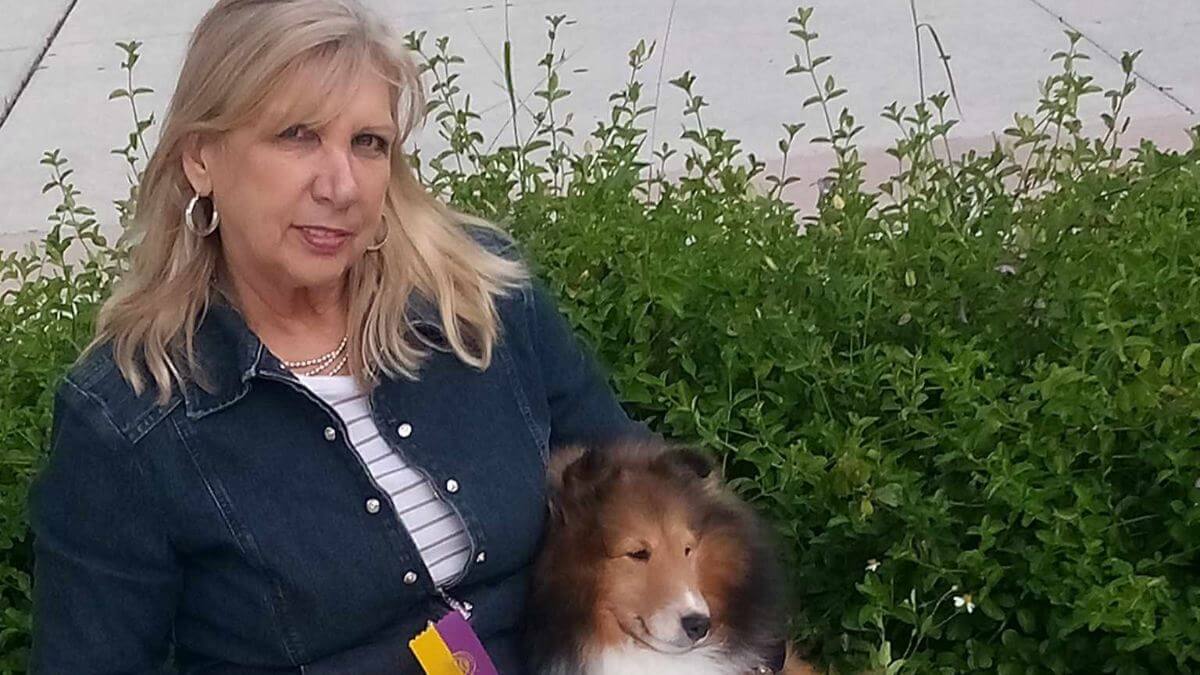
Interview with breeder/owner handler Jacqueline Evans: From cat lover to Sheltie expert, exploring 21 years in purebred dog sports.
The Weekly Brief
The best of SHOWSIGHT editorials, weekly wins, and breeder commentary — delivered to your inbox every Sunday morning.
Jacqueline Evans: I was always a cat person until my stepdaughters convinced me and my husband to purchase an Australian Shepherd puppy. The Aussie turned out to be more than I could handle, so I sought out a dog training club and that is where I first saw a Shetland Sheepdog. The owners of those dogs must have thought I was stalking them because I could just sit there all night and watch them. Then I would come home and research the breed on the Internet and finally convinced my husband to let me buy one. I started out doing Performance and when I got my first “Sheltie” puppy I was asked if I wanted to try Conformation. The rest is history.
Jacqueline Evans: I’ve been in dogs for 21 years now. Sixteen years as an Owner Handler and 14 years as a Breeder.
Jacqueline Evans: Yes, I have attended show handling classes and I’ve taught handling classes too. I’ve attended Rose Chandless’ handling seminar.
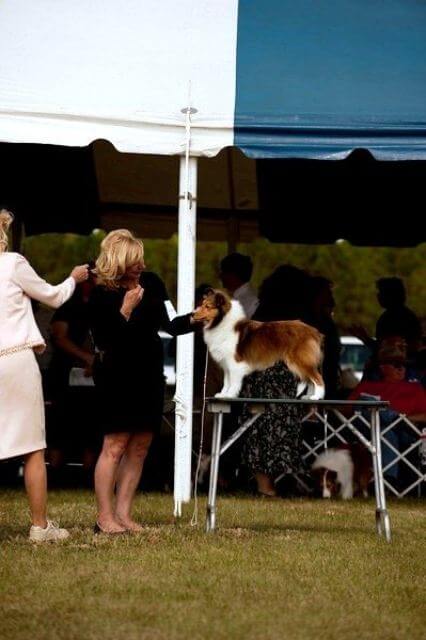
Jacqueline Evans: I have found all of these helpful, very much so, especially during COVID.
Jacqueline Evans: I have competed in NOHS in the past, but once I started winning BOB it was hard to run from the regular Group to the OH Group. Yes, rankings are very important to me. I set goals and the rankings push me along to meet those goals.
Jacqueline Evans: It’s always fun winning from the Bred-By Class. I love showing in the Specialties under breeder-judges. Both Bred-By and Specialty shows allow me to gauge how well I’m doing with my breeding program. It also opens up an opportunity for me to see how I stack up against my competition under breeder-judges.
Jacqueline Evans: Breeding Shelties is not easy; there are so many variables. I find it challenging, rewarding, and sometimes, frustrating.
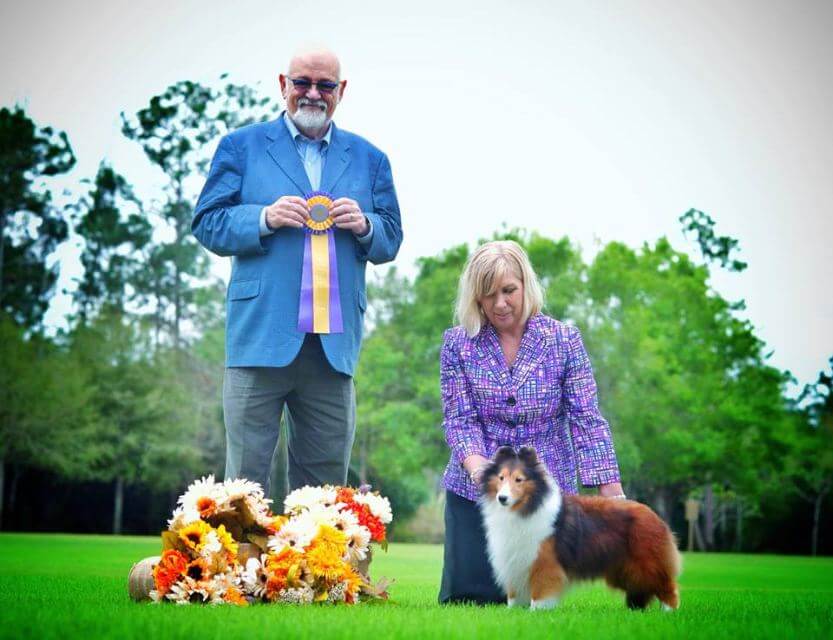
Jacqueline Evans: I’ve had a few mentors in other breeds who have encouraged me to pursue my goals. I would have to give credit to the two kennels, Coastal and Wintercreek, who sold me my foundations and encouraged me to breed my first litter. From there, I was lucky enough to learn a little from other breeders, a little here and a little there. I never had just one mentor at any given time.
Jacqueline Evans: The Breeder/Owner Handler will always be important to the sport of dogs; they go hand in hand. I wish more Sheltie breeders would participate as Owner Handlers. I don’t think there is anything more exciting than showing and winning with a dog you’ve bred.
Jacqueline Evans: Read your Breed Standard, embed it in your brain, find a good mentor, then read your Breed Standard again and again and again. Learn it and understand it and breed to it, and don’t forget to take handling classes!
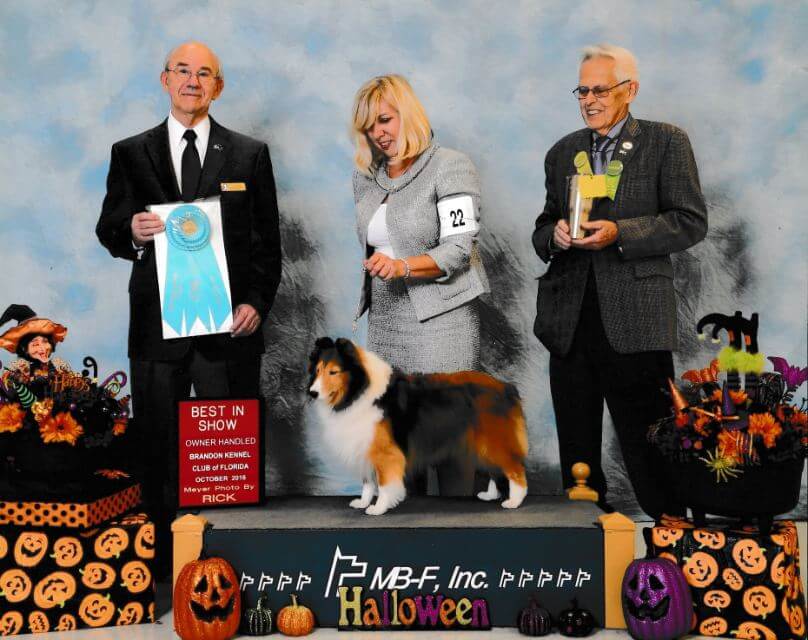
Jacqueline Evans: I would like to special another champion to Top 20 again as a Breeder/Owner Handler. Maybe make it to Westminster one day. Winning at the National Specialty Show would be nice, but I’m not there yet.
Jacqueline Evans: Oh, many, but one that always stands out is remembering my first points. When the judge pointed at me for Winners, I just stood there jumping for joy, as excited as ever until he pulled me out of the line-up and said, “Well, come on and get your ribbon.” He then went on to give me Winners Bitch at that same show. I pulled a friend who was ringside to take my boy back in while I stayed on my girl for the crossover points during BOB competition. (She was there to pick up a dog from a handler and never stood foot in a ring before.) It was quite something, with both of us being very green and new at this. Luckily, the judge was very kind and we all survived. Later, while taking the win pics, the judge and photographer both had fun with me, making sure I had the right dog/bitch with the right armband number. Certainly a day to remember and one I can laugh at now.

Meet the Breeders