Members
Learn how dedicated breeders saved the German Pinscher from extinction and shaped today’s energetic, loyal, and elegant companion. Read more!
The Weekly Brief
The best of SHOWSIGHT editorials, weekly wins, and breeder commentary — delivered to your inbox every Sunday morning.
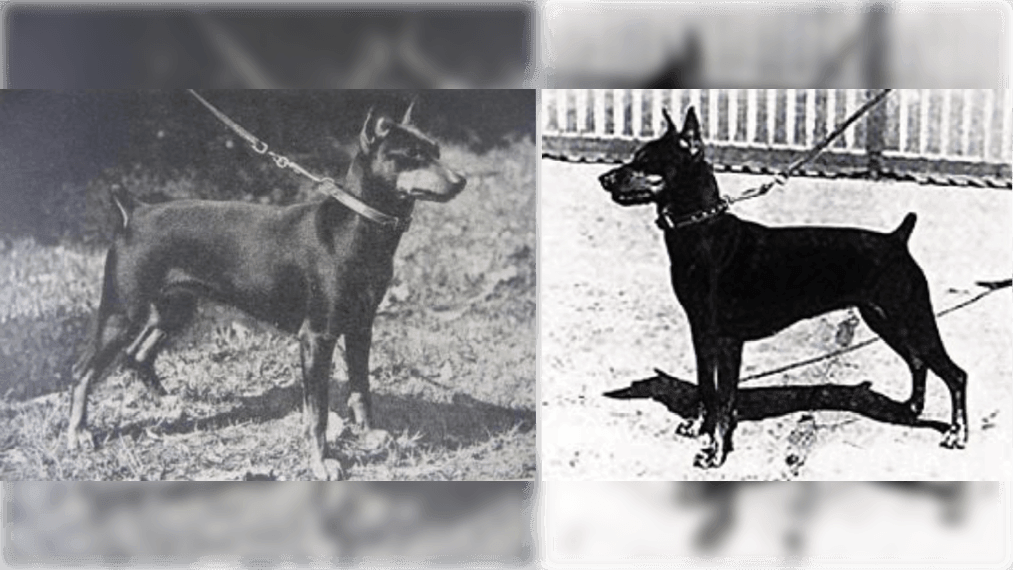
Featured photo: (left) Kitty vom Bodestrand – foundation of all modern German Pinschers, and (right) Jutta – 15-3/4-inch Miniature Pinscher bitch used to save the breed from extinction.
The original German Pinschers (GP) first appeared in the German stud books in 1881. They were a medium-sized farm guardian with size parameters of 15-3/4 to 19-3/4 inches and a maximum weight of 45 pounds. The smooth pinscher (now the German Pinscher) and the rough pinscher (now the Standard Schnauzer) were all one breed with a multitude of color combinations. Pinschers were recorded as black, black and red, salt and pepper, red pepper and salt, dark brown, brown, harlequin, yellow, and red-yellow. The Pinscher Club was established in 1895, and work began on standardizing the breed.
In 1917, the two coat varieties were officially made two separate breeds: Pinscher and Schnauzer. The popularity of the Schnauzer took off while the population of Pinschers dwindled to dangerous levels. Pinscher breeders were having difficulty breeding three generations without throwbacks to Schnauzer coats and colors. From 1922 to 1934, a few dedicated breeders slowly built the population, but that progress was lost: only 16 dogs were exhibited between 1937 and 1941; by 1949, no new entries were made into the stud books.
Werner Jung was the breed warden for the Pinscher-Schnauzer Club in Germany. In 1956, he became so concerned that a breed would go extinct on his watch that he gave up his Giant Schnauzer breeding program to attempt to save the Pinscher. Here’s where the story gets a bit dramatic! Jung did find some Pinschers of poor quality and advanced age in West Germany, but none that were considered viable. Reportedly, Jung surreptitiously made his way into East Germany where a quality bitch named Kitty vom Bodestrand was located; she was a national winner and CACIB (Certificate of Aptitude for International Beauty Championship) awardee, and he smuggled her back into the West. He found three quality, oversized Miniature Pinscher dogs and one bitch (ranging from 15.4 to 16.5 inches in height) and bred 14 litters in various combinations using these four foundations with Kitty. In total, Werner Jung bred 34 litters in just over 10 years and registered 156 pups. With a handful of other breeders, the population reached 500 by 1970.
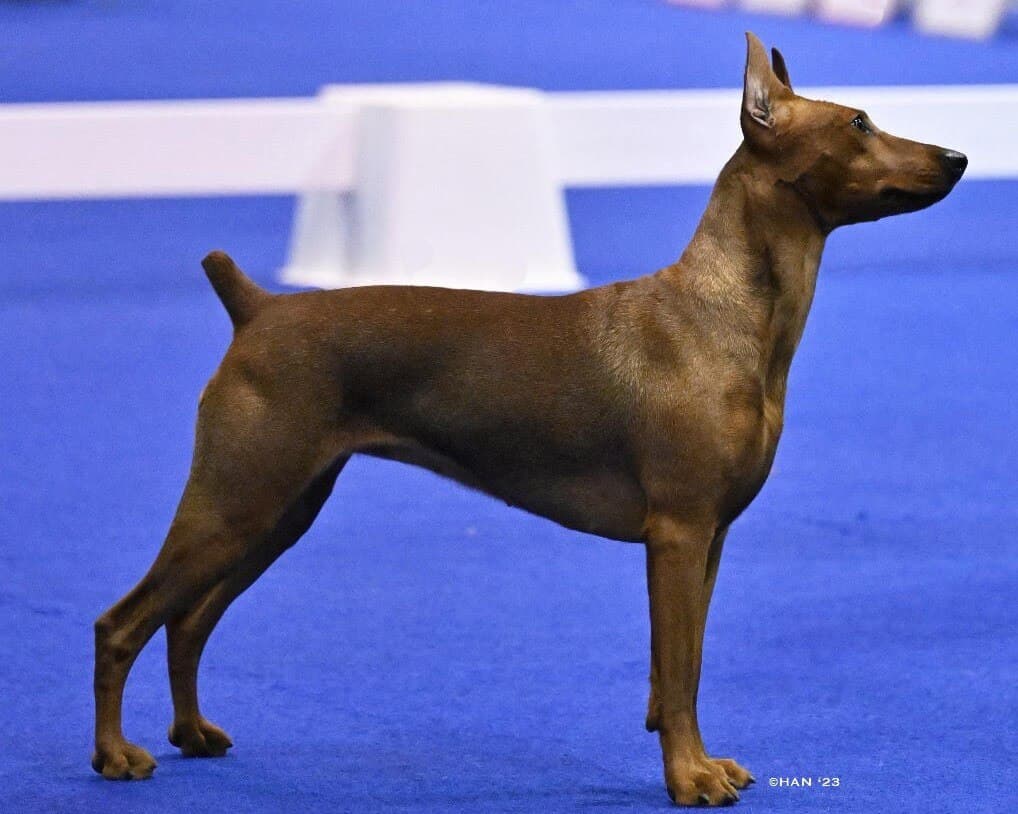
Today’s German Pinscher (or just the Pinscher to the rest of the world) maintains much of the general appearance of the two foundation bitches, Kitty and Jutta. Our size range in the US is 17 to 20 inches, with a fault over or under and the caveat that quality always takes precedence over size. They are a strongly built dog, square and elegant in appearance. Our Standard was changed in 2000 so that the breed is now ramp optional for judges.
The German Pinscher is a moderate breed, whereas its cousin the Standard Schnauzer is expected to have more substance. The shoulder should form a 90-degree angle to the upper arm, which should be equal in length to the shoulder blade. The stifles should be well bent and well boned. They should have strongly muscled thighs and be in balance with their front. The shoulder is down-sloping from the withers, and the back is level from the end of the shoulder to the faintly curved croup. The topline should be level when standing and when moving. Movement should be ground-covering and uninhibited, with good length of stride, strong drive in the rear, and free front extension. They should move clean both coming and going. Rolling, roaching, or swaying toplines and paddling, throwing elbows, and crossing or striking of the legs is incorrect. A hackney gait is a fault as is an excessive tuck-up.
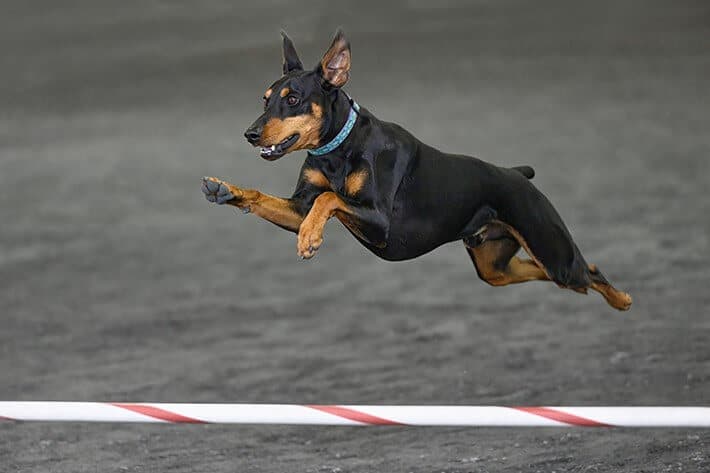
Allowable colors are Black and Tan/Red, Blue and Tan/Red, Red (both clear red and stag red) and Isabella (Fawn). Chocolate (liver and tan) is a color that exists genetically in our breed, but is not currently allowed according to our Standard. All coat colors, even the dilutes, must have dark eyes, black eye rims, black noses, black lips, and dark nails. Tails are customarily docked but not required to be docked. Tail set and carriage is important for a good topline and should be moderately set so that the tail can be carried above the horizontal. All ear types are acceptable: cropped, naturally folded, or naturally standing erect.
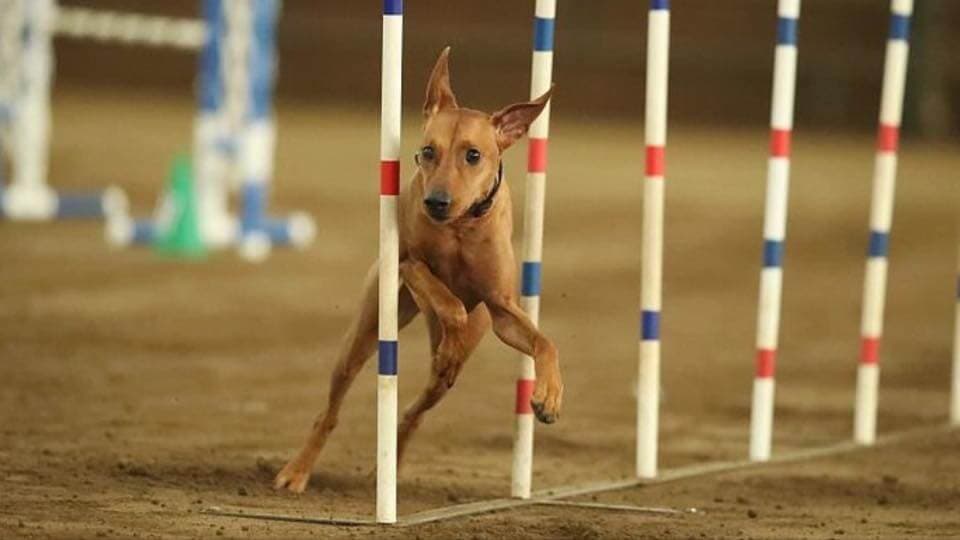
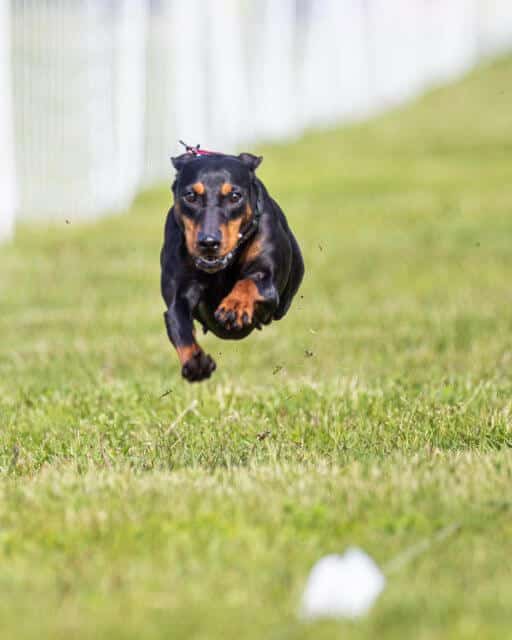
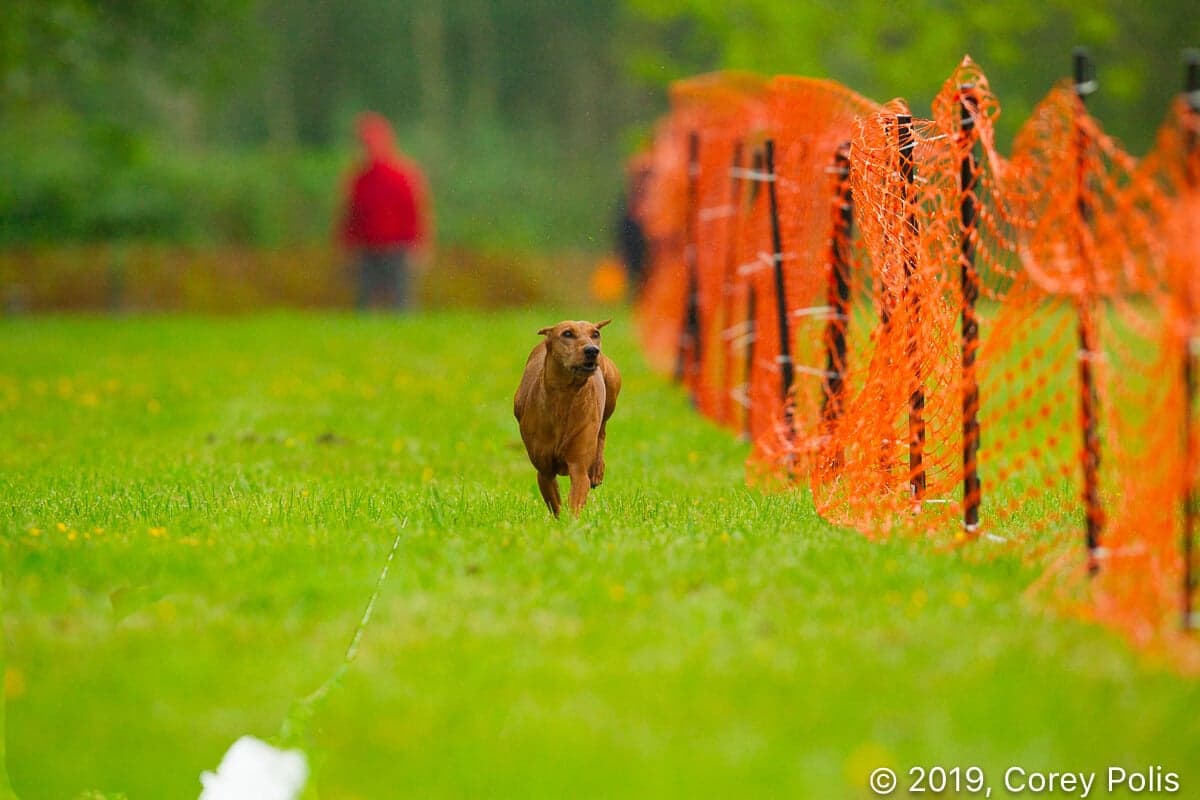
German Pinschers are a true “hidden gem” breed. They are easy maintenance, needing only nail trims and an occasional bath. They are not prone to excessive barking and are adaptable to both apartment living as well as life on the farm. They have moderate exercise requirements, so two good walks a day for a neighborhood dweller is sufficient to keep them in good health. At 30 to 45 pounds, they are easily picked up when needed but are also powerful on a lead, so owners need good leash control on walks. German Pinschers are extremely oriented to their people and highly sensitive to an owner’s physical and mental state, which has made them an interesting option for work as Service Dogs, with several serving to detect seizure onset, low blood sugar, and migraine onset as well as panic attacks for those with PTSD (Post-Traumatic Stress Disorder). Most GPs love and excel at Scent Work and they also love the thrill of the chase in Fast CAT and CAT Trials.
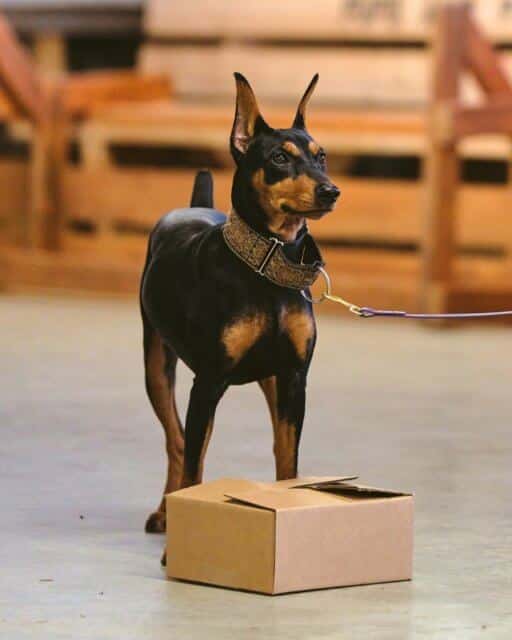
They do like to please their owners, so they are capable of titles in Rally and Obedience with dedicated owners, but they tend not to prefer a whole lot of drill and practice. They are on the independent side, so once they have done something correctly a few times they may decide not to play the training game unless the owner makes it more interesting by changing the motivation. German Pinschers are intelligent, loyal, alert, energetic, and agile. They can be quite determined when they set their mind to something and are fearless when the need to protect does arise. The breed should not show any unwarranted aggression, and fearfulness is considered a temperament fault. They are a vivacious breed that is generally quite healthy; they stay “young” and active in dog sports into their early teens and can live well into their later teens. German Pinschers are much like potato chips; it’s so hard once you have one to not need just one more.

Canine Health