Members
Breeders face deep exhaustion from responsibility, setbacks, and buyer demands—but their passion and purpose keep them going.
The Weekly Brief
The best of SHOWSIGHT editorials, weekly wins, and breeder commentary — delivered to your inbox every Sunday morning.
Our dogs are a source of great joy in life. Their companionship and devotion are comforting and a huge part of why we breed. And although all dogs require effort, the amount of effort put out by breeders can directly correlate to the level of success achieved. In fact, a breeder’s work is never done, and collectively, we are all really tired! We work on incredible amounts of adrenaline, and we’re really working unless we are sleeping—and I think maybe even then! The ability to multitask is a prerequisite for the job. Planning, researching, and raising a litter can be a joyful event, but it is tiring.
I know that today’s top breeders are exhausted. So many conservation breeders are genuinely tired, but not from whelping litters and staying up late with puppies. I think those of us who breed dogs responsibly are tired because we’ve become first point of contact for poorly homed dogs and morally bankrupt buyers who abandon or return—or have outlandish expectations of—their animals.
As preservation breeders, we can become tired because we are at the mercy of buyers’ expectations. Buyers often expect rapid-fire responses to text messages, and because of our lifelong attachment to our animals, we’ve become lifelong veterinarians, therapists, and confidants to buyers. At some point, it can all be too much. The breeder/buyer relationship has become a catch-all of sorts, as breeders take on the role of decision-maker, cheerleader, and sympathetic ear.
It’s a big burden on a lot of breeders to be that good for that long. I mean, anyone can be great during the sale of the puppy and provide all the information requested, but honestly, we become disappointed in buyers years later when their life has become a little chaotic and they need to return their dog. Although we willingly assist in making decisions regarding their animal; when to spay, what food to feed, how to handle an emergency medical situation, with all the investment made and a decade invested, we might be rather disappointed when a buyer calls to return Fluffy because they have a life change going on. Frankly, they need to calm down and carry on. Fluffy is their lifeline and devoted companion, after all.
The very best breeders out there are hit with disappointment by those owners who don’t live up to what they said they would do; who don’t perform on the level that breeders thought they would. Unfortunately, this is part and parcel with being a breeder in the sport. You can do the best job you can possibly ever do; give them a healthy animal and stand behind the dog, but when they’re done… they’re done.
The right thing to do as a breeder is to take the animal back, of course, no matter at what age or under what circumstance. Breeders do take dogs back, but buyers need to know that when a dog comes back, it faces many lifestyle changes through no fault of its own OR that of the breeder. The breeder did their job. The buyer failed for any number of reasons.
For most breeders who take back a dog, the returning animal cannot stay and will face another rehoming. Truly heartbreaking!
It is unfair to go from being a single dog to one of 14, back to the kennel instead of the sofa. This is not the lifestyle the pet is accustomed to nor it is what the breeder had planned when making the placement. And so, the breeder is now struggling to find a senior home for this veteran who has spent many years with another mother and father. That’s very hard emotionally on the dog—and on the breeder. I mean, the breeder did everything right; they made the choice to take the dog back, but now they’re faced with figuring out a solution for a veteran dog.
There’s a real conundrum here, and that’s why I’m saying responsible breeders are exhausted. We’re so good, and so protective and so willing, that we end up being repeatedly used (read abused). We don’t have limits with our puppy buyers because, if we have limits, someone will go to social media and tear us apart online. So, to avoid tarnishing our good reputations, we do what’s expected and take the dog back. But it isn’t really “the right thing,” and yet it happens all the time. The right thing is for the buyer to figure out how to keep their dog. They should, in most circumstances, make it work. After all, a dog is for life not just for Christmas… right?
All that breeders can do is offer a good service, and I do think the very best of breeders do this. We do take back the 10-year-olds, but it’s important to voice that it is done out of respect for the breed, not necessarily for the dog’s owner. As a breeder, we take back an animal that we made because it’s our responsibility to do so, but we don’t take it back without disappointment that the owner hasn’t found their own solution. When is it on them to make the responsible choice? When is it their responsibility? Preservationists almost make it too easy for owners to recycle (or dump) a dog back to the breeder.
There’s a real hardship on breeders to be so accommodating, and the exhaustion that many of us experience is multifaceted. On the one hand, we are so encouraging; we’re always looking for someone who is interested and willing to get involved with our breed, someone to share our vision and our passion. We are so good to people because we want our breeds to advance and we want to continue our programs. However, it’s very hard for today’s breeders to house all of their breeding stock, so some animals must be put out with people on a co-ownership. Those co-owners, it must be mentioned, often can’t live up to the agreement because they don’t put in the same amount of effort or prioritize the dogs in the same way. Eventually, breeders grow disappointed and exhausted as the relationship deteriorates and fractures.
Breeders want their dogs to excel and improve, and they’re so interested in finding others with similar goals that they often set themselves up for disappointment. For example, we have all likely had this experience: A dog was placed for breeding and comes back in poor condition, and takes months to get back into breeding condition, etc. And so, the breeder starts to think the decision was a poor use of time and a bad investment on their part. They now have to reevaluate their plans because they can’t actually do all the work. Breeding dogs doesn’t work if one party isn’t working as hard as the other(s).
A breeder’s office hours are not traditional. Access to breeders is on-demand! The buying market demands service in an instant today with Instagram, Facebook, AKC Marketplace, Good Dog, and all of the other outlets that promote a breeding program. While these sites and avenues bring in customers and give awareness of a kennel’s successes, they require work! They require effort. Those inquiries are looking for a rapid response and an expectation and performance that previously did not exist without these technologies. Today’s buyers want and need continuous updates on the litter, progress photos of puppies as babies; at three weeks and six weeks, etc. They want the ability to come and pick THEIR puppy or select THEIR puppy from a photo. The constant barrage of email questions and requests from buyers is unique to this time in our world, when everyone has more access to everyone else. For the old-school breeder, this is a challenge because our focus is on the dogs. We are focused on providing good socialization, good nutrition, and warmth. We want to attend to our puppies’ well-being, but instead we get distracted or sidelined by constant requests, and a failure to perform can lead to retaliatory posts on a public forum that can be detrimental to a breeder’s reputation.
There is also a fallacy among buyers that breeders are breeding for the public market when the show breeder is really breeding to keep something for themselves. We place puppies from the “extras.” In all planned breedings, we intend to keep the very best one to continue our work forward—hoping that it is an improvement on the last generation.
Don’t get me wrong. This is part of the drill. It’s part of the greater good; the ability to enjoy and produce quality animals. But it is a distraction to become the therapist to a buyer over every tiny thing, and if you don’t perform… you could face the consequences.
When exhaustion sets in, breeders may decide to take a step back from the frequency of breeding. I recently took a break. I have no stud dog in the house, and so, now, I’m trying to create one. I think you have to keep a stud dog to keep a kennel moving, as I think you need access to live semen all the time. Having said that, taking a year off will cost you, but it won’t cost you your reputation and it won’t cost you the trajectory of your kennel. It just delays it. I think it’s good to take a step back on occasion and do a reset and reassessment, and hopefully come back stronger. It’s also good for taking a look to make sure you’re not walking down the wrong path. A breather is good.
So, when do you, as a breeder, absolve yourself of responsibility?
I think, for many of us who enjoy life as a breeder of especially high-quality animals, where we’ve invested immeasurable time, money, and effort—and experienced extreme fatigue and exhaustion—we do all of it willingly, and we would do it all again. In fact, most of us are planning our next litter, or two or three!
We breed because we know the good outweighs the bad in all aspects. When we have the pleasure of these companion animals who enrich our lives beyond any lack of sleep or countless phone calls, or numerous email exchanges and never-ending Facebook posts, we all know (and we all celebrate) the accomplishment of creating another generation to admire and to share our time with. A canine friend to experience for their lifetime, and a creation that you made to bring joy into your life. The impact of breeding is truly heartfelt and, despite the exhaustion, it’s all worth it.

Breed Conservation
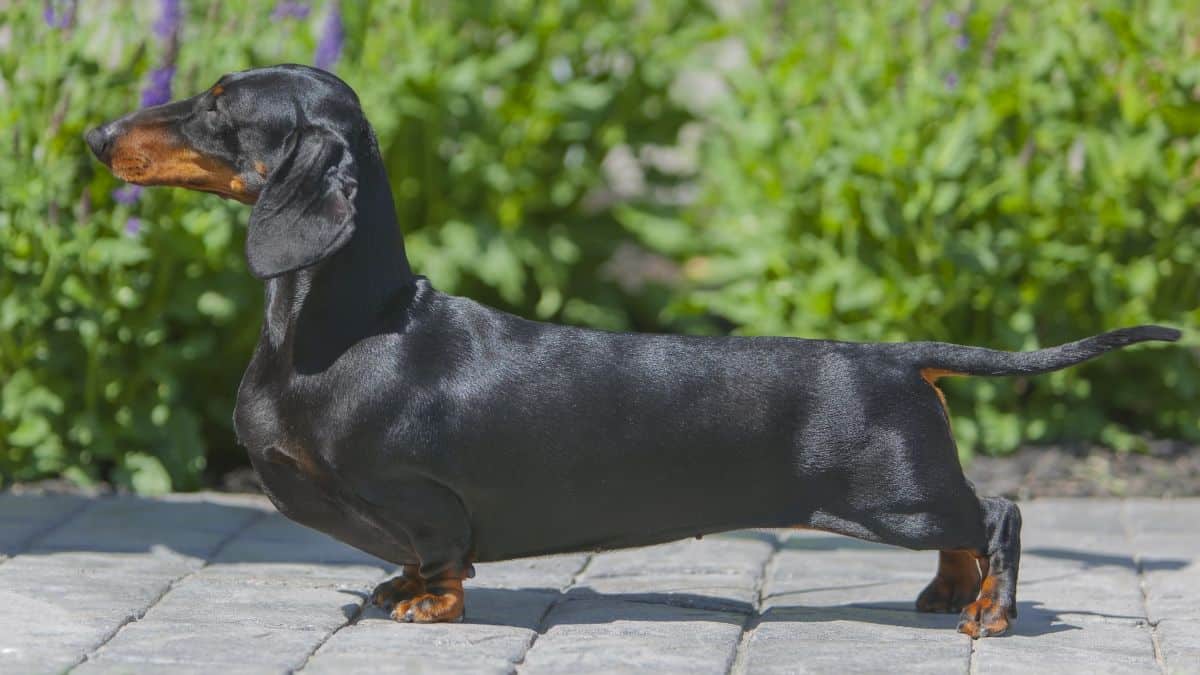
Using the Dachshund as a case study, Lexa Richmond explores how breeding decisions, mentorship, and education shape breed preservation.