Members
Reflections from Lee Whittier on judging the 2025 TTCA National Specialty – insights on breed type, structure, and the Standard.
The Weekly Brief
The best of SHOWSIGHT editorials, weekly wins, and breeder commentary — delivered to your inbox every Sunday morning.
It was my distinct honor and privilege to judge the 2025 Tibetan Terrier Club of America (TTCA) National Specialty. As I stood in the center of the ring, surrounded by the best our breed has to offer, I was struck by a profound sense of gratitude—not only for the opportunity to judge such an esteemed entry, but for the years of mentorship and guidance that brought me to that moment.
We all stand on the shoulders of those who came before us. For me, those shoulders included the late, iconic Sue Vroom, whose words continue to shape how I view the Tibetan Terrier, and how I describe the breed to others. Sue had a way of getting straight to the point: “No type, no Tibetan.” Those four words contain a challenge—and a responsibility—for every breeder, owner, and judge. As we continue to develop and preserve the breed, we must ask ourselves: Can we recognize true type, and do we value it above flash? My understanding of the breed begins with its key features. While there are dogs that may lack in one area, the winners possessed most of these elements.
To be specific, based upon the Standard, the key features of the Tibetan Terrier follow:
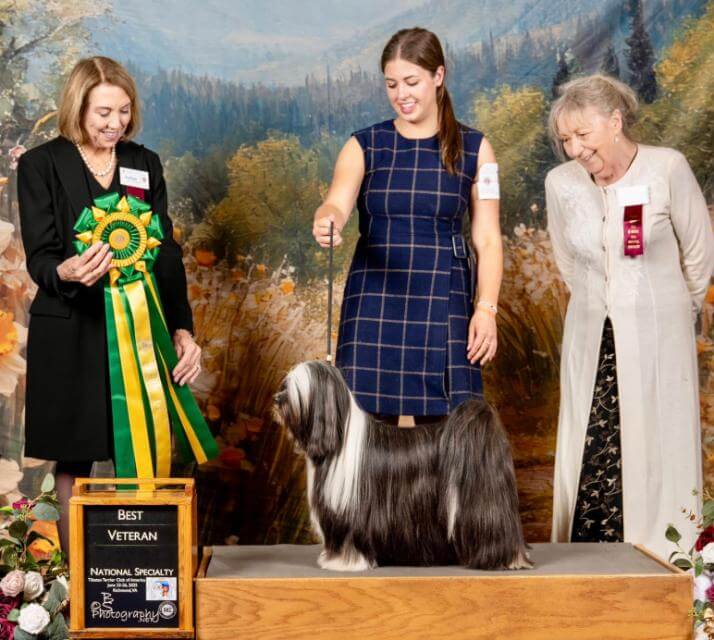
The Tibetan Terrier Breed Standard describes the ideal. My aim in judging this National was to award the dogs with the essential features that are non-negotiable, and identify acceptable variations that shape the ideal Tibetan Terrier.
The preference for height ranges of the Standard state 14-17-inches: dogs of average height, 15-16 and up to 17; bitches slightly smaller. Those bitches that are as large as the dogs are not faulted in the Standard. Dogs or bitches outside the size range of 14-17-inches are faulted. Period. It’s essential to maintain a range of sizes for different jobs that the TT performed in its historical environment.
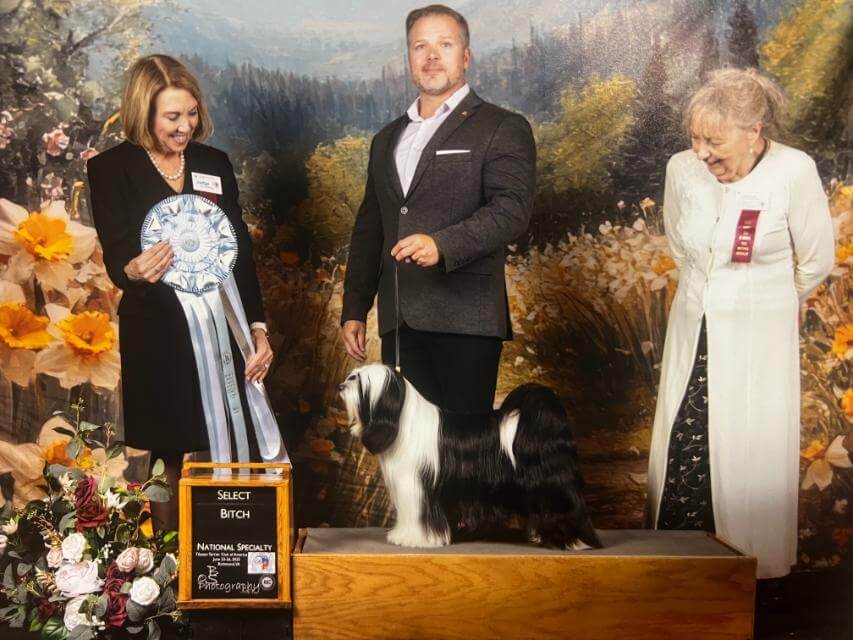
One of the essential non-negotiables is in the measurement of body proportions. The square is measured from the point of shoulder to the root of tail. Additional preferences include the size of heads, but how the length is measured is non-negotiable. You likely noticed me measuring the head proportions of every entry.
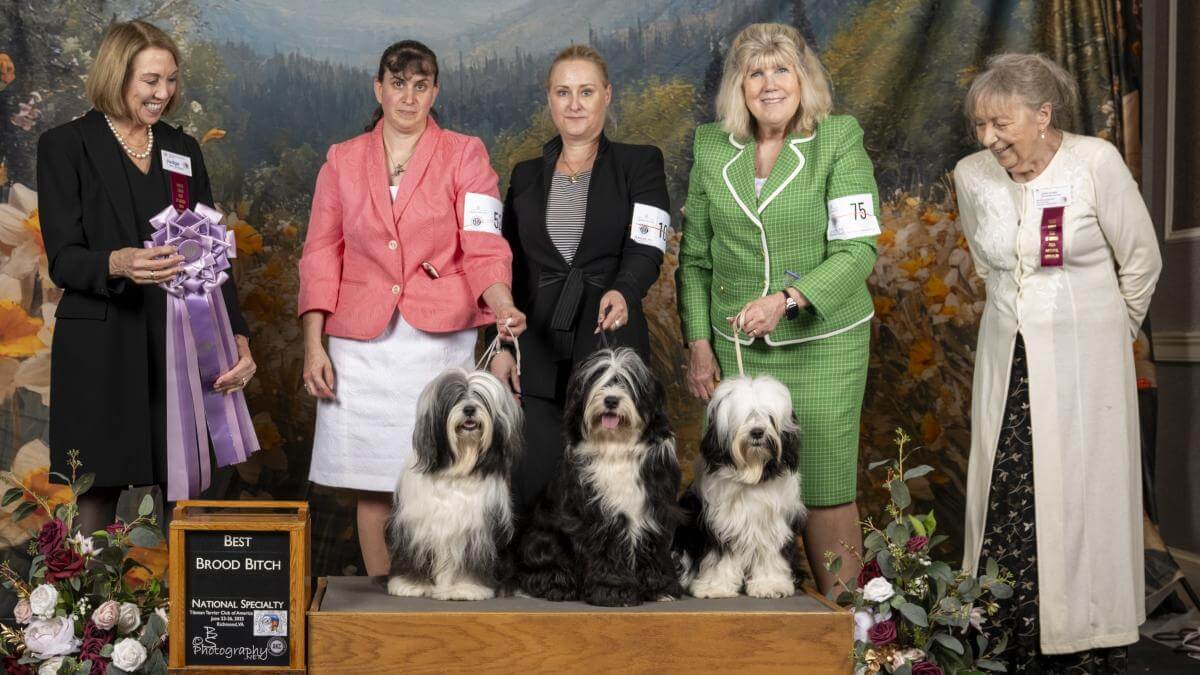
This year’s entry brought forward several excellent dogs. Many were beautifully conditioned, prepared, and in more than a few I saw the essence of the breed shining through. There were dogs with powerful, elastic gait, correct coat texture, and squarely built with compact proportions.
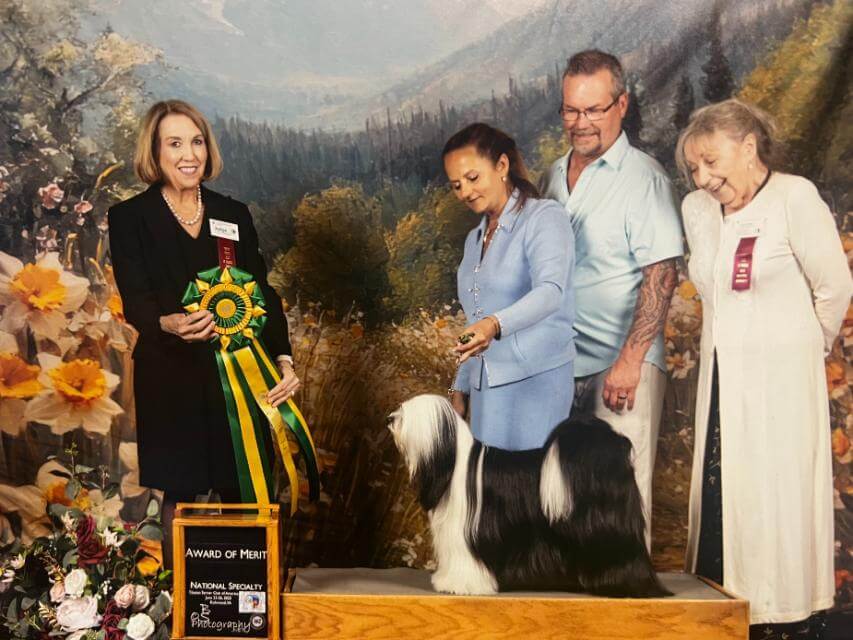
Yet, it was clear that certain other hallmarks are at risk of being lost or diluted in the ring today. Too many dogs lacked the correct foot construction that is unique to the breed. The large, flat, snowshoe-like foot, with long, flexible digits and thick pads, is more than a curiosity—it is a survival trait that enabled the Tibetan Terrier to traverse the rugged terrain of its homeland. The Standard describes this feature with specificity; we must do the same in our breeding and judging.
Most of the entries were classically presented with the fall over the eye, coats were clean and not overly groomed, with heads that narrowed slightly from the ear to the eye. There are no specific head measurements other than how the length is divided by the eye, not the stop, as in most other Standards. Many had the correct large, dark eyes, but some were smaller than others. I only had one bitch without the correct dark eye rims. All the noses were black. I found no concern about ears.
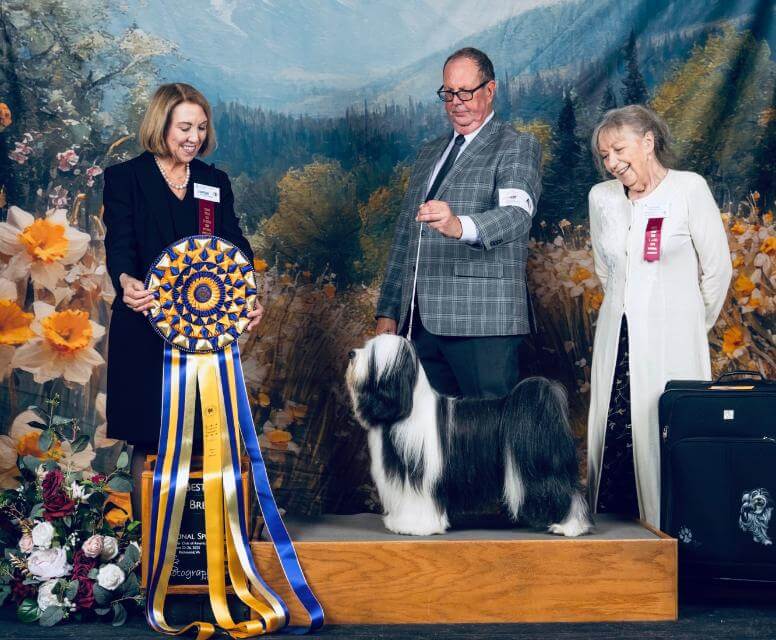
Coat texture and presentation varied considerably. The AKC (American Kennel Club) Breed Standard requires a double coat, featuring a soft, woolly undercoat and a profuse outer coat that is fine but never silky or woolly in texture. This is not the coat of a Lhasa Apso. Nor should it be sculpted into submission. The coat must insulate, protect, and move with the dog. While some exhibits reflected these qualities beautifully—with texture that was natural and flowing—others had coats that were overgroomed or flat ironed, losing the slight stand-off quality essential to the breed. Some of the dogs had an overabundance of coat. This variation would attract, rather than protect, the dogs in the harsh Tibetan climate.
The dogs with the lovely natural wave to the outer coat—just as acceptable as straight—and with a subtle resilience, reminded me what this coat is meant to do: protect, not impress.
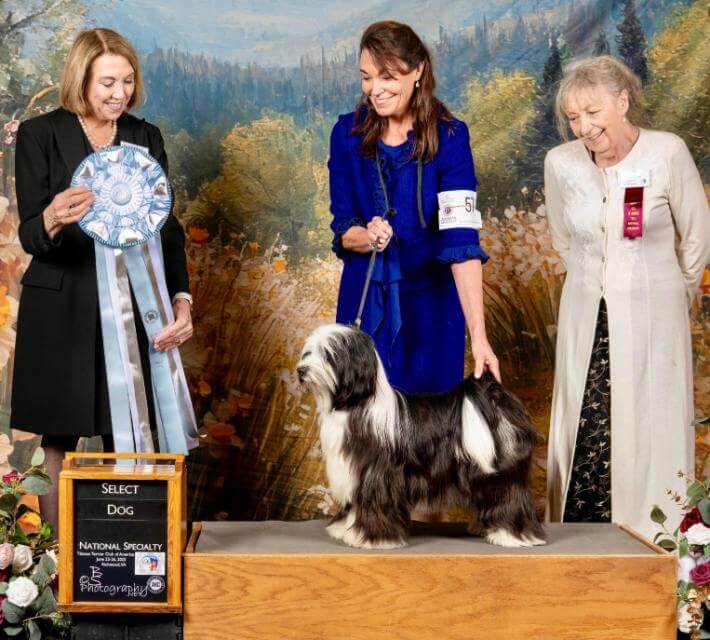
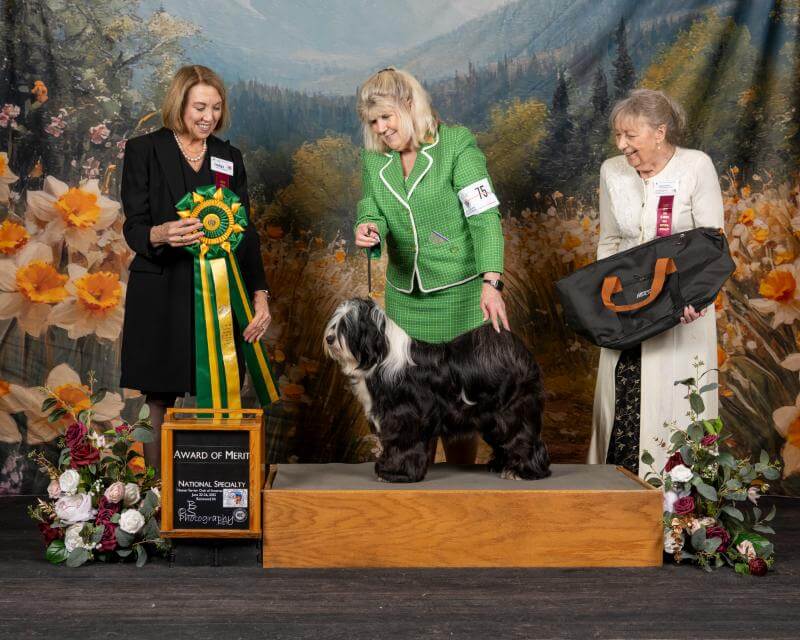
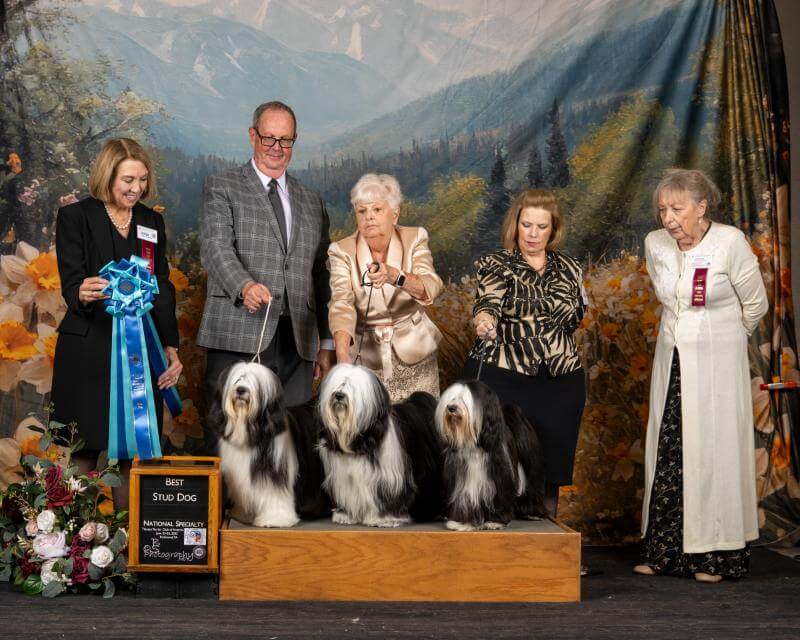
As a judge and breeder, I strongly believe in preserving the diversity of acceptable colors within the breed. The Standard clearly states that any color or combination of colors, including white, is acceptable. There are no preferred colors. In my final lineup, three of the top winners were dogs of color other than black and white—a testament to the fact that excellence in breed type and structure is not defined by coat color. We must continue to recognize and reward quality across the spectrum, ensuring that color diversity remains alive and well within our gene pool. Beauty in this breed is multifaceted, and type comes in many color variations.
The Tibetan Terrier’s movement, when correct, is unmistakable: free, effortless, and elastic, with good reach in front and flexibility in the rear allowing full extension. It should never be exaggerated. A “kick in the rear” is not the same as full extension. The breed moves in a rhythmic, efficient stride, with rear legs tracking close to the front—a reflection of balanced construction, not just flashy presentation.
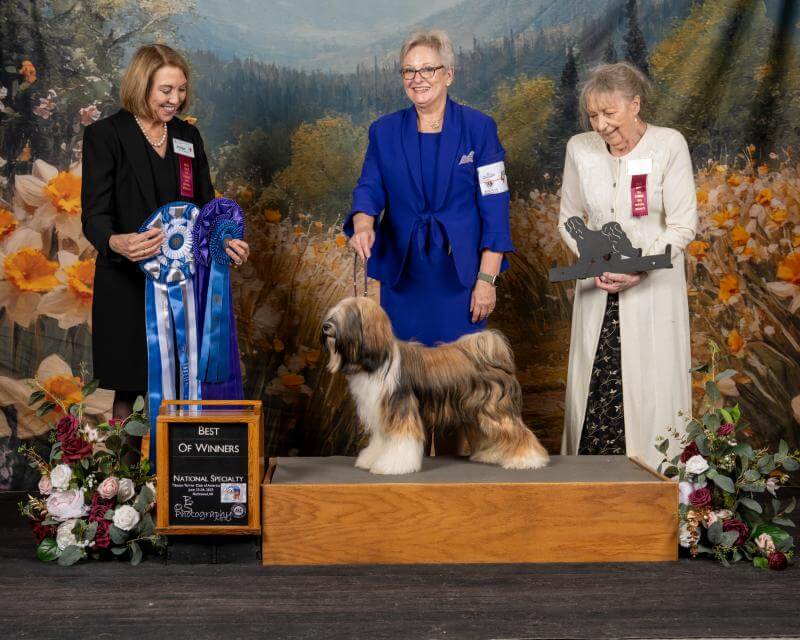
The Standard is also clear about proportions: square, compact, and strong. When standing on a hard surface, there should be light visible under the dog, indicating the length of the leg and the correct coat length. And yes, the slightly longer rear legs create that unmistakable “moon in the back,” a phrase not in the Standard but very much evident in the words used to describe the breed’s silhouette and topline.
I was pleased to find several exhibits that moved with the drive and balance the Standard requires. These were dogs that could do the job they were bred for, not just stand like a statue. As a breeder-judge, I can best appreciate the dogs’ virtues when they are trained and presented correctly in the ring. I say this in practically all my masterclasses: “Any judge appreciates a clean, happy, well-trained, typey dog in good condition in their ring.” Finally, “have fun with your dog and make sure your dog has fun with you!” This statement is a tenet of my Dog Show Mentor program.
At the end of the day, the dogs I pointed to were those that best represented type, function, and balance—dogs that had enough of the non-negotiables to justify recognition and placement.
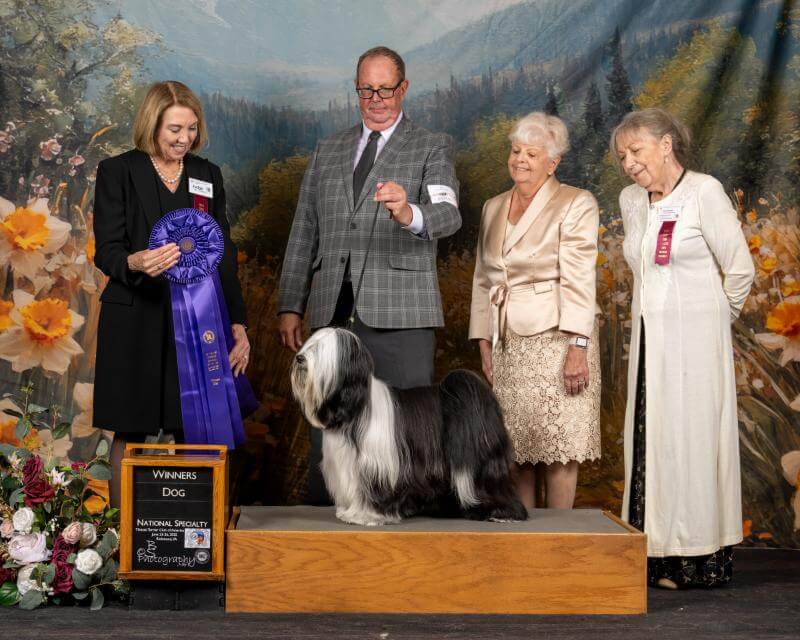
I want to thank every exhibitor for your preparation, sportsmanship, and dedication to our breed. Please continue refining your eye, not just for beauty but also for correctness and function. Go over each other’s dogs. Learn what the Standard says—and what it means. Seek feedback, not just on what’s wrong with your dog but what’s right with your own and others.
The Tibetan Terrier is a breed with essence, not a list of parts but a whole that speaks of its history, its purpose, and its heart. It is our responsibility to preserve that essence through careful breeding, honest evaluation, and informed judging.
Thank you for allowing me to play a part in that journey. It was a privilege I will never forget.
With respect and admiration,
Lee Whittier
Tibetan Terrier Breeder-Judge

All About Judging