Official Standard of the Danish-Swedish Farmdog
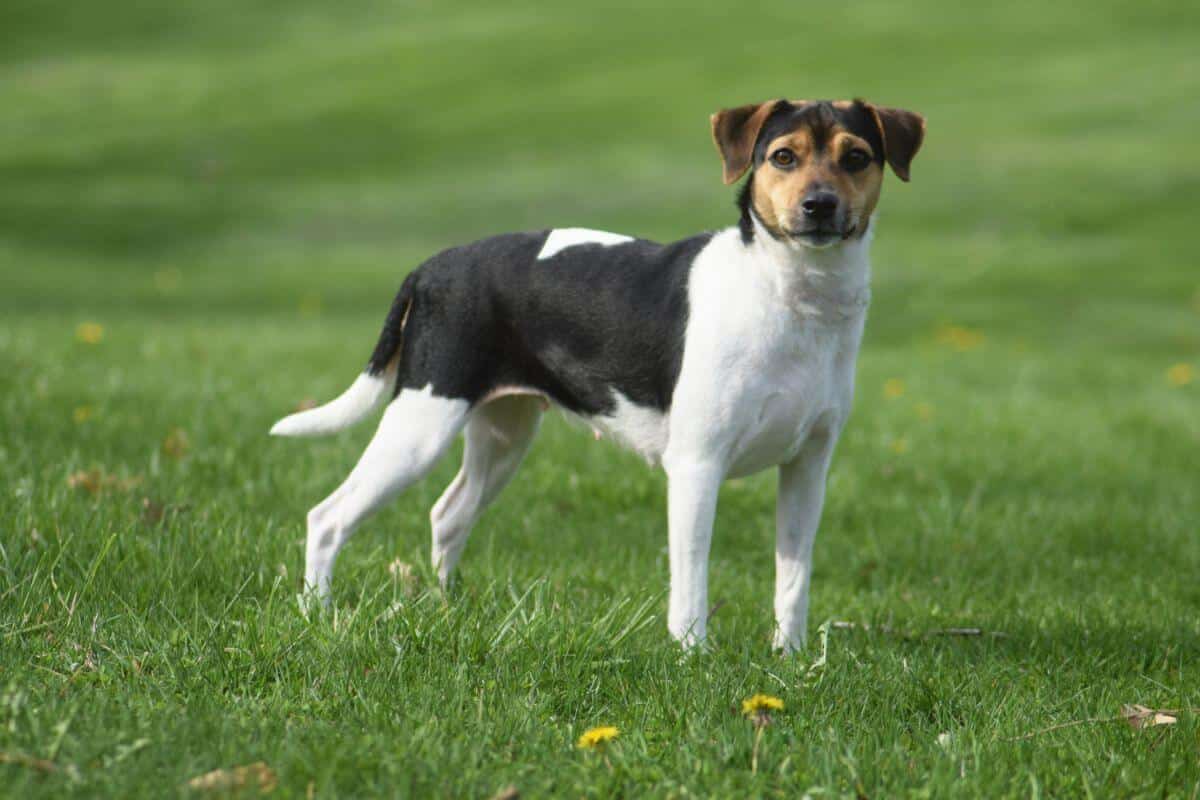
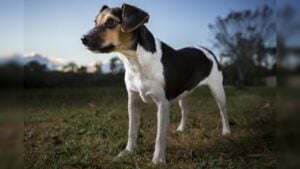
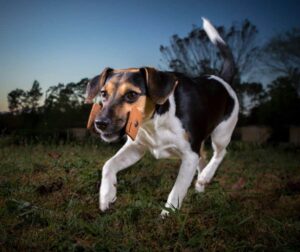
General Appearance: A small, compact, lively, smooth coated, and slightly rectangular dog. Known to mature late. The Danish-Swedish Farmdog is not to appear refined or elegant. Clear differentiation between the genders is important.
Size, Proportion, Substance: Height at the withers: Males 13½ to 14½ inches plus or minus 1 inch. Females 12½ to 14 inches plus or minus ½ inch. Proportion – The Farmdog should be slightly longer than tall. It must not give the impression of either long or short legs. The body should be slightly rectangular, a proportion of 9:10. The proportions between depth of chest and height at withers should be 1:2. Substance – Farmdogs develop slowly. This should be considered during judging. The breed is not fully developed until the age of 3 to 4 years, in some cases even longer for males. Fault – Elegant general appearance.
Head: The head should be triangular and a bit small in proportion to the body. The rather broad skull creates the basis and the head is gradually narrowing towards the muzzle, which is slightly shorter than the skull. Skull – Rather broad and slightly rounded. Stop – Well defined. Cheeks pronounced without exaggeration. Eyes – Medium-sized, slightly rounded, neither protruding nor sunken. Attentive and kind expression. Dark eye color in dogs with black patches. Slightly lighter eye color permissible in dogs with yellow, or liver/brown patches. Ears – Medium-sized. Rose or button, in both cases the fold should be just above the skull. It is not unusual to see a Farmdog with one of each. Button ears – The tips should lie close to cheeks. Fault – Prick ears. Muzzle – Well-developed and gradually narrowing towards the nose, but must not give a snipey impression. Muzzle slightly shorter than the skull. Nose bridge straight. Jaws – strong. Nose – Color in accordance with the color of patches. Bite – Scissors bite with even and well-developed incisors. A level bite is acceptable.
Neck, Topline, Body: Neck – Medium length, strong and slightly arched. No throatiness. Fault – Neck too long. Body – Compact with good substance. The body is substantial due to the deep and roomy rib cage, which has a good spring of ribs. A fully developed, compact body cannot be expected until maturity, but it is important that the proportions are correct even in young dogs. Topline – Strong back, slightly arched short loin, slightly rounded croup. If the tail is set too high, the croup is too flat and this gives the impression of terrier-type. Loin – Short, broad, and slightly arched. Croup – Slightly rounded. Must not be flat. The slightly rounded croup must never be confused with a steep or sloping croup. An overly sloping croup does not facilitate the breed’s free movement. Fault – Steep croup. Chest – Long, deep, and roomy with very well sprung ribs. Fore chest well defined. The front is slightly broader than the ribcage. The chest should reach to the elbow. Fault – Lack of depth in the chest. Narrow in front. Ribs – Well sprung. The rib cage must be relatively wide compared to the size of the dog. Fault – Flat or short rib cage. Underline/tuck up – Belly only slightly tucked up. The long rib cage and short loin, make for an only slightly tucked up belly. Tail – Not too high tail set. Long tail or naturally bobtailed. It is never docked. The tail should be carried straight with a slight curve or like a sickle. The slightly rounded croup causes the tail not to be set too high. Fault – curled tail or tail carried flat on back.
Forequarters: Upper Arm – Oblique, not too steep. Shoulder Blade – Oblique, not too steep. Legs – Front legs straight and parallel. Due to the wide and deep chest, the front legs are placed rather wide. Fault – Low on legs. Pasterns – Strong and springy. Dewclaws – Front dewclaws are present. Feet – Small, oval, and moderately tight-knit.
Hindquarters: Legs – Parallel and well-muscled. Thigh – Fairly broad. Stifle – Well angulated. Hock Joint – Well angulated. Rear Dewclaws – Accepted.
Coat: The coat is short, hard, and smooth.
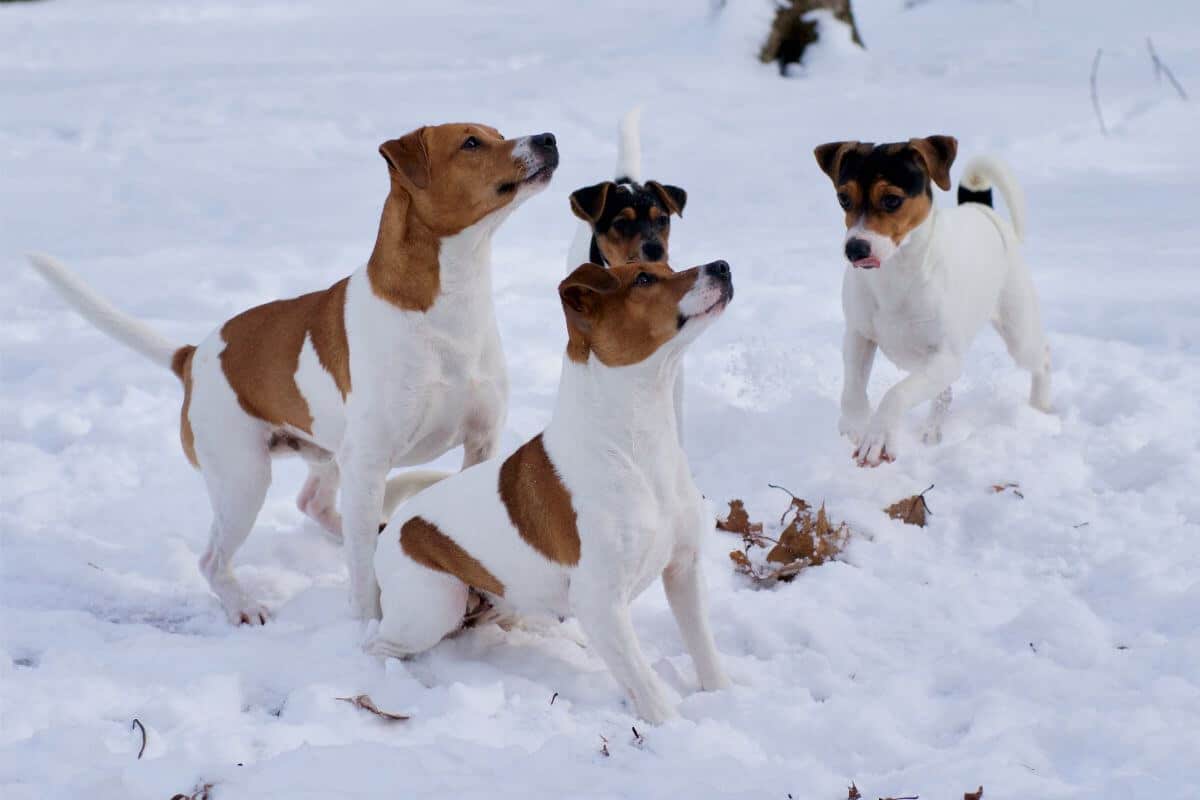
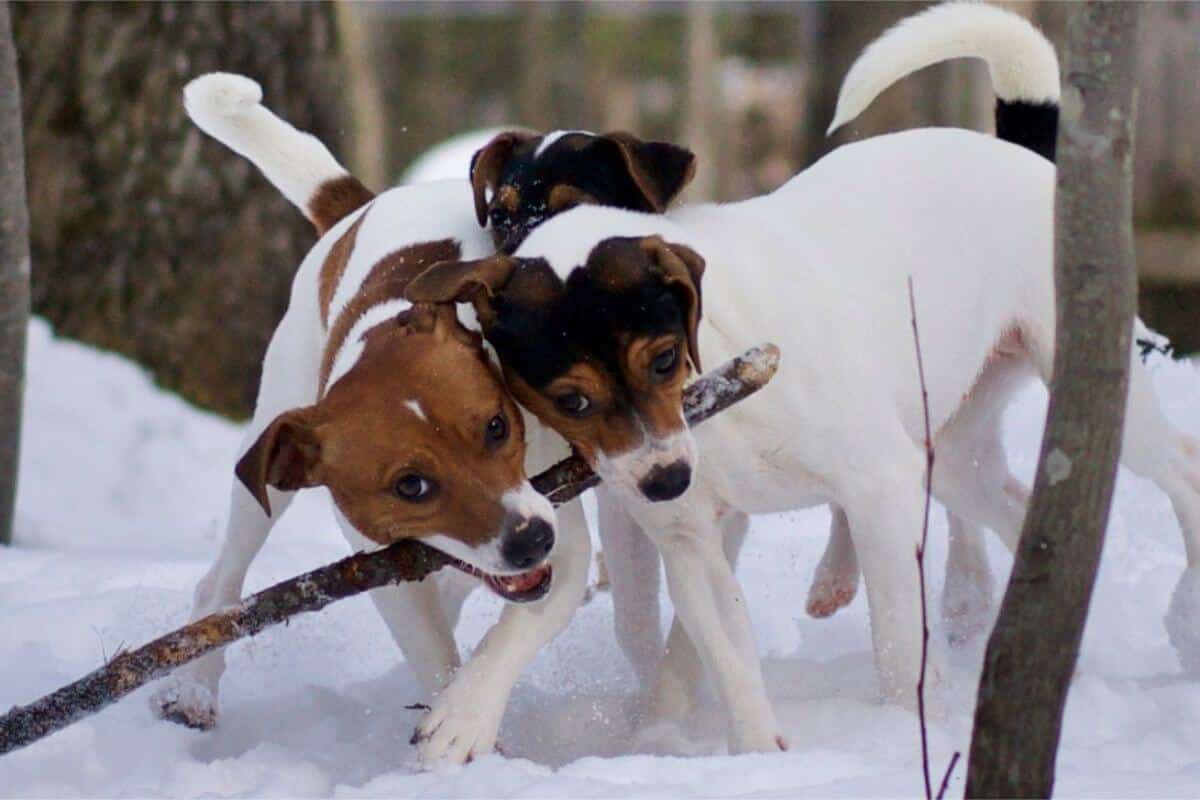
Color: White dominating. Patches of different colors, sizes, and combinations permissible, (black, brown, agouti, yellow, red, and all shades of tan and fawn). Patches also on head, with or without tan markings. Flecking accepted. Fault – Head entirely white.
Gait: Parallel and free.
Temperament: Alert, friendly, attentive, and lively.
Fault: Any departure from the foregoing points would be considered a fault and the seriousness with which the fault should be regarded should be in proportion to its degree and effect on the health and welfare of the dog.
Approved January 12, 2020
Effective July 1, 2021