Members
Explore the Alaskan Malamute’s Arctic origins, powerful build, and loyal temperament, from ancient sled dog to modern family adventurer.

Wendy A. Corr
The Weekly Brief
The best of SHOWSIGHT editorials, weekly wins, and breeder commentary — delivered to your inbox every Sunday morning.
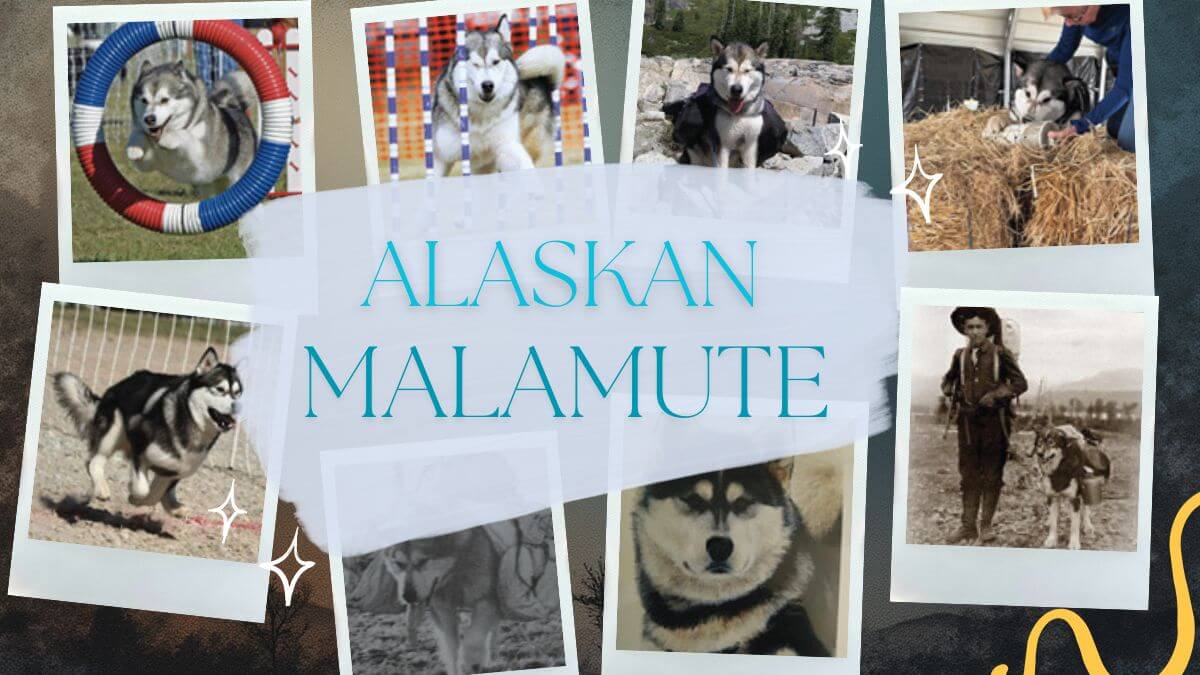
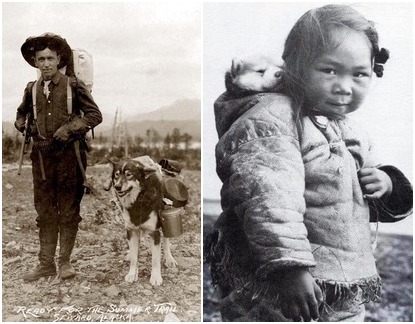
Imagine a dog bred for the wildest places on earth—a companion whose story begins thousands of years ago, alongside the Inuit people of Alaska. Far more than a mere companion, the Alaskan Malamute represents a living connection to the Mahlemut tribe who relied on these robust dogs for survival in the harsh Arctic environment. Historically, Malamutes were essential for transporting heavy loads across snowy terrain, assisting in hunting expeditions, and serving as steadfast guardians against the elements. As time progressed, Malamutes adapted to new roles, gaining prominence during the Alaskan Gold Rush as indispensable sled dogs for prospectors and explorers. Their service extended into World War II, where they contributed to supply transport and search-and-rescue operations under extreme conditions.
The physical characteristics of the Alaskan Malamute reflect its Arctic heritage: a dense, waterproof double coat, broad head, strong muzzle, and a well-furred tail carried as a plume over the back. Generations of adaptation to limited resources have resulted in a breed that utilizes food efficiently. Malamutes display a range of colors from light gray to black, sable, red, and agouti, with white predominating on the underbody, legs, feet, and facial markings. The only solid color permitted is white… as striking as the Northern Lights. Their distinctive facial masks and markings are recognized by the American Kennel Club as a testament to their wild ancestry.
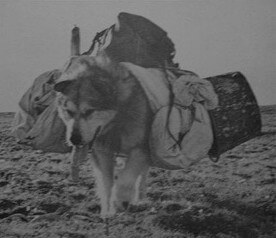
As the largest of the sledding breeds, male Malamutes typically stand about 25 inches tall and weigh up to 85 pounds, while females are slightly smaller at 23 inches and 75 pounds. Their deep chests and powerful bodies are built for endurance rather than excess. Despite their imposing stature, Malamutes are known for their affectionate, friendly, and dignified temperament, thriving as loyal family companions.
Their strength and endurance made them indispensable, and their deep connection with the Inuit people meant they were cherished as much for their companionship as for their work.
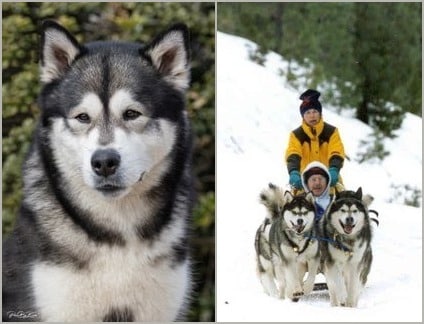
As history marched on, Malamutes found new roles. During the Alaskan Gold Rush, their fame soared as sled dogs became the lifeline for prospectors and explorers. Even in World War II, Malamutes served bravely, hauling supplies and helping with search-and-rescue missions in some of the harshest conditions imaginable. During WWII, many Alaskan Malamutes were stationed in Antarctica, but unfortunately, after the war was over, they were destroyed by the Navy, which devasted their population.
While few of us need a sled dog for daily life, Malamutes haven’t lost their love for action. These dogs can carry 30 percent of their body weight. When backpacking in the Trinity Alps, we have encountered avalanche areas where the trail has been hidden beneath the frozen snow. I cannot see beneath the frozen snow and know that there are hidden dangers such as trees broken into splinters, rocks, and other dangerous debris. The Malamutes sense the danger and cautiously approach the area. They forge out carefully, retreat, and try another area or angle. This process can continue for many minutes, and you just wait until they feel comfortable and cross.
I have learned that if I follow their tracks, I can safely cross the avalanche areas. This behavior comes from their ancestors who traveled many miles, keeping the Inuits safe when hunting for food. Their feet are well-furred with snowshoe-shaped feet, and their pads are thick and protect them from shale, climbing over boulders and granite rocks. I have witnessed other backpackers who follow their human instincts and unfortunately fall through the frozen snow to a dangerous outcome. This amazing breed has shown me many survival characteristics throughout the 30-plus years of backpacking as well as other activities. The trails in the Trinity Alps require one to cross rivers and fast-moving streams. Again, I let the Malamute observe the river and they usually stop and look before crossing to the other side. Some will stop and get a drink, and lay down in the snow-melted river before choosing their way across.
I have watched some lead dogs wade in and then back out, and move to another area and try again until they choose their path across. I keep them on a long line to allow them the ability to cross, and I follow in their path to the safety of the other side. This behavior again comes from their ancestors and their ability to keep themselves safe as well as their owners. The water temperature is just above freezing and at times extremely swift in areas. One can easily slip on the rocks and fall into a deep area when traversing to the other side. Once wet, it is important for you to change any clothes that are saturated and then repack your backpack. I carry a broom handle so that I can measure the depth of the water as well as feel the swiftness of the water before crossing, and it is also good protection when loose dogs are running toward your Malamute with the intent of causing a trouble.
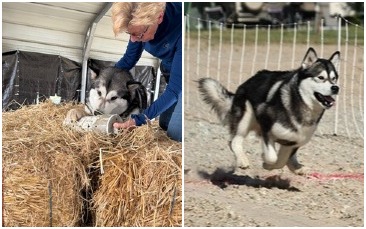
This breed also has an uncanny memory and the young dogs that are under a year of age can carry a small backpack filled with marshmallows, graham crackers, and chocolate for smores. They learn from their elders how to cross rivers, wade into the lakes, and smell around in the environment. The amazing thing for me was when we returned the following year, they remembered the trail and led us to last year’s camping spot without hesitation.
We have also tried Barn Hunt, and their noses can easily discriminate between a recently used tube, a tube filled with fresh bedding, and the actual rat. They negotiate the bales of hay and tunnels with ease; jumping from the ground to three bales up is easily done due to their athletic ability (forequarters and hindquarters as written in the Breed Standard) which provides them with strength and stamina.
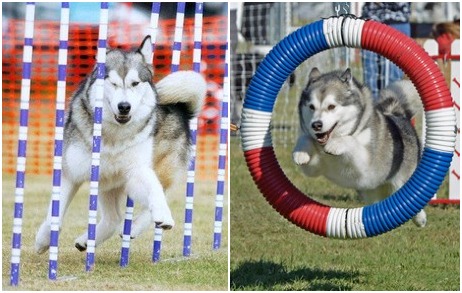
Agility is another sport they excel in due to their structure and gait. Negotiating the jumps, tunnels, A-frame, and Teeter Totter is easily done, and their stride/gait is adapted to the distance between the obstacles. The spacing between the weave poles is not designed for an Alaskan Malamute; however, they are an ingenious breed. Some see these weave poles just as an obstacle to push through and will close their eye closest to the weave pole and keep flying through the 12 weave poles as if it was a string of trees to sled through. Spectators are amazed by their power, agility, and stamina when competing in the Agility ring, as well as their entertaining behavior. Some have a reputation for completing the numbered obstacles not only once but twice while the judge looks on in amazement. Other Malamutes have looked at the weave poles and Tetter Totter as an obstacle of disdain and completed them with a look of disgust, further entertaining the spectators and judge.
Nose Work is another similar sport, where they smell boxes and locate the correct scent. This is similar to a drug-sniffing dog and provides another challenge to which the Malamute excels.
Therapy Dog is an activity they enjoy, and seeing people in the hospital or rehabilitation centers provides both the resident and the handlers with a fulfilling visit. The Malamute loves to sit next to the wheelchair and lean their head toward the resident’s hands for the head pets and verbal compliments. The Malamute’s temperament as stated in the Standard (affectionate, friendly, playful on invitation) is rewarded by the verbal praise and the many pets from the patients and residents.
Above all, the Alaskan Malamute is a dog that thrives on human connection. Their interdependent personality means they bond deeply with their humans, thriving on regular exercise and shared adventures. For those who welcome a Malamute into their lives, the reward is a companion whose loyalty and spirit are as enduring as the Arctic itself. Malamutes bring their trademark determination and joy to every task. However, Alaskan Malamutes are alpha dogs and are usually not good with other dogs or animals. The owner must be “leader of the pack” or problems could develop.