Members
Pumi colors: Black, Gray, Silver Gray, White, Born Gray, Born Brown. Pumi markings: Brindle Marking, Black & Tan Markings. Learn more.

The Weekly Brief
The best of SHOWSIGHT editorials, weekly wins, and breeder commentary — delivered to your inbox every Sunday morning.
The correct gray colored Pumi is genetically black with a graying gene that causes the hair shaft to lighten as it grows out. The puppies are born black, with black noses and black pigment, but their adult coat is gray (with a black nose and skin pigment). This is the same gene as a silver Poodle, Bedlington Terrier, and Kerry Blue Terrier.
That’s why the Pumi Standard on color says:
“The grays are born black and fade to various shades of gray. In any of the colors, an intermixture of some gray, black or white hairs is acceptable as long as the overall appearance of a solid color is maintained.”
“Disqualification – Any multiple-color pattern or patches, e.g., black and tan pattern, piebald, parti-colored.”
| DESCRIPTION | STANDARD COLOR |
| Black | YES |
| Gray | YES |
| Silver Gray | YES |
| White | YES |
| Born Gray | YES |
| Born Brown | YES |
| DESCRIPTION | STANDARD MARKING |
| Brindle Markings | YES |
| Black & Tan Markings | YES |
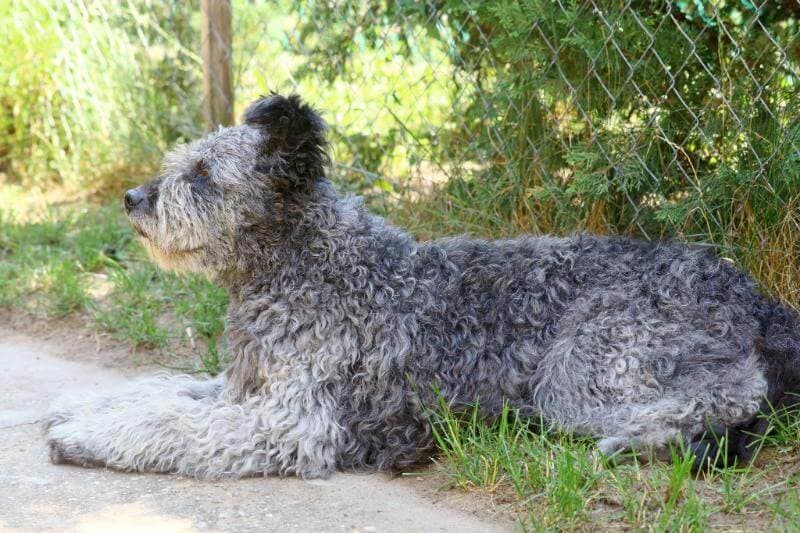
This mature Pumi shows various shades of gray color and is correct.
However, if the skin is damaged or the hair is pulled out on a dog with this graying gene, the new hairs in that area will come in black and, as they grow out, will fade to gray. In a few weeks when the hair is scissored, the black tips will be cut off and the hair will eventually fade to the same color as the rest of the surrounding hair.
The intent of the standard is to disqualify genetically multiple-colored dogs such as black and tan or parti-color. But if you consider that this dog (below) with this type of black spot does not maintain “the overall appearance of a solid color,” then the judge should disqualify it. The Hungarian Pumi Club of America felt that clarifying how these patches come about will assist judges in making that determination.
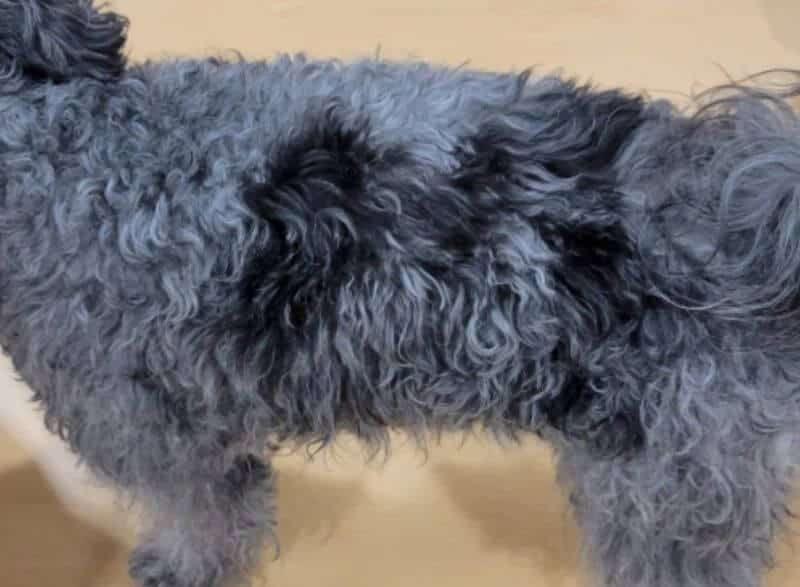
The HPCA has advised its membership that showing a dog in this situation risks their being disqualified. (FYI, there is no merle gene in the breed.)

Dog Show Candids