Members
Genetic George breaks down the B Locus and the science behind brown coat color, from TYRP1 to real-world breeding decisions. Learn more.
The Weekly Brief
The best of SHOWSIGHT editorials, weekly wins, and breeder commentary — delivered to your inbox every Sunday morning.
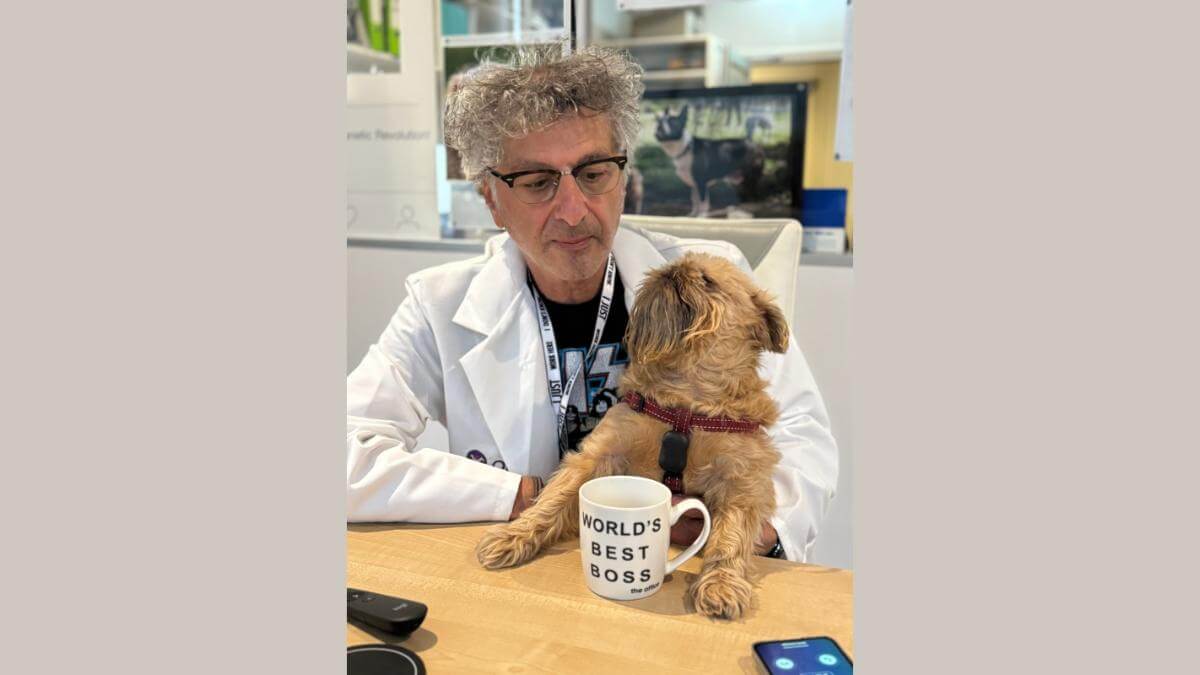
Charlie’s motto is “espresso tones only,” and Mary happily seconds it—because brown isn’t just a vibe; it’s genetics. As promised, I’m working my way down the alphabet of canine coat color: last month we tackled A, and this month we visit B. So, pull a long black and settle in—we’re taking a smooth, practical look at the B Locus and why it matters for breeders, exhibitors, and anyone who’s ever squinted at nose color trying to read a pedigree.
The B Locus corresponds to TYRP1—Tyrosinase-Related Protein 1—on canine chromosome 11. When TYRP1 functions normally, eumelanin pours as black across coat, skin, and eyes. When specific variants disrupt that function, the pigment shifts to brown, often called liver or chocolate (and in some breeds, “red”). Think of TYRP1 as the roast dial: set to standard, you get a dark roast; nudge it with the right variants and the shot lightens to a rich cocoa.
In modern testing, brown is usually explained by three recessive TYRP1 variants—commonly referred to as bc, bs, and bd. Each is a different path to the same destination, and two copies in total—even as a mix-and-match pair—flip pigment from black to brown. That’s why robust reports list them separately: a dog can be a compound heterozygote (for example, bc/bs) and still present as brown. Two hits, any combination, equals b/b functionally.
Phenotype should shake hands with genotype. A dog with at least one wild-type B typically keeps black points; two recessive copies—functionally b/b—turn points to liver, with eye color often softening toward amber. Where folks get tripped up is the E Locus. Recessive red (ee) can completely mask eumelanin in the coat, so a genetically brown dog may look cream or gold. The points, though, tell the truth: if nose leather, eye rims, lips, and paw pads are brown, TYRP1 is waving from behind the curtain.
Brown appears wherever eumelanin would have been black. Solid black becomes brown; a black mask becomes mocha; black brindle stripes go chocolate. Pheomelanin shades—reds, tans, creams—don’t “brown up” via TYRP1; they march to the beat of other loci, although points can still tip to liver if the dog is b/b.
Placement matters. The K and A loci decide where eumelanin shows up; wherever black would be, b/b turns it brown. The D Locus adds another filter: dilution turns black to blue, and brown to Isabella/lilac, so a b/b d/d dog can look surprisingly pale in both coat and points. None of this is academic—it’s the difference between a confident exhibit and an avoidable paperwork headache.
A little probability prevents a lot of surprise. Pairings with a clear BB won’t produce brown; pairings with carriers can, and two carriers bring the classic quarter-chance of b/b offspring. If a report reads “Bb or bb,” that’s a phase question: variants detected on both chromosomes, but their arrangement isn’t fully resolved. In those moments, lean on phenotype and parentage to triangulate. Planning a litter where color matters? Be conservative until the evidence says otherwise. As Charlie says when Mary steals his bed: context changes outcomes.
Some breeds show chocolate shades not explained by the standard bc/bs/bd trio. Certain lines carry breed-linked TYRP1 variants—think Australian Shepherd families with a documented allele—or entirely different genes, like the HPS3 “cocoa” seen in French Bulldogs. The headline isn’t to memorize every exception; it’s to let genotype lead and use phenotype as your cross-check, not your sole guide.
Orivet covers the full spectrum of brown so that you don’t have to guess. Alongside the three standard TYRP1 variants that most breeders know (bc, bs, bd), we also offer breed-linked calls that matter when pedigrees get specific: the Lancashire Heeler–type TYRP1 signal seen in breeds of shared ancestry; the Australian Shepherd–type allele documented in Aussie and Mini lines; and the Siberian Husky variant associated with brown in Huskies and certain crosses. And when brown shows up via a completely different mechanism, we’ve still got you covered with Cocoa (HPS3)—a dark brown that can masquerade as TYRP1 to the untrained eye. If it’s chocolate you want, then at Orivet we’ve got them all. That breadth means clearer breeding plans, fewer ringside debates, and reports that speak your breed’s dialect instead of forcing it into a generic script.
But—as Mary the Griffon would say—the B Locus is also known for being present in other breeds and tied to breeds of common ancestry. That’s why those Lancashire-type and Husky-type browns matter in practice. When we read genotype in that context, we align what you see on the dog with what’s truly in the DNA—and that keeps judging fair, pedigrees predictable, and breeding goals on track.
Because life (and genetics) should come with treats: Read this article, then email me your favorite edible chocolate—brand, bar, bonbon, or the truffle that stole your heart. I’ll pick three winners to receive one Orivet Full Breed Profile panel, free of charge.
Charlie votes we end with snacks; Mary votes we genotype the snacks. I’ll split the difference and leave you with the bottom line: Let TYRP1 call the roast, let your test panel match your breed’s history, and let Orivet be the lab that meets you where your dogs actually live—between espresso and evidence.
Canine Health